What Changes in a Boxer After Seven
Boxer dogs turning seven experience reduced energy levels, decreased exercise tolerance, and increased joint stiffness or arthritis.
Know what to watch for.
Breed-specific conditions, screening and DNA tests, what surgery actually costs, and the daily habits that stretch a healthy lifespan.

Boxer dogs turning seven experience reduced energy levels, decreased exercise tolerance, and increased joint stiffness or arthritis.

Boxer vaccination sensitivities, genetic predispositions, and common adverse reactions explained for concerned pet owners.

Anesthesia risks for flat-faced Boxers involve brachycephalic anatomy, airway management challenges, and breathing difficulties during procedures.

Boxer eye problems and corneal ulcers explained, detailing anatomical causes, eyelid conditions, and recognition of signs.

Preventive bloat surgery, known as gastropexy, explains whether this elective procedure protects your Boxer from gastric dilatation-volvulus.

Boxer chest anatomy creates extra space for the stomach to twist, causing the life-threatening emergency known as bloat.
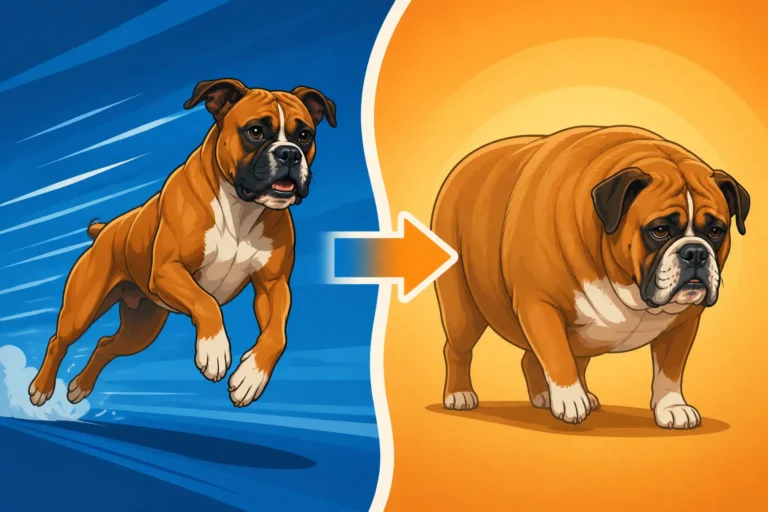
Senior Boxer weight gain and slowing down at seven or eight years old can indicate normal aging or hidden health issues requiring veterinary care.

Boxer hip dysplasia and spondylosis explained, detailing the joint malformation, early warning signs, and support methods for dogs.

Boxer hind leg weakness stems from conditions like degenerative myelopathy, arthritis, and spondylosis, causing mobility loss.

The SOD1 genetic test explains canine degenerative myelopathy, helping Boxer owners understand progressive hind leg weakness.