How Bulldogs Reached the Breeders Making Boxers
If you've ever looked at a Boxer, with their distinctive strong jaw, pushed-in nose, and robust, muscular build, you might find yourself wondering about their origins. It's a look that sparks curiosity, often leading people to ask, "Where did that come from?" This guide delves into the fascinating history of how the traits of early Bulldogs made their way into the lineage that eventually gave us the beloved Boxer, tracing the path that blended powerful ancestors into the noble companion we cherish today.
The Bullenbeisser: The Boxer's Earliest Powerful Ancestor
To truly understand how the bulldog influence shaped the Boxer, we first need to rewind quite a bit, long before the Boxer as we know it existed. The undisputed primary ancestor of the Boxer is a now-extinct German breed known as the Bullenbeisser. These dogs were magnificent, powerful animals, bred specifically for a very demanding job: hunting large, dangerous game. Imagine boar, bear, and even wild deer – animals that could easily overpower a smaller or less courageous dog.
The Bullenbeisser's name literally translates to "bull biter," which gives you a pretty clear picture of its intended purpose. These weren't dogs meant to retrieve birds or herd sheep. Their job was to run down large prey, latch onto it, and hold it firmly until the hunter could arrive to finish the kill. This required incredible strength, immense courage, and, crucially, a very specific type of jaw and bite. They needed a wide, powerful jaw that could grip effectively and sustain that grip without letting go, even when faced with a struggling, angry animal. Their physical build was equally important: strong, athletic, and fearless. You can learn more about What the Boxer's Bullenbeisser Ancestor Hunted to get a clearer picture of their demanding roles.
These dogs were incredibly valuable to hunters, and their traits were carefully preserved through selective breeding over generations. Breeders weren't just looking for any dog; they were looking for the best, most functional Bullenbeisser, one that excelled at its dangerous task. This focus on utility and specific physical attributes for a working role is a thread that runs through the Boxer's entire history.
The Arrival and Evolution of Bulldogs in Europe
While the Bullenbeisser was developing its formidable reputation in Germany, another powerful breed was making its mark across the English Channel: the Bulldog. Now, it's important to understand that the "Bulldog" of centuries past wasn't quite the chunky, low-slung companion animal we often see today. The early Bulldogs were more athletic, though still incredibly strong and tenacious, specifically bred for the brutal "sport" of bull-baiting. This activity, thankfully outlawed long ago, required dogs with immense courage, a high pain tolerance, and the ability to grip a bull by the nose and not let go. This also explains Why Boxer Ancestors Needed a Wide Grip.
English Bulldogs Crossing Borders
So, how did these English Bulldogs, with their distinctive broad heads and powerful jaws, end up influencing German breeding programs? The answer lies in the interconnectedness of Europe, even centuries ago, through trade, military movements, and the simple migration of people. As interest in dog breeding and specific working traits grew, dogs were transported across national borders. English Bulldogs, renowned for their gripping power and tenacity, became desirable assets to breeders beyond Britain. They were seen as dogs that could impart valuable characteristics to other working lines.
German breeders, already working with their Bullenbeisser stock, would have recognized the complementary traits in these English Bulldogs. Perhaps they were looking to refine certain aspects of their Bullenbeisser, or maybe introduce new levels of power and jaw strength. The exchange wasn't always a formal process; sometimes, it was a matter of soldiers bringing their dogs with them, or merchants trading dogs alongside other goods. Over time, a population of these powerful English-type Bulldogs found their way into various regions of Germany, including those areas where Bullenbeisser breeding was concentrated.
Traits German Breeders Sought
The Bullenbeisser was an excellent hunting dog, but like all breeds, there was always room for refinement. When German breeders looked at the English Bulldog, they likely saw several traits that could enhance their existing stock:
- Compactness and Agility: While both were strong, some Bullenbeisser lines might have been quite large. The Bulldog could offer a more compact, dense build, potentially increasing agility and speed in certain situations, or simply making the dog more manageable.
- Exaggerated Jaw Power: The Bulldog's jaw was legendary for its grip. Integrating this intense bite power could have been a key goal, ensuring even more secure holds on prey.
- Temperament: While both breeds were game and courageous, the specific blend of fearlessness and a certain steadfastness in the Bulldog might have been attractive. Breeders were always striving for the ideal working temperament—bold but controllable.
This era of intermingling bloodlines was crucial. It wasn't about replacing the Bullenbeisser but about strategically blending characteristics to create a superior working dog. This kind of selective breeding, aiming for a very specific functional outcome, is a hallmark of how many of our modern dog breeds came into existence.
The Blending of Bloodlines: The Birth of the Boxer Type
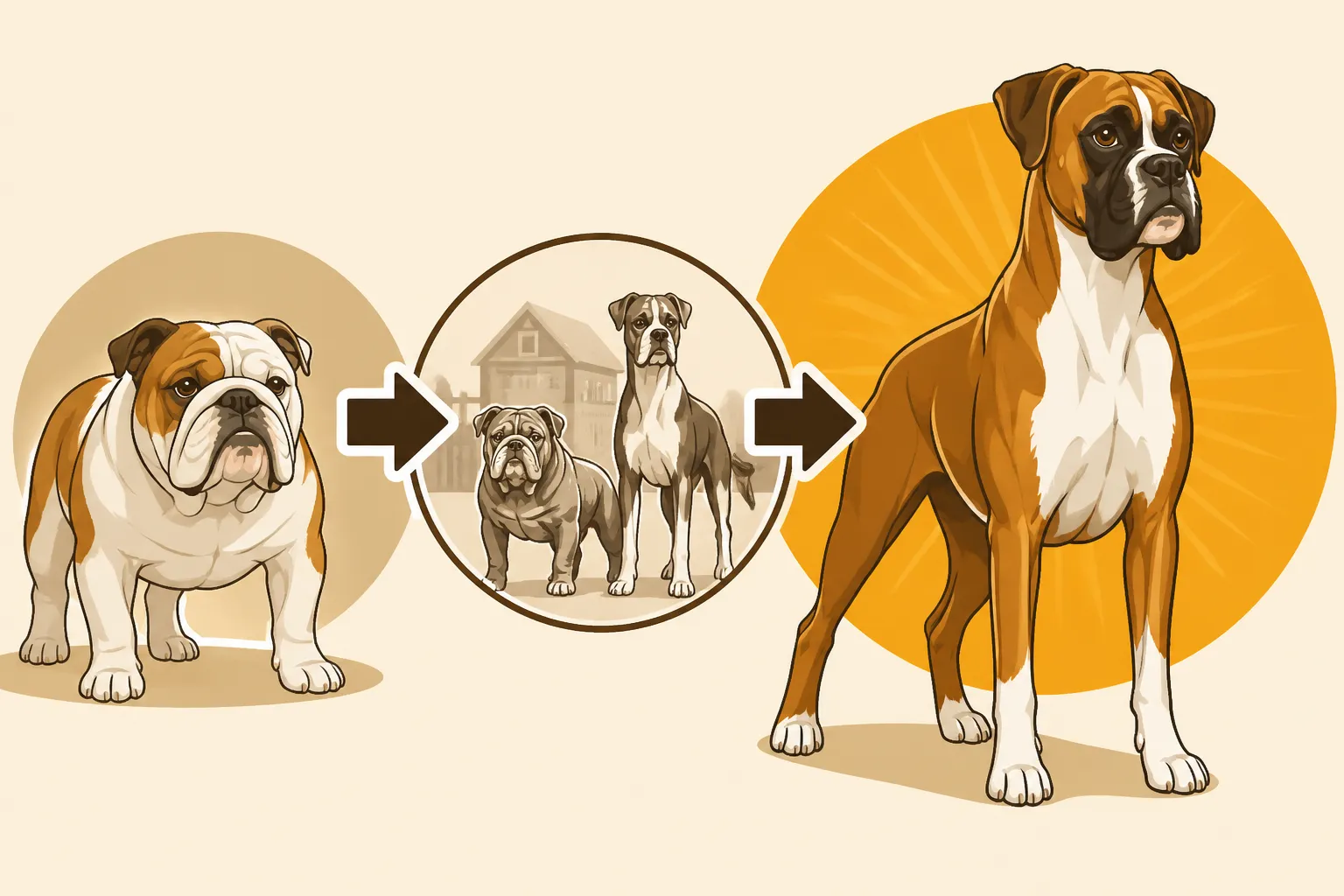
The actual crossing of the Bullenbeisser with imported Bulldogs wasn't a singular event but a gradual process that took place over many years, primarily in the latter half of the 19th century. German breeders, particularly in regions like Munich, began to systematically incorporate the bloodlines of these powerful English dogs into their Bullenbeisser stock. The goal was to produce a medium-sized dog that retained the strength, courage, and gripping ability of its Bullenbeisser ancestors but with some of the more refined characteristics contributed by the Bulldogs.
The Impact of Selective Breeding
This was a period of intense experimentation and selective breeding. Breeders would carefully choose which dogs to mate, looking for puppies that displayed the desired combination of traits. They wanted a dog that was strong enough to hold large game, but perhaps also more agile and with a more aesthetically pleasing appearance for some emerging dog fancy circles. The Bullenbeisser was rugged and functional, but the infusion of Bulldog blood helped to shape the specific "type" that would eventually become recognizable as the Boxer. For instance, the characteristic undershot jaw, so prominent in today's Boxer, became more pronounced through this crossbreeding, a trait highly valued for gripping and holding. You can read more about What an Undershot Boxer Bite Means for their function.
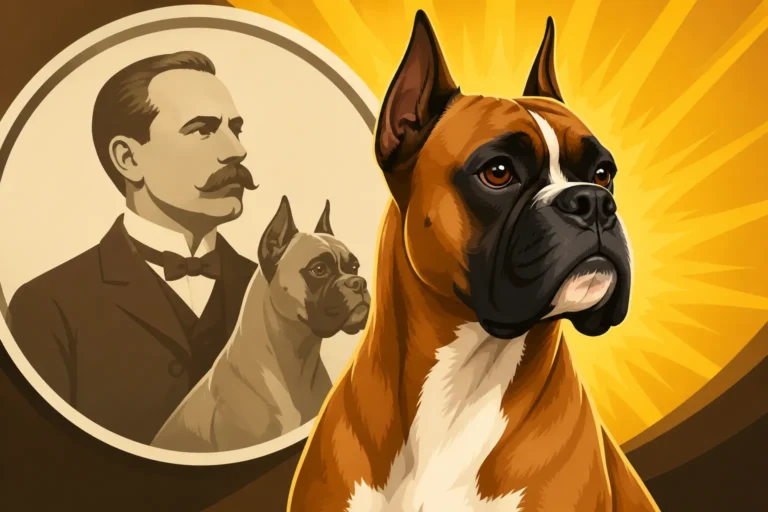
The effort wasn't just about mixing two breeds; it was about creating something new and distinct. The breeders involved, figures like Friedrich Robert, Elard König, and R. Höpner, are often credited as The Three Germans Who Fixed the Boxer Type, meticulously guiding the development of the breed. They weren't just throwing dogs together; they had a vision for what this new breed should be capable of, both in terms of work and companionship.
Emergence of the Boxer's Distinctive Look
As generations passed, the offspring of these Bullenbeisser-Bulldog crosses began to stabilize into a consistent type. This new dog possessed:
- A Brachycephalic (Short) Muzzle: While Bullenbeissers had strong muzzles, the Bulldog influence helped to shorten and broaden it further, giving the Boxer its unique facial structure. This short muzzle, combined with the undershot jaw, was believed to be ideal for holding onto game without obstructing breathing. This is a key reason Why the Boxer Was Given a Turned-Up Muzzle.
- Powerful and Muscular Build: The robust musculature of both parent types was certainly passed down, resulting in the deep-chested, athletic physique we associate with Boxers.
- Strong, Square Head: The broad head and distinct stop, characteristic of the Bulldog, were incorporated, creating the powerful and intelligent expression of the Boxer. The Boxer Head the Standard Describes is a direct legacy of this lineage.
The physical traits that made the Bullenbeisser an effective game dog and the Bulldog a tenacious baiting dog were combined and refined. The resulting Boxer was a dog capable of courage and strength in the field, yet also possessing a loyal and intelligent temperament that hinted at its future as a beloved family pet.
The Boxer's Legacy and Modern Relevance
The hard work of those early German breeders paid off, leading to the formal recognition of the Boxer as a distinct breed in the late 19th century. The breed standard, established by the Deutscher Boxer Club in 1902, codified the characteristics that had been carefully cultivated, many of which were direct results of the Bulldog infusions. When you look at The Boxer the Breed Standard Describes today, you're seeing a direct lineage from these early foundational dogs.
The Boxer's versatility, combining strength with a playful spirit, quickly made it popular. From its initial roles as a working dog – guarding, herding, and even acting as a military and police dog – it transitioned into a cherished family companion. Their endearing "boxing" behavior, using their front paws in play, is a testament to their athletic and engaging nature. You might find a wide range of products for these active dogs, from durable toys to specialized diets, readily available on platforms like Chewy, catering to their specific needs.
Today, the Bulldog influence is undeniably part of the Boxer's charm and character. It's not just in their physical appearance, like their strong jaws and broad chests, but also in their known temperament. Boxers are renowned for their courage, their deep loyalty to their families, and their playful, sometimes clownish, nature. These are all echoes of the strength and spirit of their Bullenbeisser and Bulldog ancestors.
| Ancestral Trait | Bullenbeisser Contribution | English Bulldog Contribution | Modern Boxer Characteristic |
|---|---|---|---|
| Jaw & Bite | Powerful gripping, tenacity | Undershot jaw, broad muzzle | Strong undershot jaw, capable grip |
| Physical Build | Muscular, athletic, strong | Compact, dense, powerful | Muscular, robust, athletic frame |
| Head Shape | Strong, functional | Broad head, distinct stop | Square head, clear stop, intelligent expression |
| Temperament | Fearless, courageous, game | Tenacious, devoted | Courageous, loyal, playful, high-spirited |
| Primary Function | Large game hunting | Bull-baiting | Companion, working (guarding, police, military) |
This journey from ancient hunting dogs and tenacious baiting animals to the modern Boxer is a testament to the power of selective breeding and the keen eye of dedicated breeders. The decision to integrate Bulldog blood into the Bullenbeisser lines was a pivotal moment, fundamentally shaping the breed we love today. Whether you're researching The German Origins of the Boxer or simply admiring their unique physique, knowing this history enriches your appreciation for these magnificent dogs. And for all their distinct characteristics, it's reassuring that finding appropriate food and durable accessories for a Boxer, from puppyhood through adulthood, is made simple with services like Chewy, ensuring they thrive in our homes.
The Enduring Bulldog Traits in the Boxer
Even after centuries, the legacy of the Bulldog remains deeply ingrained in the Boxer. It's not just a historical footnote; it's part of what makes a Boxer a Boxer. When you observe a Boxer's characteristic powerful gait, its confident stance, or its determined expression, you're seeing traits that were carefully selected and amplified by those early breeders who sought to create the ultimate working companion.
The deep bond Boxers form with their families, their protective instincts tempered with incredible gentleness towards children, their seemingly endless energy, and their unique way of communicating through body language are all aspects of their personality that owe something to the careful blending of their ancestors. They are robust, resilient dogs, but also famously sensitive and affectionate. This complex mix is precisely what makes them so captivating to live with.
If you're looking to understand Which Breeds Were Crossed to Make the Boxer in more detail, recognizing the significant role of the Bulldog is absolutely essential. It was a conscious choice by those pioneering German breeders to introduce specific characteristics, and the result is a dog that stands apart—a true testament to a thoughtful, deliberate breeding process that created a timeless and cherished canine. Even today, responsible breeders continue to focus on health and temperament, ensuring that future generations of Boxers embody the best of this rich heritage, often recommending quality nutrition and supplies found through reputable sources like Chewy for optimal health and well-being.
Disclaimer
This article is for general informational purposes only and does not constitute professional advice. Laws, prices and regulations vary by location and change over time. Consult a qualified professional for guidance on your specific situation.