The 1895 Munich Show That Launched the Boxer
Have you ever wondered about the precise moment when the Boxer, with its distinctive expressive face and playful spirit, truly began its journey to becoming one of the most beloved dog breeds in the world? It wasn't a gradual evolution in the shadows; rather, it was a pivotal event that solidified the breed's identity. This guide will take you back to the very origins, exploring the 1895 Munich Show that didn't just showcase a few dogs, but actively launched the Boxer breed as we know it today, moving it from regional obscurity to international recognition.
The Boxer's Humble Beginnings: Before the Show
Before that monumental exhibition in Munich, the dogs we now recognize as Boxers were a much less defined group, more a type than a fully standardized breed. They were working dogs, bred for specific tasks, and their appearance varied quite a bit depending on the region and the breeder's immediate needs. Understanding this pre-show landscape helps us appreciate the significance of what happened in 1895.
From Bullenbeisser to Boxer Ancestor
The Boxer's deepest roots lie with the Bullenbeisser, a powerful German breed historically used for hunting large game like wild boar and bear. Imagine a dog so strong and tenacious it could grip a charging animal and hold it until the hunter arrived. That was the Bullenbeisser. These dogs were selected for their strength, courage, and formidable jaws, traits that were absolutely essential for their dangerous work in the forests. They were not known for their elegant looks but for their sheer effectiveness.
Over time, as large game hunting declined and tastes in dog breeding shifted, the Bullenbeisser's role began to change. They were crossbred with various other dogs, particularly the English Bulldog, which had been brought to Germany. This crossbreeding was crucial because it introduced traits that would later become hallmark characteristics of the Boxer. The goal wasn't just to lighten the dog's build or change its appearance, but often to combine the Bullenbeisser's working drive with the Bulldog's robust structure and a more manageable temperament, moving towards a versatile farm and guard dog. You can learn more about this foundational mixing in Which Breeds Were Crossed to Make the Boxer.
The Early German Attempts at Standardization
In the late 19th century, Germany, like many European countries, saw a burgeoning interest in purebred dogs and the establishment of formal breed clubs. People were starting to recognize the value in defining specific breeds, not just types of working dogs, and this meant creating standards, tracking pedigrees, and organizing shows. However, for the "Boxer" — or dogs resembling what would become the Boxer — these efforts were fragmented and often contradictory.
There wasn't a universal agreement on what a "Boxer" should look like, how tall it should be, or even what its ideal temperament was. Breeders in different towns might have their own local version, optimized for their particular needs or preferences. Some dogs were heavier, some lighter, some with longer muzzles, others more compressed. Without a unified club or a recognized standard, these early "Boxers" existed in a state of flux, appreciated for their utility but lacking a cohesive identity that could be consistently reproduced and promoted. This made it difficult for anyone looking for a "Boxer" to know exactly what they were getting, or for breeders to aim for a common ideal.
The Visionaries Behind the Breed
The Boxer breed wouldn't have been officially launched without the dedication and foresight of a few key individuals who saw the potential in these powerful, athletic dogs. They weren't just breeders; they were passionate advocates who worked tirelessly to define and promote a consistent vision for the Boxer. Their efforts culminated in the groundbreaking event in Munich.
Who Friedrich Robert Was in Boxer History
Among the most influential figures in the early development of the Boxer was Friedrich Robert, a resident of Munich. Robert is often credited with being the true "father" of the breed. He wasn't just casually breeding dogs; he had a specific vision for a dog that was strong, intelligent, and possessing a distinctive appearance. His commitment went beyond simply producing puppies; he aimed to standardize and refine the emerging Boxer type, believing it deserved formal recognition.
Robert meticulously selected his breeding stock, focusing on dogs that exhibited the desirable combination of power, courage, and a particular facial structure that he envisioned. He was instrumental in documenting these dogs and advocating for their unique qualities. Without his unwavering dedication and his ability to articulate a clear ideal for the breed, the Boxer might have remained a varied regional type rather than evolving into a globally recognized breed. His work laid the essential groundwork for the formalization that would soon take place. You can read more about his significance in Who Friedrich Robert Was in Boxer History.
The Importance of George Alt and R. Höpner
While Friedrich Robert provided much of the foundational vision, the contributions of George Alt and R. Höpner were equally vital in shaping the early Boxer. These gentlemen were not just enthusiasts; they were active breeders who worked to bring consistency to the Boxer's physical traits and temperament. They understood the importance of selective breeding to solidify the desired characteristics across generations.
George Alt, in particular, owned a dog named Lechner's Box, a female with a strong influence on early Boxer pedigrees. Her offspring helped to propagate the specific type that breeders were aiming for. Together, Alt and Höpner focused on refining the Boxer's head, jaw, and overall conformation, ensuring that the dogs they produced fit an increasingly specific mold. Their efforts helped to create a pool of dogs that, when brought together at an exhibition, could demonstrate a shared set of breed characteristics rather than just a collection of vaguely similar dogs. They played a critical role in moving the Boxer from a general "type" to a distinct, recognizable breed with a consistent appearance and disposition.
The Pivotal 1895 Munich Boxer Exhibition
The stage was set in Munich, a city that was a hub for canine enthusiasts in Germany. The year 1895 marked a watershed moment, not just for the Boxer, but for the history of dog breeding itself. It was more than just a dog show; it was a declaration of intent, a coming together of individuals determined to give this powerful and spirited dog its rightful place.
The Genesis of the First Boxer Club
The idea of organizing a specialized Boxer exhibition and, crucially, forming a dedicated club, stemmed from a growing sentiment among a small group of enthusiasts in Munich. They saw the potential in these robust, intelligent dogs, which were then still quite varied in appearance, but clearly shared a certain spirit and utility. These visionaries, including Friedrich Robert, recognized that without a concerted effort to define and standardize the breed, its future would remain uncertain. The goal was clear: gather the best examples of the nascent "Boxer" type, showcase them, and, through discussion and agreement, establish a formal standard that all future breeding efforts could adhere to.
The enthusiasm was palpable. Local breeders and dog lovers in Munich were keen to see their beloved dogs given official recognition. The exhibition wasn't just about competition; it was a foundational meeting, a collective brainstorming session to lay down the definitive characteristics of the breed. It was understood that this event would be the springboard for something much bigger – a formal organization dedicated solely to the Boxer. This shared ambition to move beyond informal breeding and establish a solid, identifiable breed identity set the stage for the historic events of that year.
Flora, the First Boxer on Display
At this seminal 1895 Munich exhibition, a female Boxer named Flora took center stage. Flora wasn't necessarily the "perfect" Boxer by today's standards, but she was a crucial reference point, representing many of the desired traits that the early breed pioneers were striving for. Her presence at the show was significant because she provided a tangible example around which discussions about the breed standard could revolve. She was the first dog officially listed and documented as a Boxer in connection with this foundational event.
Her appearance — her build, her head shape, her temperament — became a benchmark. When breeders and enthusiasts gathered, they could point to Flora and discuss what they liked, what they believed should be emphasized, and what perhaps needed refinement in future generations. She was a living, breathing blueprint for the discussions that would shape the breed. Her inclusion in the exhibition cemented her place in Boxer history, marking her as the inaugural representative of the breed at a formal public showing. This foundational moment helped cement the idea of a distinct Boxer type, providing a starting point for what was to come. You can explore the details of this historic entry in The First Boxer Entered in a German Show.
Laying the Groundwork for the Standard
The 1895 Munich Show was far more than a simple display of dogs; it was a working meeting where the very essence of the Boxer breed was debated and drafted. Enthusiasts and breeders, fueled by a shared passion, engaged in earnest discussions about everything from ear set and muzzle length to coat color and temperament. This was where the abstract idea of a "Boxer type" began to solidify into a concrete breed standard.
The process involved considerable discussion, negotiation, and consensus-building. Different opinions needed to be reconciled, and a unified vision had to emerge. They were effectively writing the rules for what would constitute a "true" Boxer. This careful deliberation ensured that the initial standard was robust and reflected a collective ideal rather than just one person's preference. The show provided the critical forum for these diverse voices to come together and commit to a common goal, creating a foundational document that would guide Boxer breeding for generations. The principles agreed upon here were fundamental to the creation of the first written standard, details of which were formally adopted shortly after. What the First Boxer Standard Said in 1902 further explains the content of this pivotal document.
Immediate Impact and Lasting Legacy
The reverberations of the 1895 Munich Show were felt almost immediately, transforming the Boxer from a regional utility dog to a formally recognized breed with a bright future. This single event didn't just define the breed; it set in motion a series of developments that would propel the Boxer onto the international stage.
Formation of the Deutscher Boxer Club
Perhaps the most significant and immediate outcome of the 1895 exhibition was the official founding of the Deutscher Boxer Club (German Boxer Club) in 1896. This was the culmination of the efforts made during the show and represented a formal commitment to the breed's future. With the club's establishment, the Boxer gained an institutional champion dedicated to its preservation, promotion, and development. This marked a turning point, providing a central authority that could register dogs, maintain pedigrees, and, crucially, enforce the newly drafted breed standard.
The Deutscher Boxer Club quickly set about its work, formalizing the breed standard that had been laid out in principle at the Munich show. They organized future exhibitions, encouraging responsible breeding practices and educating the public about the unique qualities of the Boxer. This structure was vital because it ensured consistency and prevented the breed from splintering into countless regional variations. Without a dedicated club, the momentum generated by the show might have dissipated. The club's formation provided the necessary framework for the Boxer to flourish. To understand more about this key milestone, explore When the Deutscher Boxer Club Was Founded.
The Boxer's Rise in Popularity
With a formal standard and a dedicated club, the Boxer's profile began to soar, first within Germany and then beyond its borders. The clarity provided by the standard meant that breeders now had a blueprint to follow, resulting in more consistent and recognizable dogs. This consistency made the breed more attractive to prospective owners who knew exactly what to expect in terms of appearance and general temperament. The newfound recognition also sparked broader interest among dog enthusiasts and the general public.
The Deutscher Boxer Club actively promoted the breed, showcasing its versatility as both a capable working dog and an engaging companion. This outreach, combined with the Boxer's naturally appealing blend of strength, loyalty, and playfulness, led to a steady increase in its popularity. People began to see the Boxer not just as a utilitarian animal but as a distinctive and desirable family member. This initial surge in recognition in Germany laid the groundwork for its eventual global appeal, making it one of the most beloved breeds worldwide. The breed's popularity would eventually reach a fever pitch in other nations too, as described in The Decade Boxers Took Off With American Families.
Why the 1895 Show Matters Today
The foundational work done at the 1895 Munich Show isn't just a historical footnote; it profoundly impacts every Boxer that walks the earth today. The principles and characteristics established during that pivotal time continue to serve as the blueprint for breeders, judges, and owners alike.
The Blueprint for the Modern Boxer
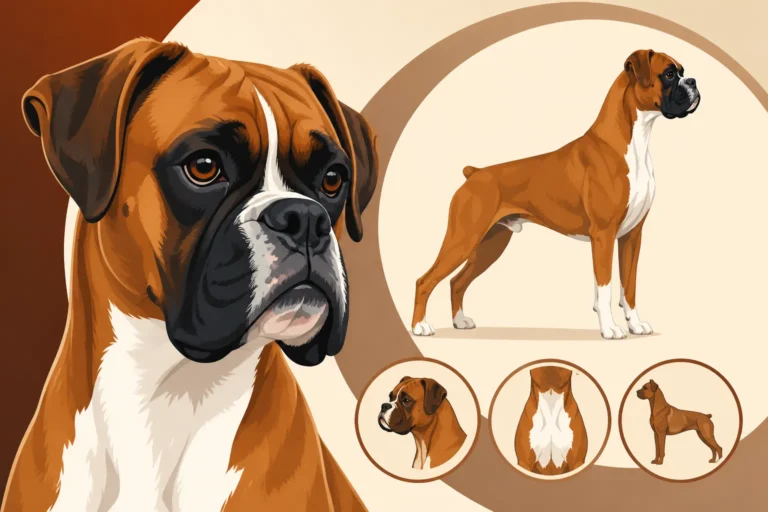
When you look at a Boxer today, from its muscular build to its expressive face and characteristic undershot jaw, you are seeing the direct lineage of the vision articulated in 1895. The breed standard, meticulously crafted and refined over the decades, is a direct descendant of those initial discussions. This standard guides breeders in making responsible pairing choices, ensuring that the integrity of the breed is maintained. It dictates everything from acceptable coat colors and markings to ideal size and proportions. The Boxer the Breed Standard Describes delves into these specifics.
Moreover, this historical blueprint affects the health and wellbeing of our Boxers. By understanding the specific traits selected for early on, we can better appreciate the breed's predispositions and unique needs. For example, the distinctive head shape, with its shortened muzzle, while defining the breed's appearance, also necessitates careful consideration of environmental factors like heat. This continuous adherence to a standard that began with that first show is why Boxers today still exhibit the consistent characteristics that make them so identifiable and loved.
| Characteristic | Pre-1895 "Boxer Type" (General) | Post-1895 Boxer (Emerging Standard) |
|---|---|---|
| Purpose | Hunting large game, farm dog | Utility, guard, companion |
| Appearance | Highly varied, less consistent | Moving towards defined standard |
| Muzzle | Could be longer or shorter | Distinctive short, turned-up muzzle emphasized |
| Jaw | Strong, but bite less defined | Undershot jaw, characteristic teeth |
| Temperament | Often purely functional, tenacious | Courageous, intelligent, playful |
| Recognition | Regional working dog | Formally recognized breed |
| Breeding Guidance | Informal, local preferences | Formal breed club & standard |
A Foundation for Health and Temperament
The early standardization efforts weren't just about looks; they were also implicitly about defining the breed's inherent character and, by extension, its health trajectory. When a breed is clearly defined, it becomes easier to track genetic lines and identify potential health concerns within those lines. The establishment of a unified breed standard provided a solid foundation for responsible breeding practices, emphasizing the importance of both physical soundness and stable temperament.
Today, this means that organizations and responsible breeders have a historical context when approaching health screenings and genetic testing. For instance, the Boxer's known predispositions to certain health issues, such as heart conditions or certain cancers, are often better understood when viewed through the lens of their genetic heritage established early on. While no one could foresee every health challenge in 1895, the very act of defining the breed opened the door for future generations to address these concerns systematically. A clear standard encourages breeders to screen for inheritable conditions, ensuring that future Boxers maintain not only their distinctive look but also their vitality and good nature. Understanding this foundation even influences what sort of The Health Screening a Boxer Breeder Owes You you should expect from a reputable source.
The Boxer temperament, known for its loyalty, courage, and exuberant playfulness, was also a core consideration from the very beginning. While the breed's origins lay in formidable hunting dogs, the refinement towards a companion animal meant selecting for stability and a friendly disposition alongside their protective instincts. This careful balancing act, begun by the breed's founders, ensures that the Boxer remains the beloved family member we cherish today.
Disclaimer
This article is for general informational purposes only and does not constitute professional advice. Laws, prices and regulations vary by location and change over time. Consult a qualified professional for guidance on your specific situation.