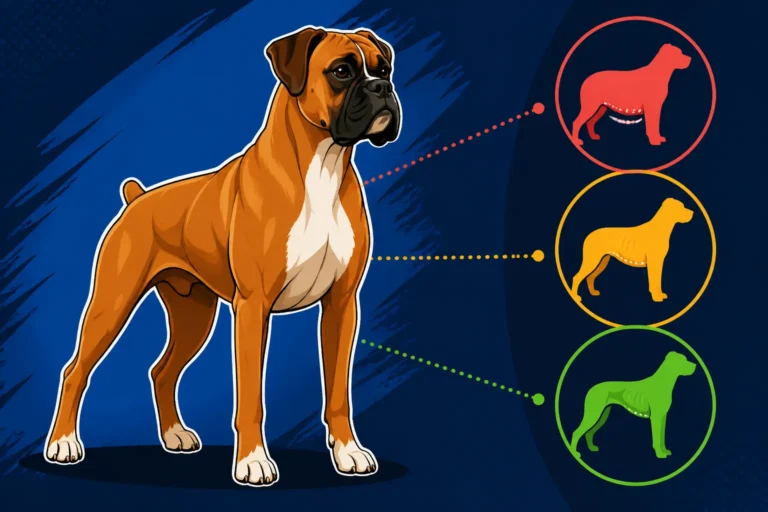
When a New Boxer Lump Needs a Vet
Finding a new lump on your beloved Boxer can send a jolt of anxiety right through you. It's that moment where your heart leaps into your throat, and all you can think is, "What if?" Because, let's be honest, Boxers are prone to all sorts of bumps and growths, and it's incredibly tough to know when something is truly serious versus just another benign quirk of their magnificent, wrinkly skin. This guide is here to walk you through how to assess a new lump on your Boxer, understand which signs signal urgency, and empower you to make informed decisions about when that vet visit simply cannot wait.
The Immediate Response: Panic, Observation, and Why Waiting Can Be Risky
That sudden discovery of an unfamiliar lump can instantly deflate your happy mood. You're petting your Boxer, enjoying their silky coat, and then your fingers hit it – a new bump, a hard knot, or a squishy mass that definitely wasn't there last week. It's a moment every Boxer owner dreads, given our breed's notorious predisposition to various growths, many of them unfortunately serious. Your first instinct might be to panic, or conversely, to brush it off as "just another Boxer thing." Neither extreme is ideal, and understanding how to respond calmly yet effectively is crucial.
The "Wait and Watch" Trap
It's tempting, isn't it? To tell yourself, "Oh, it's probably nothing," or "I'll just watch it for a few days to see if it goes away." With many breeds, a short wait-and-see period might be acceptable for very small, non-descript lumps. But with Boxers, this can be a dangerous game. Our dogs are simply wired differently when it comes to skin and subcutaneous growths. They are highly susceptible to certain types of cancer, most notably mast cell tumors, which can be incredibly aggressive and spread rapidly. What appears to be a harmless little bump one day can transform into something much more sinister in a matter of weeks. The window for effective treatment, especially for early-stage mast cell tumors, can be incredibly narrow. Missing that window because you decided to wait a month could literally change the entire prognosis for your dog. The Lumps a Boxer Owner Has to Check For are often sneaky, and their behavior isn't always obvious from the outside.
Think of it this way: if you found a suspicious lump on yourself, would you wait a month? Probably not. The same urgency applies to our Boxers. Their bodies develop things at a different rate, and the risk factors are unique. It’s better to be overly cautious than to regret inaction later. The physical and emotional toll of a late diagnosis is something no Boxer family wants to experience.
What to Note Before Calling the Vet
Before you pick up the phone to schedule an appointment, take a deep breath and perform a quick, systematic assessment of the lump. This isn't about diagnosing it yourself – that's your vet's job – but gathering vital information that will help your vet understand the situation faster and potentially prioritize your Boxer's care.
Here’s a checklist of things to observe and jot down:
- Location: Be as precise as possible. Is it on their leg, chest, belly, head, near a joint, or on a paw pad? Is it right under the jaw where lymph nodes might be?
- Size: Measure it if you can, even roughly. Use a ruler or compare it to a common object (e.g., "pea-sized," "dime-sized," "golf ball-sized").
- Shape: Is it round, oval, irregular?
- Texture: Is it hard, firm, soft, squishy, fluid-filled? Does it feel like a marble under the skin or more like a jelly bean?
- Mobility: Can you move it under the skin, or is it firmly attached to underlying tissue? Lumps that are mobile are generally, but not always, less concerning than those fixed in place.
- Temperature: Does it feel warmer than the surrounding skin? This can indicate inflammation or infection.
- Pain/Discomfort: Does your Boxer react when you touch it? Do they flinch, pull away, or show any signs of discomfort?
- Skin Involvement: Is the skin over the lump red, irritated, hairless, ulcerated, or discolored?
- Speed of Growth: When did you first notice it? Has it grown quickly? This is one of the most critical pieces of information for a Boxer.
- Consistency: Has it changed in consistency over time? (e.g., started soft and became hard).
- Other Symptoms: Is your Boxer otherwise well? Are they lethargic, off their food, or showing any other unusual signs?
Having these details ready will make your conversation with the veterinary staff much more productive. It helps them gauge the urgency and decide how quickly your Boxer needs to be seen. Remember, Weekly Lump Checks on a Boxer are your best defense, making it easier to spot new growths and track changes.
Common Boxer Lumps That Warrant Immediate Veterinary Attention
While no lump should be completely ignored in a Boxer, some characteristics scream "don't wait!" louder than others. Recognizing these red flags can be life-saving. It’s about understanding the high-risk nature of our breed and acting decisively when presented with suspicious signs.
Fast-Growing or Changing Lumps
This is, hands down, the biggest red flag for a Boxer. Any lump that appears suddenly and grows rapidly, or changes in size, shape, or texture over days to a few weeks, needs immediate veterinary attention. This is classic behavior for aggressive tumors, like the dreaded mast cell tumor. Why Boxer Mast Cell Tumors Change Size is due to their cellular nature, which can be unpredictable and swift. These tumors can be quite deceptive, sometimes appearing small and innocent, only to burst into rapid growth. They might even appear to shrink and then grow again, leading owners to believe they are benign when they are anything but.
Even if it's not a mast cell tumor, rapid growth can also indicate other aggressive cancers such as soft tissue sarcomas or even some types of lymphoma that manifest as skin masses. The faster these are diagnosed and treated, the better the prognosis. A delay of even a week or two can mean the difference between successful removal and a more invasive, complicated, and potentially less successful treatment. When you notice a rapidly changing lump, the call to the vet should be your next move, not a "let's Google it" session.
Lumps in Key Areas
The location of a lump can also be a significant indicator of its potential severity. Certain areas of a Boxer's body are anatomical hotspots for serious issues.
- Lymph Nodes: If you find a lump in areas where lymph nodes are located (under the jaw, in the armpits, or behind the knees), especially if it's firm and non-painful, this could be a sign of lymphoma. Boxer Lymphoma and How It Presents can be very serious, and early detection is crucial. Swollen lymph nodes often feel like firm, symmetrical bulges.
- Mammary Glands: Any lump on a female Boxer's mammary chain, regardless of whether she is spayed or intact, should be examined promptly. While some mammary tumors are benign, a significant percentage are malignant. The risk is generally higher in intact females or those spayed later in life.
- Around Orifices: Lumps near the eyes, mouth, nose, anus, or genitals can be problematic not just because of potential malignancy, but also because their location can interfere with vital functions like eating, breathing, or defecating. Tumors in these locations can quickly become ulcerated and infected, causing immense discomfort and complicating treatment.
- On the Paws or Toes: Boxers can develop growths on their paw pads or between their toes. These are often difficult to spot until they become irritated or your Boxer starts limping. While some might be benign cysts, they can also be mast cell tumors or other types of skin cancer. Their location makes them prone to trauma and infection, so don't delay.
- Deep-Seated Lumps: Lumps that are deep within the tissue, fixed to muscle or bone, are more concerning than superficial ones. These require diagnostic imaging to understand their full extent.
Any lump that causes your Boxer pain, lameness, interferes with eating or drinking, or shows signs of ulceration, bleeding, or discharge, warrants an immediate vet visit.
When a Lump Might Be Less Urgent (But Still Needs Checking)
Not every lump on a Boxer is a death sentence, thankfully. Many are benign, and some even resolve on their own. However, even these "less urgent" lumps still require a professional veterinary opinion to rule out anything serious. The key is that you cannot know for sure without a vet's assessment.
Fatty Lumps (Lipomas) and Cysts
These are probably the most common types of benign lumps you'll encounter on an adult or senior Boxer.
- Lipomas: Often referred to as "fatty tumors," lipomas are benign collections of fat cells under the skin. They usually feel soft or slightly rubbery, are typically mobile (you can often move them around freely under the skin), and don't usually cause pain. They can vary greatly in size, from a small pea to a large grapefruit. While harmless, a vet still needs to confirm it's a lipoma because even experienced owners can confuse a soft, mobile mast cell tumor for a fatty lump. Telling a Boxer Fatty Lump From a Tumor requires cytology, not just palpation.
- Cysts: Cysts are sacs filled with fluid, dead cells, or other material. They can be sebaceous (oil gland) cysts, follicular cysts, or other types. They often feel somewhat squishy or fluctuant, and can sometimes rupture, leading to temporary discharge and inflammation. While generally benign, ruptured cysts can become infected and painful. Again, only a vet can definitively tell you if it's a cyst or something else.
Even if you're fairly confident it's a lipoma or cyst based on your experience, getting a definitive diagnosis is always the safest bet for your Boxer. Sometimes, a fine needle aspirate (FNA) can confirm the nature of the lump without needing surgery.
Benign Skin Growths
Boxers are also prone to various benign skin growths that might look alarming but are ultimately harmless.
- Histiocytomas: These are fascinating and common in young Boxers, typically under two years of age. They often appear as small, firm, raised, red "button-like" bumps, sometimes with an ulcerated surface. The good news is that they almost always resolve on their own within two to three months, often without any intervention. While Histiocytomas on a Young Boxer are usually benign, their appearance can be very similar to a mast cell tumor, especially an ulcerated one. A vet can often diagnose these with a simple look or an FNA.
- Warts (Papillomas): Caused by a virus, warts are usually seen in younger dogs. They appear as cauliflower-like growths, often around the mouth or eyelids. While unsightly, they are generally benign and often regress on their own as the dog's immune system matures. However, if a wart is in a location that gets rubbed or irritated, or if it changes dramatically, a vet visit is warranted. Whether a Boxer Wart Needs Removing depends on its location and behavior.
- Skin Tags: Small, fleshy protrusions of skin, often on stalks. These are entirely benign and typically don't grow or change significantly. They're harmless, but still worth mentioning to your vet during a routine check-up.
While these might be less urgent, getting a professional opinion ensures peace of mind and rules out any more serious conditions. It's about knowing for sure, not just hoping.
Here's a quick reference table to help you assess:
| Lump Characteristic | Potential Urgency | What to Do |
|---|---|---|
| Rapid growth/change | HIGH | Vet ASAP! |
| Hard, fixed, irregular | HIGH | Vet ASAP! |
| Near lymph nodes, mammary, orifices | HIGH | Vet ASAP! |
| Painful, hot, red, ulcerated | HIGH | Vet ASAP! |
| Soft, mobile, consistent size (new) | MODERATE | Vet within a few days to a week. |
| Pea-sized, firm, red button (young Boxer) | MODERATE | Vet to confirm histiocytoma; may monitor. |
| Cauliflower-like (young Boxer, mouth area) | MODERATE | Vet to confirm wart; may monitor. |
| Small, fleshy skin tag (stable) | LOW | Mention at next routine check-up. |
Preparing for Your Vet Visit and What to Expect
Once you've decided a vet visit is necessary, preparing yourself and your Boxer can make the experience smoother and more productive. This isn't just about getting an appointment; it's about being an informed advocate for your dog.
What to Tell Your Vet
Remember all those observations you made earlier? Now's the time to share them. Be thorough and precise. Your vet will want to know:
- When did you first notice the lump? "Last Tuesday" is much better than "a while ago."
- Has it changed? If so, how? (e.g., "It was pea-sized last week and now it's dime-sized," or "It felt soft, but now it's hard.")
- Are there any other lumps? Perform a full body check before the appointment. Finding a Lump on a Boxer Early can lead to much better outcomes.
- Is your Boxer showing any other symptoms? Changes in appetite, energy levels, thirst, urination, or defecation could be relevant.
- Has your Boxer had any recent injuries or infections? Sometimes inflammation can mimic a lump.
Don't be afraid to take notes or even snap a picture of the lump (with a ruler next to it for scale) if you think it helps illustrate changes. Your vet is a detective, and you're providing the clues.
Diagnostic Options for Boxer Lumps
When you get to the vet, they will likely start with a physical examination of the lump. Based on their findings, they will recommend diagnostic tests.
- Fine Needle Aspirate (FNA): This is often the first step. Your vet will use a small needle to collect a sample of cells from the lump. These cells are then spread on a slide and examined under a microscope (cytology) to determine the cell type. It's minimally invasive, often done without sedation, and can quickly differentiate between fat, fluid, inflammatory cells, or cancerous cells. However, FNA isn't always definitive. Sometimes, the sample isn't adequate, or the tumor type can't be identified solely by cytology. This is particularly true for some aggressive tumors or for Grading a Boxer's Mast Cell Tumor, which often requires a full biopsy.
- Biopsy: If the FNA is inconclusive or highly suspicious, a biopsy will be recommended. This involves surgically removing a small piece of the lump (incisional biopsy) or the entire lump (excisional biopsy) for histopathology (examination by a veterinary pathologist). A biopsy provides a much more definitive diagnosis and can determine if the tumor is benign or malignant, and if malignant, its type and grade. Needle Biopsy on a Boxer Lump can provide more tissue than an FNA for diagnosis.
- Blood Work/Imaging: Depending on the suspected type of lump, your vet might recommend blood tests (to check overall health or look for signs of systemic disease) or imaging like X-rays or ultrasound (to see if the lump has spread or is connected to internal organs).
The cost of these diagnostics can vary, but remember that early and accurate diagnosis is priceless. It allows for the most effective treatment plan, which can save money in the long run by avoiding more complicated or advanced procedures. Many vets understand the financial burden and will discuss options with you, always prioritizing your Boxer's health. For managing ongoing health expenses, many owners turn to retailers like Chewy for their recurring food and supplement needs, or even specialized services like Ollie for fresh, personalized meal plans, which can sometimes help manage certain health issues or maintain general wellness. For more specific medical supplies or even things like cooling vests to keep an exercising Boxer comfortable, Amazon can be a go-to.
Remember, a lump is a symptom, not a diagnosis. Your vet is there to help you unravel the mystery and determine the best course of action for your cherished Boxer. Don't hesitate to ask questions, understand the options, and advocate for your dog.
Disclaimer
This article is for general informational purposes only and does not constitute professional advice. Laws, prices and regulations vary by location and change over time. Consult a qualified professional for guidance on your specific situation.