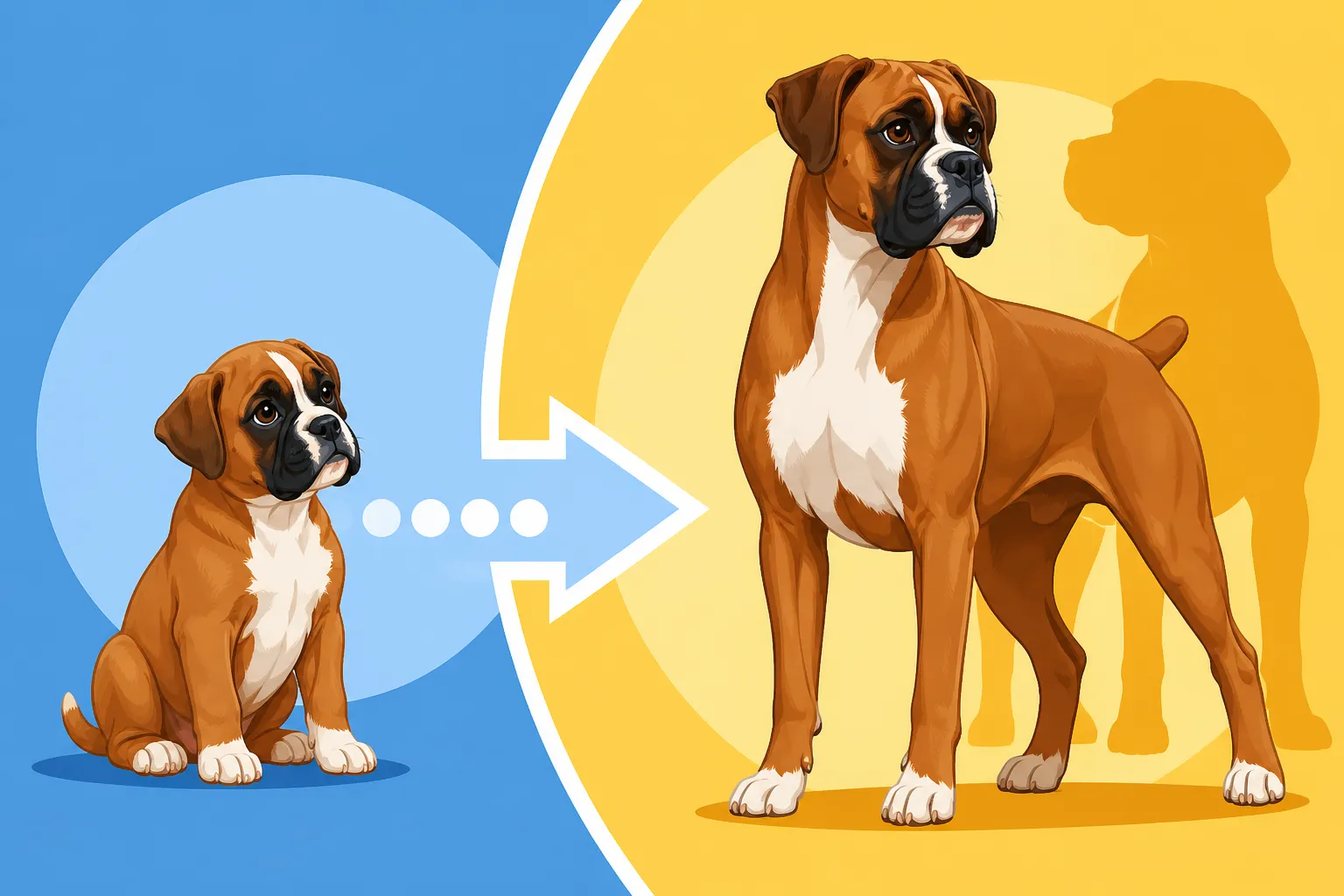
Whether a Boxer Puppy Is on Track for Seventy Pounds
It’s a totally common worry for any Boxer parent: you’re looking at your adorable, gangly puppy, and you’re wondering, "Is this little potato going to turn into the majestic, seventy-pound adult Boxer I’m envisioning, or are they falling behind?" It's a question that keeps many of us Boxer parents up at night, because we want to make sure our pups are healthy and thriving. This guide will walk you through typical Boxer puppy growth, what to expect, and how to tell if your furry friend is on a healthy trajectory towards their full adult size, easing your worries and providing practical insights.
Understanding Boxer Growth: More Than Just the Scale
When you first bring home a Boxer puppy, it feels like they grow in front of your eyes. One day they're a tiny bundle, the next they're practically a teenager. But this rapid growth phase often brings questions, especially if you're comparing your pup to others you see online or even to their siblings. It’s important to remember that every Boxer is an individual, and while there are averages, there’s a healthy spectrum of growth.
The Boxer Growth Curve: What's Normal?
Boxers, like all large breed dogs, have a distinct growth curve. They experience very rapid growth in their first six months, then a more moderate, but still significant, filling-out phase until they reach full maturity. For many Boxers, this means they’ll reach most of their height by 9-12 months, but they won't fully "fill out" with all that incredible muscle and chest breadth until they're closer to 18 months to even two or three years old. This is part of why The Boxer Puppyhood That Lasts Three Years is such a common saying among us.
It’s tempting to want your puppy to reach a certain weight by a certain age, but focusing too much on exact numbers can lead to unnecessary anxiety or, worse, overfeeding. Instead, think about consistent, healthy progress. Your vet will often track your puppy's weight and height at appointments to ensure they're following a normal trajectory for their breed and individual genetics. You'll likely see big jumps in weight early on, then a slowing as they approach their adult height and begin to broaden.
Remember that male Boxers typically mature into larger, heavier dogs than females. While a male might easily hit and exceed seventy pounds, a female might top out closer to sixty to sixty-five pounds and be perfectly healthy and structurally sound. Genetics from both parents play a huge role here, so if you know the size of your puppy’s dam and sire, you'll have a better idea of their potential adult stature.
Why a "Target Weight" Isn't a Guarantee
The idea of a "seventy-pound Boxer" is a common benchmark, and it’s true that many healthy, well-muscled male Boxers will easily reach or exceed this weight. However, it’s not a hard-and-fast rule for every Boxer. There’s a natural range even within a breed, influenced by genetics, diet, and overall health. Think of it like people – we all have different natural builds. Some Boxers are naturally more compact, while others are longer-bodied and more substantial.
Focusing solely on hitting a specific weight can be misleading. A seventy-pound Boxer could be a perfectly lean, athletic specimen, or they could be an overweight dog carrying too much fat, which is never healthy. Conversely, a sixty-five-pound male Boxer might be incredibly fit and powerful, demonstrating excellent Protein and Fat for a Muscular Boxer balance. The breed standard, for instance, offers a weight range, not a single target. The male Boxer standard generally calls for 65-80 pounds, while females are usually 55-65 pounds. These are guidelines, not absolute mandates.
Your Boxer's skeletal structure and overall bone density also play a part. Some Boxers are more finely boned, while others are heavier-boned. Both can be healthy and within the breed standard. Instead of fixating on a number, it's far more beneficial to focus on their overall body condition, which we'll discuss in detail, and their energy levels and vitality. A happy, active, well-proportioned Boxer at 65 pounds is always preferable to an overweight, less active 70-pound Boxer.
Factors Influencing Your Boxer's Final Size
Several key factors determine just how big your Boxer puppy will get. The most significant, hands down, is genetics. Your puppy inherited traits from both parents, including their potential for size and build. If both parents were on the smaller end of the Boxer spectrum, it’s likely your pup will be too. Conversely, if you have a puppy from large, substantial parents, they’re more likely to grow into a bigger adult. A responsible breeder can give you an idea of the parents' weights and sizes, and often show you pictures of previous litters to help you visualize what to expect.
Nutrition is another massive piece of the puzzle. Feeding a high-quality, large-breed puppy food specifically formulated for proper growth is crucial. These foods are designed to support steady, controlled growth, which is vital for large breeds to prevent orthopedic issues later in life. Overfeeding, or feeding a diet too rich in certain nutrients, can actually cause problems by promoting too-rapid growth, putting strain on developing joints. We want strong, steady progress, not a race to the finish line.
Finally, general health and well-being play a role. A puppy that experiences chronic illness or severe parasitic infestations might have its growth temporarily stunted or otherwise impacted. Regular vet check-ups, appropriate vaccinations, and prompt treatment for any health issues are all part of supporting healthy development. Environmental factors, like appropriate exercise without overdoing it, also contribute to strong bones and muscles without undue stress.
How to Monitor Your Boxer Puppy's Development
It’s natural to want to track your Boxer puppy’s growth, and there are some really helpful, non-invasive ways to do it. These methods help you get a clear picture of their development without falling into the trap of obsessing over arbitrary weight numbers. The goal is to ensure a healthy, steady progression, not a sudden surge.
Weekly Weight Checks and Growth Charts
While an exact weight isn't the only thing that matters, regular weight checks can give you a good sense of your puppy's growth rate. For very young puppies, especially up to six months, weekly checks are a good idea. You can often weigh yourself, then weigh yourself holding the puppy, and subtract the difference. For a bigger puppy, a baby scale or even a pet scale (you can often find these at pet supply stores or sometimes borrow from your vet for a quick check) can be helpful. Online retailers like Amazon or Chewy also offer a variety of pet scales suitable for different sizes.
Once you have the weight, plot it on a growth chart. Many breed-specific charts are available, or your vet might provide one. This helps you visualize the curve and see if your puppy is consistently gaining weight at a healthy rate. What you’re looking for is a steady upward trend, not dramatic spikes or prolonged plateaus. If you notice a sudden drop in weight, or if your puppy isn't gaining weight for a couple of weeks, that's a signal to call your veterinarian. Consistent tracking helps you catch potential issues early.
Keep in mind that puppies can have growth spurts and then periods of "filling out" where the weight gain might seem slower. This is often normal. They might get tall and lanky first, and then gradually put on muscle and width. Understanding these phases will help you interpret the numbers more accurately.
Body Condition Scoring: Feeling, Not Just Seeing
This is arguably more important than just the number on the scale. Body Condition Scoring (BCS) helps you assess your Boxer's fat reserves and muscle mass by looking and feeling their body. It’s a hands-on approach that tells you if your dog is too thin, just right, or overweight. Most vets use a 9-point scale, where 4 or 5 is ideal.
Here’s how you can do a quick check:
- Ribs: Gently run your hands along your Boxer’s sides. You should be able to feel their ribs without pressing hard. They shouldn't be visibly prominent or "pokey," but you should definitely feel them under a thin layer of fat and skin. If you can’t feel them at all, they might be carrying too much weight. If they're extremely visible and sharp, your pup might be too thin.
- Waist: Look down at your Boxer from above. They should have a noticeable "tuck" or indentation behind their ribs, before their hips. This is their waist. If they look like a straight block from ribs to hips, or bulge out, they could be overweight.
- Abdominal Tuck: Look at your Boxer from the side. Their belly should tuck up slightly from their chest, not hang low or be parallel to the ground. A good Reading a Boxer's Ribs and Waist is key to ensuring their health.
Performing these checks regularly, perhaps weekly or bi-weekly, gives you a much better picture of their physical development than weight alone. It accounts for individual variations in bone structure and allows you to make subtle adjustments to their diet or exercise if needed.
When to Consult Your Veterinarian
Your veterinarian is your best partner in monitoring your Boxer puppy’s growth and overall health. While regular check-ups are standard, there are specific times when you should absolutely pick up the phone. If your puppy experiences a sudden, unexplained weight loss or a significant plateau in growth that lasts more than a couple of weeks, that's a red flag. These could be signs of underlying health issues, dietary problems, or even parasites that need attention.
Another reason to call the vet is if your puppy seems to be growing too fast, or if they appear noticeably "bow-legged" or have unusual gait changes. Rapid growth, especially in large breeds, can sometimes contribute to orthopedic problems like panosteitis or growth plate issues. Your vet can assess their gait, examine their joints, and advise on appropriate feeding to ensure Growth Limits on a Boxer Puppy's Joints are respected. Don't hesitate to reach out if you have concerns about their energy levels, appetite, or general demeanor, as these can also be indicators of healthy or unhealthy development.
Nurturing Healthy Growth: Diet and Exercise
Getting your Boxer puppy to their ideal adult weight and build is a marathon, not a sprint. It’s about making consistent, smart choices in their daily care, focusing on quality nutrition and appropriate physical activity. These foundations are crucial for long-term health, not just hitting a number on the scale.
Feeding for Steady Growth, Not Rapid Gain
The cornerstone of healthy Boxer puppy growth is a high-quality diet. Choose a puppy food specifically formulated for large breeds. These formulas are designed with a careful balance of protein, fat, and minerals (especially calcium and phosphorus) to support gradual, steady bone and muscle development. Too much of certain nutrients, or calories, can lead to accelerated growth, which puts undue stress on developing joints and can predispose them to orthopedic issues. A balanced diet is especially important when you consider Feeding a Boxer Puppy Through the Growth Year.
Always follow the feeding guidelines on the food packaging, but treat them as a starting point. Adjust the amount based on your puppy's individual activity level and body condition score. If your puppy is looking a little lean, you might add a tiny bit more; if they’re looking plump, reduce it slightly. Dividing their Daily Calories for a Seventy-Pound Boxer into two or three meals a day is ideal, especially for Boxers, to prevent overeating at once and help with digestion. This also reduces the risk of bloat later in life. You can explore a wide range of reputable large-breed puppy foods on platforms like Chewy, or even consider specialized fresh food services like Ollie that offer tailored meal plans designed for optimal growth.
Avoid feeding adult dog food too early, as it lacks the specific nutrient profile a growing puppy needs. Also, be mindful of treats. They add calories, and it's easy to overdo it, especially during training sessions. Choose healthy, low-calorie options, and factor them into your puppy’s daily caloric intake.
Appropriate Exercise for a Growing Boxer
Boxers are energetic dogs, even as puppies, but it’s critical to manage their exercise carefully during their growth phase. Their bones and joints are still developing, and too much high-impact activity can cause damage. While you might be tempted to let them run and jump endlessly, especially given their zest for life, moderation is key. Intense, long-duration exercise, or repetitive activities like jumping on and off furniture or long runs, should be avoided until their growth plates have closed, usually around 12-18 months of age.
Instead, focus on short, frequent play sessions on soft surfaces, like grass. Multiple short walks throughout the day are better than one long, strenuous hike. Free play in a secure yard is excellent, allowing them to self-regulate their activity. Mental stimulation through puzzle toys and training sessions is just as important as physical exercise for a growing Boxer and helps them burn energy in a safe way. As they get older, around 18 months, you can gradually increase the intensity and duration of their physical activity, but always monitor them for signs of fatigue or discomfort. Remember, a Boxer's short snout also means they can overheat quickly, so always be mindful of the temperature when exercising.
Avoiding Common Growth-Related Pitfalls
One of the biggest pitfalls Boxer owners can fall into is overfeeding with the goal of making their puppy "bigger." While a well-fed puppy grows, an overfed puppy often grows too fast, putting excessive strain on developing bones and joints. This can lead to orthopedic problems like hip or elbow dysplasia, even in Boxers from well-screened lines. Aim for lean, steady growth, not rapid bulk. A good gauge is always the body condition score – if you can't feel their ribs, they're probably carrying too much weight. If your Boxer needs to How Fast a Heavy Boxer Should Come Down, it's best to do it gradually.
Another common mistake is neglecting regular veterinary care. Those routine puppy visits aren't just for vaccines; they're also crucial for your vet to monitor your puppy's growth, identify any potential health concerns early, and offer tailored advice. They can catch issues like Heart Murmurs in a Boxer Puppy or other congenital problems that might impact growth or overall health.
Lastly, don't compare your Boxer puppy too much to other dogs, even other Boxers. Each dog is an individual. Focus on your puppy's health, energy, and body condition. Celebrate their progress, support their development with excellent care, and enjoy every moment of their journey to becoming a magnificent adult Boxer. The "seventy-pound" benchmark is just one aspect, and a healthy, happy Boxer of any size within the standard is a true treasure.
Disclaimer
This article is for general informational purposes only and does not constitute professional advice. Laws, prices and regulations vary by location and change over time. Consult a qualified professional for guidance on your specific situation.