Whether One Copy of the Boxer Myelopathy Gene Matters
Discovering your beloved Boxer's genetic test results can be a rollercoaster of emotions, especially when terms like "degenerative myelopathy" and "carrier" pop up. It's completely natural to feel a wave of anxiety, wondering if this means a future of illness for your companion. This guide aims to thoroughly demystify what it means for your Boxer to carry one copy of the gene associated with degenerative myelopathy (DM), offering clarity and peace of mind.
Unpacking Degenerative Myelopathy in Boxers
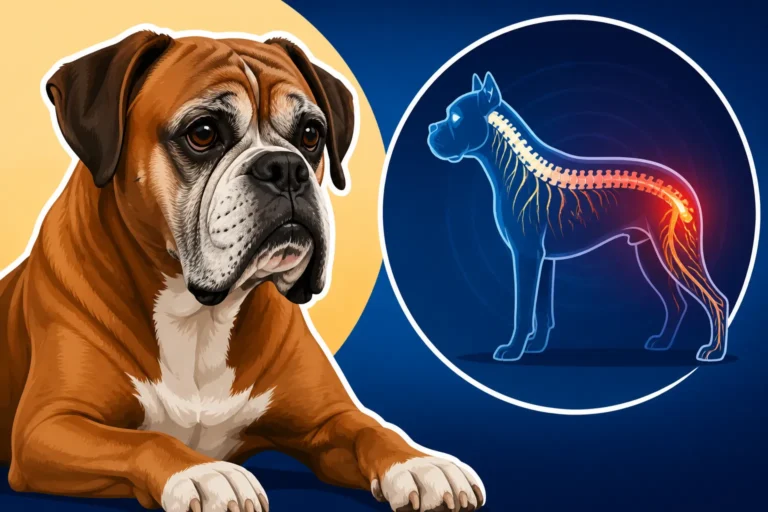
Degenerative Myelopathy (DM) is a term that strikes fear into the hearts of many dog owners, and for good reason. Often compared to amyotrophic lateral sclerosis (ALS) in humans, DM is a progressive, incurable neurological disease that affects the spinal cord. It's a cruel condition, slowly robbing dogs of their ability to walk and control their hind limbs, usually without any accompanying pain. For Boxer owners, this is particularly relevant because our breed is unfortunately overrepresented in cases of DM.
The reality of watching a once vibrant, bouncy Boxer slowly lose its coordination is absolutely heartbreaking. You might first notice a slight dragging of a back paw, a subtle wobble in their gait, or perhaps they struggle a bit more to get up after lying down. Over time, these symptoms worsen, progressing to severe weakness, ataxia (uncoordinated movement), and eventually, paralysis of the hind limbs. Some dogs may also lose bladder and bowel control. The disease typically affects middle-aged to older dogs, usually between 8 and 14 years of age, though symptoms can appear earlier or later. It's a relentless march that leaves families feeling helpless, as there is no cure, and treatments are primarily focused on supportive care to maintain quality of life for as long as possible. Understanding the true nature of DM is the first step in differentiating genuine risk from genetic predisposition.
The SOD1 Gene and Its Role in Boxer Myelopathy
The science behind Degenerative Myelopathy points to a specific genetic mutation in the SOD1 gene. This is where the terms "clear," "carrier," and "at-risk" come into play, and it's also where a lot of confusion, and frankly, unnecessary worry, can arise for Boxer families. When you get your Boxer tested for DM, the results will fall into one of these three categories based on the copies of the mutated SOD1 gene they possess.
Understanding the Genetic Classifications
A Boxer inherits two copies of every gene, one from each parent. For the SOD1 gene, these copies can either be "normal" (N) or "mutated" (A).
- Clear (N/N): A Boxer with two normal copies of the gene. This dog is not expected to develop DM and cannot pass the mutated gene on to its offspring.
- Carrier (N/A): A Boxer with one normal copy and one mutated copy of the gene. This is often where the most significant questions arise.
- At-Risk (A/A): A Boxer with two mutated copies of the gene. These dogs have a significantly higher risk of developing DM during their lifetime. However, it's crucial to understand that being "at-risk" does not guarantee they will develop the disease; it simply means they have the genetic predisposition. Some dogs with two copies of the gene never show clinical signs of DM, indicating other genetic or environmental factors might also play a role.
The key takeaway here, and what often causes the most alarm, is the "carrier" status. Many owners hear "mutated gene" and immediately jump to the conclusion that their dog is destined for sickness. But in the case of DM, having one copy of the mutated SOD1 gene does not mean your Boxer will develop the disease. Carriers are clinically normal; they do not show symptoms of DM because the single normal copy of the gene is sufficient for proper function. This is a critical distinction to grasp for anyone feeling worried about a carrier result.
Let's break down the genetic possibilities for clarity:
| Genetic Status | SOD1 Gene Copies | Risk of Developing DM | Ability to Pass on Gene |
|---|---|---|---|
| Clear | N/N | Extremely Low | No (only passes 'N') |
| Carrier | N/A | Extremely Low (negligible) | Yes (passes 'N' or 'A') |
| At-Risk | A/A | High (but not 100%) | Yes (only passes 'A') |
This table really highlights that for a pet Boxer, being a carrier is fundamentally different from being at-risk. It’s important not to confuse the two.
Implications of a Carrier Status for Boxer Owners
So, you've received results indicating your Boxer is a carrier (N/A) for the SOD1 gene. Now what? The most important thing for pet owners to understand is that for a Boxer who is not intended for breeding, a carrier status for DM holds very little significance for their individual health and lifespan regarding this specific disease.
For Your Pet Boxer's Health
If your Boxer is a beloved companion and not part of a breeding program, a carrier designation means, quite simply, that your dog is highly unlikely to ever develop degenerative myelopathy. They have one healthy copy of the gene, which provides all the necessary functionality. You won't see them watching a Boxer lose its back legs due to DM, nor will you experience the heartbreaking progression of the disease. This is a huge relief for many owners who have been living with the fear that "carrier" automatically means a future illness. Instead of worrying about DM, focus on the more common health challenges Boxers face, such as various cancers – after all, why cancer kills more Boxers than anything else is a much more pressing concern for our breed – or heart conditions like Boxer cardiomyopathy and the Holter monitor. Your carrier Boxer is generally just as healthy as a clear Boxer when it comes to DM. Keep up with their regular vet checks, ensure they get plenty of exercise, and feed them a high-quality diet, just as you would any other Boxer.
For Responsible Breeding Practices
Where carrier status does matter significantly is in the world of responsible Boxer breeding. Breeders have an ethical obligation to ensure the health of future generations, and genetic testing is a powerful tool in their arsenal. A reputable breeder will always conduct health screenings, including DNA tests for conditions like DM, before pairing dogs. Understanding the implications of a carrier status for breeding can help prospective puppy buyers identify a truly responsible breeder who prioritizes the long-term health of their lines. The health screening a Boxer breeder owes you should always include DM testing.
Here’s how carrier status impacts breeding decisions:
- Carrier (N/A) bred to Clear (N/N): This pairing will produce offspring that are 50% Clear (N/N) and 50% Carrier (N/A). Crucially, no puppies from this litter will be At-Risk (A/A) for developing DM. This is often an acceptable pairing for breeders who wish to retain valuable traits from a carrier dog in their lines while carefully managing the genetic risk.
- Carrier (N/A) bred to Carrier (N/A): This pairing is generally avoided by responsible breeders. It would produce offspring that are 25% Clear (N/N), 50% Carrier (N/A), and 25% At-Risk (A/A). This means there's a significant chance of producing puppies who could potentially develop DM.
- Carrier (N/A) bred to At-Risk (A/A): This pairing is highly irresponsible and should never occur. It would result in 50% Carrier (N/A) and 50% At-Risk (A/A) puppies, meaning every single puppy would either be a carrier or at-risk for developing DM.
The goal of genetic screening in breeding is to gradually reduce the frequency of the mutated gene within the breed while preserving genetic diversity and other desirable traits. It's a balancing act, and simply removing all carriers from the gene pool might inadvertently reduce genetic diversity too much, leading to other problems down the line. Instead, thoughtful pairings are key. If you're considering a Boxer puppy, always ask about the parents' DM test results. This commitment to transparency and health is a hallmark of a good breeder, and it's a topic that should be freely discussed alongside other inherited conditions like subaortic stenosis in a Boxer puppy.
Beyond DM: Comprehensive Care for Your Boxer
While understanding the nuances of the SOD1 gene is important, particularly for breeders, for the average Boxer owner whose dog is a carrier, the focus should quickly shift back to overall health and preventative care. Your Boxer being a carrier for DM does not mean you'll be caring for a Boxer past eight with paralysis from this specific condition. Instead, think about the broader picture of Boxer health.
Focusing on Overall Health, Not Unfounded Fears
Boxers are a fantastic breed, full of life and love, but they do come with their share of health challenges. Instead of fixating on a carrier status that won't impact your pet, turn your attention to the health issues that are genuinely prevalent. Cancer, as mentioned, is a significant concern, but so are cardiac issues, with Arrhythmogenic Right Ventricular Cardiomyopathy (ARVC) being a well-known foe. Regular check-ups with your veterinarian are paramount. These visits are critical for early detection of potential problems, from finding a lump on a Boxer early to monitoring heart rhythms.
Another common concern for Boxers, especially as they age, can be orthopedic issues like hip dysplasia or spondylosis, which can cause similar hind-end weakness symptoms to DM. However, these are distinct conditions. If you notice any changes in your Boxer's gait or mobility, it's essential to consult your vet immediately to get an accurate diagnosis. The SOD1 test for Boxer myelopathy is a specific tool, and it won't diagnose other conditions that might mimic DM's symptoms. A thorough veterinary examination is always necessary to pinpoint the exact cause of any health changes.
The Value of Pet Insurance
Considering the breed's predisposition to various health issues, a solid pet insurance policy can be an absolute lifesaver. Brands like Healthy Paws offer comprehensive coverage that can help cushion the financial blow of unexpected illnesses or accidents. Knowing that your Boxer is a DM carrier might initially make you worry about future claims, but rest assured, a carrier status won't affect coverage for actual health issues your dog might face. Pet insurance is designed to help with significant veterinary bills, from cancer treatments to emergency surgeries for bloat.
For instance, if your Boxer were to develop cancer – a much higher probability than developing DM from a carrier status – having a plan from Healthy Paws could significantly reduce your out-of-pocket expenses for chemotherapy or radiation. Or, if they needed medication for an arrhythmia, insurance could help cover those ongoing costs. It's about being prepared for the real health battles our Boxers sometimes face, rather than stressing over a genetic marker that, for a pet, essentially amounts to nothing more than trivia. Enrolling your Boxer early, before any pre-existing conditions arise, is always the smartest move, so whether pet insurance pays off for a Boxer often comes down to proactive planning.
At the end of the day, your Boxer being a carrier for the DM gene means very little for their personal health. Cherish them, care for them, and focus on the joy they bring into your life, knowing that this specific genetic marker isn't a shadow hanging over their future.
Disclaimer
This article is intended for informational purposes only and does not constitute veterinary advice. Always consult with a qualified veterinarian for any health concerns or before making any decisions about your pet's care.