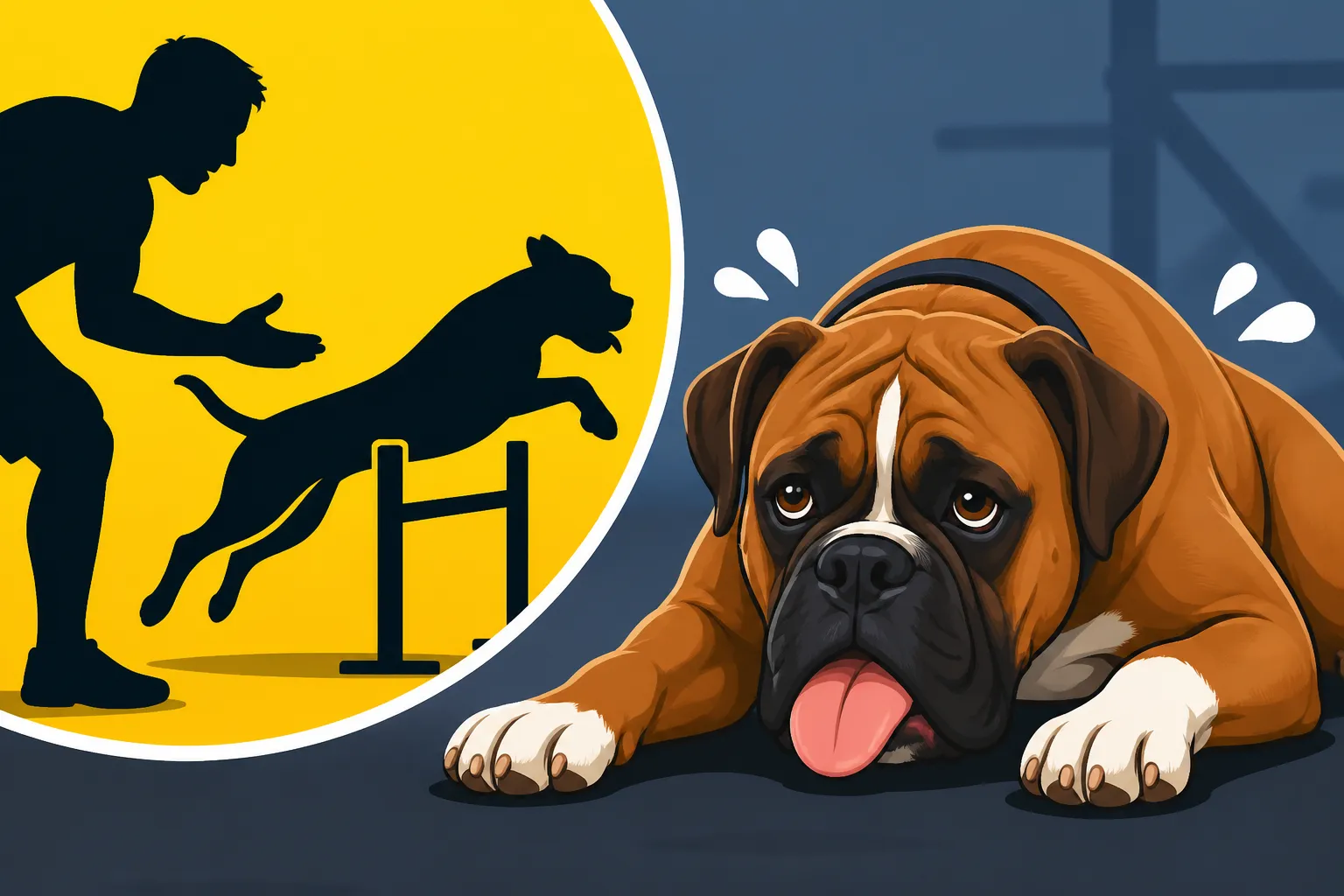
Why a Boxer Stops Working Mid-Session
There’s nothing quite like the boundless enthusiasm of a Boxer, especially when they’re in the mood to learn! But if you’re a Boxer owner, you’ve likely experienced that moment: your smart, eager pup is doing great, nailing commands, and then suddenly… poof. Their focus vanishes, their ears might perk up at a leaf across the yard, or they simply sit down and stare off into space, effectively ending your training session mid-flow. This guide will explore the common reasons behind this quintessential Boxer behavior and arm you with practical strategies to keep your energetic companion engaged and learning.
Understanding the Boxer Brain: Energy, Excitement, and Attention Span
Boxers are a truly unique breed, known for their playful spirit, unwavering loyalty, and sometimes, their incredible ability to go from laser-focused to utterly distracted in a nanosecond. It’s not personal, we promise! This tendency often stems from their innate characteristics and how their bright, excitable minds are wired.
The "Forever Puppy" Mentality
Many Boxer owners affectionately refer to their dogs as "the Peter Pans of the dog world," and for good reason. Boxers tend to retain their puppy-like exuberance and playful nature well into adulthood, often acting like overgrown puppies until they're three years old or even older. This extended "puppyhood" means their mental maturity and ability to sustain focus often lag behind other breeds of similar age. While this makes them incredibly fun companions, it also means their attention can be easily hijacked by the sheer joy of existence.
Imagine you're trying to teach your two-year-old Boxer a new trick in the backyard. They might be doing wonderfully, showing off their intelligence, but then a butterfly flutters by, a new smell wafts in from next door, or a distant siren catches their ear. Suddenly, the complex task you're asking of them pales in comparison to the fascinating world around them. It's not a deliberate defiance; it's simply that their excitable, still-developing brain finds novelty and external stimuli far more compelling than repetitive drills. This youthful exuberance, while charming, can certainly make structured training a challenge, requiring patience and a flexible approach from their human companions. This very characteristic is why many owners will tell you Why a Boxer Acts Like a Puppy Until Three.
Short Attention Spans and Boredom
Boxers are intelligent dogs, but they are also easily bored. If a training session becomes too repetitive, too long, or too dull, a Boxer will often simply "check out." They thrive on variety and mental stimulation. Asking a Boxer to perform the same "sit, stay, come" sequence ten times in a row, with the same treat and in the same spot, is a surefire way to have them decide that watching dust motes float by is a more engaging activity.
Their minds are quick, always seeking new challenges and experiences. If they perceive a task as monotonous or unrewarding, they'll swiftly lose interest. This isn't laziness; it's a testament to their need for engagement. A Boxer needs to feel like they are solving a puzzle, not just going through the motions. If you find your Boxer suddenly flopping down or gazing into the distance, it’s a strong signal that they've reached their mental limit for that particular exercise or that they're simply not entertained. Understanding Why Repetition Loses a Boxer is crucial for effective Boxer training, highlighting the need to keep sessions fresh and exciting.
Over-Arousal and "Zoomies"
Sometimes, a Boxer stops working mid-session not because they're bored, but because they're actually too excited. Boxers have an incredible amount of energy and can become over-aroused very quickly. This heightened state of excitement can make it difficult for them to process commands or maintain focus. What might start as enthusiastic participation can quickly tip into a state where their brain goes into overdrive, making them unresponsive to cues.
You might see this manifest as "zoomies," where they suddenly tear around the yard at top speed, or they might start mouthing, pawing, or jumping excessively. In these moments, their ability to learn or follow instructions is severely diminished because their adrenaline is pumping, and their focus has shifted from the task at hand to burning off that intense energy. Recognizing the signs of over-arousal – panting heavily even when it's not hot, frantic movements, or an inability to make eye contact – is key. When your Boxer reaches this point, pushing through the training is usually futile; it's better to give them a break, let them decompress, or redirect their energy into a vigorous play session before trying to resume any structured work.
Environmental Factors That Pull Focus
Even the most dedicated Boxer can be thrown off their game by what's happening around them. Their keen senses and natural curiosity mean they're constantly taking in their surroundings, and sometimes, those surroundings are simply too interesting to ignore.
Distractions, Distractions Everywhere
The world is an incredibly stimulating place for a dog, and a Boxer's naturally curious and alert nature means they pick up on everything. A training session in your quiet living room might go smoothly, but step outside into the yard, a park, or even a different room in your house, and suddenly the challenges multiply. A distant dog barking, a child riding a scooter down the street, the scent of a squirrel that passed by an hour ago, or even just a gust of wind rustling the leaves can completely derail your Boxer's concentration.
For a Boxer, these aren't just background noises or fleeting sights; they are significant events demanding attention. Their strong prey drive, their social nature, and their sheer curiosity mean that these external stimuli often take precedence over your verbal cues. It's like trying to do your taxes with a marching band going by your window – possible, but incredibly difficult. To combat this, it’s important to introduce distractions gradually and systematically. Start training in the calmest environment possible, then slowly add minor distractions, building up to more complex settings. A structured online training program, like those offered by BAXTER & Bella, often emphasizes starting in controlled, low-distraction environments and progressively adding complexity, recognizing that dogs, especially Boxers, need to master skills in one setting before generalizing them to another.
Heat and Humidity: A Boxer's Kryptonite
Boxers are a brachycephalic (flat-faced) breed, which means they have a shortened snout and often smaller, more constricted airways compared to longer-nosed dogs. While this gives them their distinctive and beloved appearance, it also makes them incredibly susceptible to overheating, especially in warm or humid conditions. Their ability to pant effectively to cool themselves down is compromised, and they can quickly become overheated and uncomfortable.
When a Boxer is struggling with heat, their primary focus shifts from "what do you want me to do?" to "how do I get cool?" Their brain function can be impaired, and they certainly won't be in a learning mindset. Signs of heat distress can range from excessive panting and drooling to lethargy and stumbling. If your Boxer suddenly quits mid-session on a warm day, a quick check of their condition and the ambient temperature is vital. Always consider the weather when planning outdoor training. Early mornings or late evenings are often the safest times during warmer months. Providing plenty of water and seeking shade is non-negotiable. Cooling vests, which you can easily find on Amazon, can also be a lifesaver for Boxers during hotter training sessions, helping to regulate their body temperature and maintain their comfort and focus. Understanding How Fast a Flat-Faced Boxer Overheats is not just about exercise limits, but also about their mental capacity.
Hunger, Thirst, and Physical Discomfort
Just like us, dogs can't perform their best if their basic needs aren't met or if they're experiencing discomfort. A Boxer who is hungry, thirsty, or feeling unwell will prioritize these needs over training. If your session is scheduled too close to mealtime and your Boxer is feeling peckish, their nose will be more interested in sniffing out crumbs than listening to your commands. Similarly, dehydration can lead to lethargy and a complete lack of interest.
Beyond basic needs, consider any underlying physical discomfort. An unnoticed ache from an old injury, an upset stomach, or even just feeling a bit "off" can make a Boxer withdraw from engaging. Dogs are experts at masking pain, but a sudden refusal to participate in something they usually enjoy can be a subtle sign that something is amiss. Before starting a session, ensure your Boxer has had a chance to relieve themselves, has access to fresh water, and isn't showing any obvious signs of illness or injury. A comfortable and well-fed Boxer is a more receptive and engaged learner.
Your Training Approach and Its Impact
Sometimes, the way we structure our training sessions can inadvertently contribute to our Boxer's decision to "check out." Our enthusiasm might lead us to push too far, or we might not be making the training as rewarding as it needs to be for such an active and intelligent breed.
Length and Intensity of Sessions
Boxers, for all their energy, often have surprisingly short attention spans when it comes to formal training. Trying to cram a 30-minute training block into one go is often too much for them, especially if they are young or new to a particular behavior. Their minds will wander, their body will get restless, and their enthusiasm will wane.
Instead of long, drawn-out sessions, Boxers thrive on short, frequent bursts of training. Think of it as hitting the gym for high-intensity interval training rather than a long, monotonous jog. Five to ten minutes, two to three times a day, can be far more effective than one marathon session. The goal is to always end on a high note – finish the session while your Boxer is still eager and successful, leaving them wanting more. This builds positive associations with training and prevents them from getting bored or overwhelmed. If you're wondering Why Short Sessions Suit a Boxer's Attention Span, it really comes down to their mental wiring and their need for constant novelty and engagement.
Lack of High-Value Rewards
Boxers are generally very motivated by food and play, but not all rewards are created equal. If your Boxer is suddenly losing interest, it might be that your current reward isn't "high-value enough" to compete with the various distractions and exciting thoughts pinging around their head. A piece of their regular kibble might be fine for a simple "sit" in a quiet room, but it won't cut it when you're asking for a complex chain of behaviors in a stimulating environment.
High-value rewards are those things your Boxer absolutely loves. This could be small pieces of boiled chicken, cheese, hot dogs, or a favorite squeaky toy. The key is to experiment and find what truly motivates your individual Boxer. Moreover, vary your rewards! Don't always use the same treat or toy. Keep them guessing and excited about what they might get. Sometimes, the reward isn't food at all, but a quick game of tug or a vigorous belly rub. If your Boxer is tuning out, consider if your reward is genuinely worth their undivided attention. The right motivation can make all the difference in keeping their focus. It's important to know Rewards a Boxer Will Work Hard For and adjust them to the difficulty of the task and the level of distraction.
Inconsistent Cues and Frustration
Imagine someone constantly changing the rules of a game you're trying to play. You'd get frustrated and probably quit, right? The same applies to your Boxer. If your cues (verbal commands or hand signals) are inconsistent, unclear, or you're asking for too much too soon, your Boxer can become confused and frustrated, leading them to simply shut down.
This might look like they're being stubborn or disobedient, but often, it's a sign that they genuinely don't understand what you're asking. Are you using different words for the same command? Are your hand signals always the same? Are you expecting them to perform a behavior perfectly in a new environment when they've only mastered it in a quiet one? Dogs learn through clear communication and consistent repetition of the same information. If they're constantly trying to guess what you want, they'll quickly become overwhelmed and decide it's easier to just disengage. It's our responsibility as trainers to be clear, fair, and patient, ensuring our Boxers have every opportunity to understand and succeed.
| Reason for Disengagement | Common Boxer Behaviors | Quick Solutions During Session | Long-Term Training Adjustments |
|---|---|---|---|
| Over-Excitement | Zoomies, frantic movements, excessive pawing/mouthing, loss of eye contact, hard staring at distractions. | Take a short break, offer water, do a quick "sniffari" (let them sniff around), throw a toy for active release. | Shorten sessions, use high-value rewards, introduce distractions gradually, incorporate play breaks. |
| Boredom/Repetition | Laying down, looking away, yawning, sniffing the ground, slow responses, lack of enthusiasm. | Change the exercise, end the session on a positive note, switch to a fun game. | Vary exercises, use different environments, incorporate novel rewards, keep sessions short and unpredictable. |
| Distraction Overload | Staring at other dogs/people, fixating on smells, ignoring cues completely. | Move to a quieter spot, physically block the distraction (if safe), use a more exciting treat/toy to regain focus. | Start in quiet areas, slowly add low-level distractions, practice "look at me" cues, build strong foundational behaviors. |
| Physical Discomfort | Lip licking, yawning, stretching excessively, shifting weight, reluctance to move, heavy panting (if hot). | Check for heat stress, offer water, allow rest, gently check paws/body for injury. Stop if signs persist. | Ensure proper hydration and comfort, avoid extreme temperatures, consult vet for suspected pain, adjust exercise to physical condition. |
| Confusion | Slow, hesitant responses, "deer in headlights" look, trying multiple behaviors, looking at you for clues. | Break down the exercise into smaller steps, go back to a previously mastered skill, use clearer cues. | Practice consistency with cues, ensure clear communication, don't rush through steps, use luring and shaping effectively. |
Strategies for Keeping Your Boxer Engaged
Now that we understand why your Boxer might be tuning out, let’s talk about concrete strategies you can implement to keep their intelligent, energetic minds focused and ready to learn.
Keep it Short, Sweet, and Varied
This is perhaps the golden rule for training a Boxer. Their attention spans are simply not built for long, drawn-out drills. Instead, aim for multiple short training sessions throughout the day. Think of "micro-sessions" lasting anywhere from two to five minutes each. You can squeeze these in during commercial breaks, while waiting for the kettle to boil, or even during a walk.
Within these short bursts, focus on variety. Don't do the same three commands in the same order every time. Mix it up! Incorporate different types of exercises – some obedience, some tricks, some mental games like finding hidden treats. You can also vary the location. One session might be in the living room, the next in the hallway, another in the backyard. This constant novelty keeps your Boxer's brain engaged and prevents boredom from setting in. Remember to always end on a positive note, with a success and a big reward, leaving them feeling accomplished and excited for the next session. This approach makes training feel less like work and more like a fun game, which is exactly what a Boxer needs.
Manage the Environment First
Setting your Boxer up for success means controlling their environment as much as possible, especially in the early stages of learning a new skill. Trying to teach a complex command at a bustling dog park is like trying to learn to play the violin at a rock concert – it’s just too much input.
Start your training in a calm, low-distraction environment, like a quiet room in your house or your securely fenced backyard when no one else is around. Once your Boxer consistently performs the desired behavior in this quiet setting, you can slowly and incrementally introduce distractions. Start with very mild distractions, like having a family member walk by at a distance, or training near an open window with distant sounds. Gradually increase the level of distraction over many, many sessions, never overwhelming your dog. Remember, success breeds success. By managing the environment, you empower your Boxer to focus on you and the task at hand, rather than the myriad of fascinating things happening around them.
Boost Motivation with Irresistible Rewards
For a Boxer, the reward needs to be worth the effort and the distraction. If your Boxer is losing focus, it's often a sign that your current reward isn't hitting the mark. This is where you become a reward detective! What does your Boxer absolutely go crazy for? For many Boxers, high-value food treats are incredibly motivating. Think small pieces of cooked chicken, cheese, hot dogs, or even specially formulated soft, smelly training treats. You can find a huge variety of training treats on Amazon, often in bulk, which can be a cost-effective way to keep your Boxer motivated.
Beyond food, consider play. Some Boxers are equally, if not more, motivated by a quick game of tug or fetch with a favorite toy. The key is to make the reward exciting and sometimes unpredictable. Don't always show them the treat before they perform; sometimes, the surprise of a super delicious morsel can be a huge motivator. Vary your rewards too – switch between different treats, toys, or even praise and affection. This keeps your Boxer engaged and eager to see what amazing thing they might earn next. Understanding Whether a Boxer Trains Better for Food or Play is unique to each dog, so be sure to observe and adapt!
Read Your Boxer's Body Language
Your Boxer is constantly communicating with you, even when they're not making a sound. Learning to read their body language is a powerful tool for preventing disengagement and knowing when to adjust your training. Subtle cues can tell you if they're getting bored, overwhelmed, or physically uncomfortable.
Signs of losing focus or mild stress can include:
- Head turns or looking away: They're actively trying to avoid eye contact with you or the task.
- Sniffing the ground excessively: A displacement behavior, showing they're trying to de-stress or are bored.
- Yawning or lip licking (when not tired or hungry): Also displacement behaviors, indicating stress or confusion.
- Slow or hesitant responses: They might eventually do the command, but there's a delay and lack of enthusiasm.
- Suddenly sitting or lying down: A clear sign they're opting out.
- Excessive panting (when not hot): Can indicate stress or over-arousal.
If you notice these signs, it's your cue to make a change. Either make the task easier, increase the value of your reward, take a short break, or end the session. Pushing a Boxer when they're already checked out will only lead to frustration for both of you and can sour their feelings about training. By paying close attention to these signals, you can adapt your approach, maintain their trust, and ensure training remains a positive and productive experience.
Disclaimer
This article is for general informational purposes only and does not constitute professional advice. Laws, prices and regulations vary by location and change over time. Consult a qualified professional for guidance on your specific situation.