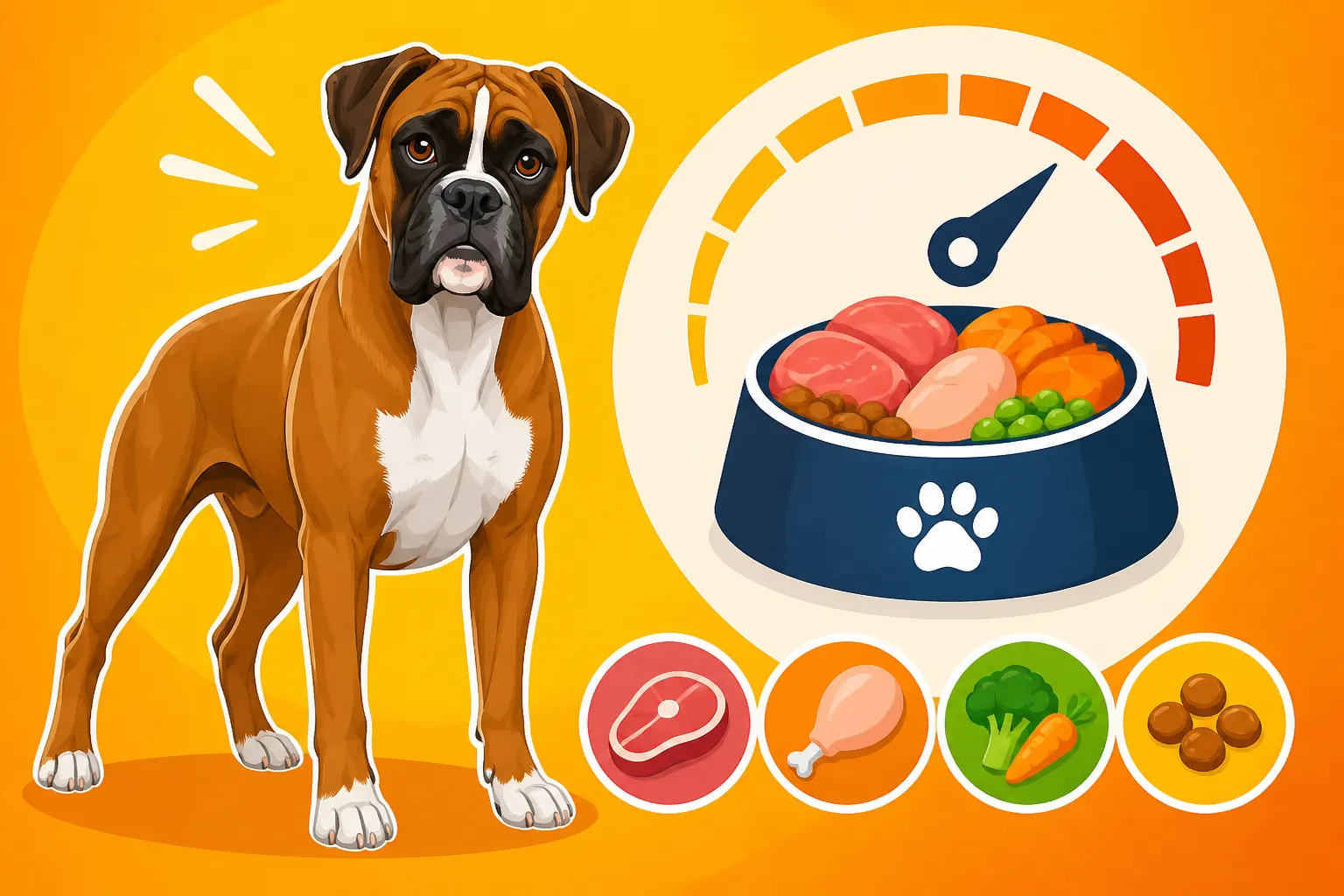
Daily Calories for a Seventy-Pound Boxer
It’s a common dilemma for every Boxer owner: you stand there, bag of kibble in hand, staring at your magnificent, seventy-pound companion, and wonder, "Am I feeding them enough? Too much? What's the magic number?" Getting your Boxer's daily calorie intake just right feels like solving a complex puzzle, especially when they have all that muscle and energy. This guide will help you understand the science behind those calories and how to tailor them perfectly for your 70-pound Boxer, ensuring they stay lean, healthy, and full of that wonderful Boxer zest for life.
The Calorie Equation: Understanding Your Boxer's Energy Needs
Figuring out how much to feed your Boxer isn't just about grabbing a cup and scooping. It starts with understanding their baseline energy requirements and then adjusting for their unique life and activity levels. Think of it as a personalized diet plan for your best friend.
Basal Metabolic Rate and Resting Energy Requirement
Every living creature, even when simply resting, burns calories to keep its body functioning – breathing, circulating blood, digesting food, maintaining body temperature. This is known as the Basal Metabolic Rate (BMR). For dogs, we often use a slightly more practical measure called the Resting Energy Requirement (RER), which is the number of calories needed to sustain basic bodily functions in a calm, non-exercising state.
For a 70-pound Boxer, which is roughly 31.8 kilograms, we can estimate their RER. While exact formulas can be a bit scientific, a general approximation places a 70-pound dog's RER somewhere around 1200-1300 calories per day. Now, before you panic and drastically cut your Boxer's food, understand that this is the absolute minimum needed at rest. Your Boxer isn't a statue; they're an active, vibrant dog, and their actual needs will be significantly higher than this baseline. It's simply the starting point for our calculations.
Activity Levels and Metabolic Modifiers
The RER is just the foundation. From there, we apply a "metabolic modifier" or "activity factor" to account for everything else your Boxer does in a day. This is where the individuality of your Boxer truly comes into play. Is your 70-pound Boxer a couch potato who only gets short walks? Or are they a high-energy athlete who runs for miles and plays fetch for hours? Each scenario drastically changes their caloric needs.
For instance, a spayed or neutered adult dog with a moderate activity level might need about 1.6 times their RER. An intact, highly active dog could require 2.0 to 2.5 times their RER, or even more if they're a working dog or involved in intense sports. Puppies, with their rapid growth and boundless energy, have even higher multipliers. The trick is to honestly assess your Boxer's typical day. Boxers are inherently energetic and tend to fall into the "active" category for most of their lives, so rarely will their needs be at the lowest end of the spectrum.
How Activity Shapes a 70-Pound Boxer's Daily Intake
The Boxer breed is renowned for its boundless energy and enthusiasm. This isn't a breed that's content with just a leisurely stroll around the block. Their activity level is probably the single biggest determinant of how many calories they truly need each day.
The Energetic Boxer: More Than Just a Walk Around the Block
A 70-pound Boxer, even one on the calmer side, typically requires a good sixty to ninety minutes of moderate to vigorous exercise daily. This isn't just about burning off excess energy; it's crucial for maintaining their muscle tone, cardiovascular health, and mental well-being. Think about a game of fetch in the park, a brisk jog with you, or an extended play session with another dog. These activities burn a significant number of calories.
If your Boxer gets consistent, high-intensity exercise—say, daily runs or participation in dog sports like agility—their caloric expenditure will be much higher than a Boxer who only gets leashed walks. It’s a common pitfall to underestimate just how much energy these dogs expend, especially when they're zooming around the yard or engaging in their characteristic "boxer dance" with another canine friend. Keep in mind that a Boxer’s flat face means they can overheat quickly, so Boxer Exercise Needs and the Heat That Limits Them is essential reading for planning their physical activity.
Adjusting for the "Weekend Warrior" vs. the Everyday Athlete
Not every day is the same, right? Your Boxer might have a super active weekend, hiking or spending hours at the dog park, then a quieter week with fewer opportunities for strenuous exercise. This is where your calorie calculations need to be flexible. A "weekend warrior" Boxer might need a higher calorie intake on those active days, but if their weekdays are significantly less active, maintaining that same intake could lead to gradual weight gain.
It's tempting to feed the same amount every day for simplicity, but a truly well-managed diet for an active Boxer often means subtle adjustments. On days with higher activity, a little extra protein or a healthy treat might be warranted. On quieter days, a slight reduction might be necessary. This doesn't mean meticulously counting every single calorie, but rather being mindful of the energy balance. Consistency in their base diet, augmented by thoughtful additions or subtractions, is key to preventing them from becoming either too lean or carrying extra pounds.
Beyond the Scale: Other Factors Affecting Calorie Needs
While weight and activity are huge pieces of the puzzle, a Boxer's caloric requirements are also influenced by a host of other individual factors that you absolutely cannot ignore. These elements can swing their daily needs by hundreds of calories, making blanket recommendations tricky.
Age, Spay/Neuter Status, and Health Conditions
A Boxer puppy, with its rapid growth and relentless energy, needs significantly more calories per pound of body weight than an adult dog. They're building bones, muscles, and organs, and this intense developmental period demands serious fuel. Conversely, as a Boxer ages and becomes a senior citizen, their metabolism naturally slows down, and their activity levels often decrease. An older Boxer might need fewer calories to maintain a healthy weight, sometimes as much as 20-30% less than their prime adult years. It’s important to pay attention to What Changes in a Boxer After Seven to understand these shifts.
Spaying or neutering your Boxer also has a profound impact. After these procedures, a dog's metabolism often slows down, making them more prone to weight gain if their caloric intake isn't adjusted. Many owners overlook this, continuing to feed the same amount, which leads to those extra pounds creeping on. Furthermore, certain health conditions can influence calorie needs. A Boxer with Boxer Colitis and the Young Dogs It Hits might need a specific diet that supports gut health, and while the total calorie count might remain similar, the type of food and its digestibility become paramount. Dogs recovering from surgery or illness might need a temporary boost in calories to aid healing, while others on certain medications might need less. It's always best to consult your vet for personalized advice when health issues are involved.
Food Quality and Macronutrient Balance
Not all calories are created equal. The source of those calories—whether they come from high-quality protein, healthy fats, or easily digestible carbohydrates—matters immensely for a Boxer. A diet rich in animal-based protein and moderate fats is ideal for maintaining their impressive musculature and providing sustained energy. Highly digestible ingredients mean your Boxer's body can utilize more of the nutrients, reducing waste and ensuring optimal health. Cheap fillers, on the other hand, provide "empty" calories that might fill your Boxer up but offer little nutritional value, potentially leaving them hungry sooner or impacting their overall vitality. This is why paying attention to Protein and Fat for a Muscular Boxer is so important.
Consider the brand and type of food you're offering. A premium kibble formulated for active large breeds, or even fresh food options like those offered by Ollie, often pack more nutritional punch per calorie than a generic budget brand. If you're using a service like Chewy to order your dog's food, you have a vast array of options to research ingredients and caloric density. The caloric density (kcal/cup or kcal/kg) of different foods varies wildly. A dense, nutrient-rich food will require smaller portions to meet the same calorie target as a less dense, lower-quality food. Understanding these differences prevents both overfeeding and underfeeding, even when the "scoop" size looks similar.
Putting it into Practice: Calculating and Measuring Your Boxer's Food
Once you have a handle on the various factors influencing your Boxer's caloric needs, it's time to translate that knowledge into actual feeding. This is where precision and consistency become your best friends in ensuring your Boxer receives the right amount of fuel.
Deciphering Food Labels and Calorie Density
Every bag or package of dog food is legally required to list its caloric content, usually expressed as kilocalories per kilogram (kcal/kg) or kilocalories per cup (kcal/cup) if it's kibble. This is the most crucial piece of information you need. Don't rely solely on the "feeding guide" chart on the bag; while a good starting point, those are generalized recommendations. For a 70-pound Boxer, you'll want to calculate their specific needs, then match that to the food's density.
For example, if your 70-pound Boxer needs roughly 2200 calories per day, and their food has 400 kcal/cup, you'd feed 5.5 cups per day. Simple math, right? The challenge is measuring that accurately. A standard measuring cup used for baking isn't always precise enough for dog food, as kibble density varies. Investing in a digital kitchen scale available on Amazon, or a dedicated food scoop that provides gram measurements, is a game-changer. This ensures you're consistently giving your Boxer the exact amount of food you've calculated, taking the guesswork out of their daily meals.
The Importance of Consistent Feeding Schedules
Boxers thrive on routine, and meal times are no exception. Splitting your Boxer's daily calorie allowance into two meals, morning and evening, is generally recommended. This not only helps manage hunger but is also a crucial preventative measure against bloat, a life-threatening condition common in deep-chested breeds like Boxers. Eating smaller meals reduces the amount of air swallowed and prevents the stomach from becoming overly distended. This is why Why a Boxer's Meals Have to Be Split and Timed is such important reading for all Boxer owners.
| Activity Level (70lb Boxer) | Metabolic Modifier | Est. Daily Calorie Needs | Meal Frequency | Example Food Volume (400 kcal/cup) |
|---|---|---|---|---|
| Sedentary/Spayed/Neutered | 1.4-1.6x RER | 1680 – 1920 kcal | Twice daily | 4.2 – 4.8 cups total |
| Active Adult | 1.8-2.0x RER | 2160 – 2400 kcal | Twice daily | 5.4 – 6.0 cups total |
| Highly Active/Working | 2.2-2.5x RER | 2640 – 3000 kcal | Twice daily | 6.6 – 7.5 cups total |
| Growing Puppy | 2.0-3.0x RER | 2400 – 3600+ kcal | 2-3 times daily | 6.0 – 9.0+ cups total |
Note: RER (Resting Energy Requirement) for a 70lb (31.8kg) Boxer is approximately 1200 kcal/day. These are estimates; always consult your vet.
This table gives you a framework. For an active, 70-pound Boxer, aiming for the "Active Adult" range is usually a good starting point, perhaps 2200-2400 calories per day. However, always remember the "Resting Energy Requirement" is just a base, and you should always be watching your dog's body condition. Feeding a Boxer Twice a Day explains this in more detail, highlighting how consistent, portion-controlled meals support digestive health and satiety.
Keeping Your Boxer Lean and Healthy: Monitoring and Adjusting
Even with all the calculations in the world, your Boxer's body is the ultimate feedback system. Watching their physical condition and making subtle adjustments to their diet is a continuous process. You can't just set it and forget it!
The Eye Test and the Hand Test: Assessing Body Condition
The most important tool for assessing your Boxer's calorie intake isn't a measuring cup; it's your eyes and your hands. You should be able to clearly see a tuck-up at their waist when looking down from above, and a visible abdominal tuck from the side. When you run your hands along their sides, you should be able to easily feel their ribs, but not see them protruding sharply. This "rib test" is a hallmark of Reading a Boxer's Ribs and Waist and indicates they are at a healthy weight.
Veterinarians use a Body Condition Score (BCS) system, typically on a 1-5 or 1-9 scale, to objectively assess a dog's fat reserves. A score of 3/5 or 5/9 is generally considered ideal. If your Boxer is looking a bit more "barrel-chested" with no discernible waist, or if you can't easily feel their ribs without pressing, they might be carrying extra weight. Conversely, if their ribs, hip bones, or vertebrae are prominent without pressing, they might be too thin. This regular assessment empowers you to make informed decisions about their food intake.
When to Adjust and How to Do It Gradually
If your Boxer's body condition score is trending high, indicating they're gaining weight, it's time to reduce their calorie intake. But don't make drastic changes! A sudden, significant cut can leave them feeling hungry and even stressed. Start by reducing their daily portion by about 10% and monitor their weight and body condition over the next two to four weeks. If they're still not losing, make another small adjustment. The goal is slow, steady weight loss, which is healthier and more sustainable.
Similarly, if your Boxer is too lean despite adequate feeding, a 10% increase in their daily calories might be appropriate. Always remember to factor in treats and chews, as these contribute to overall calorie intake. For health concerns or if you're struggling to manage your Boxer's weight, a visit to your veterinarian is crucial. They can rule out underlying medical issues and provide a tailored plan. Regular Wellness Exam Costs for a Boxer are a smart investment, as these routine check-ups are ideal times to discuss nutrition and weight management with your vet. Catching weight issues early can prevent more serious problems down the line, such as Why Extra Weight Hurts a Boxer's Heart.
Avoiding Common Pitfalls in Boxer Nutrition
Even with the best intentions, it's easy to fall into common traps when feeding your Boxer. Being aware of these missteps can save you headaches, and your Boxer, from preventable health issues.
The Danger of Overfeeding and "Empty" Calories
One of the biggest culprits of canine obesity is simply overfeeding, often compounded by a steady stream of "empty" calories from treats and table scraps. It’s hard to resist those soulful Boxer eyes begging for a bite of your dinner, but human food, especially fatty or sugary items, can wreak havoc on their digestive system and pack on unnecessary pounds. A single slice of cheese or a bite of cooked chicken can represent a significant percentage of a 70-pound Boxer's daily calorie allowance.
Treats should always be factored into their overall caloric intake. If your Boxer gets a lot of training treats throughout the day, their meal portions need to be reduced accordingly. Opt for low-calorie, healthy treats, or even use a portion of their daily kibble ration as training rewards. Products from Chewy or Amazon often list calorie counts for treats, making it easier to be mindful. Remember, a fit Boxer is a healthier Boxer, and it starts with a disciplined approach to their diet. Make sure you check out Treats That Do Not Wreck a Boxer's Diet for healthier alternatives.
Not Accounting for Changes in Life Stage or Lifestyle
Your Boxer's caloric needs aren't static; they evolve throughout their life. A growing Boxer puppy will have different nutritional requirements than a spayed adult, which will differ again from a senior Boxer with reduced mobility. Failing to adjust their diet as they transition through these life stages is a common mistake. For example, a young adult Boxer that has been highly active might slow down significantly as they enter their senior years, but if their food intake isn't reduced, weight gain is almost inevitable.
Similarly, changes in your household's lifestyle can impact your Boxer. A period of increased activity, like training for a dog sport, or a decrease due to a new baby or a change in your work schedule, all necessitate dietary adjustments. Keep an open dialogue with your veterinarian during their annual check-ups, especially as your Boxer approaches middle age and beyond. They can help you identify subtle shifts in metabolism or health that require dietary modifications, ensuring your 70-pound Boxer remains at their optimal weight and condition throughout every stage of their wonderful life.
Disclaimer
This article is for general informational purposes only and does not constitute professional advice. Laws, prices and regulations vary by location and change over time. Consult a qualified professional for guidance on your specific situation.