Sunscreen Safe for a White Boxer
If you're the proud parent of a beautiful white Boxer, you already know the unique challenges that come with their stunning coat. One of the biggest worries, especially when the sun is shining, is how to protect their incredibly sensitive skin from sunburn and the long-term damage that can follow. It's a common frustration to want to let your Boxer enjoy the outdoors without constant fear of a red, irritated nose or patchy burn, and finding a truly safe and effective sunscreen can feel like searching for a needle in a haystack. This guide is here to cut through the confusion and provide you with actionable advice on choosing and using sunscreens that are genuinely safe for your white Boxer, along with other essential sun protection strategies.
Why White Boxers Are So Susceptible to Sunburn
It might seem obvious, but the lack of pigment in a white Boxer's coat and skin makes them incredibly vulnerable to the sun's harsh rays. Unlike their fawn or brindle siblings, who have natural melanin providing some level of protection, white Boxers essentially face the sun with little to no built-in defense. This isn't just about a cosmetic tan; it's about real, tangible damage that can occur quickly.
Lack of Pigment and Melanin's Role
Melanin is the natural pigment that gives skin and hair its color. In dogs, just like in humans, melanin acts as a natural sunscreen, absorbing harmful ultraviolet (UV) radiation and protecting the underlying cells from damage. White Boxers, particularly those with pink noses and pale skin around their eyes and bellies, simply don't produce enough melanin in these areas to offer significant protection. Their coats might look thick, but the hair itself doesn't offer enough blockage for the intense UV light, especially in areas where the hair is sparse or naturally thin. This means their skin is exposed directly to the sun's potent energy, making them prime candidates for sunburn even on moderately sunny days.
The genetic traits that lead to a white coat in Boxers are often linked to a reduced ability to produce pigment not just in the fur, but throughout the skin. This isn't a flaw in their beauty; it's just a biological reality that we, as their caregivers, need to understand and mitigate. Think of it like a fair-skinned person going to the beach without protection – the consequences are far more immediate and severe than for someone with a darker complexion. Our white Boxers are in a similar boat, but they can't choose their own shade or apply their own lotion!
Understanding UV Radiation and Its Impact
Ultraviolet (UV) radiation from the sun comes in different forms, primarily UVA and UVB, both of which are detrimental to skin health. UVB rays are typically responsible for sunburn, causing the immediate redness and irritation you'd associate with spending too much time outdoors. UVA rays, while not always causing an immediate burn, penetrate deeper into the skin and contribute to long-term damage, including aging and, more critically, an increased risk of skin cancer.
For a white Boxer, consistent exposure to these UV rays without adequate protection isn't just about a one-off burn. Each instance of sun exposure contributes to a cumulative effect, slowly breaking down skin cells and their ability to repair themselves. This explains why over time, areas like the nose, ear tips, and belly, which often have the least fur and are most exposed, are particularly susceptible to Skin Cancer Risk on a White Boxer. It's a serious concern, making proactive protection not just advisable, but absolutely crucial for their long-term health and well-being.
Identifying Sunburn and Skin Damage in White Boxers
Knowing what to look for is half the battle when it comes to protecting your white Boxer. Sometimes, the signs of sunburn can be subtle, especially beneath their short, dense coat. It's not always a bright red, peeling mess like a human sunburn, but it can still be incredibly painful and damaging for your dog.
Spotting Early Signs of Sunburn
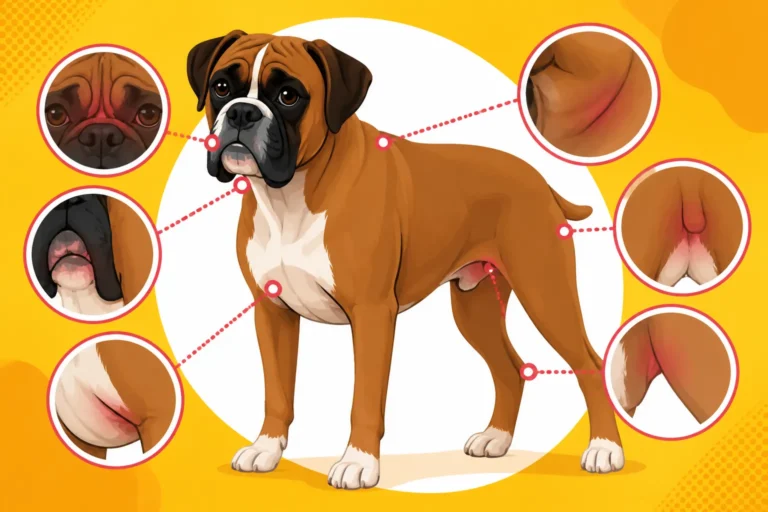
The first signs of sunburn on your white Boxer will often appear on areas with sparse hair or pink skin. The nose, especially the bridge and around the nostrils, is a prime spot for visible redness. You might also notice redness and tenderness on the ear tips, along the part in their fur on their back, and on their belly and inner thighs where they spend a lot of time lying down. Their paws, particularly the top of the paw and between the toes, can also get burned from reflective surfaces like concrete or sand.
Beyond visible redness, your Boxer might give you clues through their behavior. They might seem uncomfortable, restless, or keep licking or scratching at the affected areas. The skin might feel warm to the touch, and in more severe cases, you might even see blistering or crusting, which requires immediate veterinary attention. Don't underestimate these subtle signs; a dog's discomfort can escalate quickly, and early intervention is always best. Regular, gentle checks of their skin, perhaps as part of your The Weekly Skin Check Every Boxer Needs, are vital.
Long-Term Risks of Sun Exposure
While an acute sunburn is painful and needs immediate care, the more insidious threat from repeated sun exposure for white Boxers is the cumulative damage. Just like in humans, chronic UV exposure can lead to premature aging of the skin, causing it to become dry, leathery, and less elastic. More alarmingly, it significantly increases the risk of various forms of skin cancer. Squamous cell carcinoma, hemangiosarcoma, and mast cell tumors are all concerns, especially in breeds with light pigmentation who spend significant time in the sun.
These cancers often develop in the very areas most prone to sunburn – the nose, ear tips, and abdomen. Catching these early is paramount, which is another reason why inspecting your Boxer's skin regularly is so important. Prevention, through diligent sun protection, is by far the best approach to safeguard your white Boxer from these potentially life-threatening conditions. It's a testament to our responsibility as Boxer owners to provide them with the best care, anticipating these breed-specific vulnerabilities.
Choosing the Right Sunscreen for Your White Boxer
Now, let's get down to the nitty-gritty: finding a sunscreen that's actually safe and effective for your white Boxer. It's not as simple as grabbing your own bottle of SPF, as many human sunscreens contain ingredients that are toxic to dogs if ingested, and let's face it, most Boxers are going to lick it off eventually!
Key Ingredients to Look For and Avoid
When you're searching for a dog-specific sunscreen, you're looking for products formulated with pet-safe ingredients. Generally, mineral-based sunscreens containing zinc oxide or titanium dioxide are considered safe for dogs, provided they are in a dog-specific formulation designed to be non-toxic if licked in small amounts. However, even with these, ingestion in large quantities can be problematic, so it's always best to choose products explicitly labeled for canine use. Brands like Epi-Pet or My Dog Nose It often use these mineral blockers. Other dog sunscreens might use combinations of natural oils or specialized non-toxic chemical blockers.
Ingredients to Absolutely Avoid from Human Sunscreens:
- Zinc Oxide: While a good physical blocker, concentrated human sunscreens with zinc oxide can be toxic if ingested in large amounts by dogs, leading to zinc poisoning. Many dog sunscreens use it in safer, diluted forms, but always stick to products labeled for dogs.
- Para-aminobenzoic acid (PABA): This is an older chemical sunscreen ingredient that can cause allergic reactions in some dogs.
- Oxybenzone, Avobenzone, Octinoxate, Homosalate: These are common chemical blockers in human sunscreens that can cause stomach upset, vomiting, or diarrhea if ingested by your dog. Some studies even suggest potential endocrine disruption with long-term exposure.
- Fragrances and Dyes: These can irritate sensitive canine skin.
- Essential Oils (unless specifically tested and approved for canine topical use): Many essential oils are toxic to dogs, either topically or if ingested.
Always check the label meticulously. If in doubt, ask your veterinarian for a recommendation. You can often find a good selection of pet-safe sunscreens on online retailers like Chewy or Amazon, which usually list ingredients clearly.
Here's a quick comparison of what to look for and avoid:
| Ingredient Category | Look For (in Dog-Specific Products) | Absolutely Avoid (from Human Products) | Potential Concern (even in dog products if ingested heavily) |
|---|---|---|---|
| Active Blockers | Titanium Dioxide, specially formulated Zinc Oxide | Oxybenzone, Avobenzone, Octinoxate, Homosalate | High concentrations of Zinc Oxide (even in dog products) |
| Inactive Ingredients | Aloe Vera (dog-safe form), Shea Butter, Vitamin E | PABA, Artificial Fragrances, Dyes | Some essential oils |
Application Tips and Frequency
Applying sunscreen to an excited Boxer can be an Olympic sport! But it's essential for their protection. Focus on the most vulnerable areas: the bridge of the nose, ear tips, around the mouth, the belly, and the inner thighs. Some Boxers might also need a little protection on their back where the hair is thinnest, especially if they love to sunbathe.
- Start Small: Introduce sunscreen gradually. Let your Boxer sniff it, apply a tiny bit, and offer a treat. Make it a positive experience.
- Target Areas: Use a gentle touch. For the nose, a small dab and quick rub will do. For the belly, apply a thin layer where the skin is exposed. Be careful around their eyes.
- Frequency: Apply sunscreen about 15-20 minutes before sun exposure to allow it to absorb. Reapply every 2-4 hours, especially if your Boxer is swimming, playing vigorously, or if it's a particularly sunny day. Whether a White Boxer Burns in Normal Sun really depends on the intensity and duration, so frequent reapplication is key.
- Distraction is Your Friend: A tasty chew or a quick training session can keep them occupied while the sunscreen dries a bit, reducing immediate licking.
- Less is More: You don't need to slather it on thick. A thin, even layer is usually sufficient.
Remember, a little goes a long way in preventing discomfort and potential health issues down the line.
Human vs. Dog Sunscreen: What's the Difference?
The fundamental difference between human and dog sunscreen lies in their formulation and the assumptions about ingestion. Human sunscreens are designed with the understanding that they will be absorbed by human skin and, while we might accidentally get some in our mouths, it's not expected to be a primary route of exposure. Dog sunscreens, on the other hand, are formulated knowing that dogs will lick their skin. This means ingredients must be non-toxic if ingested, even in small amounts.
While both types aim to block UV rays, the ingredient list is critical. As we discussed, many common human chemical blockers and even zinc oxide in high concentrations can be harmful to dogs. Dog sunscreens often opt for safer, more natural barriers or mineral blockers specifically processed for canine safety. Never assume that a "natural" human product is safe for your dog without checking its specific ingredients against known canine toxins. Always err on the side of caution and opt for a product clearly labeled and formulated for pets.
Beyond Sunscreen: Comprehensive Sun Protection Strategies
Sunscreen is a fantastic tool in your arsenal, but it's just one piece of the puzzle. For a white Boxer, a multi-faceted approach to sun protection is essential to truly safeguard their delicate skin. You want to create an environment where they can enjoy life without constantly battling the sun's intensity.
Timing Outdoor Activities
This is perhaps one of the easiest and most effective ways to protect your white Boxer: adjust your schedule. The sun's rays are strongest between 10 AM and 4 PM. During these peak hours, it's best to limit your Boxer's outdoor exposure as much as possible. Instead, plan walks, play sessions, and yard time for early mornings or late afternoons/evenings.
This strategy not only helps prevent sunburn but also reduces the risk of overheating, which is a significant concern for flat-faced breeds like Boxers. How Fast a Flat-Faced Boxer Overheats can be alarming, making careful timing even more critical. A leisurely stroll at 7 AM or a vigorous fetch session after 6 PM can be much more enjoyable and safer for your dog than struggling in the midday heat and intense sun. Consider Whether a White Boxer Should Be Kept Indoors at Noon – the answer is often a resounding yes for their safety!
Protective Clothing and Shade Solutions
Just like humans wear hats and long sleeves, your Boxer can benefit from protective clothing. UV-protective dog shirts or bodysuits, especially those designed for breeds with short coats, can provide an excellent physical barrier against the sun. These are particularly useful for protecting their back and belly, areas that often get significant exposure. For their nose, there are specialized sun-protective balms and even snoods or visors that can offer shade without hindering their breathing.
When outdoors, always provide access to ample shade. If you're spending time in your yard, ensure there's a shaded area under a tree, a porch, or a pop-up canopy. If you're at the park or beach, bring your own shade solution, like a dog tent or umbrella. Even a minute of seeking shade can make a difference. Remember, reflective surfaces like concrete, sand, and water can amplify UV exposure, so shade is paramount even on partially cloudy days.
Regular Skin Checks
Even with the best precautions, accidents happen, and it's vital to be vigilant about your Boxer's skin health. Make a habit of performing regular, thorough skin checks. This means running your hands over their entire body, paying close attention to those vulnerable areas like the nose, ear tips, belly, groin, and paw pads. Look for any redness, irritation, dry patches, flaking, or suspicious lumps.
Early detection of any abnormalities, whether it's a new sunburn or a potentially cancerous lesion, significantly improves the chances of successful treatment. Boxers are prone to various skin issues, and Why a Boxer's Short Coat Shows Every Rash means you're more likely to spot problems quickly if you're looking. If you find anything concerning, don't hesitate to consult your veterinarian. They can assess the situation and recommend the appropriate course of action, giving you peace of mind and ensuring your beloved white Boxer stays as healthy and happy as possible for years to come.
Disclaimer
This article is for general informational purposes only and does not constitute professional advice. Laws, prices and regulations vary by location and change over time. Consult a qualified professional for guidance on your specific situation.