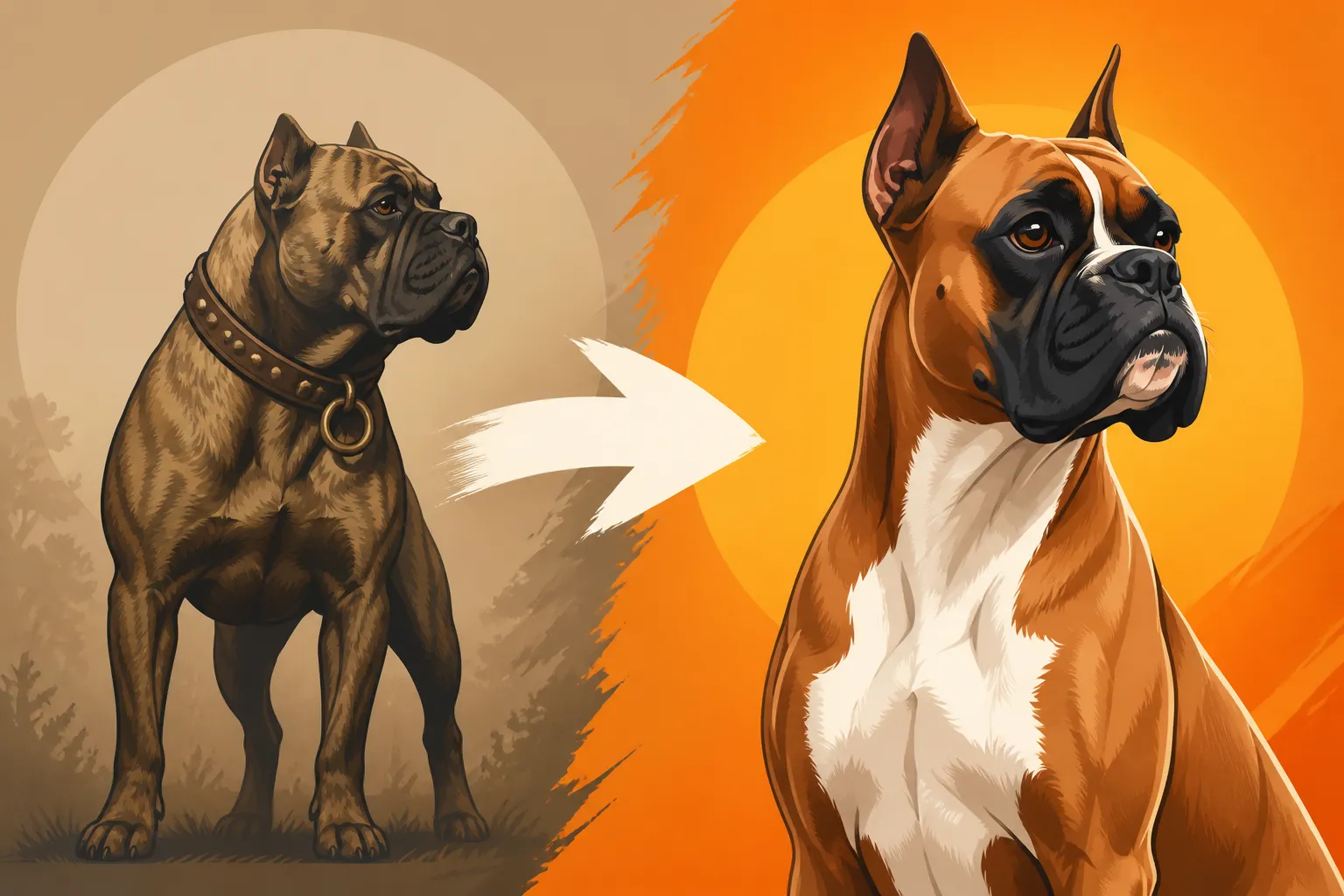
The Bullenbeisser the Boxer Came From
Many Boxer owners look at their goofy, playful companion and wonder about the breed's origins. It’s hard to imagine that the modern Boxer, with its characteristic wiggle and boundless enthusiasm, descends from a powerful, formidable hunting dog. This guide will take you back in time to explore the Bullenbeisser, the ancient ancestor that shaped the Boxer we adore today, helping you understand the roots of many of your dog's most distinct traits.
The Bullenbeisser's Place in History: A Forgotten Ancestor
Before our Boxers were curled up on our sofas, stealing socks, and demanding belly rubs, their ancestors were working dogs of a very different caliber. The Bullenbeisser was not a pet in the modern sense; it was an indispensable tool, a canine athlete built for the harsh realities of pre-industrial Europe. Understanding this lineage helps us see the echoes of a distant past in our beloved Boxers.
What Was the Bullenbeisser?
The Bullenbeisser was a type of dog, rather than a specific standardized breed as we understand it today, developed in Germany centuries ago. The name itself, "Bullenbeisser," literally translates to "bull-biter," which gives you a pretty clear picture of its primary function. These were large, muscular dogs, renowned for their incredible strength, powerful jaws, and tenacious grip. They were bred to be courageous and fearless, capable of confronting and holding large, dangerous game. Imagine a dog that needed to be able to latch onto a wild boar or a bear and not let go, providing a critical aid to hunters. Their physical characteristics were tailored precisely for this: a broad head, strong neck, and a sturdy, athletic body that could withstand immense force and pressure. While specific appearance varied regionally, the core functional traits were consistent across all Bullenbeisser types.
There were regional variations within the Bullenbeisser family, with the Brabanter Bullenbeisser, hailing from Brabant (a historical region spanning parts of modern-day Belgium and the Netherlands), being particularly significant to the Boxer's direct lineage. Another, the Danziger Bullenbeisser, was a larger, heavier type. It was the smaller, more agile Brabanter that was eventually crossed with various Mastiff-type dogs and Old English Bulldogs, laying the groundwork for the modern Boxer. These were dogs bred for function above all else, where survival depended on their ability to perform their demanding job with unwavering dedication.
The Need for the Bullenbeisser: A Brutal Past
The historical context of the Bullenbeisser is crucial to understanding why such a powerful dog was needed. In medieval and early modern Europe, hunting large, dangerous game was not merely a sport for the aristocracy; it was a practical necessity for pest control, food, and protection. Wild boar, bears, and even deer were formidable adversaries, capable of injuring or killing hunters. This is where the Bullenbeisser came in, playing a vital, albeit brutal, role.
Their specific function was to assist hunters by catching and holding large animals. A hunter might wound a large beast, but it could still be incredibly dangerous. The Bullenbeisser would then move in, seize the animal by the nose or ear, and hold it firmly until the hunter could deliver a killing blow. This required immense bravery, incredible strength, and an unshakeable grip. Why Boxer Ancestors Needed a Wide Grip explains how this specific need shaped their jaw structure and overall musculature. They were essentially living anchors, ensuring the safety of the hunters and the successful capture of prey. It was a perilous job, and only the toughest, most resolute dogs could perform it. This selective breeding for tenacity and strength against powerful animals laid the genetic foundation for many of the Boxer's enduring physical and mental characteristics, even if their modern purpose is vastly different.
From Ancient Hunter to Modern Companion: The Boxer's Evolution
The transition from the formidable Bullenbeisser to the beloved Boxer was a gradual process, driven by changing societal needs and the deliberate efforts of dedicated breeders. It wasn't a sudden transformation but a careful weaving of new traits into an existing, powerful genetic tapestry. The journey involved specific crosses and a clear vision for a new type of dog.
The Bridge Breeds: Bulldogs and the Boxer's Emergence
As the demand for large game hunting dogs waned with societal changes, the Bullenbeisser began to be crossed with other breeds to adapt their skills for new purposes, primarily cattle driving and guarding. One of the most significant "bridge breeds" in this transformation was the Old English Bulldog. These Bulldogs, themselves descended from ancient Mastiff-type dogs, brought specific traits that were desirable for the emerging Boxer type. They contributed to the characteristic broad head, strong jaws, and powerful build, while also influencing temperament, potentially introducing a degree of docility or adaptability that was less critical in the original Bullenbeisser. How Bulldogs Reached the Breeders Making Boxers details how these crosses were integral to the Boxer's development.
The infusion of Bulldog blood helped to refine the Bullenbeisser's raw power and aggression, steering it towards a more versatile role. These crosses were not random; they were part of a conscious effort to create a dog that could still perform demanding tasks but with a more manageable temperament for human interaction. The result was a dog that retained the strength and courage of its ancestors but began to show the playful, intelligent nature that would become a Boxer hallmark. This period of cross-breeding laid the foundation for the establishment of the Boxer as a distinct breed in the late 19th century, marking a significant step away from the pure Bullenbeisser type.
The German Founders and the Birth of the Boxer
The true birth of the Boxer breed as we know it today took place in Germany in the late 19th century, primarily through the efforts of a few dedicated individuals. Friedrich Robert, Elard König, and R. Höpner are often credited as the "fathers" of the Boxer. They recognized the unique potential in the descendants of the Brabanter Bullenbeisser and set out to create a standardized breed with consistent characteristics. Who Friedrich Robert Was in Boxer History highlights his pivotal role. Their goal was to produce an athletic, medium-sized dog that was intelligent, loyal, and capable of both protection work and companionship.
These early breeders meticulously selected dogs that exhibited the desired physical traits and temperament, often interbreeding them to fix these characteristics. They were aiming for a dog that was distinct from both the earlier Bullenbeisser and the heavier Bulldogs, focusing on agility, a well-defined head, and a balanced, powerful physique. The Boxer's first official appearance was at a dog show in Munich in 1895, and the Deutscher Boxer Club was founded in 1896, marking the formal establishment of the breed. This dedication to a clear vision transformed a robust working type into a recognized and cherished breed, meticulously shaped from its strong ancestral roots.
Tracing Bullenbeisser Traits in Today's Boxer
Even though centuries have passed, and Boxers have evolved into affectionate family members, the genetic blueprint of the Bullenbeisser is undeniably present. Many of the physical attributes and even some of the behavioral quirks we see in our Boxers today can be traced directly back to their powerful ancestors. It's a fascinating connection that helps us appreciate the depth of their heritage.
The Boxer's Distinctive Jaw and Bite
One of the most striking physical characteristics passed down from the Bullenbeisser is the Boxer's distinctive jaw and bite. Our Boxers famously have an undershot jaw, where the lower jaw protrudes beyond the upper jaw. While it gives them a unique, almost smiling expression today, its original purpose was far more practical and brutal: it was designed for gripping. A strong, wide grip was essential for holding onto large, struggling prey, providing a powerful, unyielding anchor point. This specialized bite allowed the Bullenbeisser to clamp down and maintain its hold without obstructing its breathing, a critical advantage in strenuous situations.
This powerful jaw means modern Boxers often have an impressive chewing ability. If you've ever watched your Boxer demolish a chew toy in minutes, you're seeing a direct echo of that ancestral strength. Providing them with durable, appropriate chew toys is not just for entertainment; it's a way to satisfy an inherent drive. You'll find a wide selection of robust options on platforms like Chewy, designed to stand up to a Boxer's powerful bite. Regular dental care is also paramount for Boxers, given their unique jaw structure. Boxer Dental Care and the Undershot Bite covers how to keep those strong teeth and gums healthy, especially important given their ancestral predisposition for using their mouths vigorously.
Strength, Musculature, and Athleticism
Another clear inheritance from the Bullenbeisser is the Boxer's impressive strength, musculature, and innate athleticism. The Bullenbeisser was a dog built for power and endurance, capable of engaging in physically demanding tasks for extended periods. This powerful build translates directly to the modern Boxer, a breed known for its lean, muscular physique and incredible energy levels. They are not delicate dogs; they are robust and agile, capable of bursts of speed and sustained activity.
This inherent strength means that Boxers require significant exercise to stay healthy and happy. They aren't content with just a leisurely stroll around the block; they need purposeful activity that engages both their bodies and minds. Boxer Exercise Needs and the Heat That Limits Them delves into how to manage their energy safely. Many new Boxer owners often underestimate their energy levels, leading to behavioral issues if not properly channeled. Providing a high-quality, protein-rich diet, easily sourced from reputable pet supply retailers like Chewy, is crucial for maintaining this musculature and supporting their active lifestyle. Whether it's zooming around the yard, playing fetch, or participating in dog sports, a Boxer's physique is a testament to its powerful lineage.
Temperament Echoes: Guardian Instincts and Playfulness
Beyond the physical traits, the Bullenbeisser's temperament also left an indelible mark on the modern Boxer. While our Boxers are renowned for their playful antics and affectionate nature, there's a serious, protective core that speaks to their guarding past. It's this unique blend of traits that makes them such fascinating and beloved companions.
The Protective Nature of the Boxer
The Bullenbeisser was a fierce and loyal guardian, utterly devoted to its role and its human handler. This unwavering loyalty and protective instinct are very much alive in the modern Boxer. They are naturally alert and observant, often quick to notice anything out of the ordinary. This can manifest as barking at strangers approaching the door or being generally watchful of their surroundings. Whether a Boxer Is Naturally Protective explores how this guardian role expresses itself in contemporary Boxers. While they are not typically aggressive without cause, their ancestral roots mean they possess an inherent sense of responsibility for their family and home.
It's vital for Boxer owners to understand and properly channel these instincts through early training and consistent socialization. A well-socialized Boxer will generally be confident and friendly, but always with an underlying awareness of its environment. They need to learn appropriate responses to new people and situations, distinguishing between a genuine threat and a friendly visitor. This thoughtful approach ensures that their protective nature is a valuable asset, making them reliable watchdogs who are also wonderful, well-adjusted family members.
The "Clown" with a Serious Side
Despite their serious, powerful ancestry, Boxers have earned a reputation as the "clowns of the canine world." This seemingly contradictory blend of a formidable past and a playful present is one of the most endearing aspects of the breed. While their ancestors were stoic, focused working dogs, centuries of selective breeding for companionship and a more sociable nature have brought out a delightful goofiness. Boxers love to play, to entertain, and to engage in comical antics that belie their muscular physique. Why Boxers Are Called Clowns is a perfect read if you want to understand more about this charming aspect of their personality.
Yet, underneath all the play bows and wiggles, the intelligent and watchful nature of the Bullenbeisser remains. A Boxer can shift from goofy play to focused alertness in an instant if they perceive a need. This unique blend means you get a dog that is both an entertaining companion and a capable, loyal protector. Engaging their minds with interactive toys and puzzle feeders, which are readily available from online stores like Chewy, can help satisfy both their playful spirit and their intelligent, problem-solving drives, keeping them happy and mentally stimulated. It's a reminder that while their job description has changed drastically, the depth of their character has only grown richer.
The Disappearance of the Bullenbeisser and the Rise of the Boxer
The story of the Bullenbeisser is one of evolution and adaptation, ultimately leading to its absorption into new breeds. Its "disappearance" isn't a tragic tale of extinction, but rather a testament to successful transformation, culminating in the cherished Boxer breed.
Why the Bullenbeisser Died Out
The Bullenbeisser, as a distinct "type" of dog primarily dedicated to large game hunting, gradually faded from existence for several key reasons. Foremost among these was the changing landscape of European society. As forests were cleared, large game populations declined, and hunting practices evolved, the specific need for a dog capable of tackling and holding formidable beasts lessened significantly. The brutal nature of their work became less relevant in a modernizing world. Simultaneously, there was a growing desire for dogs that could perform new roles, such as guarding property, cattle driving, and eventually, companionship. This shift in demand meant that breeders began to select for different traits, favoring dogs that were more versatile and adaptable to domestic life.
Instead of dying out completely, the Bullenbeisser's bloodlines were purposefully integrated into new breeds. The most direct and significant descendant is, of course, the Boxer, but its genes also contributed to other molosser-type dogs. When the Boxer's Ancestor Disappeared further clarifies this evolutionary process. It wasn't a matter of the dogs vanishing, but rather their characteristics being refined and re-purposed through selective breeding to create new breeds that met the evolving needs of human society. The Bullenbeisser's legacy lives on, transformed but not lost, in the dogs that now grace our homes.
The Boxer's Legacy: A Breed Transformed
The Boxer stands as a living legacy of the Bullenbeisser, a powerful example of how purposeful breeding can transform a formidable hunter into a devoted family companion. The modern Boxer retains the strength, courage, and loyalty of its ancestors but combines these with an unparalleled playfulness, intelligence, and a deep affection for its human family. This transformation wasn't accidental; it was the result of dedicated German breeders who envisioned a new kind of dog – one that could still be a capable guardian but also a joyful, integrated member of the household.
Today, the Boxer continues to win hearts globally, embodying a unique blend of ancient power and modern charm. Their distinctive appearance, energetic personality, and unwavering devotion make them truly special. We owe a debt of gratitude to those who carefully selected and bred the Bullenbeisser lines to give us the Boxer, a breed that continuously enriches the lives of countless families. Caring for these incredible dogs means recognizing their history and providing for their needs, from a well-balanced diet to durable toys, all of which are easily accessible through trusted retailers like Chewy. The Boxer's journey from the rugged wilderness to our living rooms is a remarkable story of adaptation and enduring canine spirit.
| Characteristic | Bullenbeisser | Modern Boxer |
|---|---|---|
| Primary Purpose | Large game hunter (boar, bear), catcher & holder | Companion, guard dog, family pet, sport dog |
| Size | Variable, generally larger, more rugged | Medium-large, athletic, lean & muscular |
| Temperament | Fierce, tenacious, single-minded, courageous | Playful, loyal, intelligent, courageous, protective |
| Jaw/Bite | Extremely powerful, undershot, for gripping prey | Undershot jaw, strong bite, less pronounced |
| Energy Level | Very high, driven by hunting instinct | High, requires significant daily exercise |
| Socialization | Less emphasis on broad social skills | Requires extensive early socialization |
| Coat/Color | Varied, typically short | Fawn or brindle with white markings, short coat |
Disclaimer
This article is for general informational purposes only and does not constitute professional advice. Laws, prices and regulations vary by location and change over time. Consult a qualified professional for guidance on your specific situation.