Whether an Older Owner Can Hold a Boxer
It's a completely valid concern to wonder if you, as an older individual, can genuinely handle a Boxer. These dogs are famed for their exuberance, their strength, and that seemingly endless puppy energy. The thought of being pulled off your feet by a seventy-pound bundle of muscle, or having a playful paw connect with your face, can be daunting. This guide will delve into the realities of Boxer ownership for older adults, addressing the challenges head-on and offering practical strategies to make this wonderful breed a joyful, manageable companion throughout their life.
The Boxer's Youthful Exuberance: A Reality Check
Let's be real: a young Boxer is a powerhouse. They are built like canine athletes, and their zest for life often translates into physical displays that can be overwhelming if you're not prepared. Many older owners express a legitimate worry about being physically able to manage such a dynamic dog, especially during those early, boisterous years.
The Unmistakable Power of a Young Boxer
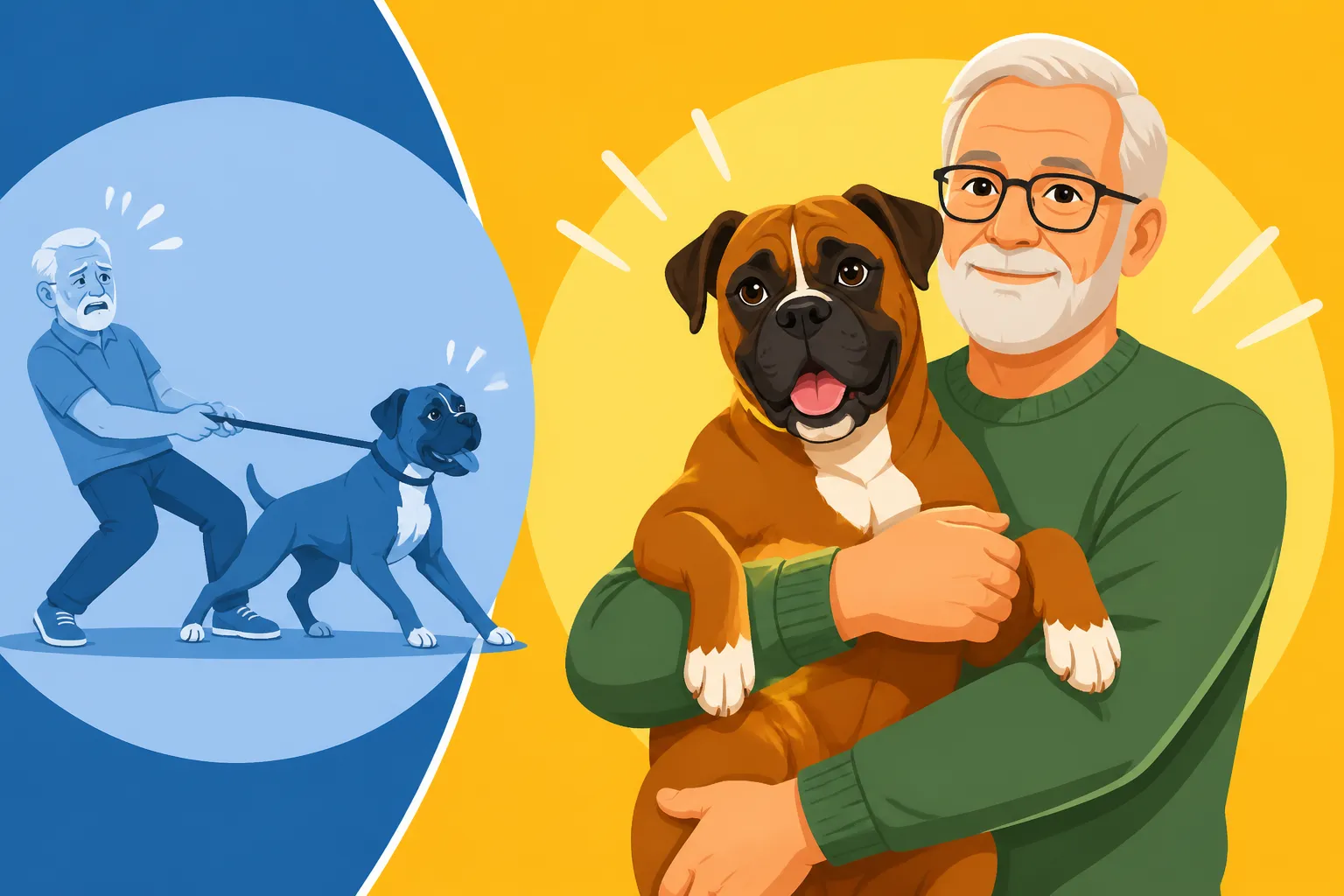
Imagine taking a six-month-old Boxer puppy for a walk. Even at that age, they might weigh 40 or 50 pounds, and their ability to suddenly lunge at a squirrel or another dog is remarkable. This isn't out of malice, but pure, unadulterated Boxer enthusiasm. They have a low center of gravity and a powerful build, meaning that if they decide to pull on the leash, you'll feel every single ounce of their determination. It’s not uncommon for even younger, spry owners to find themselves off-balance or struggling to maintain control if their Boxer isn't properly trained. This physical strength can be a genuine barrier for older adults who might have less stable footing, reduced core strength, or pre-existing joint issues. It's not about your love for dogs; it's about the practical physics of managing a strong, energetic animal.
Why the "Forever Puppy" Can Be a Lot to Handle
Boxers are often lovingly called the "Peter Pan" of the dog world because their puppyhood seems to last an exceptionally long time. While other breeds might start to settle down around their first birthday, Boxers often retain that playful, sometimes clumsy, puppy energy well into their second or even third year. This means that for a significant period, you're not just dealing with physical strength, but also a boundless need for mental and physical stimulation. A bored Boxer is a destructive Boxer, and keeping them engaged requires a commitment of time and energy that might not align with everyone's lifestyle. They don't just need a casual stroll; they need structured play, training sessions, and opportunities to burn off that incredible energy. This extended period of high demand is a key factor to consider, as it means the initial "puppy phase" will require sustained effort, as described in The Boxer Puppyhood That Lasts Three Years.
Strategies for Managing Boxer Energy and Strength
The good news is that with the right approach, equipment, and support, many of the challenges posed by a Boxer's strength and energy can be effectively managed, making them a suitable companion for older owners. It’s all about working smarter, not harder.
Smart Training and Equipment Choices
Effective training is non-negotiable for a Boxer, regardless of your age. For an older owner, it becomes even more critical. Prioritize loose-leash training from day one, focusing on positive reinforcement to teach your Boxer to walk politely by your side. This isn't just about good manners; it's about your safety and comfort. Investing in the right equipment can also make a world of difference. A front-clip harness, for example, discourages pulling by redirecting the dog's momentum back towards you, rather than allowing them to lean into the pull. A head halter, which fits over the muzzle, gives you even more control with minimal physical effort. You might find a great selection of these on sites like Chewy, offering various styles and sizes. These tools, combined with consistent training, can drastically reduce the physical strain of walking a strong Boxer. Remember, the goal is to teach them how to exist calmly in the world, not just to physically restrain them. For more on this, consider resources like Harnesses That Hold a Pulling Boxer.
Teaching your Boxer to keep all four paws on the ground when greeting people is another crucial piece of the puzzle, especially if you or your visitors are less steady on your feet. Boxers are infamous for their enthusiastic, full-body wiggles and jumps. Consistent training, often involving teaching an alternative behavior like "sit" for greetings, can curb this tendency. This requires patience and repetition, but the payoff in terms of safety and peace of mind is immeasurable. Check out Teaching a Boxer to Keep Four Feet Down for practical tips on this common Boxer trait.
Tailoring Exercise to Your Lifestyle
While Boxers are undeniably energetic, their exercise doesn't always have to come from you physically running miles with them. The key is to ensure they get adequate mental and physical stimulation in ways that suit your capabilities. If long, strenuous walks are not feasible, consider hiring a trusted dog walker for midday outings. Doggy daycare can be an absolute lifesaver, allowing your Boxer to burn off steam in a safe, supervised environment with other dogs, leaving them tired and content when they come home to you. Many older owners find that two or three days a week at daycare makes their Boxer much more manageable on the days they're home. You can find options and reviews for local daycare services through pet supply retailers like Chewy, which often have community boards or directories.
Another consideration is the climate. Boxers, being brachycephalic (flat-faced), are prone to overheating. This means that intense exercise on hot days is often out of the question, regardless of your age. This naturally limits their outdoor activity during warmer months, and understanding Boxer Exercise Needs and the Heat That Limits Them is paramount. On such days, indoor games, puzzle toys, and short, early morning or late evening strolls become essential. The goal is consistent, appropriate activity that prevents boredom and maintains muscle tone without overtaxing either you or your dog. Remember, even a short, brisk walk combined with a mentally stimulating game can be more beneficial than a long, boring stroll.
Creating a Calm Home Environment
Beyond physical exercise, a Boxer's mental stimulation is vital for keeping them happy and calm indoors. A tired mind often leads to a tired body. Puzzle feeders, lick mats, and durable chew toys can occupy your Boxer for significant periods, diverting their energy into constructive activities. Investing in durable puzzle toys, perhaps from Chewy, can make a huge difference in managing their energy levels within the home. These toys require them to think and work for their food or treats, which is surprisingly draining for dogs.
Crate training is another invaluable tool, especially for puppies and young adults. A properly introduced crate becomes a safe, cozy den for your Boxer, offering a quiet space for them to settle and preventing destructive behaviors when you can't actively supervise. It can also provide a much-needed break for you, knowing your Boxer is safe and contained. This is particularly relevant given Why a Boxer Needs a Crate More Than Most. Establishing a consistent routine for feeding, walks, and playtime also helps a Boxer feel secure and reduces anxiety, leading to a calmer demeanor overall. They thrive on predictability, and a structured day can significantly mellow their temperament.
The Aging Boxer: A More Mellow Companion
While the youthful Boxer can be a whirlwind, it's important to remember that they don't stay perpetual puppies forever. As Boxers mature, their energy levels naturally begin to wind down, often making them even more suitable companions for older adults.
The Natural Shift in Energy Levels
Around the age of seven or eight, many Boxers enter their senior years, and with that comes a noticeable decrease in their boundless energy. The frantic zoomies become less frequent, their desire for intense play might lessen, and they are generally more content with shorter walks and extended napping sessions on the couch. This transition can be a real sweet spot for older owners, as they get to enjoy the affectionate, loyal nature of the Boxer without the earlier physical demands. You'll find that an older Boxer is often a more sedate, soulful companion, perfectly happy to curl up beside you while you read or watch TV. This shift in temperament is a natural part of their life cycle, and understanding What Changes in a Boxer After Seven can help set expectations.
Continued Care and Companionship
Even a senior Boxer, while calmer, still requires attentive care. Regular veterinary check-ups become even more critical to monitor for age-related conditions like arthritis, heart issues (such as those discussed in Boxer Cardiomyopathy and the Holter Monitor), or lumps and bumps. While their exercise needs decrease, they still benefit from gentle, consistent movement to maintain joint health and prevent stiffness. Short, frequent walks are often better than one long one for an older Boxer.
Providing comfortable bedding, ensuring easy access to food and water (perhaps using raised bowls if they have joint pain), and continuing mental enrichment with gentle puzzle games are all important aspects of caring for an aging Boxer. The bond with a senior Boxer is truly special; they are often deeply attuned to their owners, offering quiet companionship and unwavering loyalty. This stage of their life, when managed with understanding and care, can be incredibly rewarding, as detailed in Caring for a Boxer Past Eight.
Here's a quick comparison of the Boxer at different life stages, particularly through the lens of an older owner:
| Characteristic | Young Boxer (1-3 years) | Mature Boxer (4-7 years) | Senior Boxer (8+ years) |
|---|---|---|---|
| Energy Level | High to very high; prone to zoomies, intense play. | Moderate to high; still playful, but settling. | Low to moderate; prefers naps, gentle activity. |
| Physical Strength | Very strong, prone to pulling; can knock over easily. | Strong; still needs training, but more manageable. | Reduced strength; less prone to pulling with age. |
| Attention Span | Shorter; easily distracted; requires consistent training. | Longer; more focused, eager to please. | Varies; may be less engaged in intense training. |
| Training Needs | Intensive focus on basic obedience, leash manners. | Reinforcement of existing training, advanced cues. | Gentle reminders, maintaining routines. |
| Ideal Exercise | Long walks, running, vigorous play, dog parks. | Brisk walks, fetch, mental games. | Short, frequent walks; gentle play; mental enrichment. |
| Potential Challenges | Pulling, jumping, chewing, high demands for stimulation. | Occasional stubbornness, managing boredom. | Mobility issues, health concerns, less stamina. |
| Companionship | Affectionate, goofy, active partner. | Loyal, playful, engaged family member. | Calm, devoted, comforting presence. |
Benefits of Boxer Companionship for Older Adults
Beyond the practicalities, bringing a Boxer into your life as an older owner offers a wealth of benefits that can profoundly enrich your golden years. The connection forged with a Boxer is unlike any other.
The Unconditional Love and Joy They Bring
Boxers are renowned for their incredible affection and their unwavering devotion to their families. They are truly "heart dogs" that bond deeply with their owners. For an older individual, this unconditional love can be a powerful antidote to loneliness, providing a constant source of companionship, comfort, and joy. Their goofy antics, their expressive faces, and that famous Boxer wiggle can bring endless laughter into a home. They have a way of sensing your mood and offering a gentle nudge or a soft paw when you need it most. This emotional support system is invaluable, and the simple presence of a loving dog can significantly improve mental well-being and reduce stress. They truly become a cherished member of the family, often serving as a devoted shadow, always nearby, offering a silent, comforting presence.
Gentle Encouragement for Activity
While we've discussed managing their energy, even a calmer Boxer provides a gentle impetus for daily activity. Knowing your dog needs to go out encourages you to get up and move, even if it's just for a short stroll around the block. This regular, low-impact exercise is beneficial for maintaining your own mobility and cardiovascular health. Having a routine centered around your Boxer's needs, such as feeding times and potty breaks, provides structure to your day, which can be particularly helpful for older adults. They encourage interaction, whether it's throwing a soft toy across the living room or engaging in a short training session. This gentle encouragement to stay active and engaged with the world around you is a significant, often underestimated, benefit of Boxer ownership for older individuals. They don't just fill your home; they fill your life with purpose and presence.
Disclaimer
This article is for general informational purposes only and does not constitute professional advice. Laws, prices and regulations vary by location and change over time. Consult a qualified professional for guidance on your specific situation.