The German Boxer Club and Its 1902 Standard
Have you ever wondered why your beloved Boxer has that distinctive strong build, expressive face, and undeniable spark of personality? It's not by accident! Many new Boxer owners are fascinated by the breed's unique characteristics but might not realize the immense effort that went into defining them. This guide will take you back in time to explore the pivotal role of the German Boxer Club and the groundbreaking 1902 breed standard that shaped the Boxer we know and love today, ensuring its consistency and safeguarding its future for generations of enthusiasts.
The Genesis of the German Boxer Club
Before the German Boxer Club officially laid down its markers, the "Boxer" as a distinct breed was still very much in flux. There were dogs that looked like Boxers, used for similar purposes, but without a unified vision, breeders were working in a vacuum, leading to a wide variety of types and temperaments. This lack of consistency was a real headache for anyone trying to develop a predictable and recognizable breed. Imagine trying to explain what a Boxer was to someone, only for every other example to look completely different!
The Need for Uniformity in Early Boxers
In the late 19th century, the dogs that would eventually become Boxers were known by various names and exhibited a broad range of appearances and working abilities. They descended from the Bullenbeisser, a powerful dog used for bull-baiting and hunting large game, often crossed with Bulldogs imported from England. This diverse genetic background, while contributing to the Boxer's inherent strength and agility, also meant there was no single, agreed-upon "Boxer type." Some dogs were heavy and slow, others too light and quick. Owners and early breeders were passionate about their dogs, but without a common goal, the breed's identity remained elusive. It was clear that for the Boxer to gain recognition and thrive, a consensus on its ideal form and function was absolutely necessary. The German Origins of the Boxer delves deeper into these early influences.
Founding Figures and Their Vision
It was this yearning for a clear direction that led to the formation of the Deutscher Boxer Klub (German Boxer Club) in 1895. A group of dedicated enthusiasts in Munich, recognizing the potential of these strong, intelligent dogs, came together with a shared vision: to standardize the Boxer breed. Key figures like Friedrich Robert, Elard König, and R. Höpner were instrumental in this early effort. They weren't just dog lovers; they were visionaries who understood that a coherent breed required clear guidelines for breeding, judging, and preservation. Their goal was to create a dog that was not only aesthetically pleasing but also possessed the stable temperament and working ability for which Boxers would become renowned. Their commitment paved the way for the development of the definitive breed standard, a document that would serve as the blueprint for all future Boxers. Who Friedrich Robert Was in Boxer History shares more about one of these pivotal individuals.
Crafting the First Boxer Standard in 1902
The initial formation of the club was a crucial first step, but the real work began with codifying what a Boxer truly was. This wasn't a quick process; it involved years of discussion, observation, and consensus-building among breeders. The 1902 standard wasn't just pulled out of thin air; it was the culmination of dedicated individuals striving for perfection and consistency. It wasn't about imposing arbitrary rules but about capturing the essence of the best examples of the breed and setting them as the benchmark.
Defining Physical Traits and Ideal Proportions
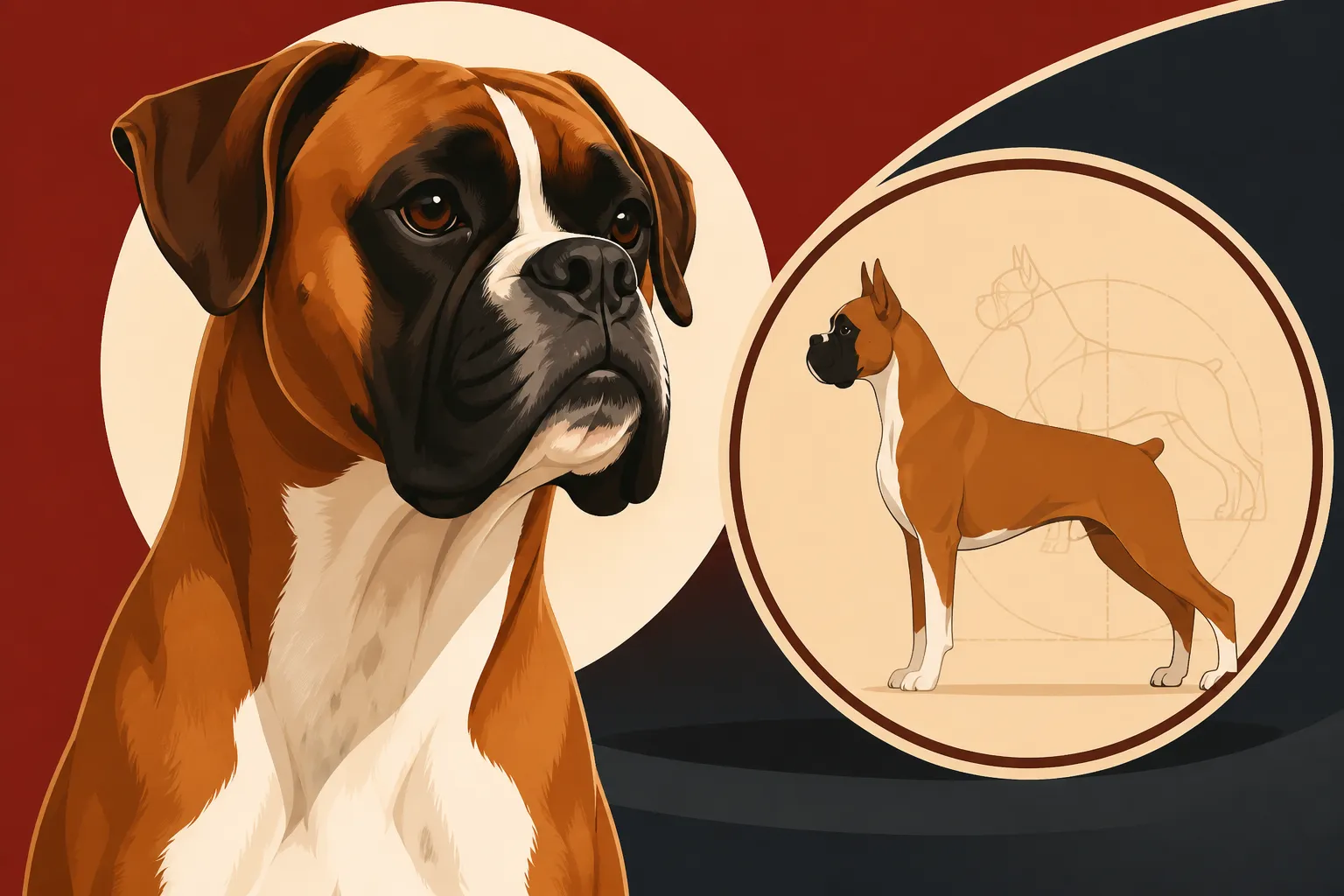
The 1902 standard was incredibly detailed in its description of the Boxer's physical attributes, aiming for a balance of power, elegance, and utility. It specified a medium-sized, smooth-coated, sturdy dog, compactly built and square in proportion. The head, famously, was given significant attention. The distinctive Boxer head, with its broad, slightly domed skull, pronounced stop, and square, blunt muzzle, was meticulously described. They wanted a dog with strong jaws and the characteristic undershot bite, but not one that was excessively exaggerated to the point of hindering function. The ideal body was compact, with a strong back, deep chest, and well-sprung ribs, indicating both power and stamina. Even details like the placement and color of the eyes were noted, contributing to the serious yet intelligent expression characteristic of the breed.
Temperament: Courage, Loyalty, and Playfulness
Beyond the physical, the 1902 standard placed immense emphasis on the Boxer's temperament, understanding that a beautiful dog without the right character was incomplete. They envisioned a dog that was courageous and fearless, reflecting its working heritage, yet simultaneously good-natured, calm, and loyal to its family. This balance was crucial. They wanted a dog that could be a formidable protector when needed, but also a trustworthy and playful companion within the home. The standard explicitly rejected dogs that were overly shy, aggressive, or nervous, highlighting the importance of a stable and predictable disposition. This emphasis on a solid temperament is one of the reasons Boxers are so beloved today, known for their unwavering devotion and playful antics. Boxer Temperament in the Standard and in Life explores this further.
The Boxer's Original Working Purpose
The physical and temperamental descriptions in the 1902 standard were deeply intertwined with the Boxer's intended working purpose. While the days of bull-baiting were fading, the Boxer was still envisioned as a versatile working dog. It was expected to excel as a guardian, a police dog, and a reliable companion. The muscular build and powerful jaws were not just for show; they were remnants of its history, still valued for protection and strength. The intelligence and trainability were essential for its role in police and military work, which Boxers would eventually undertake. The agility and endurance were necessary for a dog expected to work alongside handlers for extended periods. This focus on working ability ensured that the breed retained its functional soundness, preventing it from becoming merely a show dog. The Boxer's Working History sheds more light on its versatile past.
Key Elements of the 1902 Standard
The 1902 standard was a masterclass in detail, leaving little to the imagination for aspiring breeders and judges. It was a comprehensive guide that covered everything from the tips of their ears to the end of their docked tails, meticulously outlining what was considered desirable and what was a fault. Understanding these foundational elements is key to appreciating the Boxer's unique design.
The Importance of the Head and Muzzle
The Boxer's head was, and remains, arguably its most defining feature, and the 1902 standard dedicated significant text to it. The aim was for a head that was proportional to the body, neither too light nor too heavy, and with a clean, unexaggerated appearance. The skull was broad and slightly rounded, not flat. The stop, the indentation between the eyes, was clearly defined. The muzzle, however, was where much of the character lay. It needed to be broad and powerful, turning up slightly, but not so much as to interfere with breathing or eating. The undershot bite, where the lower jaw protrudes beyond the upper, was mandatory, with the front teeth of the lower jaw fitting behind those of the upper, and the canines positioned far apart. The standard even described the folds of skin on the muzzle, wanting them to be present but not excessive. This meticulous attention to the head ensured that the Boxer retained its distinct "face," which is so instantly recognizable. Why the Boxer Was Given a Turned-Up Muzzle explains the functional reasons behind this unique feature.
Body Structure and Movement
A Boxer’s body needed to be a testament to its strength and athleticism. The 1902 standard called for a square build, meaning the length of the body from the point of the shoulder to the point of the buttock was approximately equal to the height at the withers. This gave the Boxer its compact, powerful outline. The chest was to be deep and broad, reaching at least to the elbows, with well-sprung ribs that allowed for ample lung capacity. The back was short, strong, and level, flowing into a powerful loin. Limbs were straight, well-boned, and muscular, designed for powerful, elastic movement. When a Boxer moved, the standard dictated a free and vigorous gait, with good reach and drive, reflecting its working heritage. This emphasis on correct structure wasn't just for looks; it was about ensuring the dog could perform its duties efficiently and without undue strain.
Color, Markings, and Ear/Tail Treatment
The 1902 standard also outlined the acceptable colors and markings for the Boxer. The primary colors were fawn and brindle. Fawn could range from a light yellowish fawn to a dark deer red. Brindle Boxers were to have dark stripes on a fawn background, with clear distinction between the two colors. White markings were permitted, but within specific limits, primarily on the chest, feet, and muzzle. Excessive white was considered undesirable, a tradition that continues to this day where Boxers with more than a third white are typically excluded from conformation shows. Ears were almost universally cropped, and tails docked, as was the custom for working breeds of the era, though this practice has changed in many regions over time. The standard detailed the desired shape and set of the cropped ears and the length of the docked tail. For specific colors and markings, you can explore the information in What the First Boxer Standard Said in 1902.
Early Disqualifications and Faults
To maintain the integrity of the breed, the 1902 standard clearly listed disqualifications and serious faults. These were aspects deemed so detrimental to the Boxer type or temperament that they would prevent a dog from being considered a true representative of the breed. Examples of serious physical faults included an overly long or snipy muzzle, a lack of undershot bite, light eyes, or poor pigment. Temperamental disqualifications included shyness, cowardice, or overt aggression. The intention was to prevent the perpetuation of undesirable traits and to guide breeders toward producing healthy, sound Boxers with the correct conformation and character. This stringent approach helped to quickly solidify the Boxer's identity and prevent divergence from the established ideal. For those curious about the physical characteristics that are still considered important, The Boxer the Breed Standard Describes offers a current perspective.
| Feature | 1902 Standard Description (Summary) | Modern Emphasis (General) |
|---|---|---|
| Head | Proportional, broad skull, clear stop, square/blunt muzzle, definite undershot bite. | Similar, with continued focus on proportion and expression, less on extreme turn-up. |
| Muzzle | Broad, powerful, turned-up. Strong jaws, teeth not excessively visible. | Broad, deep, and proportionate to the skull. Strong, dry jaws. |
| Bite | Undershot, lower incisors behind upper. Canines wide apart. | Undershot, specific alignment of incisors and canines. |
| Body | Square build (height = length), strong back, deep chest, well-sprung ribs. | Square, compact, strong. Athletic build, deep chest for health. |
| Coat | Short, smooth, tight. | Short, glossy, tight to the body. |
| Colors | Fawn (light to dark red), brindle. White markings acceptable, limited to 1/3. | Fawn (various shades) and brindle. White markings restricted for show. |
| Temperament | Courageous, good-natured, calm, loyal, intelligent, playful. | Stable, outgoing, intelligent, loyal, fearless but not aggressive. |
| Ears/Tail | Ears cropped (pointed), tail docked short. | Varies by region: often natural in many places, cropped/docked where legal. |
Impact and Legacy of the 1902 Standard
The 1902 standard wasn't just a document; it was a declaration of intent that profoundly shaped the Boxer breed. Its influence reached far beyond the borders of Germany, establishing a universally recognized ideal that would guide breeders and fanciers for over a century. This foresight and dedication by the German Boxer Club truly solidified the breed's place in the canine world.
Shaping the Modern Boxer Type
The meticulous guidelines laid out in the 1902 standard proved to be incredibly effective in solidifying the Boxer's characteristics. By providing a clear target for breeders, it fostered a remarkable degree of consistency in the breed. Over time, Boxers across Germany, and eventually the world, began to more closely resemble the ideal described in that document. It ensured that the breed retained its functional athleticism while also developing a distinct, attractive appearance. When you look at a Boxer today, whether it's an American Boxer or a European Boxer, you can still see the foundational blueprint laid down in that initial standard. While minor adjustments have been made over the decades to refine certain aspects or to reflect changing cultural attitudes (like ear cropping), the core essence defined in 1902 remains largely unchanged. How Little the Boxer Standard Has Changed emphasizes this enduring consistency.
The Enduring Influence on Boxer Breeding Worldwide
The German Boxer Club's 1902 standard wasn't just for Germany; it became the bedrock for Boxer clubs and standards established in other countries. When Boxers were introduced to America and other parts of the world, these new clubs looked to the original German standard as their primary reference. They adopted its core principles, translating and adapting them slightly to local contexts, but always maintaining the spirit of the original. This global adoption ensured that despite geographical distances, Boxers maintained a recognizable and consistent type worldwide. Breeders today still study the nuances of the standard, striving to produce dogs that embody the ideal combination of physical beauty, robust health, and exemplary temperament. Finding quality educational resources about breed standards, often available through platforms like Chewy, can be invaluable for new owners trying to understand their dog's lineage and what defines the breed.
The Boxer's Journey from Germany to America
The journey of the Boxer from a regional German working dog to a beloved international companion is a testament to the strength of its early standardization. When Boxers first arrived in America in the early 20th century, they brought with them the genetics and characteristics that had been carefully cultivated under the 1902 German standard. This strong foundation allowed the breed to quickly gain popularity. Early American Boxer enthusiasts and breeders already had a clear guide to follow, preventing the breed from fragmenting or losing its identity. The standard provided a framework for selection and breeding, ensuring that the American Boxer developed with the same core qualities that made it so appealing in its homeland. From its working roles to becoming cherished family members, the Boxer's success owes a great deal to the clarity and vision enshrined in that pivotal 1902 document. You can learn more about its expansion in The Boxer's First Twenty Years in America.
Disclaimer
This article is for general informational purposes only and does not constitute professional advice. Laws, prices and regulations vary by location and change over time. Consult a qualified professional for guidance on your specific situation.