How a Judge Treats an Undocked Boxer Tail
It’s a common moment of confusion for new Boxer owners, or even seasoned enthusiasts stepping into the world of dog shows: you see beautiful Boxers with their iconic, short, docked tails, then you spot another just as regal, but sporting a long, elegant whip of a tail. You might wonder, "How does a judge even look at that? Is it a fault? Does it hurt their chances?" This guide is here to untangle the complexities of how judges approach the undocked Boxer tail in the conformation ring, validating the very real questions and concerns you might have about this evolving aspect of the breed.
The Historical Context of Boxer Tail Docking and Breed Standards
For generations, the image of a Boxer included a short, docked tail. This wasn't just an aesthetic choice; it was rooted deeply in the breed's history as a working dog. Boxers were originally developed in Germany from the Bullenbeisser, a powerful mastiff-type dog used for hunting boar and bear. A long tail could easily get caught, broken, or injured during these strenuous activities. Docking became a practical measure to protect the dog.
Why Docking Became the Norm
As the Boxer transitioned from a purely working dog to a companion and show dog, the docked tail remained part of its "look." The early breed standards, written in Germany and subsequently adopted by kennel clubs around the world, described the Boxer with a docked tail. This meant that the picture in a judge's mind, and the literal description in the standard, showcased a specific silhouette. It became intrinsically linked with the breed's identity. For many, a docked tail was simply the Boxer tail, and anything else felt… different.
The practice was so ingrained that breeders, owners, and judges alike understood it as a fundamental characteristic. To present a Boxer with a natural tail in the early days of dog shows would have been almost unthinkable in many regions, often considered a significant deviation from type, even if not explicitly stated as a disqualification. This historical precedent created a strong visual bias that still impacts perceptions today, even as regulations and attitudes shift.
Shifting Sands: Global Perspectives on Tail Docking
However, times have changed. Concerns over animal welfare led many countries, particularly across Europe, to ban or heavily restrict cosmetic procedures like tail docking. Organizations like the Fédération Cynologique Internationale (FCI), which governs many European kennel clubs, no longer permit the showing of docked dogs in member countries unless specific medical exemptions are in place. This has led to a fascinating divergence in the breed's appearance globally.
In countries where docking is prohibited, Boxers are now almost exclusively seen with natural tails. This means a whole new generation of judges and breeders has emerged, accustomed to evaluating the breed in its natural state. Meanwhile, in places like the United States, where docking remains legal (though widely debated), the American Kennel Club (AKC) standard still describes a docked tail but explicitly states that an undocked tail should not be penalized as long as it is carried properly. This creates a challenging environment for exhibitors and judges alike, who must reconcile historical expectations with modern realities. The core question becomes: how does one judge a dog against a standard that describes one thing, but allows another? It’s a nuanced discussion, and one that highlights the ongoing evolution of breed standards in a changing world. You can find more historical information in Boxer Ear Cropping and Tail Docking.
Evaluating the Undocked Boxer Tail: A Judge's Perspective
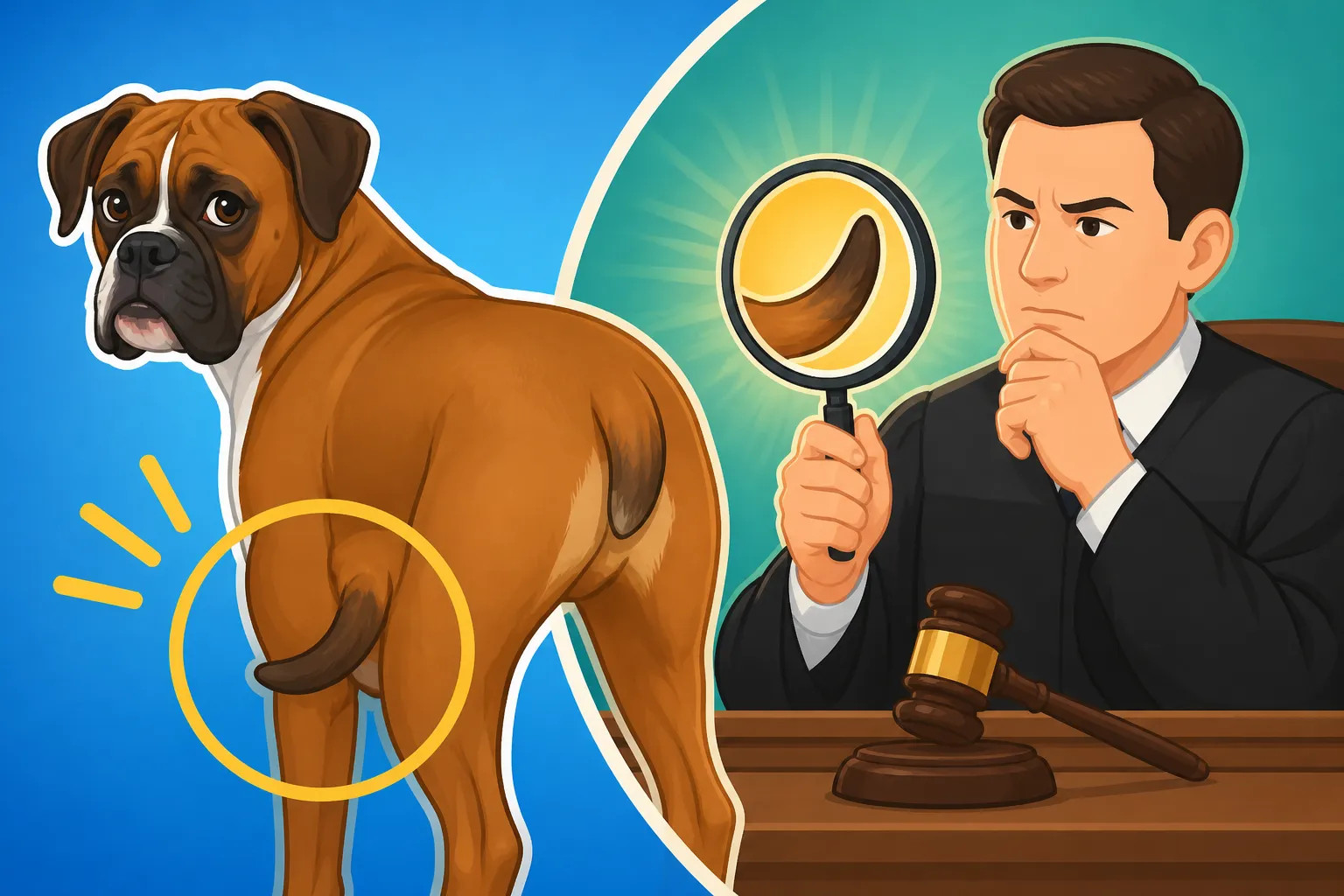
When a Boxer with an undocked tail enters the ring, a discerning judge isn't simply ignoring it. Instead, their focus shifts to how that natural tail is presented and what it conveys about the dog's overall structure and temperament. It's not about comparing it to a docked tail, but rather evaluating the natural tail on its own merits within the context of the Boxer standard.
What the Judge Looks For
The primary considerations for a judge observing a natural Boxer tail revolve around its set, carriage, and condition. These are elements that can be objectively assessed, regardless of whether the tail has been altered.
- Tail Set: This refers to where the tail attaches to the dog's body, specifically its croup (the area from the hip bones to the tail base). A correctly set tail should be a natural extension of the topline. It shouldn't be too high (creating a steep, short croup appearance) or too low (suggesting a sloping or weak hindquarter).
- Tail Carriage: How the dog holds and moves its tail is crucial. The Boxer standard emphasizes a tail carried upward, often with a slight curve, especially when alert or moving. A judge will observe if the tail is carried gayly over the back (a common fault in some breeds but not ideal for a Boxer), tucked tightly between the legs (indicating shyness or fear, which is a temperament fault), or hanging lifelessly. The tail should be an expressive extension of the dog, reflecting its mood and engagement.
- Tail Length and Thickness: While not directly mentioned for undocked tails in older standards, judges will assess if the length is proportionate to the body and if its thickness is appropriate for the breed. An overly thin "rat tail" or an excessively thick tail might be noted.
- Condition and Grooming: A natural tail, like the rest of the dog, should be clean, well-groomed, and free of mats or damage. The coat on the tail should blend seamlessly with the body coat. You can find good grooming supplies, including brushes for a short-coated breed like a Boxer, at retailers like Chewy.
It’s important to understand that a judge isn't faulting the presence of an undocked tail, but rather any structural or temperamental issues revealed by that tail. A poorly set or carried tail can indicate underlying structural issues with the hindquarters or even a less-than-ideal temperament, both of which are legitimate faults according to the breed standard.
Distinguishing Faults from Disqualifications
One of the biggest concerns for owners showing Boxers with natural tails is whether it will be "faulted." In the AKC system, an undocked tail is not a disqualifying fault. This means a Boxer cannot be removed from the ring or prevented from winning simply because its tail is natural. However, a judge can fault a dog for incorrect tail set or carriage, or if the tail is deemed to detract from the overall appearance and movement of the dog. This is a subtle but critical distinction.
Think of it this way: the standard describes the ideal Boxer, and the docked tail was historically part of that description. But in allowing natural tails, the focus shifts to ensuring that the natural tail still harmonizes with the rest of the dog. A judge should not penalize for the mere fact of an undocked tail, but they will assess it as part of the whole dog's structure and movement. If the tail's appearance, set, or carriage is distracting, or indicates a structural deficiency, then it can certainly impact placements.
The Natural Boxer Tail in the Show Ring: Challenges and Presentation
Showing a Boxer with a natural tail presents unique challenges and requires a particular focus on presentation. It’s not just about letting nature take its course; it’s about making sure that natural tail is an asset, not a distraction, in the eyes of the judge.
Overcoming Perceptual Biases
For many years, the docked tail was the universally accepted image of a Boxer in the show ring, particularly in North America. This creates an unconscious bias, even among experienced judges. While judges are trained to judge against the standard and not personal preference, centuries of tradition are hard to overcome overnight. As an exhibitor, your job is to present your natural-tailed Boxer so impeccably that any lingering bias becomes irrelevant.
This means ensuring every other aspect of your Boxer is top-notch: their movement, their temperament, their musculature, and their overall type. The natural tail should flow seamlessly with the dog's powerful gait and alert expression. If the dog is otherwise exceptional, the tail often fades into the background as just another well-presented feature. However, if there are other faults, a less-than-perfect natural tail might draw more negative attention. This is why it's so important for your Boxer to embody the breed standard in all other respects.
Presentation Tips for an Undocked Tail
Presenting a natural tail effectively is all about making it look like it belongs and enhances the dog's silhouette, rather than detracting from it.
- Conditioning is Key: A healthy, well-conditioned coat makes any tail look better. Ensure your Boxer's coat is shiny and free of dandruff or dry patches. Regular brushing and a high-quality diet contribute significantly to coat health. You can find specialized foods and supplements on sites like Chewy that can help with skin and coat.
- Cleanliness Matters: Before entering the ring, make sure the tail is impeccably clean. Boxer tails, especially if they are thicker, can sometimes gather dust or debris. A quick wipe down with a damp cloth or a gentle brush can make a big difference.
- Training for Carriage: While you can't change tail set, you can influence carriage through training and confidence-building. A confident, well-socialized Boxer will naturally carry its tail more proudly. Practice stacking and gaiting your Boxer, encouraging an alert, happy demeanor that allows their tail to express itself naturally, often with that characteristic upward curve. Avoid anything that makes your Boxer nervous or causes them to tuck their tail.
- Avoid Distraction: The tail should not be a point of fixation for the judge. Ensure it's not tangled, matted, or drawing undue attention. While the Boxer's natural tail typically has short hair like the rest of the body, sometimes longer feathers can develop; if so, neatening these with a quick trim can prevent a scruffy appearance.
| Tail Characteristic | Ideal Natural Boxer Tail | Potential Fault |
|---|---|---|
| Set | Natural extension of topline, neither too high nor too low. | Too high (gay tail), too low (poor croup). |
| Carriage | Carried upward, often with a slight curve, expressive. | Tucked (fear/shyness), over back (gay tail), limp. |
| Length | Proportionate to body, reaching roughly to the hocks. | Excessively short or long, not in proportion. |
| Thickness | Moderate, blending with body, not too thin or heavy. | "Rat tail" (too thin), overly coarse. |
| Condition | Clean, well-groomed, healthy coat, no mats/damage. | Dirty, matted, damaged, poor coat quality. |
| Movement | Moves fluidly with gait, balancing the dog's structure. | Stiff, rigid, or erratic movement. |
The Future of the Boxer Tail in Shows
As more countries adopt bans on docking, the natural tail is becoming increasingly common. Judges, particularly younger ones, are becoming more accustomed to evaluating Boxers with their full tails. This shift ensures that the focus remains on the overall health, structure, and temperament of the dog, rather than on a cosmetic alteration. Organizations like the AKC continue to monitor global trends and adapt their policies, making the path for owners of natural-tailed Boxers smoother with each passing year. The breed standard for a Boxer describes its ideal characteristics, and while The Boxer the Breed Standard Describes historically focused on a docked tail, the allowance of natural tails shows an adaptation. Ultimately, a Boxer with an undocked tail, if it is well-set, well-carried, and presented with confidence, can certainly succeed in the show ring.
Beyond the Tail: What Truly Matters to a Boxer Judge
While the tail, docked or natural, is one feature a judge assesses, it's crucial to remember that it's just one piece of a much larger puzzle. A judge's ultimate goal is to evaluate how closely a Boxer embodies the entire breed standard, which covers everything from head and expression to movement and temperament.
Overall Boxer Type and Balance
A truly excellent Boxer should be a harmonious package of power, elegance, and athletic grace. The judge is looking for balance – how all the different parts of the dog fit together. Is the head proportionate to the body? Is the musculature well-developed without being coarse? Does the dog move with the characteristic drive and reach of a Boxer? These are monumental considerations that far outweigh the single detail of an undocked tail, especially if that tail is otherwise correct in its set and carriage.
For example, a Boxer with a magnificent head, a strong topline, and powerful, fluid movement, but a slightly less-than-perfect natural tail, will often be placed above a Boxer with a perfectly docked tail but structural faults elsewhere. The tail is meant to enhance the overall picture, not define it. A judge must step back and assess the whole dog, not just individual components in isolation. This holistic approach ensures that the best Boxers, regardless of their tail, are recognized. For a deeper dive into what makes an ideal Boxer, you can read The Boxer the Breed Standard Describes.
Temperament and Movement: The Pillars of Boxer Judging
Two aspects that cannot be overlooked, and are paramount for any judge, are temperament and movement. These are intrinsic to the Boxer breed and are heavily weighted in any judging scenario.
- Temperament: A Boxer is known for its fearless yet friendly nature, its self-assurance, and its playful spirit. A judge will always look for a confident, attentive, and cooperative dog in the ring. Any sign of shyness, aggression, or timidity will be a significant fault, far more impactful than the presence of a natural tail. The way a dog carries its tail can often be an indicator of its temperament; a tucked tail might signal fear, while a gaily carried tail could sometimes indicate an overly excitable or unfocused dog. The ideal is a tail that moves with purpose, reflecting an alert but stable demeanor. Boxer Temperament in the Standard and in Life delves further into this critical aspect of the breed.
- Movement: The Boxer's powerful, elastic gait is a hallmark of the breed. A judge will observe the dog moving around the ring to assess its reach and drive, its soundness, and its overall efficiency. The dog should move freely, without any stiffness or awkwardness. An undocked tail, when carried correctly, should move in harmony with the dog's body, acting as a natural rudder or counterbalance, enhancing the picture of athleticism. If the tail's movement is distracting or seems to impede the dog, that's where a judge might take note. Ultimately, the ability of the Boxer to perform its historical function – even if only symbolically in the ring – is demonstrated through its robust and fluid movement.
In conclusion, while the topic of undocked tails in Boxers can stir considerable debate and personal preference, the discerning judge focuses on the breed standard as a whole. A natural tail, when correctly set, carried with confidence, and presented in excellent condition, should not hinder a Boxer's chances in the show ring. It simply becomes another feature to be evaluated as part of the magnificent and complex animal that is the Boxer.
Disclaimer
This article is for general informational purposes only and does not constitute professional advice. Laws, prices and regulations vary by location and change over time. Consult a qualified professional for guidance on your specific situation.