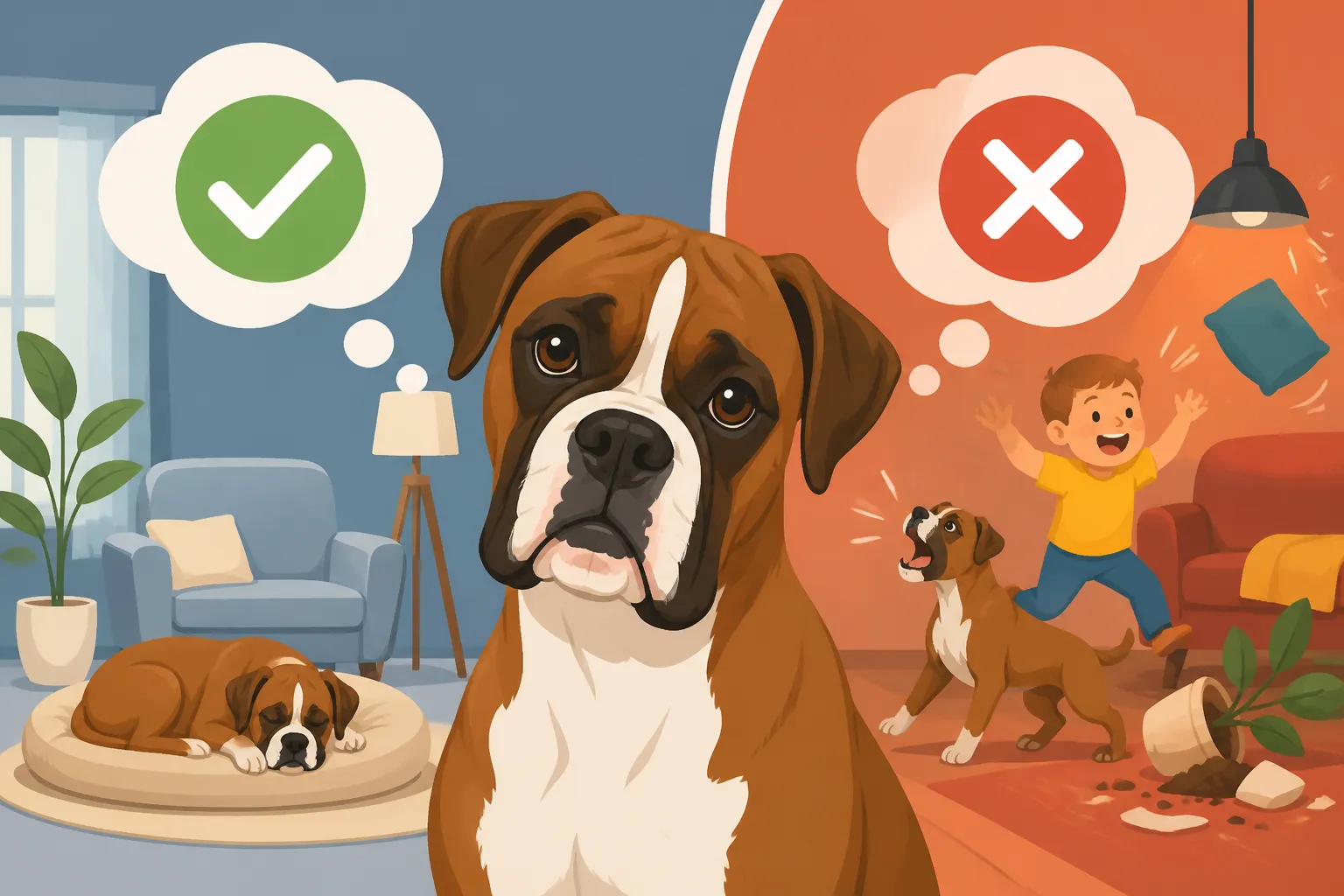
Whether a Boxer Suits a Quiet Household
It's a common dilemma for Boxer lovers: you adore their goofy charm, their expressive faces, and that famous wiggle, but you also value peace and quiet in your home. Maybe you work from home, live alone, or simply prefer a calm environment. The big question then becomes, can a Boxer, a breed known for its boundless energy and "eternal puppy" antics, truly thrive in a quiet household? This guide will dive deep into the Boxer temperament, explore how different types of quiet environments might impact them, and offer actionable strategies for creating a harmonious home for you and your beloved Boxer.
Understanding the Boxer Temperament: The "Eternal Puppy" Myth and Reality
Boxers are magnificent dogs, full of life, love, and a notorious amount of energy. It's not just a stereotype; it's deeply ingrained in their breed characteristics. Understanding this fundamental aspect is the first step in deciding if they're the right fit for your serene home.
The Unmistakable Boxer Energy
When people talk about a Boxer's energy, they're not just talking about needing a walk around the block. We're talking about explosive bursts of power, enthusiastic "zoomies" that turn your living room into a race track, and a persistent desire to play, jump, and interact. This isn't energy that can simply be "turned off" with a long morning walk. It’s an inherent drive that often persists well beyond their actual puppyhood, sometimes until they are two or even three years old. Why a Boxer Acts Like a Puppy Until Three discusses this phenomenon in detail.
Imagine this scenario: you're settling down with a book in your quiet living room, enjoying the tranquility. Your Boxer, however, might interpret this calm as an invitation to engage. They might bring you a toy, nudge your hand with their nose, or even "box" at you with their front paws, all in an effort to initiate play. This isn't them being disobedient; it's simply their natural inclination to be an active, involved member of the household. Their high energy levels mean they need a significant outlet, and if that outlet isn't provided, they will often find their own — which might not always align with your definition of a quiet home.
The Need for Engagement, Not Just Exercise
It’s easy to think that if you just walk a Boxer enough, they’ll be calm indoors. While physical exercise is absolutely crucial for a Boxer, it's only one piece of the puzzle. These intelligent, social dogs also crave mental stimulation and active engagement with their human companions. A Boxer isn't content to simply lie by your feet all day, even if they've had a good run. They want to be involved.
Think about a puzzle feeder: a Boxer loves the challenge of figuring out how to get treats out. Or a training session: even just 10-15 minutes of working on "sit," "stay," and "come" can be incredibly tiring for their brain. Without this kind of mental workout, a Boxer can quickly become bored. And a bored Boxer is a destructive Boxer. They might start chewing furniture, counter-surfing, or developing other undesirable behaviors as a way to entertain themselves. This kind of "self-entertainment" can be very disruptive to a quiet household, turning your peaceful space into a hub of mischief. You might find excellent interactive toys and puzzle feeders on sites like Chewy that can help occupy their minds. Training a Boxer That Gets Bored Fast offers more insights into keeping them engaged.
Sensitivity to Household Dynamics
Boxers are incredibly attuned to the mood and activity level of their household. They thrive on routine and consistency, but they also feed off the energy around them. In a boisterous home with lots of people, kids, and activity, a Boxer will often match that energy. But in a quiet home, their own high spirits might feel amplified.
This isn't to say they can't adapt. Boxers are highly sensitive dogs, and they can pick up on subtle cues. If you're consistently calm and deliberate in your interactions, they can learn to modulate their behavior. However, this takes a great deal of consistent training, patience, and a clear understanding of what you're asking of them. A quiet home also often means fewer diverse sounds and smells, which could make a Boxer more alert to external noises, potentially leading to more barking at passersby or sudden sounds. Their Boxer Watchdog Instinct Without Aggression can be a double-edged sword in a quiet setting.
How a Quiet Environment Might Impact a Boxer
While a quiet home might seem like a peaceful haven, for a breed like the Boxer, it can present unique challenges if not properly managed. It's not just about what you don't want them to do, but what they need to do to be happy and well-adjusted.
The Risks of Undersocialization and Boredom
A quiet household, particularly one where residents are rarely home or tend to keep to themselves, can inadvertently lead to a Boxer being undersocialized. Boxers are naturally social dogs. They need exposure to different people, sights, sounds, and other friendly dogs from a young age to develop into confident, well-adjusted adults. If their world is too small and too quiet, they can become anxious, fearful, or even reactive when they do encounter new experiences.
Imagine a Boxer who rarely hears unexpected noises or sees new faces. A sudden delivery truck, a child's scream down the street, or a visit from a stranger could trigger an exaggerated response – barking, lunging, or cowering. This is not conducive to a quiet home and can create stress for both you and your dog. A lack of stimulation also fuels boredom, which, as mentioned earlier, often manifests in destructive behaviors like chewing or digging. Why a Boxer Wrecks Things When Under-Exercised delves into how vital proper stimulation is. Regularly planned outings to dog-friendly parks, stores, or even just walks in different neighborhoods can help mitigate this, even if your home itself is quiet.
When "Quiet" Turns into "Lonely"
For a Boxer, "quiet" can sometimes translate to "lonely." These dogs are known for their deep bonds with their families. They are affectionate, people-oriented, and thrive on companionship. Being left alone for long periods in a quiet house, day after day, can lead to separation anxiety. This isn't just a dog missing its owner; it's a profound distress that can manifest in excessive barking, destructive chewing (especially around doors or windows), house soiling, and even self-harm.
A quiet home often means fewer people around to interact with the dog throughout the day. If you work long hours outside the home and your Boxer is left alone in silence, the emotional toll can be significant. Even if you're home, if interactions are minimal, the Boxer might not feel that deep connection they crave. It's crucial to distinguish between a quiet house where the Boxer is still an integrated, cherished family member, and a quiet house where the Boxer is simply an overlooked occupant. Providing a cozy crate, perhaps one sourced from Chewy, can help provide a sense of security for your Boxer when alone, but it doesn't replace human interaction. Why a Boxer Needs a Crate More Than Most explains the benefits of crate training for this breed.
Managing a Boxer's Alertness in a Calm Setting
Boxers possess a natural alertness and a strong protective instinct, a remnant of their working past. While generally friendly, they are quick to notice anything out of the ordinary. In a quiet household, where there are fewer ambient noises to mask external stimuli, this alertness can be heightened. Every rustle of leaves, every distant siren, every person walking by the window might trigger a bark.
This isn't necessarily aggression, but rather their way of communicating that something has changed in their environment. In a bustling home, these barks might blend into the background noise, but in a quiet setting, they can be jarring and disruptive. Managing this requires consistent training to teach them appropriate responses to environmental triggers, rather than allowing every new sound to become a reason to sound the alarm. It means being proactive in desensitizing them to common household and neighborhood noises.
| Characteristic of a Quiet Household | Boxer Temperament | Potential Conflict / Challenge | Strategies for Harmony |
|---|---|---|---|
| Low ambient noise, few visitors | High alertness, strong protective instinct | Excessive barking at external stimuli, heightened anxiety | Desensitization training, window coverings, white noise machine. |
| Infrequent, calm interactions | High need for engagement, social bonding | Loneliness, attention-seeking behaviors, destructive acts | Scheduled play/training, puzzle toys, dog walking services. |
| Less physical activity from humans | High energy, "eternal puppy" phase | Underexcitement, zoomies indoors, restlessness | Structured daily exercise, dog sports, doggy daycare. |
| Fewer new experiences (people, places, sounds) | Need for early and ongoing socialization | Fearfulness, reactivity, anxiety around novelty | Regular outings, puppy classes, positive exposure to new things. |
| Predictable, low-stress environment | Sensitivity to emotions, desire for routine | Boredom if routine lacks stimulation, feeling overlooked | Consistent schedule with engaging activities, quality interaction. |
Adapting a Boxer to a Tranquil Lifestyle
If your heart is set on a Boxer and you live in a quiet home, don't despair! It is absolutely possible to create a fulfilling life for both of you, but it requires deliberate effort, understanding, and commitment.
Structured Exercise and Mental Stimulation
The cornerstone of a happy Boxer in any home, but especially a quiet one, is ensuring their needs for physical exercise and mental engagement are met. This isn't optional; it's fundamental.
Firstly, intense physical exercise should be part of their daily routine. This could be vigorous games of fetch in a securely fenced yard, long brisk walks or jogs (weather permitting, given their brachycephalic nature), or even dog park visits if your Boxer is well-socialized and enjoys them. Two high-intensity sessions a day, each lasting 30-45 minutes, is often a good starting point, but every Boxer is different. Remember, Boxers can overheat easily, so always be mindful of the temperature. Boxer Exercise Needs and the Heat That Limits Them is essential reading for any Boxer owner.
Secondly, mental stimulation is just as vital. This means incorporating short, regular training sessions into your day. Boxers are smart, but they can get bored quickly with repetition. Keep it fun, varied, and reward-based. Why Short Sessions Suit a Boxer's Attention Span provides excellent guidance. Use puzzle toys that dispense kibble or treats, engage them in nose work games around the house, or teach them new tricks. Even a simple game of "find it" with treats hidden around the room can be incredibly stimulating. Many high-quality interactive toys can be found at retailers like Chewy, perfect for keeping their minds active.
Creating a Balanced Home Environment
A quiet household needs to actively work to ensure the Boxer feels secure, stimulated, and loved, rather than isolated. This means being mindful of how quiet your home actually is and taking steps to enrich it.
Consider using ambient sounds like music, podcasts, or a TV show playing softly when you're out or when the house is otherwise silent. This can prevent startling reactions to sudden outside noises and make the environment feel less lonely. Creating designated "safe spaces" for your Boxer, such as a comfortable crate or a dog bed in a quiet corner, gives them a retreat when they need it. These spaces should be positive, not used for punishment.
While your home might be quiet, your Boxer's social calendar doesn't have to be. Arrange regular playdates with other friendly dogs, enroll in obedience or dog sport classes, or even consider a reliable dog walker or daycare a few days a week if you're frequently away. This external stimulation will help them burn off energy, socialize, and return home tired and content, ready to settle into your quiet space. You might also want to explore Socializing a Boxer Puppy Before Sixteen Weeks if you're bringing a young Boxer into your home.
The Importance of Consistent Training
Training is paramount when pairing a high-energy dog like a Boxer with a quiet household. It's not just about teaching commands; it's about teaching impulse control, appropriate manners, and how to "switch off" when it's time for calm.
Start early with basic obedience, and be consistent. Cues like "place" or "go to bed" can be invaluable for directing your Boxer to a designated calm spot when you need peace. Teach them a solid "off" or "four on the floor" command to manage jumping. Rewarding calm behavior – not just active engagement – is crucial. When your Boxer is quietly lying down, go over and gently praise them, perhaps offer a calm pat or a small, quiet treat. This reinforces that being calm also gets positive attention. Getting a Boxer's Attention Outdoors talks about the challenges and rewards of consistent training.
Professional trainers can also be incredibly helpful in tailoring strategies for your specific situation. Look for trainers who use positive reinforcement and understand the Boxer breed's unique blend of exuberance and sensitivity. They can help you teach your Boxer to respect boundaries and channel their energy in appropriate ways, making your quiet home a haven for both of you.
Is a Boxer the Right Fit for Your Quiet Home? A Self-Assessment
Ultimately, the decision rests on your honest assessment of your lifestyle, your expectations, and your willingness to commit to meeting a Boxer's unique needs. It's not about whether a quiet home is bad for a Boxer, but whether your quiet home, and your approach to dog ownership, can provide the life a Boxer deserves.
Assessing Your Time and Commitment
Boxers demand time – a lot of it. They need dedicated time for exercise, training, play, and just being with their people. If your quiet household means you are often out for long stretches, or if you prefer a companion who is largely self-sufficient, a Boxer might not be the best choice. They thrive on interaction and can become unhappy and destructive if left to their own devices too much.
Ask yourself:
- Can I commit to 1-2 hours of active exercise daily, even in bad weather?
- Am I willing to dedicate 20-30 minutes each day to mental games and training sessions?
- Do I enjoy interactive play, such as fetch, tug, or hide-and-seek?
- Am I prepared to handle the inevitable "zoomies" and enthusiastic greetings, and patiently redirect them?
- Can I integrate my Boxer into my life, even if my home environment is otherwise quiet, ensuring they don't feel isolated?
The Energy New Boxer Owners Underestimate is a vital read before bringing a Boxer into your life. The commitment required goes beyond simple feeding and walking; it's about being an active participant in their daily joy and mental well-being.
Considering Potential Personality Mismatches
Just like people, Boxers have individual personalities. While the breed generally shares common traits, there can be variations. Some Boxers might be slightly more mellow than others, while some are pure bundles of kinetic energy. However, even a "mellow" Boxer by breed standards is often more energetic than many other breeds.
Consider the energy level you truly want in your home. If you envision a dog that primarily naps by your feet and rarely demands attention, a Boxer might be a source of frustration. Their joyful exuberance can be overwhelming for someone seeking constant tranquility. If you adopt or rescue an adult Boxer, try to spend time with them to assess their individual energy and social needs. Boxer Temperament in the Standard and in Life delves into the breed's character, which can help align expectations.
Finding the Right Individual Boxer
If you've assessed your commitment and still feel a Boxer is for you, finding the right individual dog is crucial.
- Reputable Breeder: If getting a puppy, work with a responsible breeder who prioritizes temperament and health. They can often guide you to a puppy whose individual personality might be a better fit for a quieter home, perhaps one that's a bit more observant or less overtly dominant in play with siblings. They should also be able to provide health clearances for the parents and transparently discuss the lineage.
- Rescue Organizations: Adopting an adult Boxer from a reputable rescue can be an excellent option. Rescue groups often have foster parents who can provide detailed insights into a dog's personality, energy levels, and how they behave in a home environment. They can tell you if a specific Boxer tends to be calm indoors, if they have separation anxiety, or how they react to various stimuli. This allows for a much more informed decision than choosing a puppy.
A Boxer can absolutely thrive in a quiet household, provided that "quiet" doesn't mean "neglected" or "under-stimulated." It means that you, as their owner, are ready and willing to be their primary source of activity, engagement, and social connection, bringing the joy and liveliness they need into their lives, even if your home's backdrop is calm.
Disclaimer
This article is for general informational purposes only and does not constitute professional advice. Laws, prices and regulations vary by location and change over time. Consult a qualified professional for guidance on your specific situation.