Boxer Hip Dysplasia and Spondylosis
It’s a truly heartbreaking moment when you start to notice your normally bouncy, exuberant Boxer slowing down, perhaps struggling a bit to get up from a nap, or just not quite having that same spring in their step they once did. For us Boxer owners, these majestic, powerful dogs often hide their discomfort so well, which can make it even more challenging to pinpoint exactly what’s going on. Many times, these subtle shifts in movement or behavior are the first whispers of underlying joint issues, particularly conditions like hip dysplasia and spondylosis, which are unfortunately common in our beloved breed. This guide is here to walk you through understanding these conditions, recognizing the signs, and learning how to best support your Boxer through their journey.
Understanding Hip Dysplasia in Boxers
Hip dysplasia is a term that strikes fear into the hearts of many large breed dog owners, and Boxers are no exception. It’s a complex, often inherited condition that impacts the hip joints, and understanding it is the first step toward effective management.
What is Hip Dysplasia?
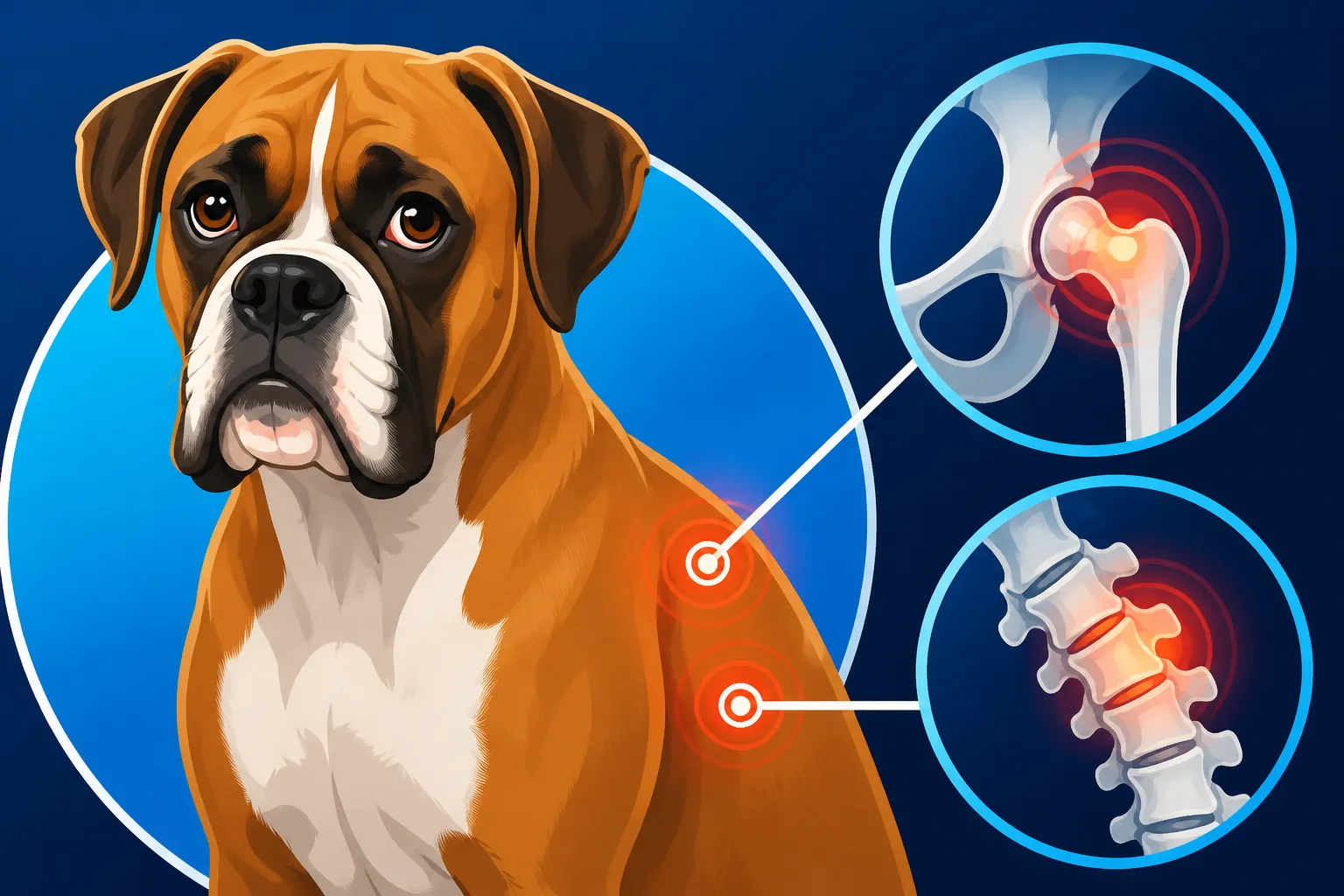
At its core, hip dysplasia is a malformation of the hip joint. Imagine a ball and socket joint: the "ball" is the head of the femur (thigh bone), and the "socket" is part of the pelvis, called the acetabulum. In a healthy hip, these two fit snugly together, allowing for smooth, frictionless movement. When hip dysplasia is present, this fit is compromised. The socket might be too shallow, the femoral head might be misshapen, or both. This poor fit leads to looseness in the joint, known as laxity, which causes the bones to rub and grind against each other instead of gliding smoothly.
Over time, this abnormal friction and movement lead to the degeneration of the joint. The cartilage wears away, new bone spurs (osteophytes) can form as the body tries to stabilize the unstable joint, and eventually, this progresses into osteoarthritis, which is essentially painful arthritis. It's a progressive disease, meaning it tends to get worse over time, particularly without intervention. It’s not just an "old dog" problem; some Boxers show signs as puppies, while others might not exhibit clinical symptoms until middle age, even if the underlying condition has been there all along.
Why Boxers Are Prone to Hip Dysplasia
Boxers, like many larger, fast-growing breeds, have a genetic predisposition to hip dysplasia. While genetics play a significant role, it’s not the only factor. Environmental influences also contribute to how severe the condition becomes. Rapid growth spurts, excessive weight gain during puppyhood, certain types of intense exercise that put undue stress on developing joints, and even nutrition can all exacerbate or mitigate the expression of the disease in a genetically predisposed dog.
When you're dealing with a breed as muscular and athletic as a Boxer, the demands placed on their joints are considerable. A strong dog with faulty hips can experience even more pain and damage because their powerful muscles might be constantly pulling on an unstable joint. This is why responsible breeding practices are so crucial. Breeders who screen their dogs for hip dysplasia, such as through OFA or PennHIP evaluations, are trying to reduce the incidence of this painful condition in future generations. You can learn more about The Health Screening a Boxer Breeder Owes You if you're looking for a puppy. It's a devastating diagnosis, and knowing your breeder has done their part can offer some peace of mind.
Recognizing the Early Signs in Your Boxer
Catching hip dysplasia early can make a huge difference in managing the condition and improving your Boxer's quality of life. Unfortunately, Boxers are notoriously stoic and excellent at masking pain, often continuing to be playful even when they're hurting. This makes us, their devoted owners, their best advocates.
Keep a close eye on their movement and behavior, especially after rest or exercise. Do they seem stiff when they first get up in the morning or after a long nap? Are they reluctant to jump into the car or climb stairs? You might notice a subtle lameness in one or both hind legs, or a decrease in their willingness to play or go for long walks. Some Boxers might display a "bunny hop" gait, where they move both hind legs together, especially when running. You might also observe muscle loss in their hindquarters, as they try to shift weight away from the painful hips, leading to atrophy. It's important to remember that these signs can be subtle, and can sometimes be mistaken for other conditions, such as A Boxer That Drags a Back Foot. Pay attention to changes in their overall enthusiasm for activities they once loved. If your Boxer used to zoom around the yard and now prefers to lie down, it’s definitely worth a vet visit.
Diagnosing Hip Dysplasia and Spondylosis
When you suspect your Boxer might be struggling with joint pain, the diagnostic process becomes paramount. Getting an accurate diagnosis is crucial for developing an effective treatment plan.
The Role of X-rays and OFA Scoring
The gold standard for diagnosing hip dysplasia is through veterinary radiography (X-rays). Your vet will likely take several views of your Boxer's hips, often requiring sedation to ensure proper positioning and minimize discomfort for your dog. These X-rays allow the veterinarian to visually assess the hip joint's conformity, the depth of the acetabulum, and the fit of the femoral head.
For breeding purposes, and sometimes for general diagnosis, dogs can undergo orthopedic evaluations from organizations like the Orthopedic Foundation for Animals (OFA). The OFA uses a panel of three independent radiologists to evaluate hip X-rays and assign a grade (Excellent, Good, Fair, Borderline, Mild, Moderate, Severe). This grading system helps breeders assess the hip health of their dogs before breeding, aiming to reduce the incidence of hip dysplasia. Understanding Reading a Boxer's OFA Hip Score can give you a clearer picture of what these evaluations mean. While OFA certification is usually done around two years of age, diagnostic X-rays can be taken at any age if hip dysplasia is suspected. It’s a critical tool in a vet’s arsenal to see what’s truly happening beneath the surface.
Differentiating Between HD and Other Conditions
Diagnosing joint issues isn't always straightforward because many conditions can present with similar symptoms. For instance, hip dysplasia symptoms can sometimes be confused with those of degenerative myelopathy (DM) or even certain types of cancer. Degenerative myelopathy, a progressive neurological disease affecting the spinal cord, can also cause hind limb weakness and incoordination, similar to severe hip pain. Knowing How Fast Boxer Myelopathy Progresses can help you understand the differences in progression.
Spondylosis deformans, which we'll delve into more deeply shortly, is another condition that can cause stiffness and discomfort in the spine, sometimes mimicking hip pain. Arthritis in other joints, nerve impingement, or even soft tissue injuries can all produce similar signs. This is why a thorough veterinary examination, including palpation, gait analysis, and neurological testing, along with X-rays, is essential. Your vet will rule out other potential causes of your Boxer's symptoms to ensure the diagnosis is accurate and the treatment plan is targeted effectively. It's not uncommon for Boxers, especially as they age, to develop Arthritis in an Older Boxer in multiple joints, further complicating the diagnostic picture.
When to Seek a Specialist
While your primary veterinarian is an excellent first resource, there are times when seeking the opinion of a specialist can be incredibly beneficial. If your Boxer’s symptoms are severe, if the diagnosis is unclear, or if your vet recommends advanced treatment options like surgery, a referral to a board-certified veterinary orthopedic surgeon or a rehabilitation specialist might be the next step.
These specialists have extensive training and experience in complex musculoskeletal conditions. They can offer more advanced diagnostic techniques, such as CT scans or MRIs, to get a detailed view of the joints and surrounding structures. More importantly, they can discuss a wider range of surgical interventions and rehabilitation protocols. For instance, if your Boxer is a candidate for a total hip replacement or a femoral head ostectomy (FHO), an orthopedic surgeon is the expert you'll want on your side. Investing in specialized care can be costly, but the long-term benefits to your Boxer’s mobility and comfort can be immense. This is where a robust pet insurance plan like those offered by Healthy Paws can truly make a difference, helping to mitigate the financial burden of advanced diagnostics and treatments.
Managing Boxer Hip Dysplasia
Once diagnosed, managing hip dysplasia becomes a lifelong commitment to keeping your Boxer comfortable and mobile. There's no one-size-fits-all solution, and a multi-modal approach is often the most effective.
Conservative Management Strategies
For many Boxers with mild to moderate hip dysplasia, or for those not suitable for surgery, conservative management is the first line of defense. This approach focuses on alleviating pain, reducing inflammation, and preserving joint function without invasive procedures.
It typically involves a combination of therapies:
- Pain Relief and Anti-Inflammatory Medication: Non-steroidal anti-inflammatory drugs (NSAIDs) are commonly prescribed to reduce pain and inflammation. Your vet will determine the appropriate dosage and monitor for side effects, especially with long-term use. Other pain medications might also be used, depending on the severity.
- Joint Supplements: Glucosamine, chondroitin, MSM, and Omega-3 fatty acids are popular supplements that can help support cartilage health and reduce inflammation. While not a cure, they can contribute to overall joint health and potentially slow the progression of arthritis. You can explore Joint Support in a Boxer's Diet for more specific recommendations.
- Physical Therapy and Rehabilitation: This is a game-changer for many dogs. A certified canine rehabilitation therapist can design a tailored exercise program to strengthen muscles supporting the joint, improve range of motion, and reduce pain. This might include hydrotherapy (swimming or underwater treadmill), therapeutic exercises, massage, and modalities like laser therapy or acupuncture. These targeted therapies can significantly improve your Boxer’s comfort and mobility.
- Controlled Exercise: While strenuous, high-impact activities should be limited, regular, moderate exercise is crucial. Short, frequent walks on soft surfaces are better than long, intense sessions. The goal is to maintain muscle mass without overstressing the joints.
Surgical Interventions for Severe Cases
When conservative management isn't enough to maintain a good quality of life, or if the dysplasia is severe, surgical options become a serious consideration. These procedures aim to either correct the anatomical defect or alleviate the pain associated with it.
Some common surgical options include:
- Total Hip Replacement (THR): This is the most effective surgical treatment for severe hip dysplasia, replacing the diseased hip joint with prosthetic components. It offers excellent long-term results, often restoring near-normal function and eliminating pain. However, it's a complex and expensive procedure.
- Femoral Head Ostectomy (FHO): In an FHO, the head of the femur is removed, and a "false joint" forms from scar tissue. This procedure is generally less expensive than a THR and is often recommended for smaller dogs or when THR is not feasible. While it relieves pain, it doesn't restore normal hip mechanics, and the limb might be slightly shorter.
- Triple Pelvic Osteotomy (TPO) or Juvenile Pubic Symphysiodesis (JPS): These are preventative surgeries performed on younger dogs (TPO for dogs typically under 10 months, JPS for puppies under 5 months) with early signs of hip laxity, aiming to improve the congruence of the hip joint before significant arthritis develops.
The decision for surgery is a big one, involving discussions with your vet and specialist about your Boxer's age, overall health, severity of the condition, and your financial capabilities. Surgical costs, follow-up care, and rehabilitation can add up, making a proactive approach to pet insurance through providers like Healthy Paws a wise decision early in your Boxer's life.
The Importance of Weight Management and Exercise
Regardless of whether your Boxer undergoes surgery or is managed conservatively, maintaining an ideal body weight is absolutely paramount. Every extra pound your Boxer carries puts additional stress on their already compromised joints, exacerbating pain and accelerating the progression of arthritis.
Think of it this way: for every extra pound on your Boxer, it's like putting four times that weight onto their hips with every step. Keeping your Boxer lean and muscular is one of the most impactful things you can do to manage hip dysplasia. Your vet can help you determine your Boxer's ideal weight and recommend a suitable diet and feeding plan. Feeding a balanced diet appropriate for their activity level and age is crucial.
Exercise, as mentioned, needs to be controlled. The goal is muscle building and joint mobility, not high-impact stress. Daily, moderate walks, swimming (which is excellent non-weight-bearing exercise), or gentle leash walks are usually best. Avoid activities that involve excessive jumping, twisting, or hard stops and starts, which can put immense strain on the hips. When you consider Whether a Boxer Puppy Should Jump, this advice applies even more to a Boxer with developing or diagnosed hip issues. Consistency is key, but always listen to your Boxer and adjust activity levels based on their comfort.
Unpacking Spondylosis Deformans in Boxers
While hip dysplasia focuses on the hip joints, spondylosis deformans is a condition affecting the spine, often developing silently for years before becoming apparent.
What is Spondylosis Deformans?
Spondylosis deformans is a degenerative condition of the spine characterized by the formation of bony spurs, or osteophytes, along the undersides, sides, and eventually the top surfaces of the vertebrae. Essentially, it’s the body's attempt to stabilize areas of spinal instability or stress. These bony bridges can grow quite large, sometimes fusing vertebrae together, especially in the thoracic (chest) and lumbar (lower back) regions.
It's a very common finding in older Boxers and other large breeds, often appearing on X-rays taken for other reasons, even in dogs that show no clinical signs. However, when these bony growths become extensive, or if they impinge on nerves exiting the spinal cord, they can cause pain, stiffness, and reduced mobility. The exact cause isn't fully understood, but it's believed to be a combination of genetic predisposition, repetitive stress, injury, and age. Just like with hips, A Boxer That Thickens and Slows Down might be showing early signs of spinal changes, even if you haven't considered spondylosis yet.
Symptoms and Progression in Boxers
Many Boxers with spondylosis deformans never show any symptoms. The bony bridges can develop quite extensively without causing any noticeable problems for the dog. When symptoms do appear, they typically manifest as stiffness, particularly after rest or exercise, reluctance to jump or climb, and a decreased range of motion in the spine.
You might notice your Boxer:
- Having difficulty getting up from lying down.
- Being hesitant to turn their head or body.
- Exhibiting a hunched posture.
- Showing pain when you touch their back.
- Having a reduced activity level or playing less.
In severe cases, if the bony spurs compress spinal nerves, it can lead to neurological signs like weakness in the hind legs, limping, or even incontinence. However, this is less common than simple stiffness. The progression is usually slow and gradual, often advancing over years. It’s a chronic condition, and while the bony changes are irreversible, the symptoms can often be managed effectively. Regular check-ups as your Boxer ages, particularly around the time you're Caring for a Boxer Past Eight, can help identify these changes before they significantly impact quality of life.
How Spondylosis Differs from Other Back Issues
It’s crucial to distinguish spondylosis from other, sometimes more acute and severe, back problems. Conditions like intervertebral disc disease (IVDD) or degenerative myelopathy can present with similar signs of back pain or hind limb weakness, but their underlying pathology and treatment are very different.
- Spondylosis vs. IVDD: IVDD involves the degeneration and herniation of the intervertebral discs that cushion the vertebrae. When a disc bulges or ruptures, it can press on the spinal cord, causing acute, severe pain, weakness, and even paralysis. Spondylosis, in contrast, is the body's response to instability, forming bony bridges around the discs. While spondylosis can indicate some underlying instability that might predispose to IVDD, they are distinct conditions. IVDD is often a sudden, emergency situation, whereas spondylosis is typically a slow, chronic process.
- Spondylosis vs. Degenerative Myelopathy: Degenerative Myelopathy (DM) is a progressive neurological disease that affects the white matter of the spinal cord, leading to hind limb weakness and paralysis. DM is not painful, whereas spondylosis can be painful. A Boxer with DM won't typically exhibit pain responses when their back is palpated, but a Boxer with painful spondylosis or IVDD will. A definitive diagnosis often requires advanced imaging and neurological examination to differentiate these conditions, as well as specific genetic testing for DM.
Table: Hip Dysplasia vs. Spondylosis Deformans in Boxers
| Feature | Hip Dysplasia (HD) | Spondylosis Deformans |
|---|---|---|
| Location | Hip joints (ball and socket) | Spinal vertebrae |
| Pathology | Malformed joint, laxity, cartilage wear | Bony spurs (osteophytes) along vertebrae |
| Primary Cause | Genetic, environmental factors (growth, weight) | Age, genetics, repetitive stress, injury |
| Common Symptoms | Hind limb lameness, stiffness, "bunny hop" gait, difficulty rising, reluctance to jump/climb, muscle atrophy in hindquarters | Stiffness, reluctance to turn/bend, hunched posture, pain on palpation, decreased activity |
| Pain Level | Often painful, especially with arthritis | Can be asymptomatic, but can cause pain/stiffness if severe or nerves are compressed |
| Progression | Progressive, often leading to osteoarthritis | Slow, chronic, bony changes are irreversible |
| Diagnosis | X-rays of hips (OFA/PennHIP) | X-rays of the spine |
| Treatment Focus | Pain management, anti-inflammatories, joint supplements, physical therapy, weight control, surgery (THR, FHO, TPO) | Pain management, anti-inflammatories, physical therapy, weight control, gentle exercise |
Living with and Supporting a Boxer with Joint Issues
Living with a Boxer experiencing hip dysplasia or spondylosis requires dedication and thoughtful adjustments to their daily life. The goal is to maximize their comfort and mobility for as long as possible.
Home Modifications and Mobility Aids
Making simple changes around your home can significantly reduce strain on your Boxer’s joints. Every little bit helps to make their environment more joint-friendly:
- Ramps and Stairs: If your Boxer loves to ride in the car or sleep on the couch, invest in ramps to eliminate jumping. Stairs, especially for larger dogs, can be difficult and painful. Consider installing ramps inside your home if you have multiple levels, or block off access to stairs if they pose too much risk.
- Non-Slip Flooring: Slippery floors like hardwood or tile can be challenging and dangerous for dogs with compromised mobility. Use rugs, runners, or carpet tiles to provide traction, especially in high-traffic areas.
- Orthopedic Beds: A high-quality orthopedic bed with dense foam provides excellent support and cushioning, alleviating pressure on sore joints. Standard fluffy beds often don’t offer enough support. Consider the advice in Bedding for an Old Boxer's Joints for specific choices.
- Raised Food and Water Bowls: For Boxers with neck or back pain from spondylosis, raised bowls can make eating and drinking much more comfortable by reducing the need to bend down.
- Harnesses and Support Slings: A rear-support harness or a full-body harness can provide extra stability and make it easier for you to assist your Boxer in standing up, navigating stairs, or walking. There are many excellent options designed specifically for dogs with mobility challenges.
Nutritional Support and Supplements
Nutrition plays a vital role in managing joint health. Beyond maintaining an ideal weight, specific dietary components and supplements can offer support:
- Joint-Specific Diets: Many premium dog food brands offer formulas specifically designed for joint health, often fortified with glucosamine, chondroitin, and omega-3 fatty acids. Discuss these options with your vet.
- Omega-3 Fatty Acids: Fish oil, rich in EPA and DHA, has powerful anti-inflammatory properties that can help reduce joint pain. Look for high-quality supplements specifically formulated for dogs.
- Glucosamine and Chondroitin: These are chondroprotective agents that help support cartilage health and may slow down its degradation. While their effectiveness can vary, many owners report positive results.
- MSM (Methylsulfonylmethane): Another supplement known for its anti-inflammatory and pain-relieving properties.
- Antioxidants: Vitamins E and C, along with other antioxidants, can help reduce oxidative stress in the joints.
Always consult your veterinarian before adding any supplements to your Boxer's diet to ensure they are appropriate and don’t interact with any medications. Proper nutrition and supplementation can significantly contribute to your Boxer's comfort and mobility, especially as they get older.
Long-Term Outlook and Quality of Life
The long-term outlook for a Boxer with hip dysplasia and/or spondylosis varies greatly depending on the severity of the condition, the age of onset, and the effectiveness of management strategies. While neither condition is curable, most Boxers can live comfortable, happy lives with appropriate care.
The key is proactive, consistent management. This means regular vet check-ups, adhering to medication schedules, continuing physical therapy exercises, and maintaining optimal weight. Monitoring your Boxer closely for any changes in their pain levels or mobility is crucial so that adjustments to their treatment plan can be made promptly.
Our Boxers thrive on companionship and routine, so maintaining a consistent, loving environment is also vital for their mental well-being. Even if their physical abilities are diminished, they still crave interaction and a sense of purpose. Focus on activities they can still enjoy, whether it's gentle walks, puzzle toys, or simply cuddling on the couch. The quality of life is paramount. If their pain becomes unmanageable, or they can no longer participate in activities that bring them joy, difficult conversations with your veterinarian about end-of-life care may be necessary. For more on this, you might find valuable information in posts like How Boxer Costs Climb After Seven and considering overall well-being.
Prevention and Responsible Breeding Practices
While some aspects of joint health are beyond our control, there are many proactive steps owners and breeders can take to minimize the risk and impact of hip dysplasia and spondylosis in Boxers.
Screening Prospective Boxer Parents
For anyone considering bringing a Boxer puppy into their home, one of the most impactful preventative measures is choosing a reputable breeder who prioritizes health screening. Responsible Boxer breeders will routinely screen their breeding stock for hip dysplasia, as well as other genetic conditions common in the breed.
This involves submitting hip X-rays to organizations like the OFA (Orthopedic Foundation for Animals) or PennHIP. A breeder should be able to provide OFA certificates or PennHIP reports for both parents of a litter, showing a passing grade (e.g., Fair, Good, or Excellent for OFA hips). Insist on seeing these certifications. A breeder who tells you "we haven't had any problems" or "they're just pets, so we don't do that" is a red flag. Health clearances are non-negotiable for reducing the risk of these debilitating diseases. This diligent screening helps ensure that you are bringing home a puppy with the best possible genetic start.
Early Life Care for Joint Health
The first year of a Boxer's life is a critical period for joint development. How they are raised during this time can significantly influence their lifelong joint health, especially for dogs predisposed to conditions like hip dysplasia.
- Controlled Growth: Avoid rapid growth spurts in puppies. Feed a high-quality large-breed puppy food designed for slow, steady growth. Overfeeding and allowing a puppy to become overweight puts excessive strain on their developing joints.
- Appropriate Exercise: While Boxers are energetic, their growing joints are fragile. Avoid forced, high-impact exercise like long runs, jumping from heights, or intense agility training until their growth plates have closed (typically around 12-18 months). Plenty of supervised, free-play on soft surfaces is good, but don't overdo it. Short, frequent walks are better than one long, strenuous one.
- Injury Prevention: Be mindful of slippery floors and prevent your puppy from repeatedly jumping on and off furniture. A single bad fall or twist can cause damage that impacts joint health long-term.
- Regular Vet Check-ups: Routine veterinary visits allow your vet to monitor your puppy's growth and address any concerns early on.
By carefully managing a Boxer puppy's nutrition and exercise during their developmental stages, you can give them the best chance at healthy joints.
Choosing a Reputable Boxer Breeder
The choice of breeder is arguably the single most important factor in preventing serious genetic health issues like hip dysplasia and spondylosis. A reputable breeder is much more than someone who just sells puppies; they are dedicated to the health, temperament, and longevity of the breed.
- Health Clearances: As mentioned, they will perform and openly share health clearances for hips, elbows, heart (ARVC and SAS), and sometimes thyroid and DM, on both parents.
- Transparency: They are happy to answer all your questions, allow you to visit their facility, and let you meet the puppy’s parents. They should be transparent about any health issues in their lines.
- Lifetime Support: A good breeder will offer ongoing support and advice for the lifetime of your dog.
- Contracts and Guarantees: They will typically have a health guarantee in their puppy contract.
- Waitlists: Be prepared for a waitlist. Ethical breeders typically have limited litters and focus on quality over quantity.
Choosing a well-bred Boxer from a health-tested lineage significantly reduces the risk of encountering these challenging joint conditions, giving your beloved companion the best possible start to a long, healthy, and active life.
Disclaimer
The information provided in this guide is for general informational purposes only and is not intended as a substitute for professional veterinary advice. Always consult with a qualified veterinarian for any health concerns or before making any decisions related to your Boxer's health and treatment.