Why Boxers Live Shorter Than Similar Breeds
It’s a heartbreaking reality for many Boxer owners: these incredible, loving dogs often don't live as long as we desperately wish they would, or as long as many other similar-sized breeds. This guide aims to gently walk you through the complex reasons behind the Boxer's often shorter lifespan, exploring the genetic predispositions and breed-specific health challenges that sadly contribute to their earlier departures.
The Unfortunate Reality of Boxer Lifespan
Bringing a Boxer into your home is an experience unlike any other. Their clownish antics, boundless energy, and unwavering loyalty fill your life with joy and laughter. But lurking in the background for every Boxer owner is the knowledge that their time with these magnificent creatures might be shorter than they’d hope. It’s a heavy truth, one that often brings with it a sense of urgency to cherish every single moment. We love them fiercely, and that love makes the statistics sting even more.
Comparing Boxers to Other Breeds
When you look at the average lifespan for many medium to large-sized dog breeds, you'll often see numbers stretching into the 12-14 year range, and sometimes even longer. Breeds like Labrador Retrievers often live 10-12 years, Golden Retrievers 10-12 years, and even larger breeds like German Shepherds typically see 9-13 years. Then you look at the Boxer. The average The Ten to Twelve Year Boxer Lifespan often hovers between 9 and 10 years, and for many, it's even less. While 9 years isn't a short life for a dog, it's notably shorter than many of their contemporaries, leaving owners wondering why their spirited companions seem to face the clock speeding up. This disparity is not just anecdotal; it's a well-documented trend that researchers and veterinarians have observed for decades, confirming that Boxers, unfortunately, tend to have a compressed timeline compared to their canine cousins.
It can feel incredibly unfair when you pour your heart and soul into raising a healthy, happy Boxer, only to realize that their youth seems to fly by, and senior age arrives much sooner than anticipated. This isn't due to a lack of care or love; it's deeply rooted in their breed-specific vulnerabilities. Understanding these factors isn't about dwelling on the negative, but rather about arming ourselves with knowledge to provide the best possible care and to make informed decisions throughout their lives, striving to maximize those precious years.
The Emotional Toll on Boxer Owners
The knowledge that Boxers often have a shorter lifespan casts a long shadow over the joy of ownership. Every twitch of an ear, every playful romp, every slobbery kiss is cherished, but also tinged with the bittersweet awareness that time is fleeting. Many Boxer owners experience anticipatory grief, a quiet sorrow that starts long before the actual goodbye. You find yourself examining every new lump, every slight cough, every moment of lethargy with heightened concern, wondering if this is "it." This constant vigilance can be emotionally draining, transforming the pure joy of pet ownership into a vigilant watch against the inevitable.
It’s completely valid to feel this way. Boxers are not just pets; they are family members with huge personalities that leave an indelible mark on our lives. When you bring home that goofy, energetic puppy, you dream of a decade or more of adventures together. To realize that your timeline might be significantly shorter can be devastating. This emotional burden underscores the importance of being present, celebrating every day, and also planning for their future health needs. Having good pet insurance, like a policy from Healthy Paws, can alleviate some of the financial stress when these health challenges inevitably arise, allowing you to focus on care rather than cost.
The Genetic Blueprint: A Double-Edged Sword
Boxers are magnificent animals, a testament to generations of selective breeding that gave them their distinctive look, powerful build, and charming temperament. However, this same selective breeding, unfortunately, also concentrated certain genetic predispositions to serious health issues that dramatically impact their longevity. It's a cruel twist of fate for a breed known for its robust appearance and vibrant personality.
The Predominance of Cancer in Boxers
If there's one single factor that contributes most significantly to the Boxer's shorter lifespan, it's their overwhelming susceptibility to cancer. It's not just a risk; it's the risk. You’ll find that Why Cancer Kills More Boxers Than Anything Else is a tragically common headline in the Boxer world. This breed consistently tops lists for cancer incidence among all dog breeds. We're talking about a genetic predisposition so strong that many breeders refer to it as "the Boxer curse." This isn't about unlucky individual dogs; it's a systemic vulnerability.
The types of cancer that commonly afflict Boxers are varied and aggressive. Mast cell tumors are incredibly prevalent, often appearing as innocuous lumps on or under the skin, but they can metastasize quickly and aggressively. Lymphoma, a cancer of the lymphatic system, is another heartbreakingly common diagnosis, often presenting with swollen lymph nodes. Then there are hemangiosarcomas, aggressive cancers of the blood vessel lining, which can develop silently in organs like the spleen or heart, leading to sudden and often fatal internal bleeding. Brain tumors in Boxers are also a significant concern, often signaled by sudden seizures or behavioral changes. The sheer variety and aggressive nature of these cancers mean that many Boxers are diagnosed, even with the best care, at a relatively young age, significantly shortening their lives. Regular Weekly Lump Checks on a Boxer are not just a good idea, they are absolutely critical for this breed.
This genetic vulnerability means that even with the most diligent care, the odds are stacked against them. When we talk about genetics, it means these tendencies are passed down through generations. While responsible breeders work tirelessly to screen their breeding stock and avoid pairing dogs with a strong family history of cancer, it's an uphill battle given the breed's widespread genetic susceptibility. This deep-seated predisposition to various forms of cancer is arguably the single largest factor in why Boxers don't live as long as many other breeds, often claiming them far too soon.
Cardiac Concerns: ARVC and SAS
Beyond cancer, heart disease is another major contributor to the Boxer's shortened lifespan, particularly a condition known as Arrhythmogenic Right Ventricular Cardiomyopathy (ARVC), also commonly called Boxer Cardiomyopathy. This inherited disease causes the heart muscle cells to be replaced by fatty or fibrous tissue, leading to electrical instability in the heart. This instability manifests as arrhythmias, or irregular heartbeats, which can range from mild and asymptomatic to severe, causing fainting, exercise intolerance, and, tragically, sudden death. It's not uncommon for seemingly healthy Boxers to suddenly collapse and pass away due to ARVC. Many owners use a Boxer Cardiomyopathy and the Holter Monitor to screen for this silent killer.
Another serious heart condition found in Boxers is Subaortic Stenosis (SAS). This is a congenital (present at birth) narrowing below the aortic valve, the main artery leaving the heart. This narrowing forces the heart to work harder to pump blood to the body, leading to thickening of the heart muscle and potential heart failure. The severity of SAS varies, but in moderate to severe cases, it significantly increases the risk of sudden death, even in young Boxers. Screening for Subaortic Stenosis in a Boxer Puppy is a vital part of responsible breeding practices.
These two conditions, ARVC and SAS, demonstrate how deeply integrated genetic health issues are into the Boxer breed. While diligent health screening by breeders can reduce the incidence of these diseases, they remain prevalent due to their genetic basis. Pet insurance providers like Healthy Paws are invaluable in these situations, helping cover the often substantial costs of cardiac diagnostics (like echocardiograms and Holter monitors) and long-term medication needed to manage these serious conditions, giving owners peace of mind and their Boxers the best chance possible.
Breed-Specific Health Challenges Beyond Genetics
While cancer and heart disease are often at the forefront of discussions about Boxer health, other breed-specific conditions, some with genetic components and others related to their unique anatomy and physiology, also contribute to their overall health challenges and can impact their longevity or quality of life significantly. These aren't always immediate killers but can lead to severe complications or a diminished quality of life that eventually leads to difficult decisions.
Bloat (GDV): A Sudden and Deadly Threat
Gastric Dilatation-Volvulus, commonly known as bloat, is a terrifying and rapidly fatal condition that disproportionately affects large, deep-chested breeds like the Boxer. In bloat, the stomach fills with gas and then twists upon itself, trapping the gas and cutting off blood supply. The onset is sudden and excruciatingly painful, and without immediate emergency veterinary intervention, it's almost always fatal. The symptoms can come on incredibly fast: pacing, retching without producing anything, a distended abdomen, and obvious signs of distress. It's an emergency that requires surgery within hours, sometimes minutes.
Boxers' deep chests, while part of their majestic appearance, are a risk factor for bloat. The exact causes are complex, but rapid eating, large meals, and excessive exercise around meal times are thought to contribute. This means Boxer owners must be extra vigilant, splitting meals into smaller portions, using slow-feeder bowls, and ensuring a quiet rest period before and after eating. Many owners consider prophylactic gastropexy, a surgery to tack the stomach to the abdominal wall, which can prevent the fatal twisting even if the stomach still dilates. Deciding Whether Preventive Bloat Surgery Suits a Boxer is a serious consideration for many. Bloat is a stark reminder that a Boxer’s unique physique, while beautiful, also carries significant, life-threatening risks that demand constant awareness from their caretakers.
Degenerative Myelopathy: A Slow Decline
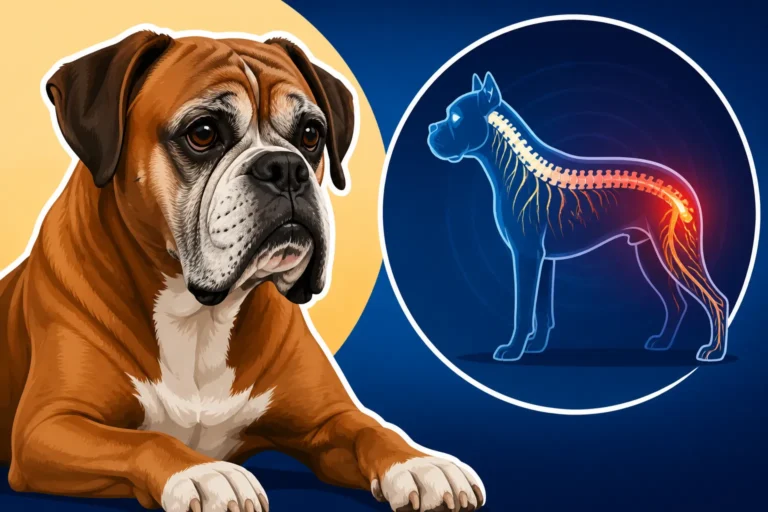
Degenerative Myelopathy (DM) is a progressive neurological disease that affects the spinal cord, leading to weakness and eventual paralysis of the hind limbs. While not directly fatal, DM severely impacts a Boxer's quality of life, leading to a slow and often frustrating decline. It's often compared to Lou Gehrig's disease (ALS) in humans. The early signs can be subtle, like a slight dragging of a back paw or an uneven gait. Over time, the weakness progresses, making it difficult for the dog to stand, walk, and control their bladder and bowels. Degenerative Myelopathy in an Older Boxer can be heartbreaking to witness, as their minds remain sharp while their bodies fail them.
Boxers are genetically predisposed to DM, with a specific gene mutation identified that increases their risk. This makes genetic testing an important tool for responsible breeders to try and reduce the incidence. For owners of affected dogs, management focuses on supportive care: physical therapy, slings, and eventually wheelchairs or carts to maintain mobility and comfort. While DM doesn't cause pain itself, secondary issues like pressure sores from immobility can arise. The difficult decision to euthanize is often made when the dog can no longer move independently or maintain hygiene, underscoring how this disease, even without being a direct killer, can shorten a dog's meaningful life.
The Impact of Breeding Practices and Awareness
While we've discussed the genetic predispositions, it's crucial to acknowledge the human element in managing and, hopefully, mitigating these challenges. Responsible breeding practices and increased owner awareness play a significant role in improving the health prospects of individual Boxers and the breed as a whole.
The Role of Responsible Breeding and Health Screening
The foundation of a healthy Boxer starts long before you bring them home. A truly responsible breeder is not just focused on pretty puppies; they are dedicated to the long-term health and welfare of their lines. This means extensive health screening of both parents before breeding. For Boxers, this is particularly critical. This includes regular cardiac screenings (echocardiograms and 24-hour Holter monitors to check for ARVC), genetic testing for Degenerative Myelopathy, and sometimes even thyroid checks. A reputable breeder will be transparent about the health history of their breeding dogs and their pedigrees, often providing documentation of these tests. Asking about The Health Screening a Boxer Breeder Owes You is not just good practice, it's essential.
Unfortunately, not all breeders are created equal. Puppy mills and backyard breeders often skip these expensive and time-consuming health tests, prioritizing profit over health. This perpetuates the cycle of inherited diseases, leading to more Boxers suffering from preventable conditions and living shorter lives. Supporting responsible breeders, even if it means paying a higher upfront price, is an investment in a healthier, potentially longer life for your Boxer and contributes to improving the breed's health statistics overall. These breeders are trying to reduce the frequency of conditions like ARVC, even though the genes are so prevalent in the breed.
Early Detection and Proactive Care
For Boxer owners, being proactive about health is paramount. Given their susceptibility to cancer, cardiac issues, and bloat, early detection is key to successful treatment and extending their lives. This means routine veterinary check-ups are non-negotiable, but it also means being highly observant at home. Knowing the signs of bloat, being diligent with Weekly Lump Checks on a Boxer, and recognizing changes in energy levels or breathing patterns can literally be life-saving.
| Condition | Common Symptoms | Proactive Measures | Impact on Lifespan |
|---|---|---|---|
| Cancer | Lumps, swollen lymph nodes, lethargy, weight loss | Weekly lump checks, regular vet exams, prompt biopsy | Significant reduction |
| ARVC (Cardiomyopathy) | Fainting, exercise intolerance, sudden collapse, cough | Annual Holter monitor, echo, genetic testing | Significant reduction |
| SAS (Subaortic Stenosis) | Heart murmur (often puppyhood), fainting, exercise intolerance | Puppy echo screening, vet monitoring | Moderate to significant |
| Bloat (GDV) | Retching, distended abdomen, restlessness, pain | Smaller meals, slow feeder bowls, rest after eating, gastropexy | Acute, often fatal |
| Degenerative Myelopathy | Hind leg weakness, dragging paws, instability | Genetic testing, supportive care, physical therapy | Quality of life, eventual euthanasia |
Regular check-ups, even if your Boxer seems perfectly healthy, are essential. Your veterinarian can catch subtle changes, conduct routine blood work that might flag early issues, and perform physical examinations that can detect things you might miss. Partnering with a good vet who understands the Boxer breed's specific health concerns is invaluable. Think of your pet insurance from providers like Healthy Paws as your safety net, covering a significant portion of the costs for the diagnostics, specialist referrals, and treatments that these serious conditions often require, encouraging prompt and thorough care.
Maximizing the Years You Have Together
While the genetic dice are certainly loaded against Boxers in terms of longevity, that doesn't mean we, as their devoted owners, are helpless. Far from it! There are many things we can do to not only enhance their quality of life but also potentially extend their time with us, making every moment count.
Lifestyle Factors for a Longer, Healthier Life
A healthy lifestyle is just as crucial for a Boxer as it is for us. One of the most important aspects is diet. Feeding a Boxer to Stay Lean and Muscled is vital. Obesity puts extra strain on their hearts and joints, exacerbating potential issues. Choose a high-quality dog food appropriate for their life stage and activity level, and resist the urge to overfeed. Split their daily ration into two or even three smaller meals to help prevent bloat, and always ensure a rest period before and after eating. Treats should be given in moderation, and fresh, healthy snacks like carrots or apple slices can be great alternatives to processed options.
Exercise is another cornerstone of a healthy Boxer life. These are high-energy dogs that need consistent physical activity to stay fit and mentally stimulated. Daily walks, playtime in a securely fenced yard, or engaging in dog sports can help them maintain muscle tone and a healthy weight. However, due to their brachycephalic (flat-faced) structure, Boxers are prone to overheating, especially in warmer climates or during intense exercise. Always be mindful of the temperature, provide plenty of water, and avoid strenuous activity during the hottest parts of the day. Mental stimulation, through puzzle toys, training sessions, and new experiences, is also critical to keeping their intelligent minds sharp and preventing boredom-related destructive behaviors.
Beyond diet and exercise, regular preventive care, including vaccinations, parasite control, and dental hygiene, contributes significantly to their overall health. Remember, a healthy mouth is often an indicator of overall systemic health. All these small, consistent efforts add up to a greater chance of your Boxer enjoying a vibrant, active life for as long as possible.
Understanding Quality of Life Decisions
Even with the best care, the reality is that Boxers are prone to significant health challenges as they age. This brings with it the difficult, yet loving, responsibility of assessing their quality of life, especially in their senior years or when battling chronic illness. Caring for a Boxer Past Eight often involves managing multiple conditions. This isn't about giving up; it's about ensuring their comfort, dignity, and happiness remain paramount.
When a Boxer is diagnosed with a progressive disease like cancer, severe ARVC, or advanced Degenerative Myelopathy, there comes a point where treatment decisions shift from curative to palliative, focusing on pain management and comfort. This might mean adjusting medications, exploring alternative therapies, or simply providing more quiet, comfortable spaces. It’s a deeply personal journey, and there’s no right or wrong answer, but it's important to have honest conversations with your veterinarian about their prognosis and what constitutes a good quality of life for your individual dog.
Knowing When a Boxer With Cancer Has Had Enough or when their discomfort outweighs their joy is one of the hardest decisions a pet owner will ever face. It's about looking beyond our own desires and truly seeing their suffering. Focusing on their comfort, ensuring they still have moments of joy, and making the selfless decision when their pain or distress becomes unmanageable is the ultimate act of love. While their lives may be shorter than we'd like, the depth of love and companionship they bring makes every single day a priceless gift.
Disclaimer
The information provided in this guide is intended for general knowledge and informational purposes only, and does not constitute veterinary advice. Always consult with a qualified veterinarian for any health concerns or before making any decisions about your Boxer's care.