Spondylosis on a Boxer’s X-Ray
It's always a bit unsettling when your beloved Boxer goes in for X-rays, perhaps for a subtle limp or just a routine check-up as they get older, and you hear words like "spondylosis" pop up. It sounds serious, even a little scary, and it leaves you wondering exactly what it means for your bouncy, playful companion. This guide is here to shed light on what spondylosis on a Boxer's X-ray truly signifies, what you can expect, and how best to support your dog through it.
Understanding Spondylosis Deformans in Boxers
When a veterinarian mentions spondylosis deformans, they're talking about a degenerative condition affecting the spine. It's not a sudden injury but rather a gradual change that often comes with age and the wear and tear of a lifetime of enthusiastic Boxer antics. For us Boxer parents, it’s just another one of those things we need to be aware of, right alongside heart concerns and certain cancers, as our dogs mature.
What Exactly Is Spondylosis?
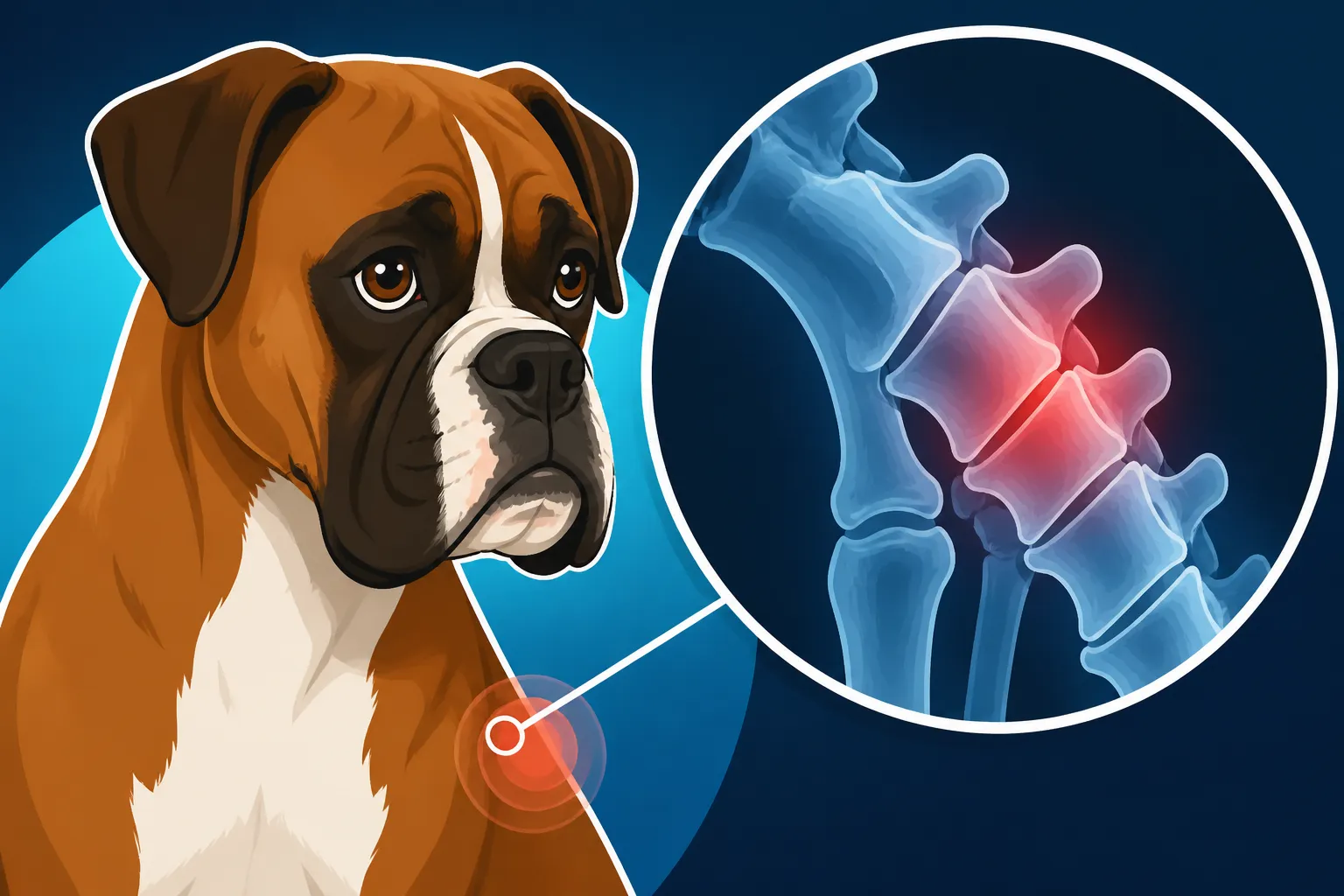
At its core, spondylosis deformans is the body's attempt to stabilize an aging or unstable spine. Imagine your Boxer's spine as a stack of building blocks (vertebrae) with cushions (intervertebral discs) in between. Over time, these cushions can lose elasticity or the ligaments holding the vertebrae together might weaken. To counteract this, the body starts laying down new bone, forming bony spurs, often called osteophytes, along the underside, sides, and top of the vertebrae. These spurs can grow quite large, sometimes even bridging the gap between two adjacent vertebrae, essentially fusing them together.
Think of it like concrete patching up cracks in an old road. It's a natural, albeit often problematic, response. While the intention is to strengthen the spine, these new bone formations can sometimes cause stiffness, discomfort, or, in more severe cases, impact nerve function. It’s a bit of a double-edged sword: the body tries to help, but the solution itself can become part of the problem.
Why Boxers Are Prone to Spondylosis
Boxers, with their deep chests, muscular builds, and incredibly active, sometimes rambunctious personalities, tend to be more susceptible to certain orthopedic conditions, and spondylosis is definitely on that list. Their conformation, combined with their energetic lifestyle – all that "boxing" with their front paws, the enthusiastic wiggles, and those dramatic leaps – puts a fair amount of stress on their spinal columns over the years. It’s a common ailment as they get into their senior years, much like Arthritis in an Older Boxer might affect other joints.
Genetics also play a role; some lines may be more predisposed to developing spondylosis earlier or more severely. While it's not often considered a primary genetic disease like some others, the underlying factors that contribute to spinal wear and tear can certainly have a hereditary component. Furthermore, the sheer force of a seventy-pound Boxer running full tilt, stopping on a dime, or launching themselves off the sofa can create micro-traumas in the spine that, accumulated over time, accelerate the development of these bony changes. It’s the price they pay for being such joyful, powerful goofballs.
The Silent Progression of the Condition
One of the trickiest things about spondylosis is that it often develops silently, especially in its early stages. You might not notice any overt symptoms for years, even if your Boxer’s X-rays are starting to show those tell-tale bone spurs. This is because the spurs themselves aren't inherently painful; it's when they impinge on nerves, cause inflammation in surrounding tissues, or severely restrict movement that signs become apparent.
Many Boxers carry significant spondylosis without ever showing a single sign of discomfort. They might just seem a little stiffer when getting up in the morning, or perhaps they're not quite as eager for that marathon game of fetch, which you might simply attribute to them getting older. It's often only when the condition progresses, or when another issue prompts an X-ray, that the extent of the spinal changes is revealed. This silent progression can be frustrating, making you wonder if you missed something, but it’s just the nature of the beast.
Interpreting X-Ray Findings for Spondylosis
When your vet takes those X-rays, they’re getting a snapshot of your Boxer’s skeletal structure. For spondylosis, this means they’re looking specifically for those extra bone formations along the vertebrae. Seeing them on film can be concerning, but understanding what your vet is looking at can help ease some of that worry.
What the Vet Sees on the X-Ray
On an X-ray, the veterinarian will be looking for what are called osteophytes – those distinctive bony spurs that grow out from the edges of the vertebrae. In more advanced cases, these osteophytes might actually connect, forming a "bridge" between two or more adjacent vertebrae. This bridging indicates a more severe, and often more stabilizing, form of spondylosis. These changes are most commonly found in the thoracic (chest) and lumbar (lower back) regions of the spine, as these areas experience a lot of movement and stress.
The X-ray will also show the overall alignment of the spine, the condition of the intervertebral disc spaces, and rule out other potential issues. Sometimes, what looks like a single spur can be indicative of underlying disc degeneration or instability that the body is trying to compensate for. It's a comprehensive view, not just a search for one specific anomaly. A good veterinarian will explain these findings in detail, often pointing them out on the actual film or digital image, so you can see exactly what they're seeing.
Grading Spondylosis and What It Means
While there isn't one universally standardized grading system for spondylosis across all veterinary practices, vets often use a qualitative scale to describe the severity, usually ranging from mild to severe.
| Grade of Spondylosis | X-Ray Appearance | Clinical Signs Often Present | Management Approach |
|---|---|---|---|
| Mild | Small osteophytes, not bridging. | Often asymptomatic, mild stiffness. | Monitor, joint supplements, maintain lean weight. |
| Moderate | Larger osteophytes, some partial bridging. | Intermittent stiffness, reluctance to jump, slight gait changes. | Pain relief as needed, controlled exercise, physical therapy. |
| Severe | Extensive bridging, spinal fusion, potential nerve impingement. | Persistent pain, noticeable lameness, weakness, nerve issues. | Consistent pain management, advanced therapies, mobility aids. |
It's important to remember that this grading doesn't always directly correlate with the degree of pain or functional impairment your Boxer experiences. A Boxer with "severe" spondylosis on an X-ray might still be quite comfortable, while another with "mild" changes could be experiencing noticeable stiffness or pain. This is why clinical observation and your Boxer's behavior are just as important as the X-ray findings. This condition is also often seen alongside other issues like Boxer Hip Dysplasia and Spondylosis, making a full evaluation crucial.
Differentiating Spondylosis from Other Spinal Issues
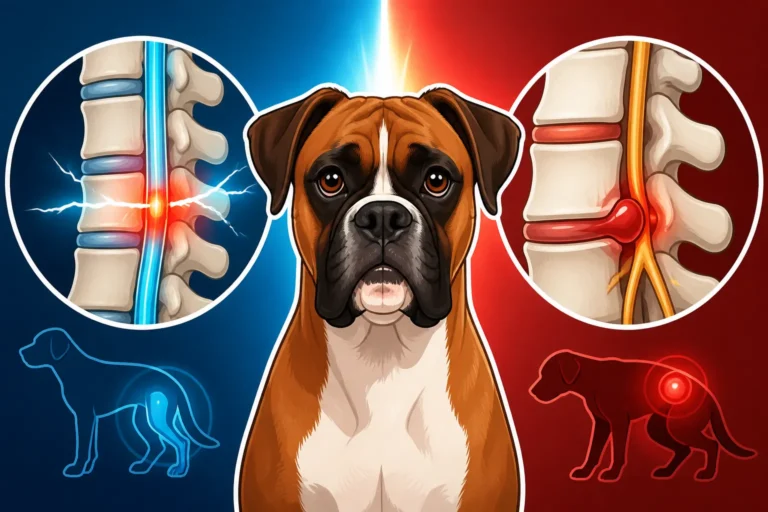
One of the critical roles of X-rays is to help distinguish spondylosis from other spinal problems that might present with similar symptoms. Conditions like intervertebral disc disease (IVDD), where the discs themselves degenerate and can bulge or rupture, can cause back pain, lameness, and neurological deficits. Degenerative Myelopathy in an Older Boxer is another serious spinal cord disease that can cause hind limb weakness and incoordination, and while it doesn't show up directly on an X-ray, X-rays are often used to rule out other causes of these symptoms.
Spondylosis primarily involves bone growth around the discs, whereas IVDD involves the disc material itself. While they can coexist, their treatments and prognoses can differ significantly. Your vet will carefully examine the X-rays for signs of disc space narrowing, vertebral subluxations, or other abnormalities that might point to something beyond simple spondylosis. This thorough diagnostic process helps ensure your Boxer receives the most appropriate and effective care, preventing misdiagnosis and unnecessary treatments.
Managing Spondylosis in Your Boxer
Discovering your Boxer has spondylosis can feel overwhelming, but the good news is that many dogs live long, comfortable lives with proper management. The approach is often multi-faceted, focusing on pain relief, maintaining mobility, and enhancing their overall quality of life.
Pain Management and Anti-Inflammatory Options
The cornerstone of managing symptomatic spondylosis is pain control. Your veterinarian will likely start with non-steroidal anti-inflammatory drugs (NSAIDs), which are effective at reducing both pain and inflammation. Popular choices include medications like carprofen, meloxicam, or firocoxib. It’s crucial to use these only under veterinary guidance, as long-term use requires monitoring for potential side effects, especially on the liver and kidneys. Blood tests are usually recommended periodically to ensure your Boxer is tolerating the medication well.
Beyond NSAIDs, other pain relievers like gabapentin can be prescribed, particularly for neuropathic pain or when NSAIDs alone aren't sufficient. Muscle relaxants might also be used if muscle spasms are contributing to discomfort. For chronic pain, multimodal therapy – combining several types of medications that work in different ways – is often the most effective strategy. Some owners also explore natural supplements like glucosamine, chondroitin, and omega-3 fatty acids (fish oil), which can support joint health and reduce inflammation, though their efficacy for advanced spondylosis can vary. This is where having pet insurance, like a policy from Healthy Paws, can really make a difference, helping to cover the ongoing costs of these medications and vet visits. Many owners find peace of mind knowing they can afford the best care for their beloved Boxer.
Lifestyle Adjustments for Comfort
Managing spondylosis isn't just about medication; it's also about making smart adjustments to your Boxer’s daily life to minimize discomfort and prevent further progression. Keeping your Boxer at a healthy, lean weight is paramount. Extra pounds put additional stress on their spine and joints, exacerbating pain and stiffness. If your Boxer is A Boxer That Thickens and Slows Down, working with your vet on a weight loss plan is essential.
Exercise is still important, but it needs to be modified. Instead of intense, high-impact activities, focus on shorter, more frequent walks on soft surfaces. Swimming or hydrotherapy can be excellent options as they provide low-impact exercise that strengthens muscles without straining the spine. Avoid activities that involve jumping, twisting, or sharp turns. At home, consider ramps instead of stairs, and provide comfortable, orthopedic dog beds that offer good support for their joints, such as those discussed in Bedding for an Old Boxer's Joints. Raised food and water bowls can also help reduce strain on their neck and back during meal times. Simple changes can make a world of difference in your Boxer's daily comfort.
Physical Therapy and Complementary Treatments
Many Boxer owners find immense relief for their dogs through physical therapy and complementary treatments. A certified canine rehabilitation therapist can develop a tailored exercise program designed to strengthen core muscles, improve flexibility, and reduce pain. This might include specific exercises, stretches, massage, and therapeutic modalities like laser therapy or therapeutic ultrasound. These therapies can significantly improve your Boxer’s mobility and overall quality of life.
Acupuncture is another increasingly popular option for managing chronic pain in dogs, including that caused by spondylosis. It involves inserting fine needles into specific points on the body to stimulate nerve function and release natural pain-relieving substances. Chiropractic adjustments, performed by a veterinary chiropractor, can also help address spinal misalignments and improve nervous system function, contributing to pain relief and better mobility. It's always best to seek out practitioners who are certified in canine rehabilitation or acupuncture to ensure your Boxer receives safe and effective treatment. These kinds of ongoing treatments highlight the importance of budgeting for The Monthly Medications a Boxer Is Never Off and other therapies.
The Long-Term Outlook for Boxers with Spondylosis
While a diagnosis of spondylosis isn't something any Boxer parent wants to hear, it's crucial to understand that it's often a manageable condition. It requires a long-term commitment to care, but with the right approach, your Boxer can continue to enjoy a good quality of life.
Prognosis and Quality of Life
For most Boxers, spondylosis is a manageable condition that allows them to maintain a good quality of life. The prognosis is generally good, especially if the condition is identified early and managed proactively. It's not typically a life-threatening disease, but rather one that impacts comfort and mobility. Many Boxers with spondylosis continue to be happy, engaged family members well into their senior years. While it might mean slowing down a bit or modifying their favorite games, it doesn't mean the end of their joyful spirit.
Your role in observing your Boxer’s comfort levels, working closely with your vet, and consistently implementing management strategies will be key. This might involve regular vet check-ups to assess their pain levels and adjust medication as needed. Remembering that The Ten to Twelve Year Boxer Lifespan is relatively short means every comfortable year is precious, and managing conditions like spondylosis helps maximize that time.
When to Consider Advanced Interventions
In most cases, conservative management with medication, lifestyle adjustments, and physical therapy is sufficient for spondylosis. However, there are rare instances where advanced interventions might be considered. If the bony spurs grow so large that they severely impinge on the spinal cord or nerve roots, causing significant neurological deficits, intractable pain, or a severe A Boxer That Drags a Back Foot, surgery might be an option. This is a complex decision and usually only considered when all other avenues have been exhausted.
For Boxers with advanced mobility issues, even without surgery, assistive devices like mobility harnesses, slings, or even custom-fitted Carts and Slings for a Boxer With Myelopathy can dramatically improve their quality of life. These devices allow dogs to remain active, get around independently, and continue to enjoy walks and time with their families, even if their back legs are significantly compromised. Exploring these options with your vet or a rehabilitation specialist can open up new possibilities for your beloved companion.
Supporting Your Aging Boxer
As Boxers age, they naturally face more health challenges, and spondylosis is just one of them. Caring for a Boxer Past Eight involves a holistic approach that acknowledges their changing needs and priorities. This means being extra vigilant for signs of pain or discomfort, not just attributing every slowdown to "old age." It involves regular vet visits, often twice a year, to catch any new issues early and to adjust existing treatments.
Beyond the medical, it's about providing a supportive and loving environment. Ensure they have easy access to their favorite spots without having to jump. Keep them mentally stimulated with puzzle toys or gentle training sessions. Continue to show them love and affection, as their emotional well-being plays a huge role in their physical health. Even with challenges like spondylosis, your Boxer can still lead a fulfilling and joyful life, surrounded by the comfort and care of their family.
Disclaimer
The information provided in this article is for educational purposes only and is not intended to be a substitute for professional veterinary advice, diagnosis, or treatment. Always seek the advice of your veterinarian or other qualified animal health provider with any questions you may have regarding a medical condition.