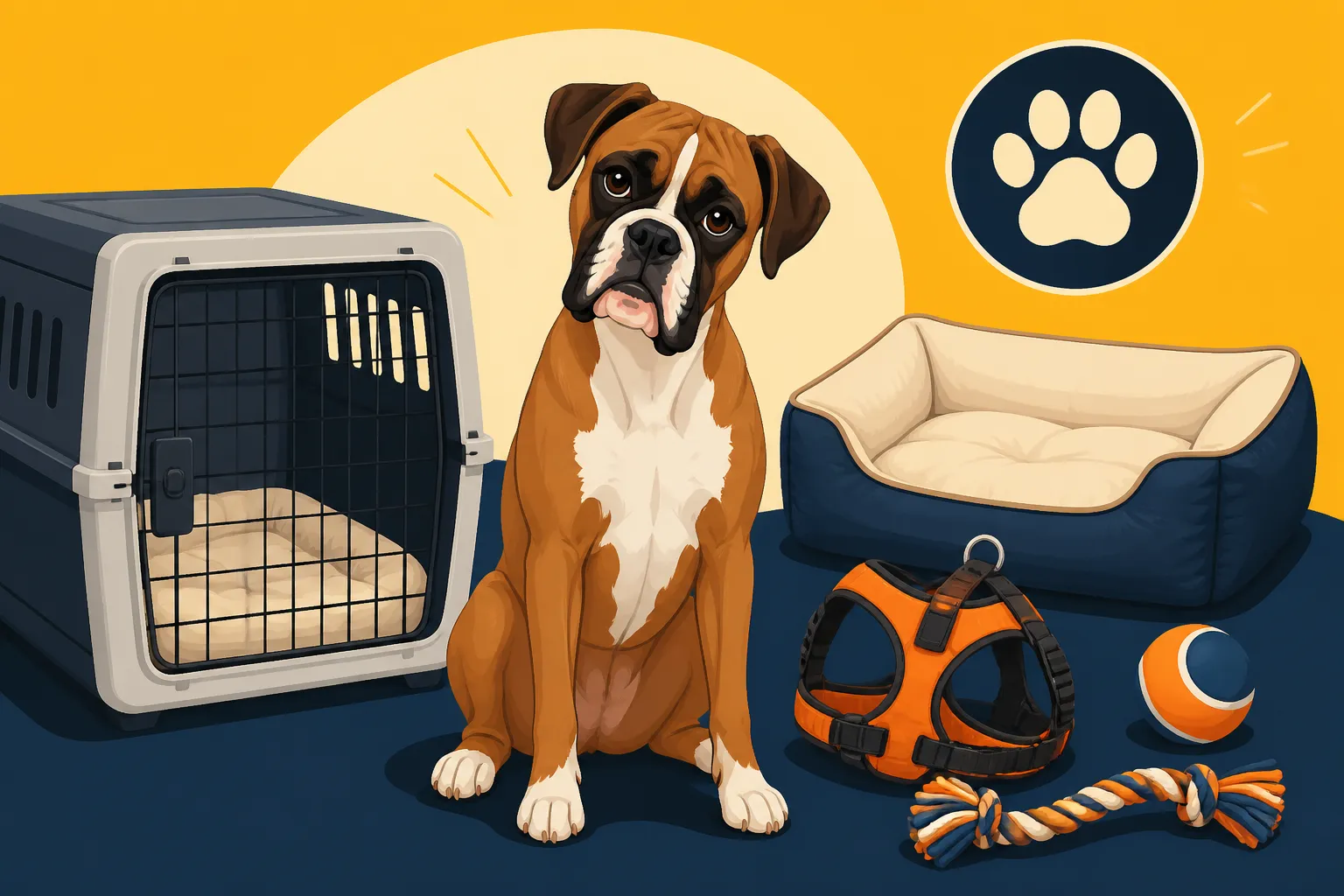
Crates, Beds and Gear Sized for a Boxer
Let's be real, owning a Boxer means accepting that most 'heavy-duty' dog gear is really just 'heavy-duty for a Chihuahua.' You bring home that adorable, wriggly pup, and suddenly, everything you thought was sturdy enough turns into a chew toy or simply buckles under their enthusiastic might. Finding crates, beds, and other essentials that can actually stand up to a Boxer's unique blend of strength, boundless energy, and often, sheer stubbornness, is a constant challenge. This guide will walk you through what truly works for our beloved Boxers, from robust crates to comfy beds and the right walking gear, helping you invest wisely and avoid the endless cycle of replacing broken items.
Crates That Withstand Boxer Enthusiasm
When you first bring home a Boxer, whether it's a tiny puppy or an older rescue, the sheer power they possess can be surprising. Their playful nature combined with powerful jaws and a knack for finding weaknesses in pretty much anything means that a flimsy crate simply won't cut it. Investing in a proper crate isn't just about containment; it's about providing a safe den, aiding in house-training, and keeping your Boxer — and your home — safe.
Sizing for Your Growing Boxer
One of the biggest conundrums for new Boxer owners is figuring out what size crate to buy. Do you get one for the puppy, knowing they’ll rapidly outgrow it? Or do you go straight for the adult size, risking house-training setbacks because the crate is too large and allows them to soil one end and sleep in the other? The ideal crate for an adult Boxer typically falls in the 42-inch or 48-inch range. A 42-inch crate is often sufficient for most females and average-sized males, offering enough room to stand, turn around, and lie down comfortably without excessive extra space. However, if you have a particularly large male or want to ensure maximum stretch-out room, a 48-inch crate might be the way to go.
For puppies, the best approach is to get an adult-sized crate that comes with a divider panel. This allows you to adjust the living space as your puppy grows, gradually expanding the area while maintaining the snug den-like feel that encourages them to hold their bladder. It saves you from buying multiple crates as your pup transforms from a small bundle of energy into a powerful adolescent. Remember, the goal is comfort, not confinement so tight they can't move, but also not so vast they can treat it like a multi-room apartment. You can learn more about picking the right size in our detailed guide on Sizing a Crate for a Boxer That Will Hit Seventy.
Durability and Material Matters
Boxers are notorious for their strength and, in their younger years, their tendency to chew. This isn't necessarily destructive behavior; often, it's just how they explore their world or cope with boredom or anxiety. This means the material and construction of your crate are paramount. Standard wire crates are a popular choice due to their affordability and ventilation, but not all wire crates are created equal. Look for heavy-gauge wire, not the thinner, easily bent kind. Some Boxers, especially those prone to separation anxiety, can bend or even break out of lighter wire crates, potentially injuring themselves in the process.
For Boxers who are true escape artists or relentless chewers, heavy-duty crates made from reinforced steel or even aluminum might be a better investment. Brands like Impact Dog Crates or Ruffland Kennels offer robust options, though they come with a significantly higher price tag. Plastic airline-style crates can also work, particularly for puppies or for travel, but ensure they are well-ventilated and large enough. The key is to assess your individual Boxer's temperament and chewing habits. A calm, non-chewing Boxer might do fine in a standard heavy-gauge wire crate, while a more determined or anxious Boxer will need something far more substantial to ensure their safety and your peace of mind.
Creating a Positive Crate Experience
The crate should never be seen as a punishment. For a Boxer, it needs to be their personal sanctuary, a safe and comfortable space where they can relax and unwind. This means associating the crate with positive experiences from day one. Feed meals inside the crate, offer high-value treats, and provide engaging chew toys. Never force your Boxer into the crate or use it as a place for time-outs after misbehavior. Doing so can quickly create negative associations, turning their den into a dreaded prison.
A soft, comfortable bed or blanket inside the crate can make it more inviting. However, be mindful of your Boxer’s chewing habits. If they tend to shred bedding, a tough, chew-resistant mat might be a better choice initially, or a simple blanket that you don’t mind replacing if it gets torn. Some owners even drape a light blanket over part of the crate to create a more den-like, secure feeling. Consistency is key; use the crate regularly, even for short periods, so your Boxer becomes accustomed to it as part of their routine. This positive training is essential, especially given that Boxer puppyhood can feel like it lasts three years, with lots of energy to manage. Our guide on Why a Boxer Needs a Crate More Than Most offers further insights into making the crate a positive space.
Beds That Offer Comfort and Durability
Boxers are active, muscular dogs, and while they might seem invincible during play, their joints and bodies benefit greatly from proper support when they rest. Finding a dog bed that can stand up to their weight, enthusiastic "digging" before settling, and occasional chewing, while still offering comfort, is another challenge many Boxer owners face.
Orthopedic Support for Boxer Joints
Boxers, unfortunately, are prone to certain orthopedic issues like hip and elbow dysplasia, as well as spondylosis as they age. Providing a supportive bed from a young age can make a significant difference in their long-term comfort and joint health. Orthopedic beds are designed with high-density foam, often memory foam, that contours to your dog's body, relieving pressure points and supporting their spine and joints. This is particularly crucial for larger breeds like Boxers.
While a soft, plush bed might seem cozy, if it doesn't offer adequate support, your Boxer might wake up stiff or sore, especially after a long night. Look for beds with at least 3-4 inches of dense foam. Some premium orthopedic beds use human-grade memory foam, providing superior cushioning and durability. Even if your Boxer is young and seemingly healthy, preventive care with a good orthopedic bed can help delay or mitigate the effects of age-related joint issues. You can read more about common joint problems in our article on Boxer Hip Dysplasia and Spondylosis.
Chew-Proof and Durable Bedding Options
Let’s be honest, many Boxers view a new bed as a personal challenge – how quickly can I unstuff this? If your Boxer is a power chewer or prone to "nesting" by vigorously digging at their bed before lying down, a standard fabric bed might not last more than a few days. The frustration of constantly replacing destroyed beds is real, and it can add up quickly. This is where investing in truly chew-proof or highly durable options pays off.
Look for beds made from robust, rip-stop fabrics like ballistic nylon, often used in luggage or military gear. While no bed is truly 100% "indestructible" against a highly determined Boxer, these materials offer significant resistance. Some beds feature hidden zippers or reinforced seams to prevent easy access to the stuffing. Elevated cot-style beds, with a durable fabric stretched over a metal frame, can also be a great option. They keep the bed off the floor, promoting air circulation, and many Boxers love the slight give of the fabric. Brands like K9 Ballistics or Kuranda offer excellent chew-resistant options. We cover more in-depth advice in our post on Chew-Proof Bedding for a Boxer That Digs.
Cooling and Comfort Considerations
Boxers are a brachycephalic (flat-faced) breed, which means they are less efficient at cooling themselves down compared to long-nosed breeds. They can overheat quickly, especially in warmer climates or during intense exercise. Their bed can play a role in managing their body temperature. Thick, plush beds, while comfortable, can trap heat, making your Boxer uncomfortable.
Consider beds made with breathable fabrics or those with cooling gel layers for warmer months. Elevated cot beds, as mentioned, are fantastic for airflow, allowing air to circulate all around your Boxer. Placing their bed in a cool, shaded spot in the house is also vital. In summer, you might even consider adding a cooling mat on top of their regular bed or offering a damp towel for them to lie on. Ensuring they have access to a cool resting spot is just as important as managing their exercise in the heat. For more ideas on keeping your Boxer comfortable in warm weather, check out our guide on Cooling Vests and Fans for a Boxer.
Walking Gear: Harnesses, Collars, and Leashes
Boxers are strong, energetic dogs with a natural exuberance that can sometimes translate into enthusiastic pulling on a leash. Finding the right walking gear isn't just about control; it's about comfort for your Boxer and safety for both of you. A standard collar and leash might work for a tiny toy breed, but for a 70-pound Boxer, you need something far more robust and strategically designed.
Harnesses for Leash Control and Comfort
For many Boxer owners, a well-fitting harness is a game-changer when it comes to leash manners. While a traditional collar puts pressure on the trachea, a harness distributes pressure across the chest and shoulders, making it more comfortable and safer for a Boxer, especially given their deep chests and often strong pull. There are generally two main types of harnesses to consider: back-clip and front-clip.
Back-clip harnesses are great for dogs who don't pull much, offering comfort and freedom of movement. However, for Boxers who pull, they can actually encourage pulling by engaging their natural sled-dog instinct to lean into the pressure. This is where front-clip harnesses shine. By attaching the leash at the front of the chest, a front-clip harness redirects your Boxer's momentum when they pull, turning them gently to the side instead of allowing them to forge ahead. This makes it much harder for them to pull effectively and gives you more control. Brands like Easy Walk, Freedom No-Pull, or Balance Harness are often recommended for their effectiveness. Ensure the harness fits snugly but doesn't chafe, especially in the armpit area, as Boxers have sensitive skin. Our article on Harnesses and Leads for a Pulling Boxer has more details.
Choosing the Right Collar
Even with a harness, a collar is still essential for holding identification tags and for quick, close-proximity control. A flat buckle collar made from durable nylon or leather is a good standard choice. Ensure it fits properly, allowing two fingers to comfortably slip between the collar and your Boxer's neck. Avoid collars that are too loose, as your Boxer can easily slip out, and those that are too tight, which can be uncomfortable and restrict breathing.
For Boxers with strong necks who might be prone to backing out of a flat collar, a martingale collar can be an excellent option. This type of collar is designed to tighten slightly when tension is applied, preventing your Boxer from slipping out, but it loosens again when the pressure is released, unlike choke chains which can continue to constrict. Martingale collars are especially popular for sighthounds and other breeds with narrower heads than necks, but they can be beneficial for Boxers too, offering an added layer of security without the harshness of a slip chain.
Leashes Built for Boxer Strength
A flimsy leash is a disaster waiting to happen with a strong, energetic Boxer. A sudden lunge after a squirrel or a playful bounce can snap a cheap leash or pull it right out of your hand. Invest in a sturdy leash made from high-quality nylon webbing or durable leather. A length of 6 feet is standard and provides a good balance of control and freedom.
Avoid retractable leashes with Boxers, especially if they are still learning leash manners. These leashes offer very little control, encourage pulling, and can lead to serious injuries for both dog and owner if the dog suddenly bolts or the leash malfunctions. For training purposes, especially recall work in a safe, enclosed area, a long line (15-30 feet) can be invaluable. This allows your Boxer more freedom to explore while still giving you the ability to intervene. When it comes to everyday walks, a strong, fixed-length leash is your best friend. A Boxer that pulls hard on walks needs gear that can handle the stress, as explored further in our related post A Boxer That Pulls Hard on Walks.
Toys for the Enthusiastic Boxer
Boxers are renowned for their playful, often clownish nature. They love to play, and a good selection of durable toys is crucial for their mental and physical well-being. However, their powerful jaws and relentless determination mean that many toys are quickly reduced to shreds. The frustration of constantly buying new toys only to have them destroyed in minutes is something every Boxer owner understands.
"Indestructible" Options for Super Chewers
When it comes to Boxer toys, the word "indestructible" often feels like a cruel joke. Yet, there are brands and materials that stand a much better chance against their powerful jaws. Hard rubber toys, particularly those from brands like Kong (their "Extreme" black line is often recommended) or GoughNuts, are excellent choices. These toys are designed for aggressive chewers and are made from a nearly indestructible rubber compound. They often come with a guarantee; if your Boxer manages to chew through to the red indicator layer in a GoughNuts toy, you can get a replacement.
Nylon chew toys, such as Nylabones, can also provide hours of chewing satisfaction. However, monitor these carefully, as small pieces can break off and pose a choking hazard or digestive issue. Puzzle toys made from tough plastics or hard rubber are another great option, engaging their minds while providing a chewable outlet. The key is to find toys that are too large to be swallowed and are made from materials that won't easily break into sharp pieces. A dedicated guide on Toys a Boxer Cannot Destroy in a Day can offer more specific recommendations.
Interactive and Enrichment Toys
Boxers are intelligent dogs, and while they love physical play, they also need mental stimulation to prevent boredom, which can lead to destructive behaviors. Interactive toys and puzzle feeders are fantastic for this. These toys require your Boxer to "work" for their treats or kibble, engaging their problem-solving skills and keeping their minds active.
Snuffle mats, treat-dispensing balls (like the Kong Wobbler), and more complex puzzle feeders (like those from Nina Ottosson) can turn mealtime into a stimulating game. This slows down their eating, which can be beneficial for digestion, and provides a much-needed mental workout. Even a simple cardboard box filled with paper and hidden treats can be a fun, temporary puzzle. Rotating toys regularly can also help keep your Boxer engaged, preventing them from getting bored with the same old things. When a Boxer is under-exercised or bored, they can definitely wreck things. These toys are a great way to occupy them, especially if you have a Boxer that frequently ends up alone during the day, which is discussed in Whether a Boxer Suits an Owner Who Works Shifts.
Feeding and Drinking Essentials
The way your Boxer eats and drinks can have a significant impact on their health and comfort. From managing gulping to preventing bloat, the right bowls and accessories are more important than you might think for this breed.
Slow Feeders and Bloat Prevention
Boxers are a deep-chested breed, which unfortunately puts them at a higher risk for Gastric Dilatation-Volvulus (GDV), more commonly known as bloat. This life-threatening condition occurs when the stomach fills with gas and twists. While the exact causes are still researched, fast eating and gulping air are believed to be contributing factors. This is where slow feeder bowls become invaluable.
Slow feeder bowls have ridges or obstacles inside that force your Boxer to eat around them, slowing down their intake of food and reducing the amount of air they swallow. This can make a big difference in digestion and may help reduce the risk of bloat. You can find a wide variety of designs, from simple raised bumps to more intricate mazes, available from retailers like Chewy. Beyond slow feeders, splitting your Boxer's daily food ration into two or three smaller meals throughout the day, rather than one large one, is also highly recommended. Our article Bowl Height and Bloat in a Boxer delves deeper into this critical topic, and if you're concerned about bloat, understanding Emergency Bloat Surgery on a Boxer is also vital.
Water Bowls and Hydration
Given their brachycephalic nature and propensity to overheat, Boxers need constant access to fresh, clean water. A large, heavy water bowl that won't tip over easily is a must. Stainless steel bowls are excellent choices as they are durable, easy to clean, and don't harbor bacteria like some plastics can. Ceramic bowls are also good, but can break if dropped.
For Boxers who tend to make a watery mess when drinking (and let's face it, many do with their jowls!), a no-spill or splash-proof water bowl can be a lifesaver for your floors. These bowls often feature a floating disc that allows your Boxer to drink only a small amount of water at a time, minimizing drips and splashes. For travel, a portable water bottle with an attached bowl or a collapsible silicone bowl is essential to ensure your Boxer stays hydrated on the go, whether you’re heading to the park or on a road trip.
Essential Grooming and Safety Gear
While Boxers are relatively low-maintenance in terms of coat care, they still have specific needs when it comes to grooming and general safety. Having the right tools on hand makes these tasks easier and helps keep your Boxer healthy and happy.
Grooming Tools for a Short Coat
You might think a Boxer's short coat means no grooming, but that's not quite true! While they don't need elaborate trims, Boxers do shed, and regular brushing helps manage loose hair, distribute natural oils, and provides an opportunity to check their skin. A rubber curry brush or a grooming mitt works wonders on a Boxer's short coat, effectively removing loose hair and giving them a nice massage. You'll be surprised how much hair comes off!
Beyond brushing, regular nail trims are essential to prevent discomfort and potential paw problems. A good pair of nail clippers (guillotine or scissor style, depending on your preference) or a Dremel tool for grinding are necessary. If you're nervous about trimming nails, ask your vet or a professional groomer for a demonstration. Ear cleaning is also important, especially for Boxers with natural (un-cropped) ears, which can be more prone to infections. Gentle ear cleaner and cotton balls or pads are all you need for this routine. Don't forget their teeth! A canine toothbrush and toothpaste are vital for maintaining good oral hygiene and preventing dental disease.
Car Safety and Travel Gear
When traveling with your Boxer, safety should always be a priority. An unrestrained Boxer can be a dangerous distraction to the driver and is vulnerable to serious injury in case of a sudden stop or accident. Investing in proper car safety gear is non-negotiable. Car restraints for a seventy-pound Boxer are not just a luxury; they're a necessity.
There are several options:
- Safety Harnesses: These are designed to attach to your car's seatbelt system, keeping your Boxer secure in their seat. Look for crash-tested harnesses that provide real protection.
- Car Crates/Kennels: A secure, crash-tested travel kennel placed in the cargo area (if you have an SUV or hatchback) or securely strapped into the back seat can offer excellent protection. Ensure it's the right size and properly anchored.
- Pet Seat Belts: While often marketed as safety devices, many pet seat belts simply attach to your Boxer's regular harness or collar and may not offer adequate protection in a crash. Always research crash-test ratings before purchasing.
For more comfortable travel, especially during warmer months, consider portable cooling pads or window shades to keep the back of the car from getting too hot. This is crucial as a Boxer can overheat much faster than other breeds in enclosed spaces.
Cooling Gear for Overheating Risks
As previously mentioned, Boxers are highly susceptible to overheating. Beyond keeping them indoors during peak heat and adjusting exercise schedules, specific cooling gear can offer crucial support. Cooling vests are popular choices; they typically work by holding cool water close to the dog's body, providing evaporative cooling. Some vests are activated by soaking them in water, while others have pockets for ice packs.
Cooling mats, as discussed for beds, can also be invaluable, offering a cool spot for your Boxer to lie on both indoors and during travel. Portable battery-operated fans can be useful in crates or cars to increase air circulation. Always have fresh water readily available, and consider carrying a small spray bottle to mist their paws and belly with water if they seem warm. Prevention is always better than treatment when it comes to heatstroke in Boxers, and these tools can genuinely save lives.
Disclaimer
The information provided in this guide is for general informational purposes only and does not constitute veterinary advice. Always consult with a qualified veterinarian for any health concerns or before making any decisions about your Boxer's care, diet, or treatment.