Teaching a Boxer to Sit Before the Door Opens
Oh, the joy of a Boxer greeting you at the door! Or, perhaps, the sheer terror when a seventy-pound bundle of muscle and enthusiasm decides to launch itself at your unsuspecting guest, children, or even you, just trying to bring in the groceries. It's a common scenario for many Boxer owners — that boundless energy at the threshold can quickly turn chaotic. This guide is here to walk you through a step-by-step approach to teaching your Boxer polite door manners, ensuring they sit calmly before anyone enters or exits, making arrivals and departures a much more peaceful experience for everyone.
Understanding Your Boxer's Door Excitement
It's easy to get frustrated when your Boxer seems to forget all their manners the moment someone approaches the door. But understanding why they behave this way is the first step toward effective training. Your Boxer isn't trying to be naughty; they're simply responding to powerful instincts and excitement.
The Root of the "Happy Dance"
Boxers are renowned for their exuberant, effervescent personalities. They live life with an almost childlike enthusiasm, and this is amplified when new stimuli enter their territory, or when their beloved humans return home. The door represents the gateway to all that excitement – new people, new smells, potential play, or the return of their favorite person after a long day. This can trigger a surge of adrenaline, making them incredibly difficult to control without proper training.
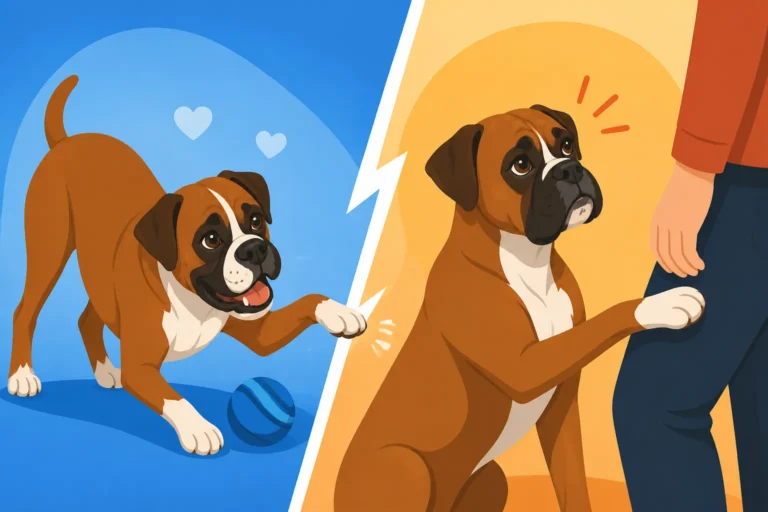
Think about it from their perspective: the doorbell rings, and suddenly, there's a huge shift in the household energy. People get excited, they move towards the door, and for a Boxer, this often translates to "Party time! Let's all get excited together!" This "happy dance" often includes jumping, spinning, pawing, and sometimes even a little playful nipping or mouthing, especially in younger dogs still grappling with Boxer Mouthing From Puppy to Adult. They aren't trying to dominate or be aggressive; they're simply expressing their immense joy and anticipation, often with little regard for personal space or gravity.
Why Ignoring Doesn't Always Work
Many training methods suggest ignoring unwanted behaviors, and while this can be effective for some things, it often falls short at the door with a high-energy breed like a Boxer. Why? Because the reinforcement they get from the environment is often too powerful to be overridden by a lack of attention from you. The arrival of a guest, even if you try to ignore your dog, is still a huge reward for their excitement. The guest might inadvertently give them attention, or the sheer novelty of a new person is enough.
Moreover, Boxers are intelligent and persistent. If their excited behavior has ever, even once, resulted in them getting what they want (whether it's a pet, a sniff, or just getting to be first through the door), they'll continue to try it. They learn very quickly what works to get attention or access. We need to replace this ingrained, chaotic behavior with a new, calm, and rewarded behavior. This requires active teaching and consistent redirection, rather than just passive ignoring. It's about giving them a clear, alternative behavior to perform that also gets them what they want – access to the guest, but on your terms.
Laying the Foundation: Basic "Sit" and Impulse Control
Before you can ask your Boxer to sit calmly at the door, they need to have a rock-solid "sit" command in a variety of environments, and a foundational understanding of impulse control. This isn't just about teaching them to plop their rear on the ground; it's about teaching them to think before they act, even when highly stimulated.
Mastering "Sit" in Calm Environments
Start where your Boxer is most relaxed and least distracted – often your living room or kitchen when things are quiet. Use high-value treats that your Boxer absolutely loves; for some, this might be small pieces of cooked chicken, for others, a favorite soft commercial treat. Hold a treat near their nose and slowly move it back over their head. As their nose goes up, their rear naturally goes down. The moment their bottom touches the ground, say "Sit!" (or "Yes!") and immediately give them the treat. Repeat this many times in short, frequent sessions throughout the day.
Consistency is key here. Everyone in the household should use the same cue word and reward method. Once they reliably sit, start adding a small delay before the treat – one second, then two, then three, gradually increasing the duration they hold the sit. Practice in different rooms, then in the backyard, always rewarding calm, settled sits. This builds their understanding that "sit" means "put your butt on the floor and stay there until released." You might find resources from programs like BAXTER & Bella useful, as they often emphasize this kind of step-by-step foundational training using positive reinforcement.
Introducing the Leash and Threshold
The leash isn't just for walks; it's a powerful training tool for impulse control, especially around doorways. Even if your Boxer is technically indoors, putting them on a leash can help mentally shift them into "working mode" and gives you a gentle way to guide and contain them. For this stage, a sturdy, comfortable leash is vital. You can find many reliable options on Amazon.
Start by practicing "sit" with the leash on, even if you're not going anywhere. This helps them associate the leash with listening to commands. Next, introduce the concept of the threshold. Walk with your Boxer on the leash towards any doorway in your home. Before you reach it, ask for a "sit." If they comply, reward them. If they try to dart through, gently hold them back with the leash, say "Uh-oh, try again," and reset, then ask for "sit" again. The goal is to teach them that the doorway is a boundary, and they must wait for your permission to cross it. This also applies to external doors like the back door to the yard. You want them to understand that they don't get to burst through any opening without your cue. Getting a Boxer to Walk Without Towing You also touches on using the leash effectively.
The Step-by-Step Doorway Training Protocol
Now that your Boxer has a solid "sit" and understands the concept of waiting at a threshold, it's time to apply these skills to the most challenging scenario: the front door when guests arrive or when you're preparing to leave.
The "Closed Door" Drill
This drill is all about managing anticipation and building a strong "sit-stay" with increasing distractions, even when there isn't a real guest.
- Preparation is key: Have your Boxer on a leash, perhaps a long line if they are prone to darting, and a pocket full of those high-value treats. Make sure you have their attention.
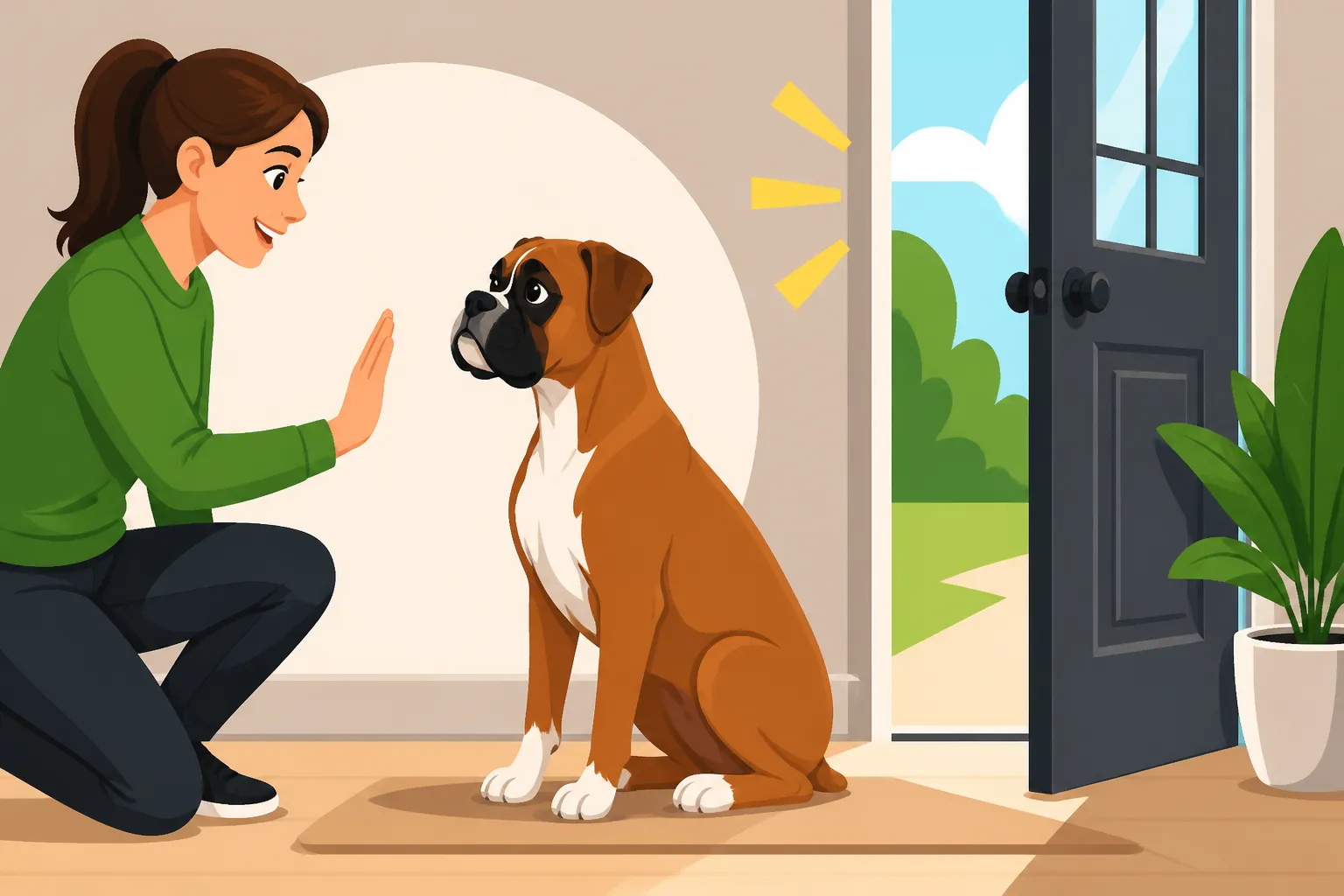
- Approach the door: Walk towards the front door. Before you even touch the doorknob, ask your Boxer to "Sit." If they sit, reward them generously. If they don't, calmly guide them into a sit with the leash and your hand, then reward.
- Introduce the sound: Once they can reliably sit as you approach, try touching the doorknob. The moment you touch it, if they break their sit, take your hand off the doorknob, say "Too bad," and reset. Only when they sit calmly with your hand on the knob do you reward them.
- Simulate the ring: Gradually increase the distraction. Start by gently tapping the door (or even using a recording of a doorbell on your phone). The rule remains the same: any break in the sit means the "doorbell" (or tap) stops, and you reset. Reward only for a calm sit.
- Practice leaving: This isn't just about guests coming in. It's also about you leaving calmly. Practice opening the door, taking a step out, and then immediately closing it if your Boxer attempts to follow. Again, they only get to stay near the door (or eventually cross it with permission) if they remain in a sit. For some dogs, having a special "place" bed or mat away from the door can be helpful here, giving them a designated spot to go to when the door is in use. Many durable pet beds can be found on Amazon that can serve this purpose.
Progressing to the "Open Door" Challenge
This is where the real work happens. You're now going to introduce the actual opening of the door.
- Tiny cracks: With your Boxer on leash, get them into a solid "sit" away from the door. Reach for the doorknob, and if they hold their sit, very slightly crack the door open, just a centimeter or two. If they hold their sit, reward! If they lunge or break the sit, immediately close the door, say "Oops," and try again. Don't let them self-reward by pushing through.
- Wider openings: As they master the tiny crack, gradually increase how wide you open the door. Always demand the sit before opening, and close the door if they break it. This teaches them that the door only opens (or stays open) when they are calm and sitting.
- Simulating a guest: This is a fantastic time to enlist the help of a family member or friend. Have them ring the doorbell and then stand outside while you work with your Boxer. Get your Boxer into their sit. When they hold it, open the door, allowing the guest to briefly step into view. If your Boxer stays, the guest can give a calm "hello" and maybe even toss a treat if they're still holding that sit. If your Boxer breaks, the guest immediately steps back outside, and the door closes. This is a powerful learning tool, as the "guest" acts as an immediate consequence (they disappear) or reward (they engage) based on your Boxer's behavior. It’s crucial the guest understands their role – no enthusiastic greetings until your Boxer is calm. Teaching a Boxer to Keep Four Feet Down and Greeting Manners for an Excited Boxer are highly relevant here.
- Releasing the Boxer: Once your Boxer is consistently holding a sit while the door is open and the guest is present, you can introduce a release cue. Say "Okay!" or "Go say hello!" to signal that they are now allowed to greet the guest politely. Keep the initial greetings calm and supervised. If the excitement escalates to jumping, gently guide them back to a sit, or have the guest step away until your Boxer calms down again.
Maintaining Consistency and Guest Involvement
This isn't a one-and-done training session. Boxers thrive on routine and consistency. Everyone who interacts with your Boxer at the door needs to be on the same page.
Make sure every family member practices this protocol whenever they enter or exit. If your kids rush in and get bowled over, or if your partner lets the dog jump, all your hard work can be undone. It might take explaining the importance of this training to friends and visitors, asking them to wait a moment outside while you get your Boxer settled. A brief explanation like, "Fido is learning some manners at the door, so please wait until he's sitting calmly before you come in," can make a huge difference.
Remember that Boxers have a long "puppyhood" phase, often acting like overgrown puppies until they're three years old, so this training will need consistent reinforcement over time. Why a Boxer Acts Like a Puppy Until Three illustrates just how long you might need to keep reinforcing these good habits.
| Training Stage | Goal | Key Actions | Common Pitfall |
|---|---|---|---|
| Foundation Sit | Reliable "Sit" in calm settings | Lure with treat, mark, reward. Increase duration. | Inconsistent cue/reward, too many distractions |
| Leash & Threshold | Waiting at any doorway, leash control | "Sit" before crossing, gentle leash pressure if lunging. | Allowing dog to self-reward by darting |
| Closed Door Drill | Calm sit with door stimuli (knob, sound) | Touch knob, tap door, use doorbell recording. Reset if sit breaks. | Rushing the stages, allowing excitement to build |
| Open Door Challenge | Calm sit with door open, person present | Gradually open door, use helper. Guest disappears if dog breaks sit. | Guest inadvertently reinforcing jumping |
| Guest Involvement | Polite greeting on release cue | Educate guests on protocol, supervised calm greetings. Release only when calm. | Guest giving attention while dog is excited |
Common Pitfalls and Troubleshooting
Even with the best intentions, training a Boxer can have its challenges. Their boundless energy and sometimes short attention span can lead to setbacks.
When Your Boxer Breaks the Sit
It's going to happen. You'll have a perfect streak, and then suddenly, the pizza delivery person arrives, and your Boxer lunges at the door like a freight train. Don't get discouraged! This is part of the learning process, especially for such an excitable breed. The key is how you respond.
When your Boxer breaks the sit, calmly but immediately close the door (or have your guest step back out). Do not yell or get angry, as this can add to their stress or excitement. Simply say "Too bad" or "Oops," guide them back to their sitting spot, and start over at an easier step. Maybe that means just touching the doorknob again, or perhaps even just walking towards the door. Break the exercise down into smaller increments again. For example, if they can't sit when the door is cracked, go back to just touching the doorknob. The moment their bottom leaves the floor, the door closes or the "excitement" stops. This immediate consequence teaches them that the desired outcome (door opening, guest engaging) only happens when they maintain their sit. You might also need to re-evaluate your rewards; are they high-value enough for the level of distraction? For a Boxer, sometimes a favorite squeaky toy (if it doesn't over-excite them) or a super smelly treat works wonders, as explored in Rewards a Boxer Will Work Hard For.
Managing Multiple Dogs and Distractions
Training one Boxer at the door can be a lot, but if you have multiple dogs, or other significant distractions like children, it adds another layer of complexity. If you have two Boxers, for instance, their combined excitement can be exponential.
For multiple dogs, it's often best to train them individually at first. Put one dog in a crate or another room with a puzzle toy (like a Kong filled with peanut butter, readily available on Amazon) while you work with the other. Once each dog is solid on their own, you can start practicing with them together, always with leashes on, and again, going back to easier steps. One dog's excitement can easily trigger another's, so patience is paramount. If one dog consistently breaks the sit, separate them again.
Distractions from children also require management. Teach children their role: to calmly wait for the dog to sit, and not to accidentally reinforce jumping. This might mean having kids wait in a specific spot away from the door during arrival times until the Boxer is settled. Remember, Boxers are generally wonderful with children, but their enthusiasm can be overwhelming. A Boxer That Knocks Children Over and Teaching a Boxer to Be Gentle With Children offer more insights into this dynamic. You might also consider seeking guidance from a professional trainer, either through private sessions or group classes, especially if the door manners are a persistent problem. A good trainer can provide tailored advice and help you navigate these specific challenges.
Disclaimer
This article is for general informational purposes only and does not constitute professional advice. Laws, prices and regulations vary by location and change over time. Consult a qualified professional for guidance on your specific situation.