The Word That Stops a Boxer Mid-Charge
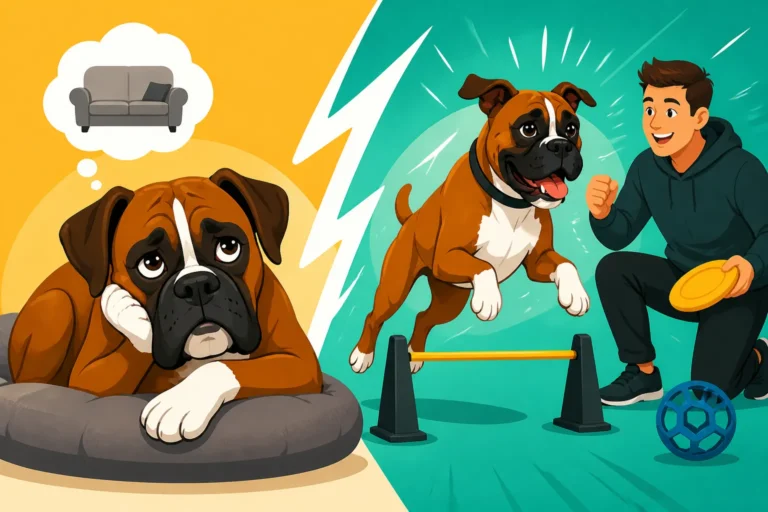
It's a familiar and heart-stopping moment for many Boxer owners: your loyal companion is trotting along, seemingly enjoying a calm walk, when suddenly, a flash of movement, an interesting scent, or the sight of another dog sends them into a full-blown charge. Your heart leaps into your throat as you watch them bolt, seemingly deaf to your calls, and you're left wondering what magic word could possibly halt a seventy-pound Boxer mid-stride. This guide is all about understanding that powerful instinct and equipping you with the tools and techniques to establish a recall so reliable, it feels like a magic word.
Understanding Your Boxer's "Charge" Instinct
Boxers are magnificent dogs, full of life, energy, and an almost unending capacity for joy. But alongside that exuberance comes a set of instincts that, while natural, can sometimes lead to incredibly frustrating and even dangerous situations. When a Boxer decides to "charge," it's rarely out of malice or deliberate defiance; it's usually a manifestation of their strong natural drives.
Why Boxers Bolt: Prey Drive and Excitement
Let's be real, a Boxer taking off isn't usually them trying to be difficult. It's often a deeply ingrained instinct kicking in. Picture this: you're walking along a path, and suddenly a squirrel darts across the grass. For many Boxers, that quick movement, combined with their inherent prey drive, is like an irresistible siren call. They lock on, and before you can even register what's happening, they're off like a rocket. It's a primal urge, not a conscious decision to ignore you. The world, to them, is an exciting playground full of smells, sights, and potential playmates.
Beyond prey drive, sheer excitement is another huge factor. Seeing another dog, especially one that looks like it's up for a game of chase, can trigger an intense burst of energy. Their wiggly bodies translate into a sudden surge forward, and in that moment of high arousal, all the careful training you've done can sometimes fly right out the window. Their focus narrows to that exciting stimulus, and your voice becomes background noise. It’s not that they don’t love you; it’s that their brains are flooded with happy chemicals telling them "GO! PLAY! CHASE!" We talk more about this specific challenge in A Boxer That Chases Squirrels.
The Dangers of an Uncontrolled Charge
While a Boxer's enthusiasm is endearing, an uncontrolled charge can have serious consequences. The most immediate and terrifying danger is traffic. A dog bolting into a street, especially a fast-moving Boxer, is a nightmare scenario for any owner. Even in seemingly safe, leash-free areas, a Boxer could disappear into dense woods, encounter wildlife that could harm them (or that they could harm), or run into someone who isn't comfortable with a large, fast-approaching dog.
Beyond physical danger, there's the risk of injury from running headlong into obstacles, or even getting lost. It only takes one wrong turn or one moment of intense focus for a Boxer to become disoriented and separated from you. Moreover, a bounding Boxer, even one full of friendly intentions, can easily knock over a child or an elderly person, leading to fright and potential injury. Preventing these scenarios is paramount, and it starts with a rock-solid recall.
Laying the Foundation for a Reliable Recall
Building a reliable recall isn't about finding one magical solution; it's about consistent, positive training that makes coming back to you the most rewarding thing your Boxer could possibly do. It takes time, patience, and a whole lot of delicious treats.
Choosing Your "Magic Word" and Making It Powerful
The first step is to pick your dedicated recall word. This needs to be a word that you will only use for recall, never for scolding or other commands. Common choices include "COME," "HERE," "TOUCH," or even a unique sound. The key is that it's clear, easy for you to say with enthusiasm, and consistent.
Once you have your word, you need to infuse it with incredible value. This means every single time you say it, something fantastic happens for your Boxer. Start indoors, in a quiet environment with zero distractions. Say your recall word once, in a cheerful, inviting tone, and immediately follow it with the highest-value treat your Boxer loves. Think small pieces of cheese, cooked chicken, hot dogs – something they rarely get and absolutely adore. Don't ask them to do anything; just say the word and give the treat. Do this multiple times a day, in short, fun sessions, for just a minute or two. The goal is to build an instant, positive association: "Magic word equals amazing treat!"
Over time, you can start taking a step back before you say the word, then two steps, making them move a tiny bit to get the reward. Always make it a game, and always make it hugely rewarding. You might even find some excellent high-value training treats or a durable training pouch on Amazon to keep those rewards handy! This builds a foundational understanding that "come" means "good things happen here!"
Starting Indoors and Gradually Increasing Distraction
Once your Boxer consistently comes bounding to you indoors for their high-value treat, it’s time to slowly increase the challenge. This gradual process is critical for success.
- Quiet Backyard: Move to your fenced backyard. Again, start with minimal distractions. Let your Boxer wander a short distance, then call them using your magic word. When they come, celebrate with immense enthusiasm and a super high-value treat. If they don't respond, calmly go get them, bring them back, and try again, but don't scold. Make it easy for them to succeed.
- Low-Distraction Park/Field: When they're reliable in the backyard, progress to a quiet park or an open field with minimal people or other dogs. This is where a long line becomes indispensable – we'll talk about that next. Continue with short, successful sessions, always ending on a high note. If your Boxer is struggling, go back a step. The idea is to set them up for success, not failure. Consistency is key, and every successful recall builds confidence. When you're working on getting their attention outdoors, remember that even a small win is a big step forward. Getting a Boxer's Attention Outdoors has more tips on this.
- Busy Environments: Only when your Boxer is reliably coming back in low-distraction outdoor environments should you even consider busier places. Even then, remember that the stakes are higher, so your rewards need to be even more enticing.
Remember, every single time you call your Boxer and they don't come, the value of your recall word decreases. So, avoid calling them if you're not confident they'll respond, especially in the early stages.
The Long Line: Your Essential Training Tool
For any Boxer owner serious about off-leash reliability, a long line is not just a tool; it's a lifesaver. This is a lightweight, strong leash typically 15 to 30 feet long, that allows your Boxer to explore further while still giving you control and the ability to practice recall safely. Think of it as a safety net that bridges the gap between on-leash and off-leash freedom. You can find excellent long lines on Amazon, designed for durability and ease of handling.
Here’s how to use it effectively:
- Attach and Drag: Attach the long line to your Boxer's harness (never just a collar for long line work, to protect their neck). Let them drag it around in a safe, open area like a park. Don't hold it initially; just let them get used to the feel.
- Gentle Guidance: Once they’re comfortable, pick up the end of the line. Let your Boxer wander. When they get to the end of the line, or when you decide to call them, say your magic word. If they hesitate, gently reel in the line while continuing to call them cheerfully. The moment they start moving towards you, release the tension and praise profusely.
- Positive Reinforcement: Every time they return, it's a party! High-value treats, enthusiastic praise, maybe even a quick game of tug. You want them to associate coming back to you with the absolute best experience. This is crucial for building a strong recall without resorting to punishment, which can actually make them less likely to return. For more detailed instructions, you might find guides like those offered by BAXTER & Bella helpful, as they often cover structured long-line training methods. Long Line Work With a Young Boxer delves deeper into the techniques.
Consistency is key here. Practice regularly, always ending on a positive note. These short, successful training sessions are far more effective than long, frustrating ones, as we also discuss in Why Short Sessions Suit a Boxer's Attention Span.
What to Do When Your Boxer Bolts (and How to Prevent It)
Despite your best efforts, there might be a moment where your Boxer takes off. Knowing how to react in the heat of the moment, and having strong preventative measures in place, can make all the difference.
Immediate Action in a Real-Life "Charge"
This is where all your preparation with the "magic word" comes into play. If your Boxer takes off:
- DON'T chase them: This often turns it into a game for them, or worse, makes them think they're in trouble and run faster. Boxers are fast, and you probably won't catch them anyway.
- DON'T scream or yell: This can sound like scolding or panic, which again, can make them less likely to return.
- DO make yourself exciting: As counter-intuitive as it sounds, often the best thing to do is turn and run away from your Boxer while calling their name enthusiastically and using your "magic word" in a happy, high-pitched voice. Boxers, with their playful nature, often can't resist a good chase, and if you're running away, you become the fun thing to pursue.
- DO drop to the ground: If running away isn't an option (e.g., in a small, enclosed space), dropping to a crouch or even sitting on the ground can pique their curiosity and make them come investigate. Again, use your happy voice and recall word.
- DO have your high-value treats ready: The instant they even think about turning towards you, start praising and get ready to reward heavily the second they reach you. Make their return a triumph. The power of Rewards a Boxer Will Work Hard For cannot be overstated in these moments.
Building a Stronger Bond and Management Strategies
A truly reliable recall stems from a strong relationship built on trust and consistent positive reinforcement. Your Boxer needs to believe that coming back to you is always the best option.
- Play and Engagement: Spend quality time engaging with your Boxer. Interactive games like fetch, tug, or even just rolling around on the floor strengthen your bond and make you more valuable than external distractions.
- Mental Stimulation: A bored Boxer is a Boxer looking for trouble. Incorporate puzzle feeders, like those you can find on Amazon, or scent games into their routine to keep their intelligent minds occupied. This can help reduce the urge to "charge" out of sheer pent-up energy. Puzzle Feeders That Hold a Boxer's Attention offers some great ideas.
- Secure Environment: Prevention is always better than cure. Ensure your yard has secure, high fencing that your athletic Boxer cannot easily clear or dig under.
- Proper Equipment: Always use a well-fitting harness and a sturdy leash when walking in unfenced areas. A flat collar can be less secure if your Boxer pulls hard, and you want to avoid any possibility of them slipping out. There are many strong harnesses designed for powerful breeds like Boxers, which can be found through retailers like Amazon. Harnesses That Hold a Pulling Boxer can help you choose the right one.
- Consistency is King: Everyone in the household needs to use the same recall word and follow the same positive reinforcement techniques. Inconsistent training will only confuse your Boxer and weaken their response.
- Enroll in Classes: If you're struggling, consider enrolling in a group obedience class or working with a private trainer. They can offer tailored advice and help you practice in a controlled, distracting environment. Group Class Against Private Work for a Boxer offers insights into this.
Remember, your Boxer's natural energy needs a constructive outlet. Combining solid training with adequate physical and mental exercise, balanced with an understanding of Boxer Exercise Needs and the Heat That Limits Them, will build a happier, better-behaved companion who is much less likely to bolt.
Here's a quick reference for common recall challenges:
| Scenario | Why It Happens | Immediate Action | Preventative/Training Measures |
|---|---|---|---|
| Chasing a squirrel | High prey drive, sudden visual stimulus | "Magic Word" + run away enthusiastically, reward heavily | Consistent long-line practice, high-value rewards, strong "leave it" command, environmental awareness |
| Bolting to greet another dog | High social drive, excitement | "Magic Word" + happy tone, use a lure (treat) if needed | Controlled greetings, positive socialization, strong "look at me" command, proofing recall in distractions |
| Ignoring recall word in park | Distractions too high, reward value too low | Go retrieve calmly, make next attempt easier and more rewarding | Gradual increase in distraction, higher value treats, more short, successful reps, Whether a Boxer Comes Back When Called |
| Running towards a person/child | Friendly curiosity, lack of impulse control | "Magic Word" + happy, inviting tone, encourage them to "touch" hand | Practice polite greetings, "stay" command, teaching a "place" command, proper leash management |
Disclaimer
This article is for general informational purposes only and does not constitute professional advice. Laws, prices and regulations vary by location and change over time. Consult a qualified professional for guidance on your specific situation.