Whether a Boxer Has a Strong Prey Drive
It’s a common scenario for Boxer owners: you’re enjoying a peaceful walk, your beloved Boxer trotting happily beside you, and then, a squirrel darts across the path, or a rabbit freezes in the grass. In an instant, your calm companion transforms into a seventy-pound projectile, straining at the leash, eyes locked on the disappearing fluff of tail. This sudden, intense focus on movement often leaves owners wondering if their Boxer has a strong prey drive and, more importantly, how to manage it safely. This guide will delve into the Boxer's inherent instincts, explore how prey drive manifests, and offer actionable strategies to help you navigate these powerful impulses, keeping both your dog and local wildlife safe.
Understanding the Boxer's Instinctual Roots
Boxers are magnificent dogs, known for their boundless energy, goofy antics, and unwavering loyalty. But beneath that clownish exterior lies a history of working dogs with instincts honed over generations. Understanding this background is key to appreciating why certain behaviors, like a strong reaction to a scurrying critter, are deeply ingrained.
The Boxer's Ancestry and Purpose
The Boxer's lineage traces back to the Bullenbeisser, a powerful German breed used for hunting large game like wild boar and deer. These dogs were bred to hold down prey until the hunter arrived. While the modern Boxer is far removed from its ancient ancestors, the echoes of this history remain. They possess strength, tenacity, and a profound interest in movement. They weren't necessarily bred to kill prey on their own, but rather to engage with it, to hold it in place. This distinction is important when we talk about prey drive today. It's often less about the final act of predation and more about the thrill of the chase and interaction. If you look into The German Origins of the Boxer, you'll see how foundational this working background is to the breed's very essence.
Over time, as their role shifted from big-game hunters to versatile working dogs and beloved family companions, their temperament was refined. However, those powerful instincts were never fully erased; they were simply channeled and adapted. Today's Boxer might not be holding down a boar, but that intense focus and physical prowess are still very much a part of who they are, often expressed through their characteristic "boxing" play with their front paws or their explosive bursts of speed.
What "Prey Drive" Really Means for a Boxer
When we talk about "prey drive" in a Boxer, we're referring to a sequence of natural behaviors: orienting, eye-stalking, chasing, grabbing, and sometimes, a "kill bite" or shaking. For most Boxers, this sequence rarely goes beyond the chase and grab, often manifesting as an intense desire to pursue anything that moves quickly. It’s not aggression in the typical sense; it’s an instinctual motivation, a hardwired program in their brain. A Boxer with a strong prey drive isn't trying to be "bad" or disobedient; they're simply responding to a primal urge that's been triggered.
This can be incredibly frustrating for owners who feel like their well-trained dog suddenly forgets every command when a squirrel appears. It's crucial to remember that this isn't a deliberate act of defiance. It’s a powerful, almost involuntary, reaction. The sight of a rabbit bolting across a field can instantly override hours of careful training. Understanding this fundamental difference between disobedience and instinct is the first step in managing it effectively. It’s about working with their nature, not against it. You'll often see this drive expressed in their vigorous play style, even among other dogs, which is why it's worth understanding Boxer Play Style With Other Dogs.
Common Manifestations of Prey Drive in Boxers
A Boxer's prey drive isn't always about wild animals in the woods. It can show up in many different ways, both indoors and out, and understanding these manifestations helps us recognize the triggers and intervene appropriately.
Chasing Small Animals Outdoors
This is perhaps the most obvious and often challenging manifestation of prey drive. Squirrels, rabbits, cats, deer, even birds taking flight can ignite that spark in a Boxer. You might notice your Boxer suddenly stiffening, their head snapping up, ears swiveling to pinpoint a sound, and then, if given the chance, an immediate lunge in that direction. This is the "orient and eye-stalk" phase, quickly followed by the "chase." If your Boxer is off-leash in an unsecured area, this can lead to them disappearing in pursuit, potentially running into traffic or getting lost.
Even on a leash, a strong prey drive can make walks incredibly difficult. A seventy-pound Boxer lunging unexpectedly can yank the leash right out of your hand or cause you to lose your balance. This isn't just a nuisance; it's a safety concern for both you and your dog. Many owners describe the feeling of their arm nearly being dislocated when their Boxer sees a target. It requires constant vigilance and strong management strategies, especially if you have a Boxer that consistently demonstrates A Boxer That Chases Squirrels. This intense focus means they are often unresponsive to calls or commands once the chase is initiated, which can be disheartening.
The Drive to "Box" and Play Rough
While not strictly "prey drive" in the classic sense of hunting, the Boxer's characteristic "boxing" with its front paws and generally rough-and-tumble play style does stem from similar historical working instincts. When Boxers play, especially with other dogs or even people (when taught appropriately), they use their front paws to bat and engage, reminiscent of their ancestors holding onto prey. This isn't aggressive; it's a playful expression of their physical power and natural inclination to interact with motion.
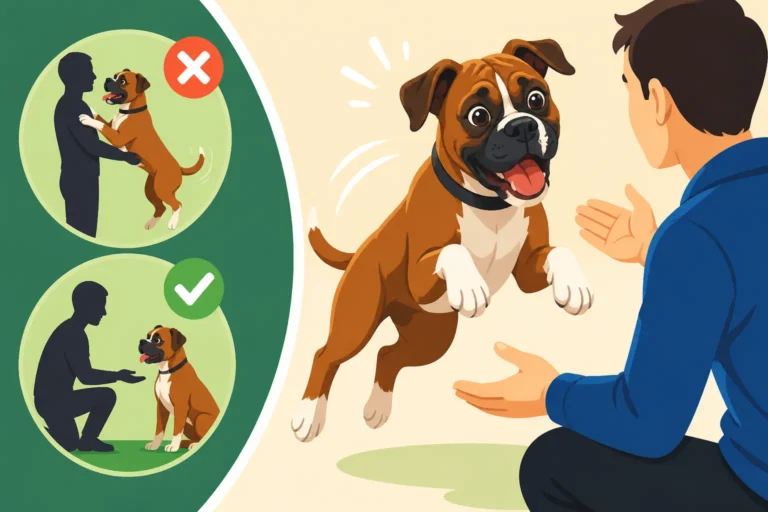
However, if not properly channeled, this can sometimes be misinterpreted or become problematic. A young, exuberant Boxer might "box" too roughly with a smaller dog, or playfully bat at children, potentially knocking them over. Understanding that this behavior, while often cute, is rooted in strong physical instincts helps us teach them appropriate boundaries and outlets. It's about teaching them self-control and how to moderate their intensity, rather than trying to suppress the instinct entirely. You can learn more about this in Why a Boxer Boxes With Its Front Paws.
Indoor Behaviors and Redirected Energy
Prey drive doesn't disappear just because you're indoors. If a Boxer isn't getting enough mental or physical stimulation, that powerful instinct to chase and interact with movement can be redirected to other, less desirable, behaviors around the house. This might look like:
- Chasing reflections or shadows: The shifting light on a wall can be incredibly captivating for a Boxer with a high prey drive, leading to obsessive chasing and barking.
- "Hunting" toys: While playing with toys is generally good, some Boxers will take it to an intense level, shaking and "killing" their toys, sometimes destroying them rapidly.
- Obsessive staring at windows: If there are birds or squirrels outside, your Boxer might spend hours fixated on the window, barking, whining, and unable to settle.
- Chasing household members: Fast-moving children, vacuum cleaners, or even a person walking quickly can trigger a short chase sequence indoors.
- Destroying items: A bored Boxer with unchanneled energy might destroy pillows, furniture, or other household items in a way that mimics "shredding" behavior. This is often a sign of frustration and unmet needs, tying into why A Boxer Wrecks Things When Under-Exercised.
Recognizing these indoor signs is important, as they tell you your Boxer needs more appropriate outlets for their energy and instincts. This isn't just about walks; it's about structured play, mental challenges, and consistent training to help them manage those impulses.
Managing and Redirecting a Boxer's Prey Drive
Dealing with a Boxer's strong prey drive can feel overwhelming, but with consistent effort, smart training, and appropriate outlets, you can help your dog manage these powerful instincts. It's about proactive management and teaching alternative behaviors, not eradicating an innate part of who they are.
Leash Training and Control
This is paramount for any Boxer owner, especially those whose dogs have a pronounced prey drive. A solid foundation in leash manners and control can literally be a lifesaver.
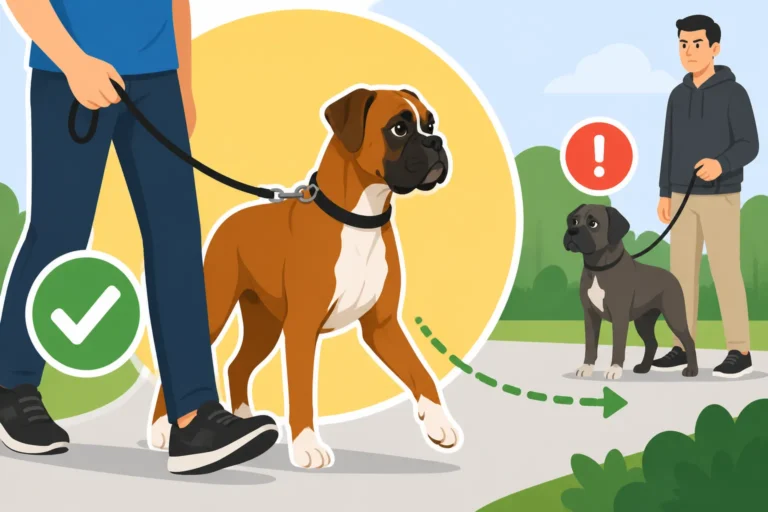
- Invest in the Right Equipment: A standard flat collar might not be enough to control a lunging Boxer. Many owners find success with front-clip harnesses, which redirect the dog's pulling power back towards you, making it harder for them to drag you along. Brands like Ruffwear or Easy Walk (available on Amazon) are popular choices for their effectiveness. A sturdy leash, preferably six feet long, is also essential. For dogs with extreme reactions, a head halter can offer even greater control, though it requires careful introduction. Look into Harnesses That Hold a Pulling Boxer for more guidance on selecting the right gear.
- Consistent Loose-Leash Training: Practice walking politely without distractions first, gradually introducing more challenging environments. Reward your Boxer generously for walking by your side and giving you attention, even if there are tempting smells or sounds nearby. The goal is to make eye contact and checking in with you more rewarding than scanning for squirrels.
- "Look at Me" and "Leave It" Commands: These are indispensable. Teach "Look at Me" to get your Boxer's attention instantly, even with distractions. "Leave It" is crucial for when you spot a potential trigger before your Boxer does. Practice these commands frequently in varied environments. The online programs from BAXTER & Bella, for example, often include modules dedicated to these vital impulse control commands.
- Emergency Recall: While a perfect recall is hard to achieve with high prey drive, it's vital to work on. Use a long line (a very long leash, 15-30 feet) in a safe, enclosed area to practice calling your Boxer back from mild distractions. Make coming back to you the most exciting and rewarding thing imaginable. However, for a Boxer that genuinely gives chase, rely on your leash.
Engaging Activities and Mental Stimulation
A tired Boxer is a well-behaved Boxer, and that includes mental fatigue. Simply walking around the block won't always cut it for these intelligent, energetic dogs.
- Puzzle Toys and Snuffle Mats: These are fantastic for engaging a Boxer's brain and satisfying their natural foraging instincts. Hiding kibble or treats in a KONG, a snuffle mat, or various interactive puzzle feeders (many options on Amazon) can provide significant mental exercise. This helps channel their focus and energy into problem-solving. Consider exploring Puzzle Feeders That Hold a Boxer's Attention.
- Obedience and Trick Training: Boxers are smart, but they can get bored if training is repetitive. Keep sessions short, fun, and varied. They thrive on learning new things. Working on advanced obedience, or even fun tricks, helps build their focus on you and provides a constructive outlet for their intelligence. If you're struggling to keep them engaged, remember that Why Repetition Loses a Boxer is a real phenomenon for this breed.
- Dog Sports: Many Boxers excel in dog sports that combine physical activity with mental engagement. Agility, Rally Obedience, Fast CAT (coursing ability test), and scent work are all great options. These sports tap into their natural athleticism and drive in a controlled, safe environment. Dog Sports That Suit a Boxer provides a deeper dive into suitable activities.
- Controlled "Chase" Games: You can actually leverage their prey drive in a positive way. Use a flirt pole (a pole with a lure on a string) to let them chase and "catch" a toy in a controlled manner. This allows them to satisfy that chase instinct without harming wildlife or pulling you down the street. Teach them to "drop it" afterwards, reinforcing control.
Safe Outlets for Natural Instincts
Beyond training, it’s about providing environments and opportunities where your Boxer can be a Boxer without consequence.
- Secure Fencing: If you have a yard, ensure it is fully and securely fenced. A Boxer can jump surprisingly high and squeeze through small gaps when motivated by a chase. Never leave a Boxer unsupervised in a yard if there's any chance of them finding a way out.
- Long Line Exploration: In safe, contained areas (like a large, empty sports field or a secure dog park during off-peak hours), use a long line to give your Boxer more freedom to explore and run, while still maintaining a physical connection. This allows them to sniff and move more freely than on a standard leash, which can be very fulfilling.
- Structured Playdates: Arrange playdates with other socialized, robust dogs that can match your Boxer's energetic play style. This helps them burn off steam and express their "boxing" tendencies safely.
- Environmental Management: Be proactive on walks. If you know a particular area is rife with squirrels, consider walking a different route or using higher-value treats to keep your Boxer’s attention firmly on you. Sometimes, simply avoiding triggers is the best immediate strategy.
- Professional Guidance: If you find yourself struggling, don't hesitate to seek help from a certified professional dog trainer or behaviorist. They can provide personalized strategies and hands-on coaching to help you and your Boxer. Training platforms like BAXTER & Bella can offer structured courses and support that many owners find incredibly helpful in managing strong instincts.
Remember, managing a Boxer's prey drive is an ongoing journey. It requires patience, consistency, and a deep understanding of your dog's natural tendencies. By providing structure, outlets, and clear communication, you can help your Boxer thrive and live a happy, fulfilling life as a cherished member of your family.
| Behavior Manifestation | Recommended Management Strategy | Key Tools/Techniques |
|---|---|---|
| Chasing Small Animals | Prioritize strong leash control, consistent recall, and teaching "Leave It." Avoid off-leash in unsecured areas. | Front-clip harness, sturdy leash, long line, high-value treats, "Look at Me" cue. |
| Rough "Boxing" Play | Teach appropriate play etiquette with other dogs and humans. Provide alternative outlets for physical engagement. | Flirt pole, supervised playdates, obedience training, "Gentle" command. |
| Indoor Redirection/Boredom | Increase mental stimulation and provide appropriate chew toys/puzzles. Address underlying unmet exercise needs. | Puzzle feeders, KONGs, snuffle mats, daily training sessions, structured indoor games. |
| Window Staring/Barking | Manage access to visual triggers. Redirect attention with training, puzzles, or indoor play. | Blinds/curtains, "Place" command, white noise, mental games. |
Disclaimer
This article is for general informational purposes only and does not constitute professional advice. Laws, prices and regulations vary by location and change over time. Consult a qualified professional for guidance on your specific situation.