Tacking a Boxer’s Stomach During the Spay
Stomach tacking during a routine Boxer spay procedure explains how preventive gastropexy reduces life-threatening GDV bloat risks.
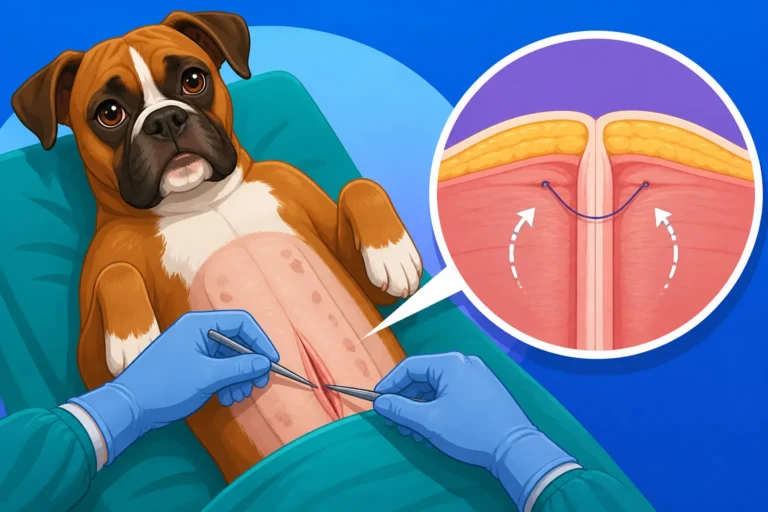
Stomach tacking during a routine Boxer spay procedure explains how preventive gastropexy reduces life-threatening GDV bloat risks.
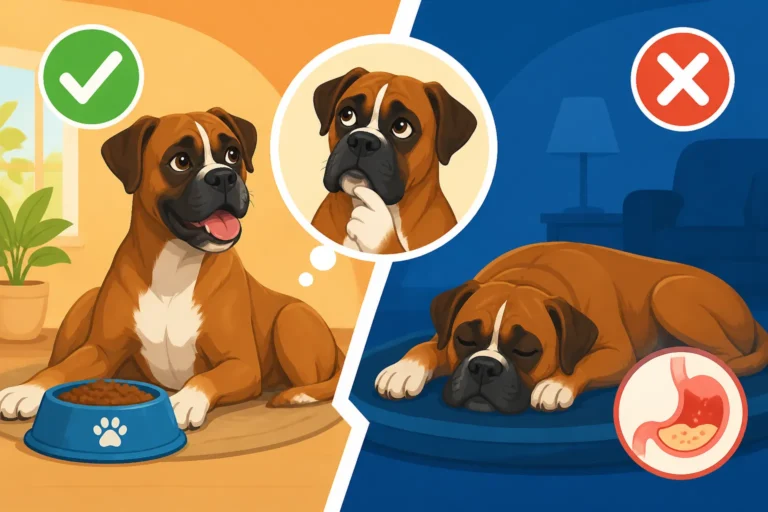
Post-meal rest prevents fatal bloat and stomach twisting in deep-chested Boxers by managing physical activity after eating.
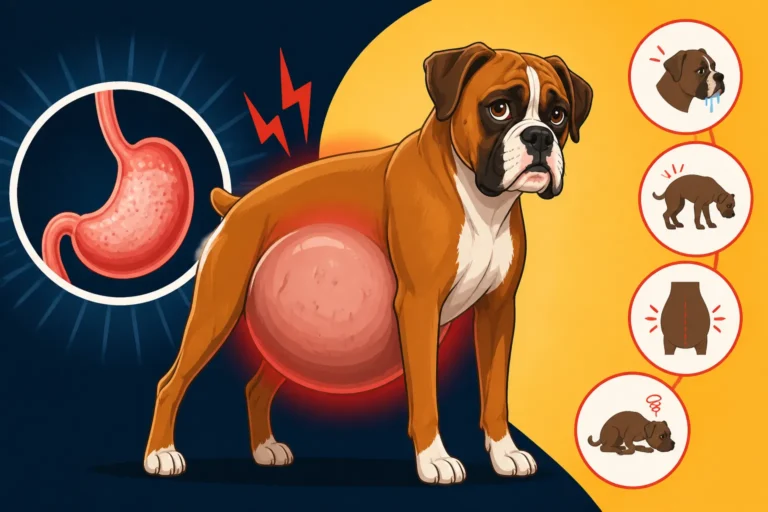
Early signs of bloat in Boxers explain how gastric dilatation-volvulus threatens dogs and requires fast veterinary emergency action.

Boxer hypothyroidism causes hormonal imbalances that explain sudden behavioral changes and physical symptoms in middle aged dogs.

Weight gain and coat loss in a Boxer often indicate hypothyroidism, requiring veterinary evaluation, testing, and steps.
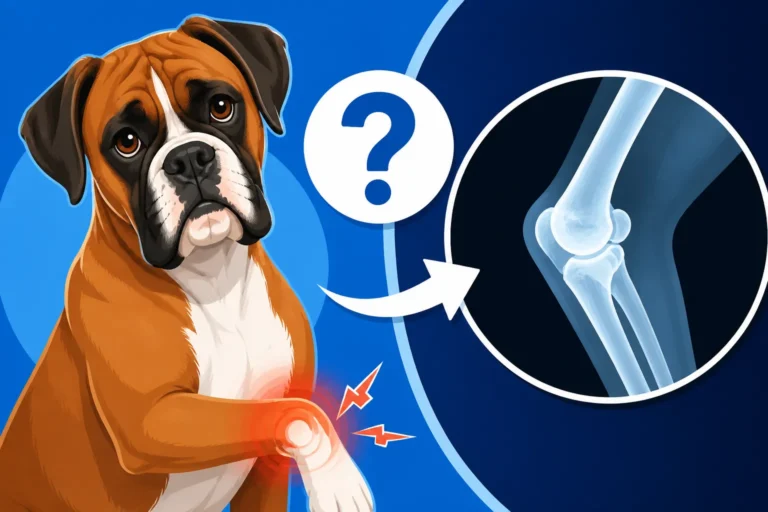
Boxer elbow x-rays reveal developmental joint abnormalities like fragmented coronoid process, ununited anconeal process, and osteochondrosis.
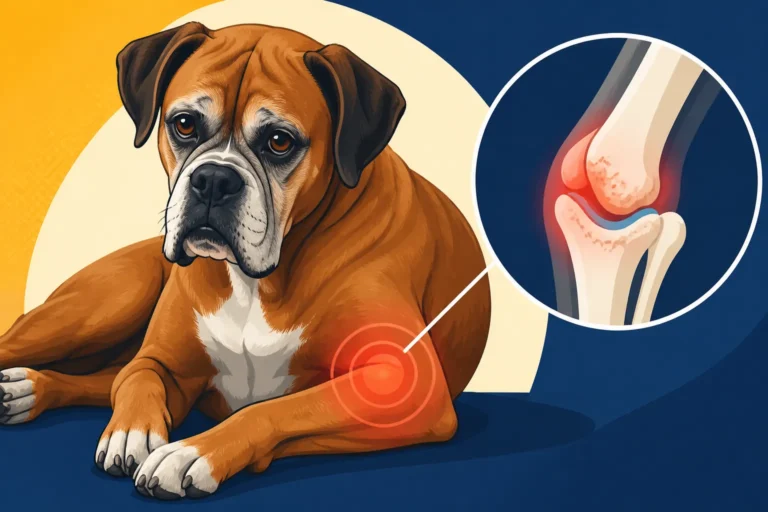
Canine arthritis causes painful joint degeneration in older Boxers through worn cartilage, inflammation, and bony growths.
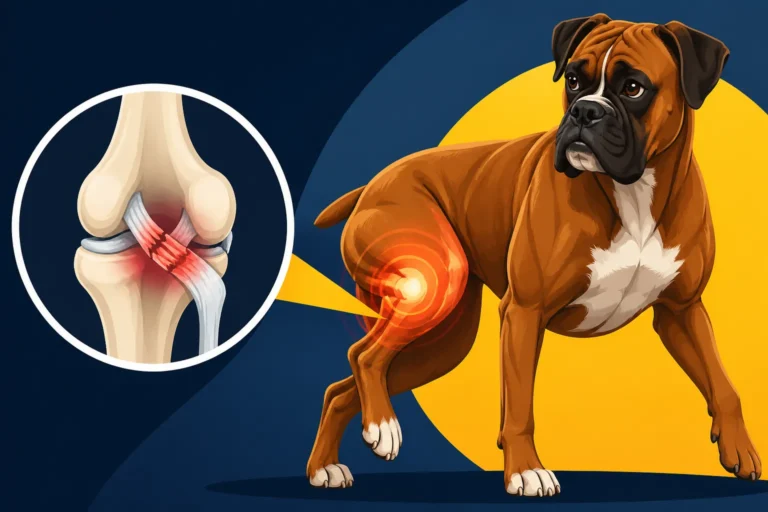
Cruciate ligament tears in muscular Boxers cause sudden lameness and knee instability, requiring proper treatment and recovery planning.

Orthopedic Foundation for Animals hip scores explain genetic dysplasia risks and testing results for Boxer dogs.
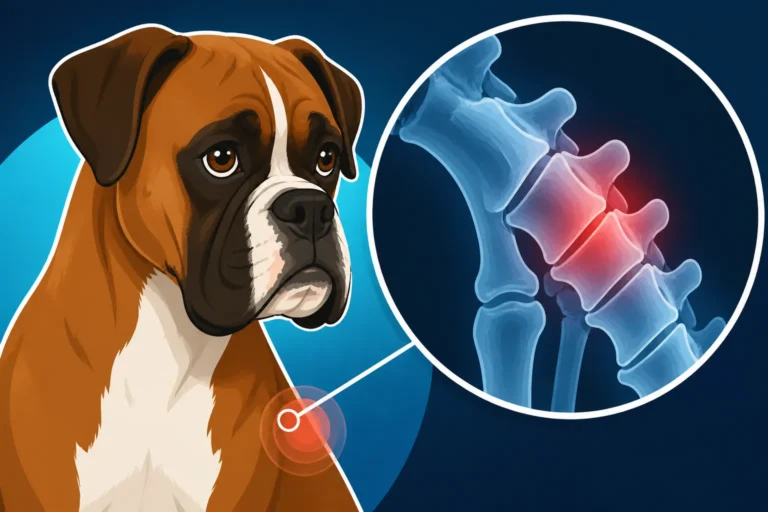
Spondylosis deformans in Boxer dogs is a degenerative spinal condition causing bony spurs that can lead to stiffness and discomfort.