The First Guide Dogs and the Boxer’s Part
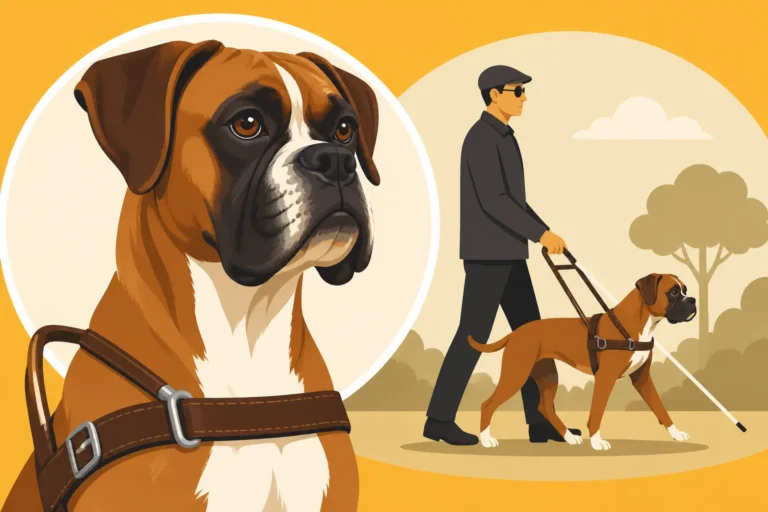
For anyone living with a Boxer, you know firsthand their intelligence, their boundless energy, and their deep desire to be a part of everything you do. But many people might not realize that these wonderful, silly dogs actually played a significant role in the very early days of guide dog programs, helping to pave the way for the incredible assistance animals we see today. This guide will take you through the fascinating history of how Boxers contributed to the inception of guide dog services and why their role evolved over time.
The Dawn of Guide Dogs: A Historical Look
The concept of a dog assisting a person with a visual impairment isn't entirely new; historical accounts from various cultures hint at dogs guiding people for centuries. However, the formal, structured training of dogs specifically for this purpose is a much more recent development, largely born out of necessity and a desire to improve the quality of life for those living with blindness.
Early Concepts of Assistance
Before formalized programs, dogs would often serve as companions or informal helpers. They might stay close to their human, offering a sense of security and familiarity, but without the specific, highly structured tasks that modern guide dogs perform. It was more about an intuitive bond and a dog's natural protective instincts rather than deliberate instruction in navigation and obstacle avoidance. Think of it as a deeply ingrained partnership, where a dog naturally becomes attuned to its owner's needs, often without specific "training" in the modern sense. These partnerships, while invaluable to the individuals involved, weren't reproducible or scalable.
The Need for Formal Programs
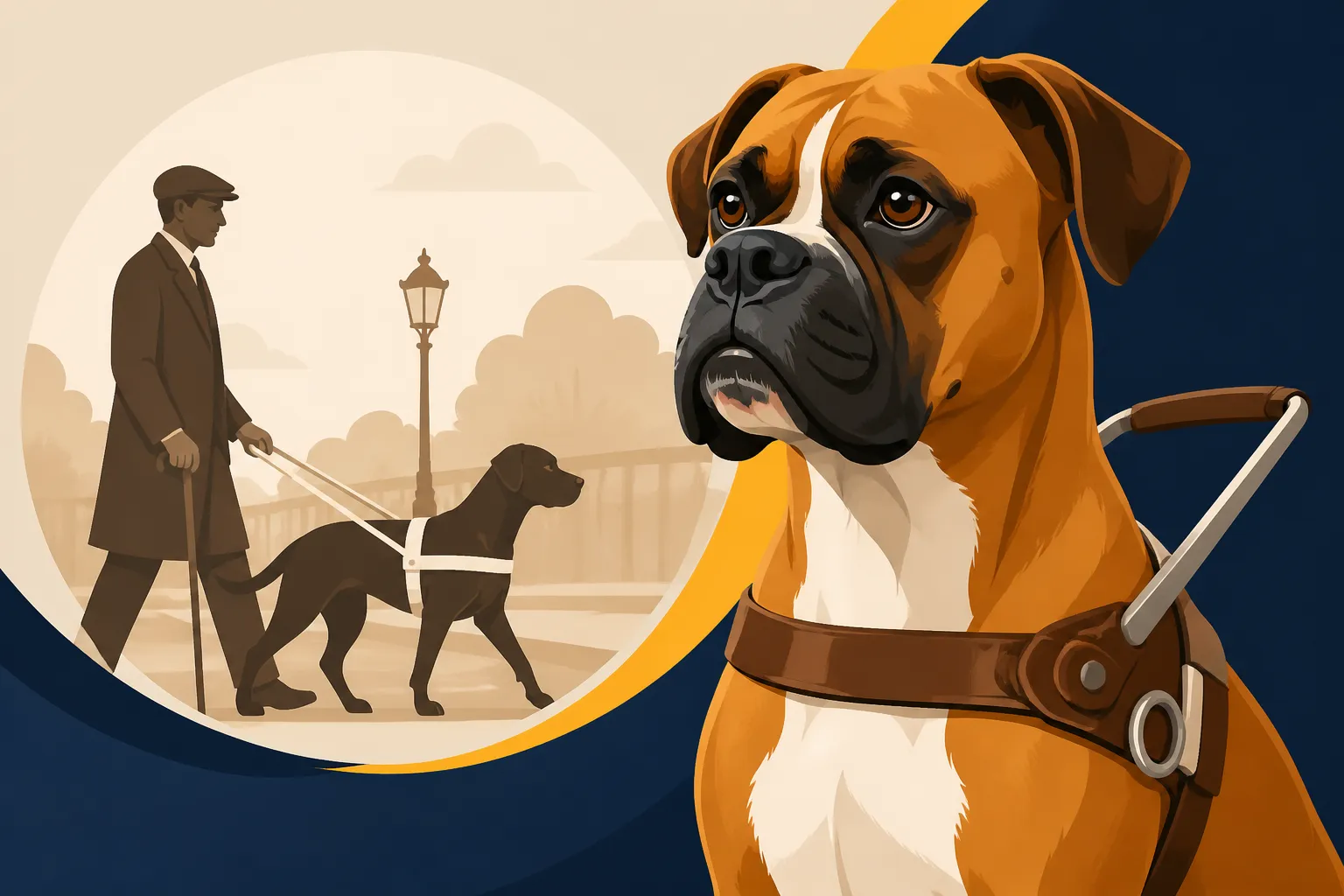
The devastating impact of World War I, with many soldiers returning home blinded, created an urgent and widespread need for practical assistance. Traditional methods of navigation were limited, and the sheer number of veterans requiring support spurred a more organized approach. It became clear that a systematic training method was required to ensure reliability, safety, and consistent performance across many dogs. This was the turning point: moving from informal companionship to a professional service. Germany was at the forefront of this movement, establishing the first official guide dog school in Oldenburg in 1916. This pioneering effort began to lay the groundwork for what would become a global phenomenon, changing the lives of countless individuals.
The Boxer's Initial Role in Guide Dog Programs
Given their German heritage and their established reputation as intelligent, loyal, and capable working dogs, it's perhaps not surprising that Boxers were among the breeds initially considered and even utilized in these burgeoning guide dog programs. Their physical prowess and mental acuity made them seem like ideal candidates at first glance.
Traits That Made Boxers Appealing and Challenging
Boxers possess a unique combination of traits that made them both attractive and, ultimately, challenging for early guide dog work. On the appealing side, their intelligence is undeniable; Boxers are quick learners and eager to please their handlers. Their strong bond with their human family translates into incredible loyalty and a desire to work closely. Physically, they are robust, muscular, and agile, capable of navigating diverse terrains and providing a solid anchor for their handler. This made them excellent choices for tasks requiring strength and steady presence. If you've ever spent time with a Boxer, you know they are intensely devoted creatures, always wanting to be by your side, which is a fantastic quality for any assistance animal. However, these very same traits could also be double-edged swords.
Their exuberant "puppyhood" famously lasts longer than many other breeds, sometimes well into their third year. Why a Boxer Acts Like a Puppy Until Three This extended period of high energy and playful antics could be a significant hurdle when rigorous, consistent training was required from a young age. Imagine trying to keep a typically bouncy, enthusiastic Boxer focused on avoiding street obstacles when a tempting squirrel darts across the path! Their playful "boxing" with their front paws, while endearing, isn't ideal for maintaining a steady, professional demeanor in public. While their loyalty is fierce, it can sometimes manifest as a strong protective instinct, which, if not carefully managed, could be misinterpreted or inappropriate in a public service role. Training a Boxer, as any owner knows, requires patience and creativity because they can get bored fast with repetitive tasks. Training a Boxer That Gets Bored Fast
Where Boxers Fit In
In the early guide dog schools, particularly in Germany, Boxers were indeed given a chance. They were powerful, intelligent, and possessed an innate courage. For individuals who were strong walkers and could manage a dog with a powerful forward drive, a Boxer could be an excellent partner. Their determination and resilience were highly valued, especially in environments that were less structured than today's urban settings. They excelled at tasks requiring confidence and a direct approach, navigating busy streets and standing firm against distractions.
For a time, Boxers were integrated into the training programs alongside German Shepherds, a breed that quickly became a dominant force in guide dog work due to their somewhat more serious and consistently focused temperament. The early trainers recognized the Boxer's potential and put considerable effort into harnessing their unique blend of enthusiasm and intelligence. While they weren't necessarily the most numerous, their presence in the initial programs speaks volumes about their regarded capabilities as working dogs. You can find more about their general working capabilities in The Boxer's Working History.
Why Boxers Aren't Common Guide Dogs Today
Despite their early involvement, Boxers are not commonly seen as guide dogs in modern programs. This shift isn't a reflection on the breed's intelligence or capability, but rather an evolution in what constitutes the ideal guide dog profile, influenced by a deeper understanding of genetics, temperament, and the specific demands of the role.
Specific Breed Suitability Evolution
As guide dog organizations matured and refined their training methodologies, they began to prioritize certain traits that proved to be consistently successful across a larger number of dogs and handlers. Breeds like Labradors, Golden Retrievers, and German Shepherds rose to prominence because they generally exhibit a more consistent temperament suitable for the specific, highly disciplined nature of guide work. These breeds tend to mature more quickly than Boxers, offering a longer window for effective training and service life.
- Temperament: Modern guide dogs need to be unflappable, calm, and utterly focused in a wide array of environments – from bustling city centers to quiet suburban streets. While Boxers can be calm, their default setting often leans towards exuberance and playfulness.
- Physicality: While Boxers are strong, their brachycephalic (flat-faced) skull structure can make them prone to overheating, especially during strenuous activity or in warmer climates. How Fast a Flat-Faced Boxer Overheats A guide dog needs to work reliably in various weather conditions, and health considerations for short-nosed breeds posed practical challenges.
- Motivation: Boxers thrive on novelty and playful interaction. The repetitive nature of guide dog training, while challenging for many breeds, can sometimes lead to disengagement or "tuning out" in a Boxer, who prefers to make things more interesting on their own terms. This isn't a lack of intelligence, but a difference in what motivates them. Why a Boxer Shuts Down When You Get Loud
The focus shifted towards breeds that were more consistently amenable to standardized training protocols and less likely to be distracted by the myriad stimuli of a human-centric world. The ideal guide dog is a steady, predictable partner, and while a Boxer can be intensely loyal, their innate "clownishness" and high energy often made them less consistently suited for the precision and unwavering focus required.
The Demands of Modern Guide Work
The role of a guide dog has become incredibly sophisticated. They navigate complex urban environments, respond to subtle cues, safely guide their handlers through traffic, and provide a constant, reliable presence. This demands a dog with exceptional concentration, minimal reactivity, and an almost inherent understanding of "intelligent disobedience" – knowing when to ignore a handler's command if it would lead to danger.
For example, a modern guide dog might need to:
- Lead through crowded spaces: Without being easily distracted by people, smells, or other dogs.
- Navigate diverse terrains: From smooth sidewalks to uneven grass, stairs, and escalators.
- Exhibit calm in all situations: From quiet doctor's offices to noisy public transport.
- Maintain a consistent pace: Regardless of environmental changes, ensuring the handler's comfort and safety.
These are incredibly high standards, and while individual Boxers could undoubtedly meet them, finding a large number of Boxers who consistently display these traits, without extensive and specialized intervention, proved less efficient for large-scale guide dog organizations. The investment in training a guide dog is substantial, so programs naturally gravitate towards breeds with the highest probability of success.
Beyond Guide Work: Boxers as Other Assistance Dogs
While the Boxer's role in traditional guide dog services has diminished, their inherent qualities make them perfectly suited for other forms of assistance and working roles. Their intelligence, loyalty, and affectionate nature shine in different capacities, demonstrating their versatility and deep capacity for human connection.
Therapy and Emotional Support
Boxers excel in roles where their warmth, playfulness, and empathetic nature are paramount. As therapy dogs, they visit hospitals, nursing homes, schools, and disaster sites, providing comfort, distraction, and joy. Their gentle demeanor with children and their ability to connect with people on an emotional level are invaluable. Imagine a child recovering from surgery, feeling isolated, and a gentle Boxer nudges their hand, offering a moment of pure, unconditional affection. This is where the Boxer truly shines. Their soft, expressive eyes and their signature "wiggle butt" can bring a smile to almost anyone's face, making them fantastic ambassadors for emotional well-being. Many Boxers, with proper training and temperament, become certified therapy animals, bringing immense comfort to those in need. Boxers Working as Therapy Dogs
If you're considering a therapy or emotional support Boxer, remember that even for these roles, good training is essential. You'll want sturdy gear, like a comfortable harness and lead, which you can easily find at retailers like Chewy, to ensure they're always comfortable and secure during their visits.
Other Working Roles for Boxers
Historically, Boxers have a rich working background beyond just early guide dog attempts. They were developed in Germany for tasks like bull-baiting, cart pulling, and even as police and military dogs. The Boxer's Working History This speaks to their inherent strength, courage, and trainability.
Today, you might find Boxers excelling in:
- Search and Rescue: Their powerful noses and stamina, combined with their desire to work, make them candidates for locating missing persons.
- Detection Work: Certain Boxers can be trained for scent detection, whether it's for specific substances or even medical alerts.
- Performance Sports: Boxers are incredibly athletic and intelligent, making them stars in dog sports like agility, obedience, rally, and flyball. These activities harness their energy and mental sharpness in a structured, fun environment. Dog Sports That Suit a Boxer
- Family Guardians: While not typically "guard dogs" in the aggressive sense, their imposing presence and protective instincts make them excellent deterrents and loyal guardians of their homes and families. Whether a Boxer Would Protect You
Boxers, with their incredible blend of strength, intelligence, and boundless affection, continue to be invaluable partners to humans in many different capacities. While their direct involvement in guide dog programs may have been short-lived compared to other breeds, their pioneering spirit in the early days remains a testament to their versatile and admirable nature. Their story is a reminder that different breeds bring different gifts, and finding the right role for each dog allows them to truly thrive and enrich our lives.
| Breed Characteristic | Ideal Guide Dog (Modern) | Boxer (General Tendency) |
|---|---|---|
| Temperament | Calm, focused, unflappable | Energetic, playful, loyal |
| Maturity | Reaches maturity quickly | Extended "puppyhood" |
| Physical Sturdiness | Good, robust | Very robust |
| Heat Tolerance | High | Moderate (brachycephalic risk) |
| Motivation for Repetition | High | Moderate, needs variety |
| Public Reactivity | Low, highly controlled | Low-Moderate, can be excitable |
| Protective Instinct | Controlled, minimal | Strong, sometimes vocal |
Choosing the right food for your Boxer, especially if they are involved in any type of working activity or training, is also crucial. A high-quality diet provides the energy and nutrients needed for their active lifestyle. Look for reputable brands that focus on lean muscle support and joint health, and you can stock up on these and other essentials through Chewy, ensuring your Boxer has everything they need for their health and happiness.
Disclaimer
This article is for general informational purposes only and does not constitute professional advice. Laws, prices and regulations vary by location and change over time. Consult a qualified professional for guidance on your specific situation.