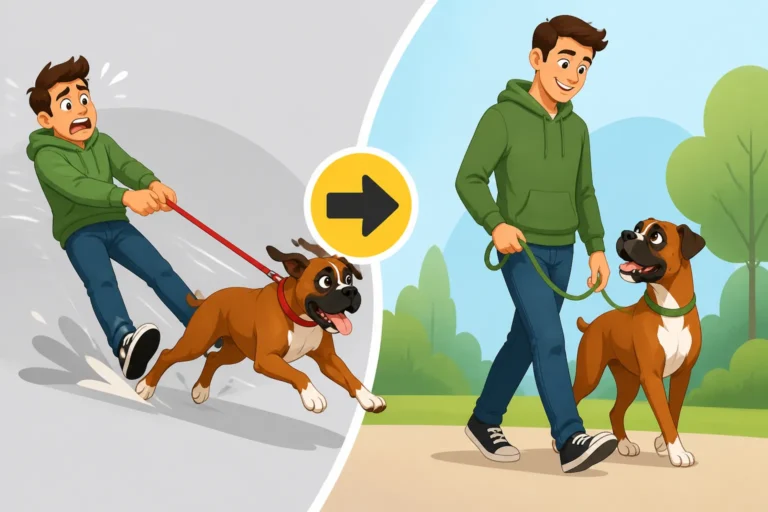
How a Boxer Reacts to a Stranger at the Door
That doorbell rings, or a knock echoes through the house, and in an instant, your otherwise calm Boxer transforms into a whirlwind of wiggles, barks, and enthusiastic body slams. It’s a familiar scene for many Boxer owners, causing everything from mild embarrassment to genuine concern for the safety of guests, delivery drivers, or even small children. This guide is here to shed light on why your Boxer reacts the way they do when a stranger appears at the door and, more importantly, how you can shape those exuberant greetings into more polite, manageable interactions for everyone involved.
The Enthusiastic Welcome: Why Boxers Love New Faces
Boxers are renowned for their playful, often clownish nature, and this extends wholeheartedly to how they interact with new people. They are, by and large, a social breed that thrives on human connection, and a new face walking through their door is often seen as an exciting opportunity for attention and play. Understanding these underlying motivations is the first step toward managing their greetings.
A Natural Friendliness and Exuberance
From their very origins, Boxers were bred to be companions as much as working dogs. They form deep bonds with their families and often extend that innate affection to anyone who shows them kindness. When a new person arrives, it’s not usually a sign of aggression, but rather an explosion of pure joy and anticipation. Think of it as a four-legged, seventy-pound toddler who hasn't quite learned personal space yet. They genuinely believe everyone is there to meet them, and they want to make sure you know how thrilled they are about it! This natural exuberance means that a calm, reserved greeting isn't their default setting; it's something they need to be taught, often against their instincts to just go for it.
They also possess what many Boxer enthusiasts affectionately call "the wiggle butt." This full-body wag, combined with their powerful build, can be quite a force. It's a clear signal of their happiness, but it can easily become overwhelming, especially for someone who isn't expecting a full-on love assault from a dog of this size. Their short, dense coat often hides just how muscular and solid they are until they launch themselves into a greeting.
Guardian Instincts and Alertness
While Boxers are generally friendly, they do possess a protective streak and an alert nature. They were originally bred to be watchdogs and to assist in holding tasks, so a stranger approaching the home can trigger their instinct to announce an arrival or assess the situation. This isn't necessarily aggression, but rather their way of doing their "job" by letting you and the newcomer know they are present and aware. It’s part of their Boxer Watchdog Instinct Without Aggression.
This alertness can manifest as barking, which serves multiple purposes: it's a warning, an announcement, and often, an invitation to interact. They might bark not out of fear or malice, but out of sheer excitement or simply because they want to know what’s going on. Sometimes, the barking is their way of saying, "Hey, new person! I see you! Come play with me!" This combination of genuine friendliness and a strong sense of duty means their initial reaction can be a confusing mix for those unfamiliar with the breed. They might sound ferocious, only to immediately dissolve into a puddle of wiggles the moment they get a head scratch.
Decoding the Doorbell Drama: Common Boxer Reactions
When the doorbell rings, your Boxer's response can vary slightly depending on their individual personality, past experiences, and the specific circumstances. However, there are some very common behaviors you'll likely observe. Understanding these helps you anticipate and prepare.
The Full-Body Wiggle and Jump
This is perhaps the most iconic Boxer greeting. The "wiggle butt" isn't just a tail wag; it’s a whole-body earthquake of joy, often accompanied by enthusiastic jumps. A Boxer’s jumping can be incredibly powerful, easily knocking over small children or even startling adults. They are simply trying to get closer to the new person, to offer a sniff, or maybe even a lick right on the face. Their physical strength, combined with their eagerness, means that even a gentle jump can feel like a considerable impact. This is why Stopping a Seventy-Pound Boxer From Jumping is often a priority for Boxer owners.
They might also "box" with their front paws – a behavior for which the breed is famously named. This isn't usually aggressive, but rather a playful invitation, often directed at faces or shoulders. This can be startling and, in some cases, painful if nails aren't trimmed or if the person is sensitive. It's their way of interacting, but it needs to be managed for safety and manners. The sheer force of their excitement means they sometimes don't differentiate between a cherished family member and a brand-new acquaintance.
Vocalizations and Intense Sniffing
Barking is almost a given for many Boxers when someone new approaches the door. It can range from a few excited "woofs" to a sustained, booming declaration of presence. As mentioned, this is often excitement, but it can sound very intimidating. Sometimes, it's a rapid-fire series of barks that only stop when the person is actually inside and acknowledged. A Boxer That Barks at Every Noise can be a real challenge for owners, especially in apartment settings.
Once inside (or even through a screen door), the intense sniffing begins. Boxers rely heavily on their sense of smell, and a new person brings a whole new world of scents to explore. They might try to get their nose into pockets, shoes, or even between legs. This is part of their information-gathering process and another way they try to engage. While harmless, it can be uncomfortable for guests, especially if the Boxer is overly persistent or pushes too hard. They want to know everything about this new person immediately.
Here's a quick overview of common Boxer greeting behaviors:
| Behavior | Motivation | Potential Impact | Management Strategy |
|---|---|---|---|
| Full-Body Wiggle | Extreme joy, excitement, friendliness | Can be overwhelming or disorienting | Redirect energy, calm verbal cues |
| Jumping | Seeking attention, trying to get closer | Can knock people over, cause injury | "Four on the floor" training, place command |
| Barking | Alerting, excitement, invitation to play | Can be intimidating, noisy | "Quiet" command, desensitization to door sounds |
| Pawing/Boxing | Playful interaction, seeking attention | Startling, can scratch | Teach alternative behaviors, redirect with a toy |
| Intense Sniffing | Information gathering, curiosity | Can be intrusive, make guests uncomfortable | Teach "leave it," maintain distance until calm |
| Zoomies/Body Slams | Overload of excitement, release of energy | Risk of injury, property damage | Prioritize exercise, use a leash for control indoors |
Training for a Calmer Greeting: Steps to Success
Managing your Boxer's door greetings isn't just about stopping unwanted behaviors; it's about channeling their natural enthusiasm into more acceptable outlets. Consistency and positive reinforcement are key, and it truly is a marathon, not a sprint, especially with such a high-energy breed.
Establishing a "Place" or Boundary
One of the most effective strategies is to teach your Boxer a designated "place" where they must go and stay when someone comes to the door. This could be a dog bed, a mat, or even their crate. The goal is to create a physical and mental boundary that keeps them away from the immediate chaos of the entryway. Start by teaching the "place" command in a low-distraction environment, rewarding them heavily for staying.
Gradually introduce distractions, including the doorbell sound without an actual person, then with a family member pretending to be a guest. Reward calm duration in their place. This isn’t about punishment; it’s about giving them a job. They get praised and rewarded for doing their job (staying on their place) instead of creating their own job (greeting the guest with a full-body tackle). Many online training programs, like those offered by BAXTER & Bella, have excellent modules dedicated to teaching a solid "place" command, which is invaluable for this exact scenario. It truly is a game-changer when you're trying to teach Teaching a Boxer a Place to Go When Guests Arrive.
Leash Control and Redirection
Until your Boxer is reliably staying on their "place," using a leash for door greetings is your best friend. Even indoors, having them on a leash gives you immediate control and prevents them from practicing unwanted behaviors. Before opening the door, clip the leash on and have them sit or lie down a few feet away. When the guest arrives, maintain a short leash, preventing jumping or excessive sniffing. Reward them for keeping Teaching a Boxer to Keep Its Paws Down and for any moments of calm.
You can also redirect their energy. If they start to get over-excited, offer a favorite toy to hold or a puzzle feeder to distract them. The idea is to give them something acceptable to do with their mouth or paws instead of using them on your guests. This also helps with Boxer Mouthing From Puppy to Adult if that's an issue with your dog. You can find a range of durable chew toys and engaging puzzle feeders on Amazon that can keep a Boxer occupied during high-excitement moments.
When Excitement Turns to Overwhelm: Troubleshooting Tips
Even with training, Boxers can be a handful at the door due to their sheer enthusiasm. Sometimes, their excitement can border on overwhelming, and it's important to have additional strategies in your toolkit.
Gradual Desensitization and Controlled Introductions
For Boxers that become excessively vocal or agitated, desensitization can be very helpful. This involves gradually exposing them to the trigger (the doorbell, a knock) in a controlled way, without the actual presence of a stranger initially. Play recordings of doorbells at a low volume, rewarding your Boxer for calm behavior. Slowly increase the volume and introduce practice scenarios with family members. The goal is to change their emotional response from "OMG, excitement!" to "Okay, that's just a sound."
When a real guest arrives, ensure introductions are calm and controlled. Ask guests to ignore your Boxer until they are settled. Boxers thrive on attention, and if they learn that calm behavior earns them a head scratch, they're more likely to offer it. If your Boxer is really struggling, consider putting them in their Why a Boxer Needs a Crate More Than Most in another room with a long-lasting chew when guests first arrive. Once they've settled, you can bring them out on a leash for a controlled, calm introduction.
Consistent Rules and Exercise
Boxers are incredibly smart but can also be stubborn, and they thrive on consistency. Every family member, and even frequent guests, needs to be on board with the rules for door greetings. If one person allows jumping and another doesn't, your Boxer will be confused and progress will be slow. Make sure everyone knows how to ask your Boxer to go to their place or to wait calmly.
Lastly, never underestimate the power of exercise. A tired Boxer is a well-behaved Boxer. If your Boxer has pent-up energy, it's far more likely to explode at the door. Ensure they get ample physical and mental stimulation every day. A good run or a vigorous play session before guests are due to arrive can significantly impact their ability to remain calm. Remember, Sixty to Ninety Minutes a Day With a Boxer of exercise is a good baseline, and mental games can be just as tiring. If you find your Boxer is still acting like a puppy well past their first year, it might be that they're just not getting enough appropriate outlets for their boundless energy.
By understanding your Boxer's natural tendencies and consistently applying these training and management techniques, you can transform those chaotic greetings into more enjoyable experiences for everyone involved, proving that even the most enthusiastic Boxer can learn to be a polite host.
Disclaimer
This article is for general informational purposes only and does not constitute professional advice. Laws, prices and regulations vary by location and change over time. Consult a qualified professional for guidance on your specific situation.