Exercising a Boxer Without Overheating It
It’s a familiar frustration for any Boxer owner: you’ve got a dog bursting with energy, practically vibrating with the need to go, but the weather is just not cooperating. That intense desire to play, coupled with their unique physical makeup, means that exercising a Boxer without careful consideration can quickly turn into a dangerous situation, especially when it’s warm out. This guide will walk you through understanding why Boxers are so susceptible to overheating and provide practical strategies to keep your beloved companion active and safe, even when the mercury rises.
Understanding Why Boxers Overheat So Easily
Boxers are magnificent dogs, full of life and boundless energy, but their distinctive appearance, particularly their facial structure, comes with a trade-off when it comes to regulating their body temperature. It’s not just about how hot it feels to you; it’s about their internal mechanics.
The Brachycephalic Challenge
Our Boxers, with their short snouts and broad heads, fall into the category of brachycephalic breeds. This term literally means "short-headed," and it describes dogs with foreshortened muzzles, a trait that makes them undeniably adorable but also prone to certain health issues, especially respiratory ones. Their anatomical structure means they have a harder time cooling themselves compared to dogs with longer snouts.
The issue stems from their airway design. Boxers often have narrower nostrils (stenotic nares), an elongated soft palate that can obstruct their windpipe, and sometimes a narrower trachea. All of these factors make it more difficult for them to move air efficiently, especially when they're panting. Panting is a dog's primary way of cooling down, as it promotes evaporation of moisture from their tongue and respiratory tract. If they can't pant effectively, they can't shed heat efficiently. This is why you might hear your Boxer making all sorts of snorting or wheezing sounds, especially after exertion, which is often a sign of restricted airflow. You might want to read more about Snoring and Noisy Breathing in a Boxer.
Imagine trying to breathe through a straw during a workout; that’s a bit like what a Boxer experiences when trying to cool down. They are working harder just to breathe, which in itself generates more body heat. This makes them inherently less efficient at dissipating the heat generated by physical activity or ambient temperatures, setting them up for overheating much faster than a German Shepherd or a Labrador.
The Impact of High Humidity and Temperatures
While their brachycephalic anatomy is a constant factor, high humidity and elevated temperatures are external forces that exacerbate the problem dramatically. It’s one thing to have restricted airflow, but quite another when the air itself is heavy with moisture, making it impossible for evaporative cooling to work effectively.
Humidity significantly hinders a Boxer's ability to cool down because it reduces the efficiency of evaporation. When the air is already saturated with moisture, the water evaporating from your Boxer's tongue and respiratory passages has nowhere to go. This means that even if they are panting vigorously, they aren't effectively releasing heat from their bodies. It's like trying to dry clothes in a steamy bathroom; nothing really dries because the air is too wet. This can lead to a rapid and dangerous rise in core body temperature, even with what might seem like mild exercise.
High ambient temperatures, even without extreme humidity, also pose a direct threat. The higher the air temperature, the less temperature differential there is between your Boxer's body and the environment. This makes it harder for their body heat to radiate away. So, if the air itself is hot, your Boxer is not only generating heat from their exercise but also absorbing it from their surroundings. This double whammy can quickly lead to their internal temperature soaring, putting them at serious risk. This is why understanding How Fast a Flat-Faced Boxer Overheats is so crucial.
Boxer's Enthusiastic Nature
Adding another layer to this challenge is the Boxer's incredible enthusiasm and tenacious spirit. They are not dogs that easily give up, which is both one of their most endearing qualities and a significant risk factor when it comes to overheating. A Boxer will often push themselves past their limits, driven by their joy for play and their desire to please you, long after their body is sending warning signals.
They have an almost childlike exuberance, often throwing themselves into play with full force from the very first minute. This intense, all-out approach means they generate a significant amount of body heat very quickly. Unlike some other breeds that might naturally slow down or seek shade when they feel too warm, many Boxers will continue to retrieve a ball, chase a toy, or roughhouse with another dog until they literally drop, completely unaware of the danger they are in.
Their muscular build also plays a role. While it makes them powerful and agile, larger muscle mass generates more metabolic heat during physical activity. This, combined with their compromised cooling system and their "never say never" attitude, creates a perfect storm for heatstroke. It's up to us, as their responsible owners, to be the sensible ones and to manage their activities carefully, making sure their boundless energy doesn't lead them into harm's way.
Recognizing the Early Warning Signs of Overheating
Preventing heatstroke is always the goal, but knowing how to spot the early signs of overheating is your critical line of defense. Boxers can go from happy and active to critically ill in a frighteningly short amount of time, so being vigilant and responsive to even subtle cues is absolutely essential.
Subtle Changes in Behavior and Breathing
The first indications that your Boxer is struggling with the heat will often be visible in their breathing and behavior. Pay close attention to these cues, as they are your dog's way of telling you they're in distress before it escalates into an emergency.
One of the most obvious signs is a change in their panting. While Boxers naturally pant more than many other breeds due to their short snouts, excessive panting – panting that is much louder, more labored, or significantly faster than normal – is a huge red flag. It might sound like deep, raspy gasps, and you'll see their chest and abdomen working much harder with each breath. Their tongue might also be hanging out further than usual, and it may appear wider and flatter. This indicates they are trying desperately to increase the surface area for evaporative cooling.
Beyond just the panting, watch for behavioral changes. Your usually energetic Boxer might start to slow down, lag behind, or seem less interested in continuing play. They might actively seek out shade, try to lie down, or make a beeline for any water source they can find, even if it's just a puddle. You might also notice their saliva becoming thicker or foamy around their mouth as they pant more intensely, indicating dehydration. If you observe any of these signs, it's time to stop activity immediately and begin active cooling. For a more exhaustive list, see Signs a Boxer Is Overheating.
Physical Indicators Beyond Panting
As overheating progresses, you'll start to see more pronounced physical symptoms that signal a serious problem. These are signs that require immediate action and, often, veterinary intervention. Don't wait for these severe signs if you've already seen the earlier, more subtle ones.
Check your Boxer's gums. If they are bright red, almost cherry-colored, it’s a strong indicator of overheating. This is due to increased blood flow to the capillaries as their body tries to dissipate heat. In very severe cases, the gums can also appear pale or bluish, which suggests shock or a lack of oxygen, an even graver sign. Their tongue may also become intensely red and swollen. Another key area to check is their skin, which might feel unusually hot to the touch, especially on their belly or inner thighs.
Beyond the visible signs, your Boxer might start to exhibit signs of neurological distress. This can manifest as lethargy, weakness, uncoordinated movement, or stumbling. They might appear disoriented, confused, or even collapse. In more advanced stages of heatstroke, vomiting and diarrhea can occur, sometimes with blood, as their internal organs begin to shut down. Seizures are also possible. If you see any of these critical signs, it means your Boxer is in immediate danger and needs emergency veterinary care without delay.
Smart Strategies for Safe Boxer Exercise
Exercising a Boxer doesn’t have to be a constant worry about overheating. With smart planning and a few adjustments to your routine, you can ensure your spirited companion gets the physical and mental stimulation they need, safely. It's all about being proactive and thoughtful.
Timing Your Physical Activity
When you choose to exercise your Boxer is arguably the single most important factor in preventing overheating. For Boxers, it's not just about avoiding direct sunlight; it's about avoiding the hottest parts of the day altogether, regardless of cloud cover.
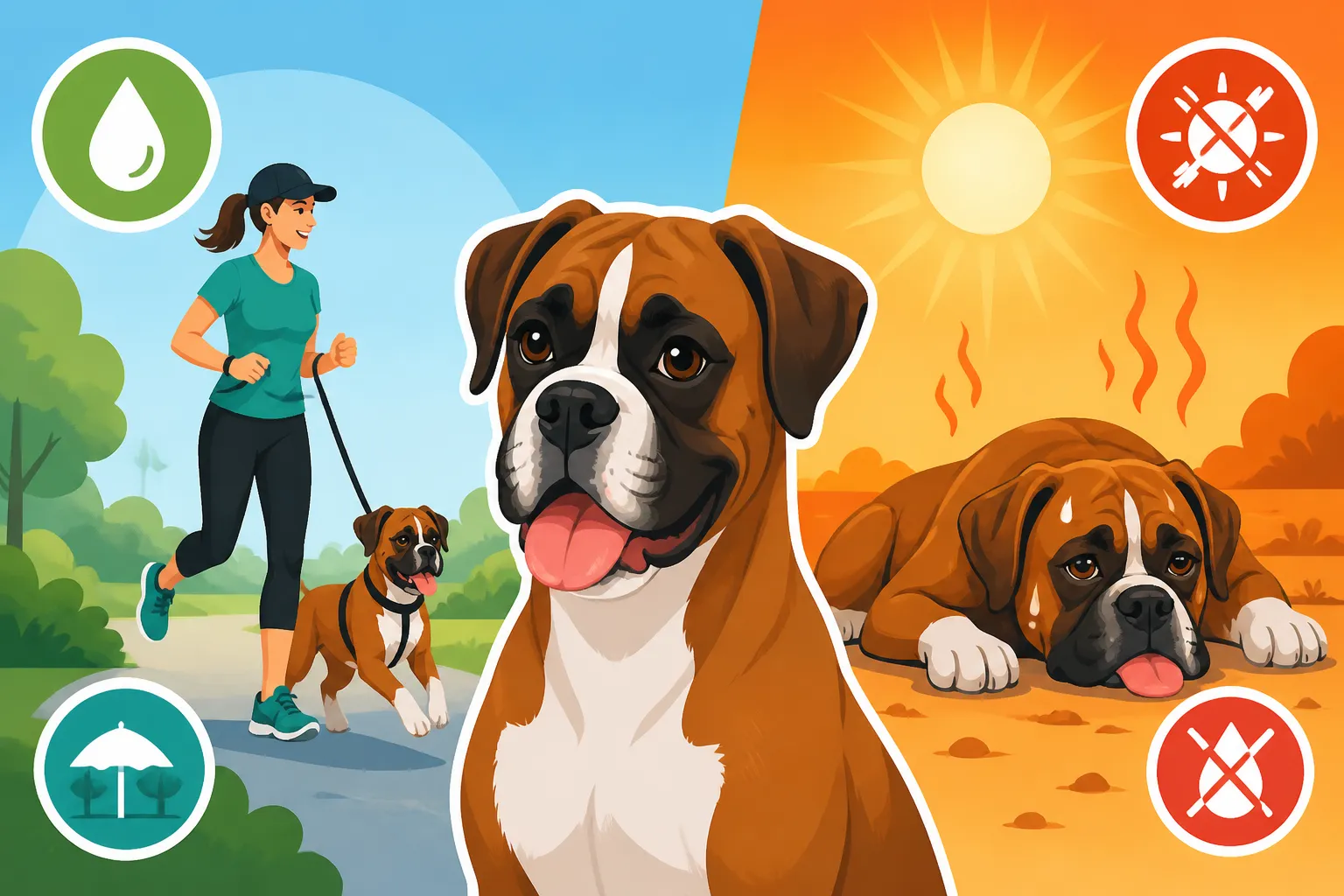
The golden rule for Boxer exercise during warmer months is to stick to the early mornings and late evenings. Think sunrise and sunset. In the summer, this might mean getting out the door by 6 AM or waiting until after 8 PM. These times offer significantly cooler ambient temperatures, which gives your Boxer's cooling system a fighting chance. Even on a cloudy day, the heat can still be oppressive, especially if humidity is high, so relying solely on cloud cover is a mistake. Always check the weather forecast, including the "feels like" temperature, which factors in humidity.
Beyond air temperature, consider the surface your Boxer will be walking on. Pavement, asphalt, and even concrete can absorb and radiate an incredible amount of heat throughout the day, remaining dangerously hot long after the sun has begun to set or before it has fully risen. A good rule of thumb is to place the back of your hand on the pavement for five to seven seconds. If it's too hot for your hand, it's too hot for your Boxer's paws. Aim for grassy areas or shaded trails when possible. Sometimes, adjusting your schedule to break up their activity throughout the day, like what's discussed in Splitting a Boxer's Exercise Around the Heat, can be beneficial.
Choosing Appropriate Activities and Intensities
Not all exercise is created equal for a Boxer, especially when you're trying to manage their core temperature. Their incredible bursts of speed and power need to be managed wisely. High-intensity, sustained exercise is often a recipe for disaster.
Instead of long, continuous runs or extended games of fetch in warm weather, opt for shorter bursts of intense activity followed by periods of rest in the shade. Think interval training for dogs! A quick five-minute sprint and retrieve session, followed by a ten-minute cool-down walk and water break, is far safer than twenty minutes of non-stop running. It allows their body temperature to recover before generating more heat. You might also find that dog sports which prioritize mental engagement over relentless physical exertion are a great option. Activities like Rally and Scent Work for a Boxer are fantastic ways to tire out a Boxer's mind without overtaxing their body in warmer conditions.
On days when it's just too warm for anything strenuous, focus on mental enrichment. Puzzle feeders, training sessions indoors, or teaching new tricks can be incredibly tiring for a Boxer. The BAXTER & Bella online puppy school, for instance, emphasizes foundation behaviors and mental engagement that can be practiced in a cool indoor environment. These activities provide much-needed stimulation without the risk of overheating. Remember, a tired mind can be just as effective as a tired body, and it's a lot safer when the weather isn't cooperating.
Hydration and Cooling Aids
These aren't optional extras for Boxer owners; they are essential tools in your heat management arsenal. Always, always have fresh water readily available, whether you're at home or out and about.
When you're out for a walk or playing at the park, carry a portable water bottle and a collapsible bowl specifically for your Boxer. Offer water frequently, even if they don't seem thirsty. Dehydration can accelerate overheating, so proactive hydration is key. Don't wait until they're gasping; make regular water breaks part of your routine. Some Boxers are also big fans of ice cubes in their water or as a treat, which can offer a little internal cooling.
Beyond water, a range of cooling aids can make a real difference. Cooling vests or bandanas, which you can soak in cool water and wring out, work by evaporative cooling against your Boxer's body. These are readily available on platforms like Amazon and can be incredibly effective. Cooling mats for indoor use can also provide a comfortable, cool spot for your Boxer to rest after a short outing. If your Boxer does start to get too warm, don't hesitate to wet down their paws, belly, and armpits with cool (not icy cold) water. These areas have less fur and a higher concentration of blood vessels, making them efficient spots for heat exchange. This rapid cooling technique is crucial, as explained in Getting a Boxer's Temperature Down in Minutes.
Environmental Considerations and Preparedness
Being a responsible Boxer owner means understanding that their environment plays a huge role in their comfort and safety. From the ground they walk on to having an emergency plan, every detail matters when you're trying to prevent overheating.
Understanding Different Surfaces
It’s easy to focus on air temperature, but the ground your Boxer walks on can be an invisible hazard, especially on sunny days. Different surfaces absorb and retain heat very differently, and this can significantly impact your Boxer's body temperature and paw health.
Dark surfaces like asphalt and dark-colored concrete absorb sunlight intensely and can reach scorching temperatures, easily hot enough to burn your Boxer's paw pads in a matter of seconds. These surfaces also radiate heat upwards, contributing to the overall ambient temperature your Boxer is experiencing. Even if the air feels mild to you, a pavement temperature of 120°F (49°C) can cause burns and quickly raise your dog's core body temperature. It's a double whammy: direct paw burns and increased body heat from radiation.
Grassy areas, dirt trails, and shaded natural ground are generally much cooler and safer for your Boxer's paws and overall body temperature. These surfaces don't absorb heat as readily, and the presence of vegetation can even create a slightly cooler microclimate. Always try to stick to these cooler surfaces during warm weather. If you must walk on pavement, consider paw protection like dog booties, which can provide a barrier against hot surfaces and also offer some protection for their pads.
Emergency Protocols for Heatstroke
Despite all your best efforts, sometimes accidents happen, or conditions change rapidly. Knowing exactly what to do if your Boxer shows signs of serious heatstroke could literally be the difference between life and death. This is not a situation to panic in, but to act swiftly and decisively.
If you suspect heatstroke, your absolute first priority is to get your Boxer out of the heat and into the coolest possible environment immediately. Move them to shade, an air-conditioned car, or indoors. Begin active cooling at once: apply cool (not ice-cold) water to their body, focusing on their armpits, groin, belly, and paw pads. You can use a hose, wet towels, or even just pour water over them. Fan them if possible to promote evaporative cooling. Do not use ice-cold water, as this can cause blood vessels to constrict, trapping heat inside, and can also induce shivering, which generates more heat.
While you are actively cooling your Boxer, contact your veterinarian or the nearest emergency veterinary clinic immediately. Heatstroke is a severe medical emergency, and your Boxer will need professional veterinary care, including intravenous fluids, monitoring for organ damage, and further cooling if necessary. Even if your Boxer seems to recover quickly at home, internal damage may have occurred, so a vet check is non-negotiable. Make sure you know the location and phone number of your nearest 24-hour emergency vet well in advance; don’t wait for an emergency to look it up.
When to Skip Exercise Altogether
Sometimes, the safest and kindest thing you can do for your Boxer is to skip outdoor exercise altogether. It can feel counterintuitive when you have such an energetic dog, but pushing them in unsafe conditions is never worth the risk.
There are definitive temperature and humidity thresholds that make outdoor activity dangerous for brachycephalic breeds like Boxers. Generally, if the temperature is above 80°F (27°C), or if the humidity is high (above 60-70%), the risk of overheating becomes significant, even for short outings. Even a slightly cooler day can be risky if the sun is intense and there's no shade. It's not about making them tough; it's about protecting their vulnerable physiology. For example, considering Whether a Boxer Should Run in Eighty Degrees often leads to a clear "no." Similarly, knowing The Temperature a Boxer Should Stop Walking At is key to safety.
On these dangerously hot or humid days, get creative with indoor activities. Engage their minds with puzzle toys that dispense treats, practice new tricks in an air-conditioned space, or have a gentle play session with a favorite soft toy. Even a short session of grooming or a calm cuddle can be stimulating enough. Remember, a day of missed strenuous outdoor exercise is far better than a lifetime of regret. Your Boxer would rather be safe and cool indoors with you than suffer a heat-related emergency outside. Many ideas can be found in Indoor Exercise for a Boxer in a Heatwave.
Long-Term Management and Prevention
While daily vigilance is crucial, a comprehensive approach to managing your Boxer's heat sensitivity involves long-term strategies. These focus on their overall health, preventative measures, and training to ensure they can thrive safely throughout their lives.
Maintaining a Healthy Weight and Fitness Level
A Boxer's weight and general physical fitness play a significant role in their ability to handle heat. An overweight Boxer is at a much higher risk of overheating than a lean, fit one, and for several compelling reasons.
Excess body fat acts as an insulator, trapping heat within their body and making it much harder for them to dissipate it. It also places additional strain on their respiratory and cardiovascular systems, which are already working harder due to their brachycephalic anatomy. This means that an overweight Boxer will struggle to breathe and cool themselves down much faster and more severely than a Boxer at an ideal weight. This is why it’s so important to monitor their caloric intake and ensure they get consistent, safe exercise to maintain a healthy lean body condition. Resources like Taking Weight Off a Boxer Without Losing Muscle can offer guidance.
Regular, consistent exercise, managed within safe temperature limits, helps build a Boxer's cardiovascular stamina. A dog with better endurance and a stronger heart and lungs will generally be more resilient to environmental stressors, including moderate heat. This isn't about pushing them to extremes but about fostering a baseline level of fitness. Work with your veterinarian to determine your Boxer's ideal body condition score and a safe exercise regimen tailored to their age, health, and local climate.
Annual Vet Checks and Brachycephalic Airway Evaluation
Proactive veterinary care is an indispensable part of long-term heat management for your Boxer. Regular check-ups allow your vet to monitor their overall health and identify any underlying conditions that could increase their risk of overheating.
During annual exams, your vet can assess your Boxer's respiratory system, check for any changes in their breathing patterns, and evaluate their overall cardiac health, which is especially important given the breed's predisposition to heart conditions like ARVC. These regular health screenings are crucial for catching potential issues early before they become more serious. Your vet can also offer personalized advice based on your Boxer's specific health profile.
Furthermore, if your Boxer consistently struggles with breathing or shows severe signs of brachycephalic airway syndrome, it’s worth having a serious conversation with your vet about potential interventions. In some cases, surgical procedures like widening stenotic nares or shortening an elongated soft palate can significantly improve airflow, making it easier for your Boxer to breathe and cool themselves. This isn't a decision to take lightly, but for some Boxers, it can dramatically improve their quality of life and reduce their risk of heatstroke. Discussing Whether a Boxer Needs Airway Surgery with an experienced veterinarian is a good first step if you have concerns.
Behavioral Training for Self-Regulation
While a Boxer's boundless energy is part of their charm, teaching them to self-regulate and settle can be a critical skill, especially when managing their activity in warmer weather. This involves training that goes beyond basic commands.
Teaching your Boxer a solid "settle" or "place" command is invaluable. This means they learn to calmly lie down on a mat or in a specific spot and relax, even when there's exciting stuff happening around them. This isn't just about obedience; it's about giving them an off-switch. If you can cue them to settle in the shade during a park outing, you're actively helping them manage their body temperature. This kind of impulse control training can make a huge difference in managing their natural inclination to "go, go, go." The BAXTER & Bella online puppy school, for instance, has modules focused on teaching impulse control and relaxation, which are foundational for a well-adjusted and safe Boxer.
Encourage calmer forms of play and interaction. While a good game of fetch is wonderful, balance it with mentally stimulating games or even just gentle tug in the shade. Teach them that not every interaction has to be high-impact. Rewarding calm behavior and promoting periods of rest can instill good habits that serve them well in managing their energy levels and body temperature. Learning how to get your Boxer to calm down when needed is essential for their safety, as discussed in Keeping a Boxer Calm During Recovery.
Here's a quick look at how various factors influence a Boxer's exercise safety:
| Factor | High Risk for Overheating | Low Risk for Overheating |
|---|---|---|
| Temperature | Above 80°F (27°C) | Below 70°F (21°C) |
| Humidity | Above 70% | Below 50% |
| Time of Day | Midday (10 AM – 4 PM) | Early morning (pre-9 AM) / Late evening (post-7 PM) |
| Surface | Asphalt, dark pavement | Grass, dirt, shaded trails |
| Activity Type | Sustained running, intense fetching | Short intervals, mental games, gentle walks |
| Hydration | Infrequent water breaks, no access to water | Frequent water breaks, portable water bottle |
| Dog's Condition | Overweight, out of shape, underlying health issues | Lean, fit, healthy |
| Cooling Aids | None | Cooling vest, bandanas, wet towels |
Disclaimer
This article is for general informational purposes only and does not constitute professional advice. Laws, prices and regulations vary by location and change over time. Consult a qualified professional for guidance on your specific situation.