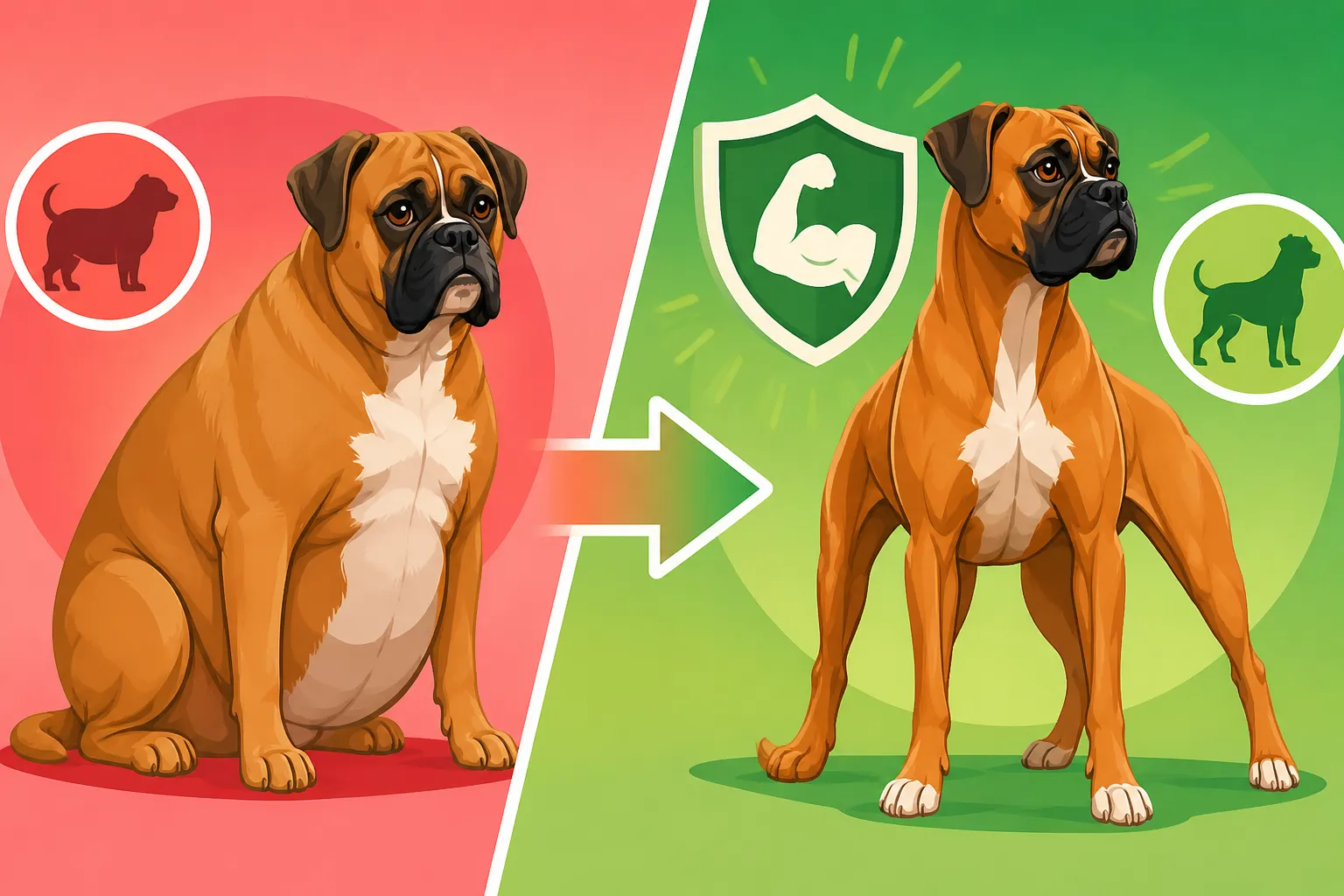
Taking Weight Off a Boxer Without Losing Muscle
It's incredibly disheartening to look at your beloved Boxer and realize they've put on a few too many pounds. You know those extra rolls aren't good for their long-term health, but the idea of dieting your high-energy, food-loving companion can feel overwhelming, especially when you want them to stay strong and muscular, not just skinny. This guide will walk you through the practical, empathetic steps to help your Boxer shed those excess pounds while preserving their incredible muscle mass and vibrant spirit.
Understanding Why Your Boxer Might Be Overweight
Before we dive into the "how," it's vital to understand the "why." Boxers are naturally athletic dogs with a powerful build, but their incredible zest for life can sometimes lead us, their owners, to misjudge their needs. It's not always about outright overfeeding; often, it's a subtle imbalance that creeps up on us. Knowing the common culprits helps us tackle the problem head-on.
The Sneaky Culprits: Portion Sizes and Treats
One of the biggest factors in a Boxer gaining weight is often found right in their bowl, or in the pocket of our favorite treat dispenser. Commercial dog food bags provide guidelines, but these are often broad averages and don't account for your individual Boxer's metabolism, activity level, or even the subtle variations between batches of food. What might be perfectly adequate for a couch potato Boxer could be far too much for one that zips around the yard all day, and vice-versa. Many of us also fall into the trap of "eyeballing" portions, which can easily lead to an extra quarter cup here or there daily, adding up significantly over weeks and months.
Beyond the main meals, treats are notorious hidden calorie bombs. Those delicious little morsels we offer for good behavior, during training, or just because our Boxer gives us those irresistible puppy-dog eyes, can stack up quickly. A few high-value training treats after a walk, a dental chew before bed, and a couple of bits of human food slipped under the table can easily add hundreds of calories to their daily intake without us even realizing it. It’s hard to say no to those faces, but understanding the caloric impact of every little bite is crucial.
Activity Levels vs. Calorie Intake
Boxers are renowned for their boundless energy, especially in their younger years. It's not uncommon for a Boxer to maintain a "puppy brain" and energy levels well into their third year, as discussed in The Boxer Puppyhood That Lasts Three Years. This high metabolism in youth might make us believe they can eat anything and burn it off. However, as Boxers mature, typically around age three or four, their metabolism naturally slows down. The once-frantic zooms might become less frequent, or their play sessions a little shorter. If their calorie intake doesn't adjust downward to match this decrease in energy expenditure, weight gain is almost inevitable.
We might still think our Boxer is as active as they once were, or we might attribute their slightly slower pace to just "growing up," without making the necessary dietary adjustments. Their brachycephalic (flat-faced) structure also means they can overheat more easily than other breeds, especially during intense exercise or in warmer climates. This can inadvertently lead to less vigorous activity sessions, further contributing to a calorie surplus if food intake remains unchanged. How Fast a Flat-Faced Boxer Overheats is a real concern and can impact their exercise capacity.
Age and Metabolic Changes
Just like us, Boxers experience metabolic changes as they age. From about seven years old, a Boxer is considered a senior, and their body begins to slow down. Their digestion might become less efficient, their muscle mass can naturally decrease, and their activity levels often decline further. This is a critical time to be mindful of their diet. If an older Boxer continues to eat the same amount of food they did in their prime, they are very likely to gain weight.
Joint issues like arthritis or hip dysplasia, common in larger breeds like Boxers, can also limit their mobility and willingness to exercise. A Boxer with discomfort might move less, but still beg for food with the same enthusiasm. Owners might also mistakenly believe that a little extra weight will "pad" their joints, when in reality, it puts more strain on them. It’s a tough balance, because we want them to be comfortable, but extra weight actively works against that goal. Addressing these age-related factors is paramount for their long-term health and comfort.
Setting Realistic Weight Loss Goals for Your Boxer
Once you've identified potential reasons for weight gain, the next step is to set clear, achievable goals. This isn't about crash dieting or drastic measures that can harm your Boxer's health and muscle. It's about a gradual, sustainable approach that focuses on overall well-being.
How to Assess Your Boxer's Current Condition
The first thing you need to do is get an honest assessment of your Boxer's current body condition. Don't just rely on the number on the scale, although that's a good starting point. A proper body condition score involves a hands-on examination. You should be able to easily feel your Boxer's ribs without pressing hard. They shouldn't be visible, but a thin layer of fat should cover them. You also want to look for a distinct "waist" when viewed from above, narrowing behind the ribs, and an abdominal tuck when viewed from the side. If your Boxer looks more like a sausage than a lean athlete, it's time to act.
A great way to begin is by taking photos of your Boxer from the side and from above. This gives you a visual baseline to compare against as they lose weight. Sometimes, we see our dogs every day and don't notice the gradual changes. These photos, along with regular checks of their ribs and waist, will be invaluable tools for tracking progress and keeping you motivated. Remember, a fit Boxer is a happy Boxer, and feeling those ribs easily is key to Reading a Boxer's Ribs and Waist.
The Ideal Boxer Physique: Lean and Muscular
The breed standard for Boxers emphasizes a lean, powerful, and agile build, not a bulky or pudgy one. They should carry significant muscle mass, giving them that characteristic "Boxer look," but without excessive fat hiding those muscles. Think of an athlete: strong, defined, but not carrying any unnecessary weight. The goal isn't just weight loss; it's fat loss while retaining or even building muscle. This means their weight might not drop as quickly as you expect if they're also gaining muscle, which is a good thing!
When you feel your Boxer's muscles, they should feel firm and well-defined, not soft or flabby. Their chest should be deep, their back strong, and their hindquarters powerful. An ideal Boxer physique supports their natural athleticism and reduces strain on their joints and cardiovascular system. This is crucial for their overall health, especially with conditions like Boxer Cardiomyopathy and the Holter Monitor being a concern in the breed. A lean body puts less stress on an already susceptible heart.
Consulting Your Vet: A Crucial First Step
Before you embark on any weight loss journey for your Boxer, a trip to the veterinarian is absolutely non-negotiable. Your vet can accurately assess your Boxer's current weight and body condition score, recommend a target weight, and help you calculate an appropriate daily calorie intake. More importantly, they can rule out any underlying medical conditions that might be contributing to weight gain or making weight loss difficult, such as hypothyroidism or other metabolic issues.
Your vet can also offer guidance on specific food choices, discuss supplements that might aid in muscle retention or joint health during weight loss, and help you craft a safe and effective exercise plan. They can tell you what a healthy weight range is for your Boxer specifically, taking into account their age, sex, and individual build. This professional guidance ensures that you're approaching weight loss in a healthy way, protecting your Boxer's well-being throughout the process. It's a team effort, and your vet is your most important teammate.
Crafting a Muscle-Preserving Diet Plan
Diet is arguably the most critical component of weight loss for your Boxer. You can exercise all day long, but if the calories going in still exceed the calories burned, you won't see results. The key is to reduce calories smartly, ensuring your Boxer still gets all the necessary nutrients, particularly protein, to maintain their muscle mass.
The Role of Protein in Boxer Weight Loss
When reducing calories, it's essential to ensure your Boxer is still getting ample protein. Protein is the building block for muscle, and a diet rich in high-quality protein helps your Boxer feel fuller for longer, supports lean muscle mass during weight loss, and has a higher thermic effect (meaning it takes more energy for the body to digest it). Look for dog foods where a named meat source (chicken, beef, lamb, fish) is the first ingredient, and ideally, the first few ingredients.
Many prescription weight-loss diets for dogs are specifically formulated with higher protein and fiber content to help achieve these goals. If you're using an over-the-counter food, you might consider one designed for active or working dogs, but you'll need to strictly control portions. Products from brands like Ollie, which offer fresh, human-grade food, often provide transparent ingredient lists and protein-rich options, though their portion sizes still need careful monitoring for weight loss. Discuss protein levels with your vet to find the right balance for your Boxer's specific needs.
Smart Carb and Fat Choices
While protein is king for muscle retention, carbohydrates and fats play important roles too. The goal isn't to eliminate them, but to choose them wisely and in appropriate quantities. Opt for complex carbohydrates like sweet potatoes, brown rice, or oats over simple, highly processed grains, which can contribute to quick energy spikes and subsequent crashes. Complex carbs provide sustained energy and fiber, which helps with satiety.
Fats are crucial for nutrient absorption, healthy skin and coat, and overall bodily function, but they are also very calorie-dense. Choose foods with healthy fat sources like salmon oil, flaxseed, or chicken fat, but ensure the overall fat percentage aligns with a weight loss diet. Often, a moderately low-fat diet is recommended for canine weight loss, but extremes should be avoided as they can lead to deficiencies. Your vet can provide precise guidance on ideal fat and carb percentages for your Boxer's weight loss plan.
Portion Control and Meal Timing
This is where the rubber meets the road. Once your vet has given you a target daily calorie intake, you must measure your Boxer's food precisely. Forget eyeballing it. Invest in a digital kitchen scale and weigh out their kibble or fresh food portions. This eliminates guesswork and ensures consistency. Even a small measuring cup can be inaccurate due to variations in how compactly kibble settles.
For most Boxers, splitting their daily food allowance into two or even three smaller meals can be beneficial. This helps prevent them from feeling overly hungry, stabilizes blood sugar, and reduces the risk of bloat, which is a serious concern for Boxers, as detailed in Why a Boxer's Chest Shape Invites Bloat. Feeding smaller, more frequent meals can also help regulate their metabolism and keep them feeling satisfied throughout the day. If you usually feed once, consider splitting it into breakfast and dinner. This strategy can make a huge difference in their comfort and your success.
| Meal Distribution Strategy | Benefits | Considerations |
|---|---|---|
| One Meal Daily | Convenience for owner | Increased hunger, higher bloat risk, less metabolic boost |
| Two Meals Daily | Better satiety, reduced bloat risk, stable energy | Requires more routine, slight increase in preparation |
| Three Meals Daily | Optimal satiety, lowest bloat risk, metabolic boost | Most demanding on owner, can be tricky with schedules |
Remember, consistency is key. Every member of the household needs to be on board with the portion control to avoid accidentally overfeeding.
Tailoring an Exercise Routine for Weight Loss
Diet is critical, but exercise is its indispensable partner in helping your Boxer lose weight and build or maintain muscle. A sedentary Boxer, even on a strict diet, will struggle to achieve a lean, muscular physique. However, simply sending an overweight Boxer out for an hour-long run isn't the answer. You need a thoughtful, gradual approach that considers their current condition and breed-specific needs.
Low-Impact Activities for Overweight Boxers
When your Boxer is carrying extra weight, their joints are under increased strain. High-impact activities like intense jumping or long, fast runs can be detrimental and even cause injury. Start with gentle, low-impact exercises. Daily walks are fundamental, but begin with shorter durations and lower intensity. A 15-20 minute leisurely walk, twice a day, can be a great starting point. As your Boxer's stamina improves and weight begins to drop, you can gradually extend the time and pick up the pace.
Swimming is an excellent low-impact option if your Boxer enjoys water and is supervised carefully. It provides a full-body workout without any concussive forces on their joints. Just be mindful of their brachycephalic nature and ensure they have a life vest for safety, as Boxers are not naturally strong swimmers. Activities like nose work or slow-paced urban exploring can also engage them mentally without taxing their physical limits too much. This helps to burn calories and keeps their minds sharp, making them feel like they're "working" even when the physical demands are light.
Gradually Increasing Intensity
As your Boxer sheds some weight and their fitness level improves, you can slowly start to increase the intensity and duration of their workouts. This isn't a race; it's a marathon. Instead of going from zero to sixty, aim for small, consistent improvements. Add five minutes to each walk, or introduce a gentle incline. If they're comfortable, incorporate short bursts of trotting into your walks, then return to a slower pace. The goal is to challenge them without overdoing it.
Pay close attention to your Boxer's breathing and energy levels, especially given their predisposition to overheating. Always carry water and offer frequent breaks. If you notice excessive panting, lagging behind, or reluctance to continue, it's time to stop and rest. Gradual progression is key to preventing injuries and keeping your Boxer motivated. You want them to associate exercise with positive experiences, not exhaustion or discomfort. Remember to consider their tolerance for heat, which directly affects Whether a Boxer Should Run in Eighty Degrees.
Incorporating Strength-Building Exercises
To preserve and build muscle mass during weight loss, incorporate specific strength-building exercises. These don't have to be complicated. Hill walking is fantastic for building hindquarter strength. Canine fitness equipment, like balance discs or wobble boards (available on sites like Amazon or Chewy), can be used for controlled, low-impact exercises that engage core muscles and improve balance. Even simple commands like "sit" and "stand" repeated several times can act as mini-squats for their hind legs.
Playing fetch, if your Boxer enjoys it, can be a good way to get short bursts of intense activity, but make sure to use a soft toy to prevent dental injuries and keep sessions short initially. Tug-of-war, played properly with rules, can also be a great full-body workout that builds muscle, especially in their shoulders and neck. For older Boxers or those with existing joint issues, consult with a certified canine rehabilitation therapist. They can provide tailored exercises that strengthen supporting muscles without exacerbating any conditions, allowing for Caring for a Boxer Past Eight with mobility and strength.
Monitoring Progress and Making Adjustments
Weight loss is rarely a straight line down. There will be good weeks and weeks where progress seems to stall. Effective monitoring and the willingness to make adjustments are vital for long-term success. This is a journey, not a destination, and patience is your best friend.
Regular Weigh-Ins and Body Condition Scoring
Consistent monitoring is non-negotiable. Weigh your Boxer once a week, ideally on the same scale, at the same time of day (e.g., before their first meal). Track this weight in a journal or on a chart. Don't be discouraged by minor fluctuations; look for the overall trend. More importantly, continue to perform regular body condition scoring. Feel their ribs, check their waist, and compare with your initial photos. Sometimes, even if the scale hasn't moved much, you might notice positive changes in their body shape and muscle definition. This is a clear sign that you're losing fat and gaining or maintaining muscle.
If you have concerns about your Boxer's progress or feel unsure about their body condition, don't hesitate to contact your vet. They can help you re-evaluate and ensure you're on the right track. Many vet clinics are happy to offer complimentary weigh-ins, providing you with a reliable scale and professional opinion. This objective feedback can be incredibly motivating and ensures you’re not just guessing.
Recognizing Plateaus and When to Adjust
It's common for dogs, just like people, to hit weight loss plateaus. You might see steady progress for a few weeks, and then suddenly, the scale stops moving. This can be frustrating, but it's normal. When you encounter a plateau, it's a signal to reassess your strategy, not to give up. First, confirm you're still being absolutely diligent with portion control and limiting treats. Even a tiny deviation can halt progress.
If you're confident in your diet consistency, it might be time to slightly decrease calorie intake (e.g., by 5-10%) or increase exercise intensity/duration. Again, this should be done in consultation with your vet. A sudden, drastic cut in calories can be counterproductive, potentially leading to nutrient deficiencies or metabolic slowdown. Small, incremental changes are often more effective and sustainable. Remember, your Boxer's metabolism is adapting, and sometimes you need to gently nudge it along.
The Importance of Consistency and Patience
Perhaps the hardest part of any weight loss journey is maintaining consistency and exercising patience. Results won't happen overnight, and there will be days when you feel like giving up. But every healthy meal, every extra walk, every managed treat contributes to your Boxer's long-term health. Celebrate small victories, like being able to feel their ribs a little more easily, or noticing they have more energy during playtime.
Involve the whole family in the process to ensure everyone is on the same page regarding food and exercise. Make it a positive experience for your Boxer by continuing to use treats (just smaller, lower-calorie ones, or using their regular kibble as treats!) and praise during training and exercise. Your consistency and patience will pay off with a healthier, happier, and more energetic Boxer who can enjoy a longer, more active life. This consistent effort is essential for keeping a Boxer lean and muscled.
Common Pitfalls and How to Avoid Them
Even with the best intentions, it's easy to stumble into common traps during your Boxer's weight loss journey. Being aware of these pitfalls beforehand can help you navigate around them and stay on track.
The Temptation of Crash Diets
One of the biggest mistakes owners make is resorting to crash diets. Drastically cutting calories or feeding an imbalanced diet in an attempt to achieve rapid weight loss is dangerous for your Boxer. It can lead to nutrient deficiencies, muscle loss (which is exactly what we're trying to avoid!), metabolic slowdown, and even behavioral problems due to constant hunger. Rapid weight loss can also put undue stress on their organs.
Instead, always aim for slow, steady weight loss, typically 1-2% of their body weight per week. This gradual approach allows their body to adjust safely, preserves muscle mass, and is much more sustainable in the long run. If you're feeling impatient, remind yourself that your Boxer's health is a marathon, not a sprint. Consult your vet before making any drastic dietary changes.
Over-Treating and Hidden Calories
We've touched on this, but it bears repeating: treats are a major source of hidden calories. It's incredibly difficult to resist those pleading Boxer eyes, but those extra bites add up. Many owners forget to account for treats in their Boxer's daily caloric intake. If you're using treats for training, deduct their caloric value from your Boxer's meal portions for that day.
Opt for low-calorie, healthy treats. Small pieces of plain cooked chicken, green beans, carrots, or apple slices (without seeds) can be excellent, nutritious rewards. Many pet supply stores, like Chewy, offer a variety of low-calorie training treats specifically designed for weight management. Be wary of dental chews, as some can contain hundreds of calories. Always check the nutritional information. Even a spoonful of peanut butter for medication can add significant calories. Every bite counts!
Ignoring Underlying Health Issues
While diet and exercise are paramount, sometimes weight gain or difficulty losing weight can be a symptom of an underlying medical condition. Hypothyroidism, for example, can cause weight gain and lethargy in dogs, making weight loss challenging. Certain medications can also lead to increased appetite and weight gain.
This is why the initial vet check-up is so critical. Your vet can perform blood tests and a thorough physical examination to rule out any health issues that might be sabotaging your efforts. If an underlying condition is diagnosed, managing it appropriately will be a key part of your Boxer's weight loss success. Don't assume it's just a matter of "eating too much" without professional veterinary input. Addressing these issues can sometimes make all the difference, particularly for A Boxer That Thickens and Slows Down without explanation.
Disclaimer
This article is for general informational purposes only and does not constitute professional advice. Laws, prices and regulations vary by location and change over time. Consult a qualified professional for guidance on your specific situation.