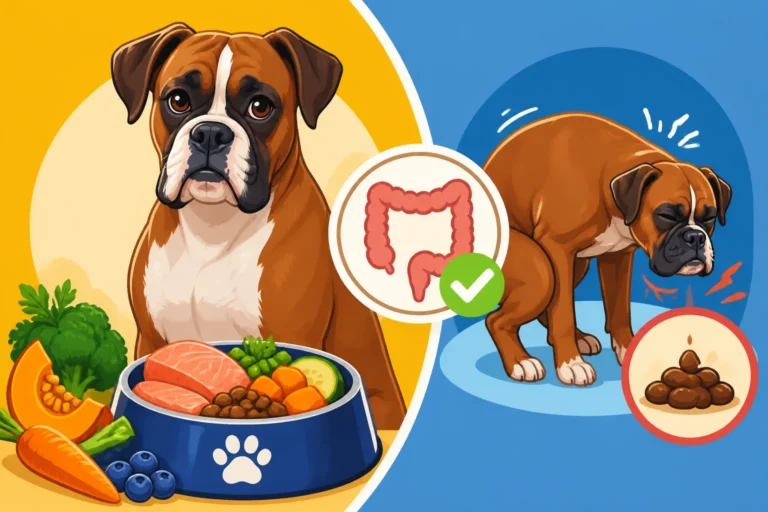
Measuring a Boxer’s Ration Against the Bag Chart
One of the trickiest things about owning a Boxer, especially as a new owner, is figuring out how much to feed them. You grab a bag of what looks like great dog food, flip it over to the feeding chart, and then immediately feel a wave of confusion because the numbers seem so generic, or sometimes even wildly off for your particular dog. This guide is all about helping you decode those often-vague feeding charts and, more importantly, teaching you how to adjust them to perfectly suit your Boxer's unique body and energy level, so you can stop guessing and start feeding with confidence.
The Frustration with Generic Feeding Charts
Let's be honest, those feeding charts on the back of dog food bags can be incredibly frustrating. They're printed there, seemingly authoritative, with neat columns for weight and corresponding cups of food. But if you've ever tried to follow them religiously, you might have found your Boxer either getting a little too chunky or looking a bit too lean. It’s not that the charts are completely useless, but they are a very broad average, and your Boxer, with all their individual quirks and energy, is anything but average.
Why Bag Charts Are Just a Starting Point
Think of a feeding chart as a "suggested retail price" — it's where the manufacturer starts, but it rarely reflects the reality of your situation. These charts are formulated based on the average caloric needs of a dog in a certain weight range, often assuming a moderate activity level. However, a Boxer isn't just "a dog." They are a unique breed with specific energy needs, a generally muscular build, and varying metabolic rates. The chart doesn't know if your Boxer is a certified couch potato, a high-octane agility star, or still zooming around like a giant puppy.
For instance, consider two Boxers, both weighing 70 pounds. One is a sleek, athletic male who goes for long runs with you daily and competes in dog sports. The other is a more sedate female, spayed, who enjoys leisurely strolls and spends most of her day napping. If you feed both exactly the same amount based on the bag's 70-pound guideline, you can see how quickly one might become underweight and the other overweight. The chart simply can't account for these vast individual differences, making it critical for you to learn how to interpret and adjust it. It's a starting point, a hypothesis, not a rigid rule.
The Hidden Costs of Over or Underfeeding
Feeding your Boxer the wrong amount of food isn't just about aesthetics; it has tangible, often costly, impacts on their health and lifespan. Overfeeding, even by a little bit each day, can quickly lead to excess weight. This extra weight puts undue stress on their joints, which can exacerbate conditions like hip dysplasia or lead to arthritis later in life. More critically for Boxers, carrying too much weight can place additional strain on their cardiovascular system, a system already prone to specific issues within the breed. For more on this, you might find Why Extra Weight Hurts a Boxer's Heart particularly insightful.
On the flip side, underfeeding your Boxer can also lead to a host of problems. A Boxer who isn't getting enough calories might lack the energy they need for their playful, spirited nature. You might notice a duller coat, a loss of muscle mass, or a constant begging for food that signals true hunger rather than just their usual Boxer charm. Prolonged underfeeding can compromise their immune system, making them more susceptible to illness, and can prevent proper growth in puppies. Both scenarios can lead to increased vet visits and higher medical bills over your Boxer's lifetime, which really adds up when you consider The Yearly Bill for a Seventy-Pound Boxer.
Understanding Your Boxer's Unique Nutritional Needs
To move beyond the generic bag chart, you need to become an expert on your Boxer. This means understanding their body, their energy output, and how various life stages and health conditions influence their dietary requirements. It’s a bit like being a detective, gathering clues to ensure you’re providing the perfect fuel.
Assessing Your Boxer's Body Condition Score (BCS)
The single most important tool in your feeding arsenal is your Boxer's Body Condition Score (BCS). This isn't about the number on the scale as much as it is about what you can see and feel. A BCS system typically ranges from 1 (emaciated) to 9 (obese), with an ideal score being around 4 or 5 for most Boxers. To assess your Boxer, you need to get hands-on.
Start by feeling along their ribs. In an ideal Boxer, you should be able to easily feel their ribs beneath a thin layer of muscle and fat, but not see them prominently. If you can't feel the ribs without pressing hard, they're likely overweight. If the ribs are visible without any pressure, they might be too thin. Next, look at their waist from above. Your Boxer should have a distinct tuck-in behind their ribs. From the side, their abdomen should tuck up, not sag down. Reading a Boxer's Ribs and Waist goes into more detail about what to look for. This tactile and visual assessment gives you far more accurate information than a simple weight number.
| BCS Score | Description | What You See & Feel |
|---|---|---|
| 1-3 | Underweight (Too Thin) | Ribs, spine, and hip bones are prominent and easily visible. No palpable fat. Severe abdominal tuck. Muscle loss is noticeable. |
| 4-5 | Ideal Weight (Healthy) | Ribs are easily palpable with a minimal fat covering. Waist is easily noted behind the ribs. Abdominal tuck is present. Muscle mass is good. This is what you're aiming for. |
| 6-7 | Overweight (Too Heavy) | Ribs are palpable but with difficulty, covered by excess fat. Waist is discernible but not prominent. Abdominal tuck is absent or minimal. |
| 8-9 | Obese (Severely Overweight) | Ribs are not palpable under a heavy fat covering. Waist is absent, back may be broadened. Obvious abdominal distention. Significant fat deposits over the lumbar area and tail base. |
Using this chart and performing regular checks allows you to make informed decisions. If your Boxer is a 6, you know you need to reduce their intake. If they're a 3, it's time to increase it, always gradually. This hands-on approach is far superior to blindly following a bag's recommendation.
Factors Influencing Your Boxer's Caloric Needs
Beyond their current body condition, several factors play a huge role in determining how many calories your Boxer truly needs. Ignoring these means you'll constantly be playing catch-up with their weight.
Age: A Boxer puppy, for example, is a growing machine, burning through calories at an incredible rate to fuel bone and muscle development. Their caloric needs per pound of body weight are much higher than an adult's. Conversely, an older Boxer, often less active and with a slower metabolism, will require fewer calories to maintain their ideal weight. This is why guidelines for Feeding an Old Boxer Less are so important as your Boxer matures. You can't feed a ten-year-old Boxer the same way you fed them at two years old.
Activity Level: This is perhaps the biggest variable. A Boxer that gets Sixty to Ninety Minutes a Day With a Boxer of vigorous exercise, whether it's running, playing fetch, or agility training, will need significantly more calories than one who primarily enjoys shorter, leisurely walks. Their muscular build means they have a high metabolism when active, but that can slow down quickly if their exercise routine declines. Be honest about your Boxer's daily energy output, not just what you wish it was.
Health Status: Any health issues can impact caloric needs. A Boxer recovering from surgery, for instance, might need extra nutrition to heal. Conversely, certain conditions like hypothyroidism can slow metabolism, requiring a reduction in food to prevent weight gain. Boxers prone to sensitive stomachs or conditions like Boxer Colitis and the Young Dogs It Hits might need specialized diets that influence caloric density and absorption. Always consult your vet if your Boxer has health issues, as their advice will supersede any general guidelines.
Neutering/Spaying: Many owners are surprised to learn that altering their Boxer can change their metabolism. Spayed or neutered Boxers often experience a decrease in metabolic rate, meaning they don't burn calories as efficiently. This can make them more prone to weight gain if their food intake isn't adjusted. Understanding Why a Neutered Boxer Puts on Weight is crucial for preventing the pounds from creeping on after their surgery. It's a common trap many owners fall into, unintentionally leading to their Boxer becoming overweight.
Practical Steps to Fine-Tune Your Boxer's Diet
Now that you understand the limitations of the bag chart and the nuances of your Boxer's individual needs, let's talk about how to actually put this into practice. It’s a process of starting, observing, and adjusting, rather than a one-time calculation.
Starting with the Bag Chart and Making Initial Adjustments
Your journey begins with the bag chart, but it doesn't end there. First, find the recommendation for your Boxer's ideal adult weight, not necessarily their current weight if they are over or under. If your Boxer is 70 pounds and the chart suggests 3 cups, use that as your initial baseline. If you're starting a puppy on adult food, use the guidelines for large breed puppies or consult your vet for specific recommendations for their growth curve.
Once you have that baseline, make your initial adjustment based on your immediate assessment of their Body Condition Score. If your Boxer looks a little chunky (BCS 6 or 7), start with about 10-15% less than the bag recommends. If they are looking a bit too lean (BCS 3 or below), start with 10-15% more. For instance, if the bag says 3 cups for a 70-pound Boxer and yours is slightly overweight, you might start with 2.5 to 2.75 cups. The key here is gradual change. Drastically cutting food can cause digestive upset and make your Boxer feel constantly hungry. Always aim to split their daily ration into at least two meals; Feeding a Boxer Twice a Day is usually much better for digestion and helps prevent bloat.
Monitoring and Adapting Over Time
Feeding your Boxer isn't a set-it-and-forget-it task. It requires ongoing monitoring and adaptation. Once you've established your starting point, commit to regular checks. Weigh your Boxer weekly, especially if you're trying to adjust their weight. If a scale isn't practical, perform a BCS check every few days. The goal is to see subtle changes in their rib coverage, waistline, and energy levels.
Observe their energy. Is your Boxer still full of life during playtime, or do they seem sluggish? What about their stool quality? Healthy, firm stools are a good indicator that their digestive system is happy with their current diet and amount. Their coat condition can also be a clue — a healthy Boxer should have a shiny, smooth coat. If you notice a change in any of these, it might be time for another adjustment. You can buy scales from retailers like Amazon or Chewy to accurately measure food portions. Remember, even a small increase or decrease, say a quarter of a cup, can make a difference over a week or two. Don't be afraid to experiment, always making changes slowly and observing the results.
The Role of Treats and Supplements
It's easy to forget that treats count! Those delicious bits of kibble, freeze-dried liver, or even a small piece of cheese you give for training or just because you love them, all contribute to their daily caloric intake. If you're consistently giving treats, you absolutely must factor them into your Boxer's daily food ration. If you don't, you're effectively overfeeding them on top of their meals. It's often helpful to measure out their entire day's kibble ration in the morning, and then pull treats from that amount.
When selecting treats, opt for healthier, low-calorie options, especially if your Boxer needs to watch their weight. There are many excellent Treats That Do Not Wreck a Boxer's Diet available at stores like Chewy. As for supplements, while many Boxers thrive on a high-quality complete dog food, some benefit from additions like fish oil for skin and coat health, and potentially for heart support. For more information, you might check out Fish Oil for a Boxer's Skin and Heart. Again, these are calories too, so discuss any supplements with your vet to ensure they're appropriate and accounted for in your Boxer's overall diet plan.
When to Seek Professional Guidance
While you can do a lot on your own to manage your Boxer's diet, there are times when professional guidance is absolutely essential. Don't hesitate to reach out to your veterinarian or a canine nutritionist if you encounter persistent issues.
Recognizing When You Need a Vet or Canine Nutritionist
You should definitely schedule a vet visit if your Boxer experiences persistent weight issues despite your best efforts. If they're gaining weight rapidly even on a reduced diet, or conversely, losing weight even when eating more, there might be an underlying medical condition. Sudden, unexplained changes in appetite, severe digestive upset, or changes in energy levels warrant immediate professional attention. For example, some Boxers have particularly sensitive stomachs or develop specific conditions that require a veterinary prescription diet.
A qualified vet or canine nutritionist can help you navigate complex dietary needs, especially for Boxers with specific health concerns like heart conditions or allergies. They can provide tailored advice, calculate precise caloric needs, and recommend specific brands or types of food. For example, they might suggest a specific kind of food you can find at a specialty pet store or through a service like Ollie, which offers customized, fresh meal plans. Remember, they have the expertise to diagnose and advise beyond general feeding guidelines.
Discussing Food Options and Brands
Your vet can be an invaluable resource in discussing the vast array of food options available today. They can help you understand the pros and cons of different food types—whether it's traditional kibble, grain-inclusive or grain-free diets, fresh cooked food, or raw food. For example, while some Boxers do well on a raw diet, others with sensitive digestive systems might struggle. The brand itself isn't always the sole indicator of quality; it's about the ingredients and how they suit your individual Boxer.
If you're considering a specialized diet, perhaps due to allergies or to manage weight, your vet can recommend appropriate brands and formulations. For instance, services like Ollie provide fresh, human-grade food that can be tailored to a Boxer's specific needs and caloric requirements, which can be an excellent option for some owners seeking a more customized approach. However, it's vital to discuss any significant dietary changes, especially switching to a fresh or raw diet, with your vet first. They can ensure the diet is balanced and meets all your Boxer's nutritional needs without inadvertently causing deficiencies or other health problems.
Disclaimer
This article is for general informational purposes only and does not constitute professional advice. Laws, prices and regulations vary by location and change over time. Consult a qualified professional for guidance on your specific situation.