Feeding a Boxer That Strains to Pass Stool
It's incredibly distressing to watch your beloved Boxer strain and struggle in the yard, putting so much effort into passing stool only for a small amount, or sometimes nothing, to come out. This isn't just uncomfortable for them; it's a clear sign their digestive system isn't happy, and as their owner, you feel that frustration and worry deeply. This guide will help you understand the common reasons behind a Boxer straining to pass stool and, most importantly, explore effective dietary adjustments and care strategies to bring them relief and improve their gut health.
When Your Boxer Strains: Understanding the 'Why' Behind the Effort
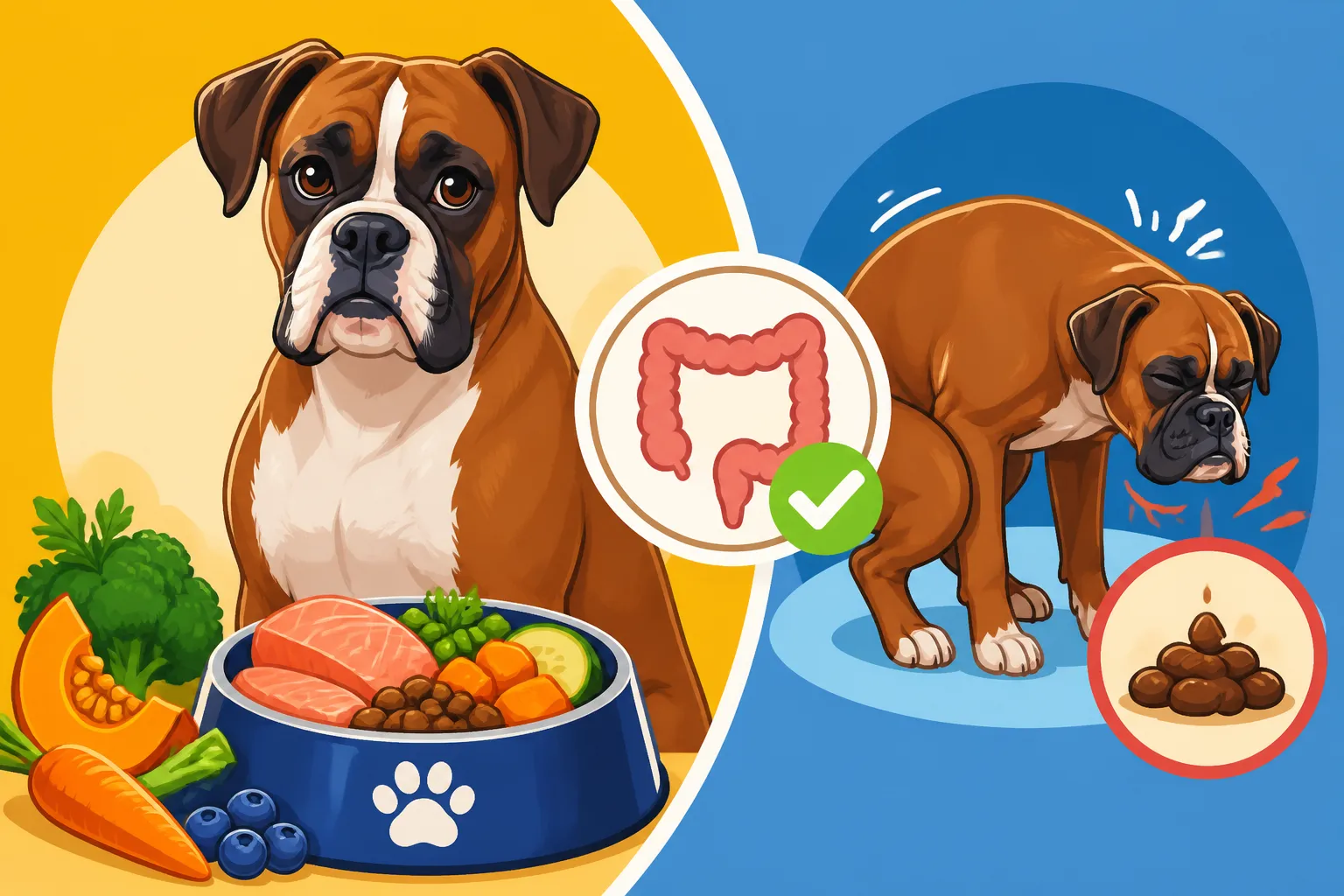
When you see your Boxer pushing and grunting, looking back at their rear end with a worried expression, it’s natural to assume they’re simply constipated. While that’s certainly a common culprit, the act of straining can actually stem from a few different places, and understanding the root cause is crucial for knowing how to help them. It’s not always about hard, dry poops; sometimes, it’s about discomfort or irritation within the colon itself.
Differentiating True Constipation from Other Causes
True constipation often means your Boxer is passing very hard, dry, pellet-like stools, or perhaps not passing any stool at all for an extended period. This is usually due to a lack of fiber, insufficient hydration, or sometimes, an underlying metabolic issue that slows gut motility. Imagine trying to push a solid, compacted block through a narrow pipe – that's what true constipation feels like for your dog. They might posture repeatedly, try, fail, and then wander off, only to try again later. It's an exhausting and painful cycle that needs to be addressed quickly to prevent further discomfort and potential complications like megacolon, where the colon becomes distended and loses its ability to contract effectively.
However, a Boxer can also strain to pass stool when they have an irritated or inflamed colon, even if the stool itself isn't hard. Conditions like colitis, for example, cause inflammation in the large intestine. With colitis, your Boxer might feel an urgent, frequent need to defecate, leading to constant straining, but they only produce small amounts of soft, perhaps mucus-laden, or even bloody stool. It’s like their colon is constantly telling them to go, even when there’s little there. This can be misleading because the effort looks like constipation, but the stool consistency tells a different story. If you’re seeing Bloody Mucus in a Young Boxer's Stool, it's definitely time for a vet visit, as dietary changes alone might not be enough.
Anal Gland Issues and Other Physical Blocks
Another common, and often overlooked, reason for straining is discomfort or impaction of the anal glands. These two small glands, located just inside your Boxer's anus, normally empty naturally when they pass a firm stool. But if they become full, infected, or impacted, it can be incredibly painful and make your Boxer reluctant to defecate. They might strain because the act of pushing stool past the inflamed glands is agony, or because the swelling itself creates a physical obstruction. You might notice them licking their rear end excessively, "scooting" across the floor, or even whimpering when they try to go. A quick trip to the vet can usually resolve impacted anal glands through manual expression, providing immediate relief.
Less common, but still possible, are physical obstructions within the rectum or colon, such as tumors, polyps, or even a foreign object ingested accidentally. In male Boxers, an enlarged prostate can also put pressure on the colon, making defecation difficult and causing straining. Older Boxers, in particular, can suffer from conditions like Arthritis in an Older Boxer or Spondylosis on a Boxer's X-Ray, where the pain from posturing to defecate can make them hesitant to go, leading to stool retention and eventual straining. It's why observing not just the straining, but also the stool itself, and any other associated behaviors, is so important for pinpointing the real problem.
Tailoring Your Boxer's Diet to Promote Comfortable Elimination
Once you have a better idea of why your Boxer is straining, you can start making informed dietary adjustments. The goal is to either soften hard stools, reduce inflammation, or ensure overall gut health, depending on the underlying cause. It’s often a process of trial and error, and consistency is key.
Boosting Fiber: The Dual-Purpose Nutrient
Fiber is often lauded as the answer to digestive woes, and for good reason, but it's not a one-size-fits-all solution. There are two main types of fiber: soluble and insoluble, and both play a role.
- Insoluble fiber is the "roughage" that adds bulk to the stool and helps it move through the digestive tract. Think of it as sweeping out the colon. If your Boxer is truly constipated with hard, dry stools, a moderate increase in insoluble fiber can help create a larger, softer stool that's easier to pass. Sources include whole grains (if tolerated), vegetables like green beans and broccoli, and the skins of certain fruits. Too much insoluble fiber, however, can sometimes absorb too much water and worsen constipation if your dog isn't well-hydrated, or create excessive bulk that's still hard to pass.
- Soluble fiber dissolves in water to form a gel-like substance. This gel helps to regulate stool consistency, firming up loose stools and softening hard ones. It also acts as a prebiotic, feeding the beneficial bacteria in the gut, which is fantastic for overall digestive health and can help soothe an inflamed colon. A common and highly effective source of soluble fiber is plain, canned pumpkin (not pie filling). Just a tablespoon or two mixed into their food once or twice a day can make a remarkable difference. Other good sources include psyllium husk (start with a very small amount, like 1/4 teaspoon, mixed with plenty of water) and certain vegetables like carrots and sweet potatoes. When considering specific solutions for inflammatory bowel issues, remember that Whether Fiber Helps a Boxer's Loose Stools is a critical question, and soluble fiber is often the star here.
When adding fiber, do so gradually over several days to avoid upsetting your Boxer's stomach and causing gas or diarrhea. You might find a balance in their regular kibble by looking for brands with slightly higher fiber content, or by supplementing with fresh, dog-safe vegetables. Many commercial foods are now incorporating ingredients like beet pulp or chicory root for this exact purpose. For specific dietary needs, Prescription Diets for a Boxer With Colitis often include carefully balanced fiber levels designed to support gut health and reduce straining.
| Fiber Type | Primary Benefit | Examples of Food Sources | Recommended for | Cautions |
|---|---|---|---|---|
| Soluble Fiber | Absorbs water to form a gel, regulates stool, prebiotic | Canned Pumpkin, Psyllium Husk, Oats, Sweet Potato | Both constipation (softens) and diarrhea (firms) | Introduce slowly, ensure good hydration, can cause gas |
| Insoluble Fiber | Adds bulk to stool, speeds transit, "sweeps" colon | Wheat Bran, Green Beans, Leafy Greens, Whole Grains | Constipation (adds bulk) | Too much can cause excess bulk or dehydration if not enough water |
Increasing Moisture Content
This one seems obvious, but it's often overlooked. If your Boxer is straining due to hard, dry stools, simply adding more moisture to their diet can be incredibly effective. Dry kibble, while convenient, contains very little moisture.
- Switch to Wet Food: Incorporating high-quality wet food, either exclusively or mixed with their kibble, can significantly increase their daily fluid intake. Brands like Ollie, which offer fresh-cooked, high-moisture meals, can be an excellent option for some Boxers, as they are naturally hydrating and often easier to digest. You can find a wide variety of wet food options and fresh food services through retailers like Chewy.
- Add Water or Broth to Kibble: A simple trick is to soak your Boxer's dry kibble in warm water or low-sodium chicken or beef broth for 10-15 minutes before serving. This softens the kibble and dramatically increases its moisture content, making it easier to digest and contributing to softer stools.
- Encourage Drinking: Make sure your Boxer always has access to fresh, clean water. Consider a dog water fountain, as the moving water can entice some dogs to drink more. Placing multiple water bowls around the house can also help, especially if they’re prone to getting distracted. You can find various water fountain options on Amazon.
Considering Novel Proteins and Probiotics
If your Boxer's straining is accompanied by very loose, mucus-y, or bloody stools, and especially if it's a recurring issue, you might be dealing with an inflammatory condition like colitis or a food sensitivity. In these cases, increasing fiber might not be enough or could even exacerbate the problem if the inflammation is severe.
- Novel Protein Diets: Some Boxers develop sensitivities to common protein sources like chicken or beef. Switching to a "novel protein" diet, which features a protein source your dog hasn't eaten before (like duck, venison, or rabbit), can sometimes calm an irritated digestive system. The idea is to remove potential allergens that might be triggering an inflammatory response. This often requires a strict elimination diet under veterinary guidance. You can search for novel protein kibbles or canned foods on Chewy.
- Probiotics: These beneficial bacteria can help restore balance to your Boxer's gut microbiome, especially after a course of antibiotics or if they've been under stress. A healthy gut flora can improve digestion, strengthen the gut barrier, and reduce inflammation, which in turn can alleviate straining. Probiotics for a Boxer After Antibiotics are particularly useful. There are many canine-specific probiotic supplements available, often recommended by veterinarians. Ask your vet about a good quality probiotic if you suspect inflammation or an imbalance in their gut.
Beyond the Food Bowl: Comprehensive Care for a Straining Boxer
While diet plays a monumental role in managing a Boxer that strains to pass stool, it's never the only piece of the puzzle. A holistic approach that includes hydration, appropriate exercise, and regular veterinary oversight is crucial for long-term digestive health and comfort.
The Critical Role of Hydration
We touched on adding moisture to food, but overall hydration cannot be stressed enough. Think about it: water is what lubricates the digestive tract and softens the stool, making it easier to pass. If your Boxer is chronically dehydrated, even with adequate fiber, their stool will remain hard and difficult to move.
Ensure your Boxer always has access to fresh, clean water. Change their water bowl multiple times a day, especially if it gets slimy or dirty. Some dogs prefer ceramic or stainless steel bowls over plastic. As mentioned, a water fountain can encourage more drinking for some, while others might prefer water from different locations in the house. During warmer months or after exercise, a Boxer's water intake needs soar. It's often helpful to carry a portable water bottle and bowl when you're out and about, ensuring they stay well-hydrated. Remember, a Boxer's deep chest and short snout can make them prone to overheating, so proper hydration is vital for their overall health, not just digestion.
Exercise and Regular Potty Breaks
Regular exercise is not just good for your Boxer's physical and mental well-being; it's also a powerful tool for promoting healthy digestion. Movement stimulates gut motility, helping food and waste move efficiently through the intestines. A sedentary Boxer is more prone to sluggish digestion and, consequently, constipation.
Aim for consistent daily exercise that matches your Boxer's energy levels. For most Boxers, this means a combination of walks, play sessions, and mental stimulation. Even short, frequent walks can make a difference. Establish a regular schedule for potty breaks. Dogs thrive on routine, and knowing when they'll have the opportunity to relieve themselves can prevent them from "holding it" for too long, which can lead to drier, harder stools. Make sure they have ample time and a calm environment during their potty breaks, free from distractions, so they can fully empty their bowels without feeling rushed. This is especially important if they have issues like Straining and Small Stools in a Boxer, where they might need more time to feel complete relief.
When to Consult Your Veterinarian
While dietary changes can often resolve mild cases of straining, it's essential to know when to bring in the professionals. If your Boxer is straining consistently, seems to be in pain, hasn't passed stool in over 24-48 hours, or if you notice any blood or excessive mucus in their stool, a vet visit is imperative.
Your veterinarian can perform a thorough physical examination, including a rectal exam, to check for impacted anal glands, prostatic enlargement, or any masses. They might recommend diagnostic tests such as blood work, fecal analysis, or X-rays to rule out underlying medical conditions, such as inflammatory bowel disease, orthopedic pain that makes posturing difficult, or even neurological issues affecting bowel control. For ongoing digestive issues, particularly if you're suspecting conditions like colitis, your vet may recommend Diagnosing Boxer Colitis by Biopsy for a definitive diagnosis and targeted treatment plan. They can also provide guidance on prescription diets or medications that might be necessary to alleviate the straining and address any underlying health problems, ensuring your beloved Boxer returns to comfortable, regular elimination.
Disclaimer
This article is for general informational purposes only and does not constitute professional advice. Laws, prices and regulations vary by location and change over time. Consult a qualified professional for guidance on your specific situation.