Whether Boxers Really Use Their Paws Like Fists
One of the most charming, yet sometimes challenging, behaviors a Boxer dog exhibits is their penchant for "boxing" with their front paws. If you've ever found yourself on the receiving end of a playful jab or a boop from a Boxer's front foot, you know exactly what I mean. This guide will delve into why Boxers use their paws like fists, what it means, and how to manage this unique breed trait so both you and your beloved Boxer can enjoy a harmonious life together.
The Origin of the "Boxer" Name and the Pawing Behavior
It's a common misconception that the Boxer breed got its name because they literally "box" with their front paws in a fighting manner. While the playful pawing is undeniable, the true origin of the name is a bit more nuanced. However, their physical prowess and the way they engage with the world using their forelimbs certainly cement the image.
Is it an "Act of Boxing" or Play?
The breed name "Boxer" is actually believed to come from the German word "Boxerhund" (Boxer dog), possibly derived from "boxl," an old name for the Bullenbeisser, a German bull-baiting dog from which the Boxer descended. Another theory, perhaps more romantic and certainly visually apt, suggests it comes from the breed's habit of standing on its hind legs and pawing at opponents (or playmates!) with its front paws. So, while they aren't donning tiny boxing gloves, the visual connection is strong. It's an instinctive, expressive behavior rather than a literal fighting move, especially in the context of a family pet. We even have a post specifically on Why the Boxer Is Called a Boxer that explores this history in more detail.
When a Boxer paws, it's usually an invitation to play, a demand for attention, or an expression of pure, unadulterated joy. It's rarely, if ever, an act of aggression or an attempt to harm. Their deep chests and powerful shoulders are built for robust activity, and those front paws are a natural extension of their energetic personality. They simply don't have hands, so paws are their primary way of interacting physically with their environment and the beings in it.
The Boxer's Natural Instinct to Use Paws
Boxers are a working breed, historically used for tasks like herding cattle, guarding, and even hunting wild boar. In these roles, agility, strength, and the ability to use their entire body to interact with their surroundings were crucial. The powerful build of their front assembly – strong shoulders, well-muscled legs – means they are incredibly adept at using their paws. This isn't just for "boxing" during play; you'll see a Boxer use its paws for a variety of tasks: batting at toys, digging in the yard, nudging you for pets, or even trying to "help" you garden.
This natural inclination to use their paws is part of their charm, but it's also something owners need to understand and guide. It's an instinct that dates back generations, and while its function has shifted from working roles to playful interactions in most modern homes, the underlying physical capability and drive remain. It's much like how a retriever will naturally want to carry things in its mouth, a Boxer naturally wants to bat and use its paws.
How Boxer Play Differs from Fighting
It’s crucial to distinguish between a Boxer’s playful pawing and any genuinely aggressive behavior. Playful pawing is characterized by loose, wiggly body language, a happy, relaxed facial expression (often with the signature Boxer "grin" or head tilt), and a generally bouncy demeanor. The paws might make contact, but it's usually soft, and the intent is clear: "Let's play!" or "Pay attention to me!"
In contrast, true aggression would involve stiff body posture, growling, snarling, raised hackles, a rigid tail, and direct, hard eye contact. These are entirely different signals and should never be confused with the typical Boxer play. Owners know their dogs best, but generally, a Boxer's pawing is an invitation, not a threat. They’re called the "clowns of the canine world" for a reason, and much of that joy is expressed through their physical, paw-centric interactions.
Understanding Your Boxer's Playful Pawing
Boxers are incredibly social and expressive dogs, and their pawing is often a key part of their communication style. Understanding why they do it can help you respond appropriately and manage the behavior effectively.
Why Your Boxer "Boxes" at You and Others
There are several common reasons a Boxer might offer a paw to the face or arm, and they almost always boil down to communication:
- Seeking Attention: This is probably the most frequent reason. Your Boxer wants to play, wants a belly rub, or just wants you to acknowledge their existence. A gentle paw tap quickly escalates to more insistent nudges if ignored. They've learned that a paw to the arm is a great way to get your eyes off that book or screen.
- Invitation to Play: Many Boxers use their paws to initiate a game. They might bat at a toy, then look at you, then bat at it again, or even give you a direct paw-nudge as if to say, "Come on, let's wrestle!" Their enthusiasm is infectious, but their methods can sometimes be a bit much for smaller children or unsuspecting guests.
- Excitement and Greeting: When you come home, or a favorite person arrives, the Boxer's excitement can overflow into physical expression. This is where you'll often see them stand up on their hind legs and "box" the air or even gently (or not so gently) paw at you. It's a joyful, energetic greeting. This kind of exuberance is part of Why a Boxer Acts Like a Puppy Until Three — they stay playful for a long time!
- Frustration or Demand: Sometimes, if they're not getting what they want (e.g., you're not throwing the ball fast enough), a Boxer might paw as a sign of mild frustration. It's usually not aggressive, but it's a clear demand for you to get on with it! This can become a habit if rewarded, so it's important to differentiate.
Reading Boxer Body Language During Pawing
Becoming a fluent reader of your Boxer's body language is key to deciphering their pawing. When the pawing is truly playful, you'll typically see:
- Loose, wiggly body: The classic "Boxer wiggle butt" is a sure sign of happiness. Their entire body will be relaxed and flowing.
- Soft eyes and relaxed mouth: No tension in their face, often with a slightly open mouth and maybe even a panting "smile."
- Tail wagging: Usually a broad, sweeping wag, indicating joy. Even with a docked tail, you'll see their whole hindquarters moving.
- "Play bow": They might drop their front end down with their rear end up in the air, a universal dog signal for "let's play!"
- Soft contact: The pawing itself will be more of a tap or a nudge, rather than a forceful blow.
If you see any stiffness, a hard stare, growling, or a rigid posture accompanying the pawing, then the context has changed, and it might be signaling discomfort or a warning, which warrants immediate attention and a re-evaluation of the situation.
| Behavior Trait | Playful Pawing | Problematic Pawing |
|---|---|---|
| Body Language | Loose, wiggly, often includes play bows | Stiff, rigid, sometimes leaning in or pushing |
| Facial Expression | Relaxed, "smiling," soft eyes, sometimes panting | Tense jaw, hard stare, wrinkled brow, direct eye contact |
| Tail | Wagging broadly, entire rear end can wiggle | Stiff wag or held rigid (high or low) |
| Vocalizations | Playful growls, excited yips, happy grunts | Deeper growl, snarl, sharp bark, whines of frustration |
| Contact Level | Soft taps, nudges, gentle batting | Forceful hits, attempts to hold or push down |
| Context | Initiating games, greeting, seeking pets | Demanding attention, guarding resources, showing dominance |
| Reaction from You | Laughter, reciprocal play, gentle redirection | Attempts to stop, discomfort, fear, perceived threat |
Managing Over-Exuberant Pawing
While endearing, a 70-pound Boxer's enthusiastic pawing can be too much, especially for small children, elderly relatives, or anyone easily knocked off balance. It’s important to set boundaries early. One of the most critical things you can do is avoid inadvertently rewarding the behavior. If your Boxer paws you and you immediately give them attention, even negative attention like "No!", they've still achieved their goal: your focus.
Instead, when the pawing starts, turn your back, cross your arms, and completely ignore them. As soon as all four paws are on the floor and they are calm, then reward them with attention, praise, or a game. Consistency is key here. Every single time the paws go up, the attention goes away. You can also preempt the behavior by engaging them with appropriate toys or a training session before they get to the point of demanding attention. For more specific guidance, you might find our post on Stopping a Seventy-Pound Boxer From Jumping very helpful, as many of the principles for managing jumping apply to pawing too.
Training and Redirecting Boxer Pawing
Training a Boxer requires patience, consistency, and a good understanding of their intelligent yet sometimes stubborn nature. Their short attention span means short, fun sessions are best.
Teaching "Four on the Floor"
The "four on the floor" cue is invaluable for Boxers. This means all four of their paws must be on the ground before they receive any attention or rewards. Here’s how you can teach it:
- Start with low-key greetings: When your Boxer is calm, approach them. If they start to lift a paw, immediately turn away.
- Wait for calm: Wait until they settle down and all four paws are on the floor. The moment they are, turn back, praise them, and offer a treat or gentle scratch.
- Use a release word: When you’re ready to engage playfully, use a release word like "Okay!" or "Free!" This helps them understand that there are times for polite greetings and times for enthusiastic play.
- Practice consistently: Apply "four on the floor" to all greetings, whether it's coming home, visitors arriving, or simply you moving from one room to another. Everyone in the household needs to be on board with this rule. Our article on Teaching a Boxer to Keep Four Feet Down dives into this even more thoroughly.
Remember, Boxers learn quickly, but they will test boundaries. Staying consistent will pay off in the long run.
Providing Appropriate Outlets for Boxer Energy
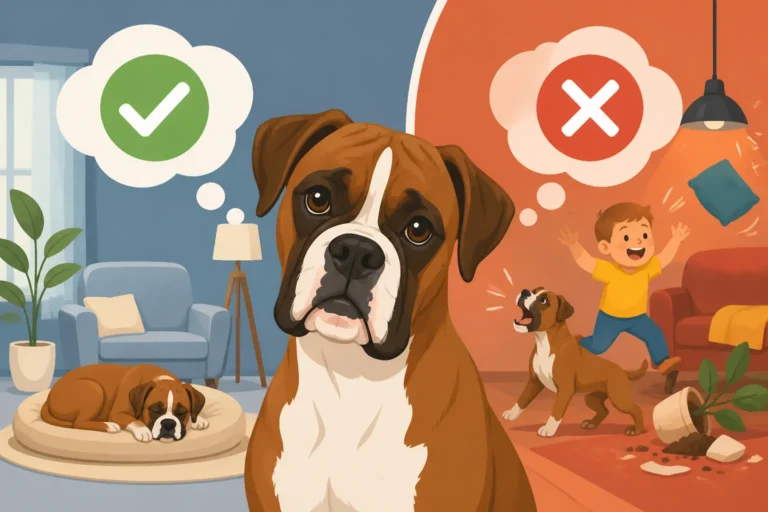
A bored or under-exercised Boxer is a Boxer more likely to resort to attention-seeking behaviors like excessive pawing. These dogs are bundles of energy and need significant physical and mental stimulation every day. Ignoring their needs can lead to frustration for both of you, and they might even start to destroy things when Why a Boxer Wrecks Things When Under-Exercised.
- Daily Exercise: Aim for at least 60-90 minutes of vigorous exercise daily. This could include fast-paced walks, running (mindful of temperature and their brachycephalic nature), playing fetch, or visiting a dog park. Remember, Boxers are prone to overheating, so be aware of Boxer Exercise Needs and the Heat That Limits Them.
- Interactive Toys: Puzzle toys, treat dispensers, and durable chew toys can help keep their minds engaged. Brands like Chewy offer a wide variety of interactive toys and strong chews that can stand up to a Boxer's powerful jaws. Rotate toys regularly to keep things interesting.
- Training Sessions: Short, daily training sessions are excellent mental exercise. Work on obedience commands, new tricks, or even introduce them to dog sports like obedience or rally. Boxers thrive on having a "job" to do. For what motivates them, check out Rewards a Boxer Will Work Hard For.
- Socialization: Regular, positive interactions with other well-behaved dogs can also help burn off energy and teach appropriate play manners.
Consistency is Key for a Boxer
I cannot stress this enough: consistency is paramount when training a Boxer. Their intelligent minds are constantly assessing what works and what doesn't. If sometimes pawing gets them attention and other times it doesn't, you're just teaching them to try harder and longer. Every family member, every guest, needs to respond to the pawing in the same way – by withdrawing attention until the desired behavior (four paws on the floor) is offered.
This requires patience, especially during the adolescent "teenager" phase where they are often testing boundaries. But with persistence, your Boxer will learn what is expected of them, and you'll have a well-mannered, loving companion who still wiggles with joy but reserves their "boxing" for appropriate play with toys.
When Pawing Becomes a Problem
While most Boxer pawing is benign, there are instances where it can cross the line from playful to problematic, requiring a different approach.
Identifying When Play Crosses the Line
Sometimes, the line between enthusiastic play and problematic behavior can blur, especially with a strong, boisterous breed like the Boxer. Here are signs that pawing might be becoming an issue:
- Injury or bruising: If the pawing consistently leaves marks or hurts family members, it's too much.
- Fear in children or guests: If visitors or kids are actively avoiding your Boxer because of their pawing, it's a problem that needs addressing.
- Resource guarding: If the pawing is accompanied by guarding behavior over toys, food, or even you, it could indicate a deeper issue of resource guarding.
- Inability to calm down: If your Boxer cannot settle and constantly paws even after exercise, it might signal an underlying anxiety or lack of impulse control.
- Escalation: If the pawing is escalating in intensity or is coupled with other undesirable behaviors like excessive Boxer Puppy Biting That Does Not Stop or nipping, it's time to intervene more seriously.
These situations go beyond simple exuberance and warrant a more structured training plan.
Seeking Professional Guidance
If you're finding it difficult to manage your Boxer's pawing, especially if it's becoming forceful or causing distress, don't hesitate to seek professional help. A certified professional dog trainer or a veterinary behaviorist can provide invaluable guidance. They can assess your Boxer's individual temperament, your household dynamics, and pinpoint the root cause of the behavior.
They might use techniques such as desensitization, counter-conditioning, or management strategies to help your Boxer learn more appropriate ways to interact. Investing in a good trainer can make a world of difference for both you and your dog. Sometimes, just a few sessions can give you the tools you need. If you're looking for help, exploring options for Boxer Training Class and Trainer Costs can be a great first step. Many trainers are happy to work with Boxer families because they understand the breed's unique blend of energy and affection.
Boxer Puppies and Mouthiness/Pawing
Boxer puppies are notorious for their mouthiness and using their paws from a very young age. This is a normal part of their development and how they explore the world. Puppy "boxing" is often seen as they play with littermates, learning bite inhibition and social cues. It's an important part of their puppyhood.
However, it's crucial to guide this behavior from the start. Just as you teach bite inhibition for their sharp puppy teeth, you need to teach appropriate paw use. Redirect pawing towards appropriate toys and reward calm behavior. Understanding that the Boxer Puppyhood That Lasts Three Years means you'll be working on these behaviors for a while. Providing plenty of engaging toys, perhaps from a well-stocked online pet supply store like Chewy, can give your puppy acceptable outlets for their energy and pawing instincts. It's much easier to shape these behaviors when they are small than to correct them when they are a fully grown, powerful adult.
Disclaimer
This article is for general informational purposes only and does not constitute professional advice. Laws, prices and regulations vary by location and change over time. Consult a qualified professional for guidance on your specific situation.