Demodex Mange in a Boxer Puppy
Finding those first patches of hair loss or irritated skin on your beloved Boxer puppy can be incredibly alarming. One minute they’re a playful, energetic blur, the next you’re seeing red, flaky spots and wondering what on earth is going on. It’s a common scenario for Boxer owners, and often, the culprit is something called demodectic mange. This comprehensive guide will walk you through what Demodex mange is, how to spot it, what to do next, and how to support your Boxer pup through recovery.
What Exactly is Demodex Mange in Boxer Puppies?
When you hear "mange," it often conjures up images of neglected, scruffy street dogs, and that can be really upsetting when it's your meticulously cared-for Boxer puppy. But demodectic mange, often just called Demodex, is a bit different from other types of mange. It's not usually itchy or contagious in the way you might expect, and it's certainly not a reflection of your care. Instead, it's an overgrowth of a mite that is a normal inhabitant of almost every dog's skin.
Understanding the Demodex Mite and Its Cycle
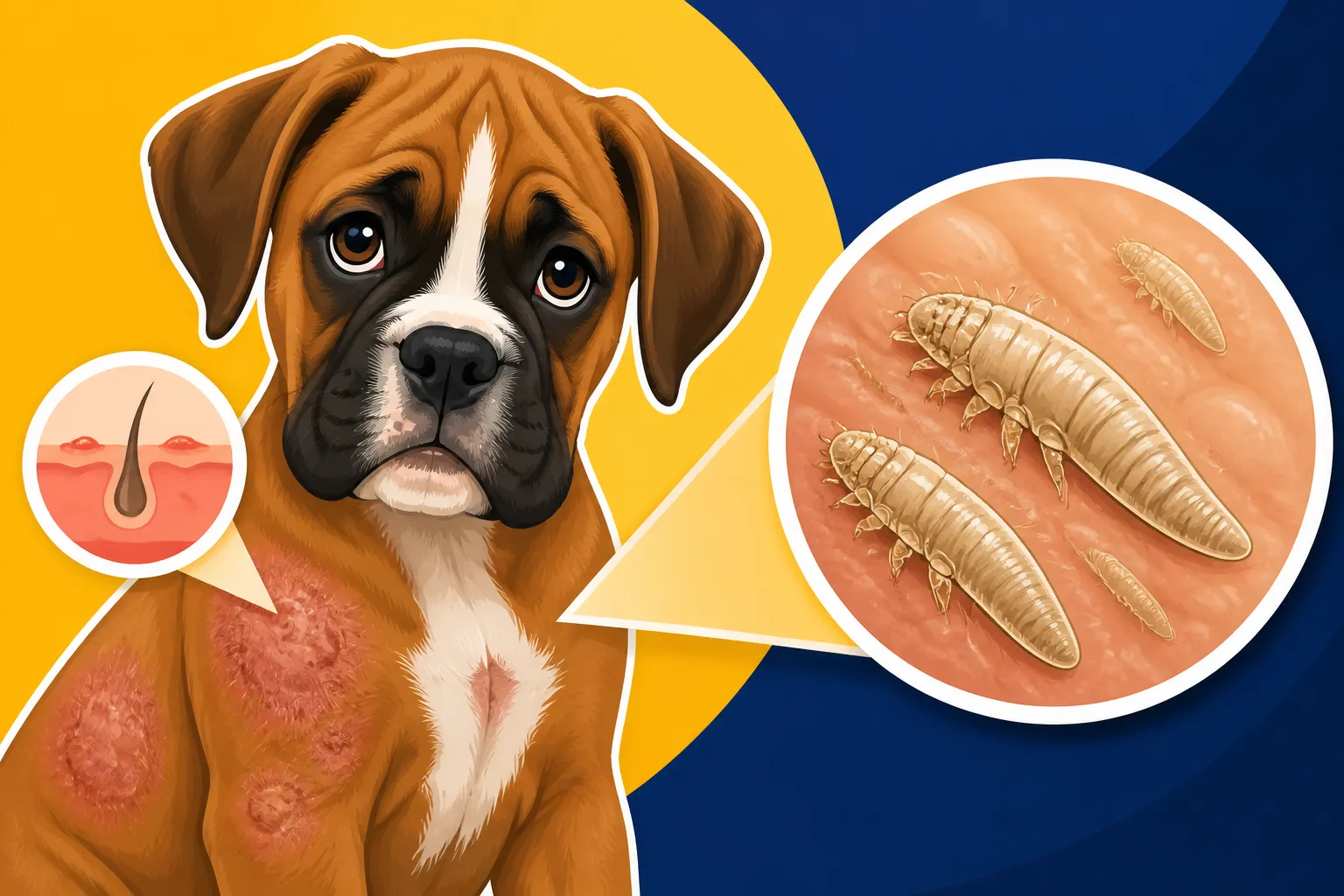
The microscopic culprit behind this condition is Demodex canis, a cigar-shaped mite that lives in the hair follicles and sebaceous glands of dogs. The key thing to understand is that all dogs, including your Boxer, have small numbers of these mites living harmlessly on their skin. They're part of the normal skin flora, passed from mother to puppy during nursing in the first few days of life. It’s an entirely natural process. Problems only arise when a dog's immune system isn't quite strong enough to keep the mite population in check, leading to an overgrowth.
For puppies, their immune systems are still developing. They’re still building up their defenses against the world, and sometimes, this natural process means they can't effectively suppress the Demodex mite population. When these mites multiply beyond normal levels, they cause inflammation and damage to the hair follicles, leading to the tell-tale signs of demodectic mange. It's not about an infection with a foreign pest, but rather a dysregulation of something already present. This is why it’s not typically considered contagious to other healthy dogs or humans – their immune systems are usually robust enough to manage their own mite populations.
Localized vs. Generalized Demodex
Demodex mange in puppies typically presents in one of two forms: localized or generalized. Understanding the distinction is crucial for both prognosis and treatment.
Localized demodectic mange is the most common form in puppies. It usually involves just a few small, well-defined areas of hair loss, often no more than five spots. These patches are typically found around the eyes, on the muzzle, or on the front legs. The skin in these areas might look red, scaly, and a bit flaky. Many localized cases are self-limiting, meaning they resolve on their own as the puppy's immune system matures, often within six to eight weeks. It can be tempting to panic, but your vet might advise a "watch and wait" approach for these minor cases, as aggressive treatment isn't always necessary and might even be more stressful than the condition itself. For instance, you might notice a small, circular bald spot on your Boxer pup's elbow. It doesn't seem to bother them, and it stays roughly the same size. This is a classic presentation of localized Demodex.
Generalized demodectic mange, on the other hand, is more serious and widespread. It involves multiple patches of hair loss on larger areas of the body, or affects an entire body region, or even two or more paws. The skin can become very red, thickened, scaly, and sometimes even develop secondary bacterial infections, leading to pustules, crusts, and intense itching (which isn't usually a direct symptom of the mites but a result of the secondary infection). Generalized Demodex requires veterinary intervention and ongoing treatment, as it's unlikely to resolve on its own. This form often indicates a more significant underlying immune system compromise, and your vet will want to rule out other health issues. For example, if your Boxer pup has bald patches covering their chest, several spots on their back, and inflamed, scabby paws, that's definitely a case of generalized Demodex needing immediate attention.
Here's a quick comparison:
| Feature | Localized Demodectic Mange | Generalized Demodectic Mange |
|---|---|---|
| Extent | Up to 5 small, defined lesions | More than 5 lesions, or entire body regions, or two+ paws |
| Appearance | Hair loss, redness, mild scaling | Extensive hair loss, severe redness, thickened skin, pustules, crusts |
| Itchiness | Usually none or mild | Often moderate to severe (due to secondary infection) |
| Contagious | No | No |
| Prognosis | Often self-resolving as immune system matures (6-8 weeks) | Requires aggressive and prolonged veterinary treatment |
| Underlying Cause | Immature immune system in puppies | More significant immune compromise, sometimes genetic predisposition |
Why Boxers Are Prone to Demodex
It's a frustrating reality for Boxer owners that our beloved breed seems to be predisposed to certain health conditions, and Demodex mange is one of them. While any puppy can develop demodectic mange, certain breeds, including Boxers, are overrepresented in cases of generalized demodex. This suggests a genetic component, where there might be an inherited defect in their cellular immune response that allows the mites to proliferate.
This doesn't mean every Boxer puppy will get Demodex, but it does mean that if your Boxer pup develops it, especially the generalized form, it's not uncommon. The characteristic short coat of a Boxer also means that any skin issues, including hair loss and redness, are immediately noticeable, unlike in breeds with longer, thicker fur where mild cases might go undetected for longer. This can sometimes make the problem seem worse than it is, simply because it's so visible. The stress of moving to a new home, vaccination, or even internal parasites can also temporarily suppress a puppy's developing immune system, making them more susceptible to an outbreak. This is why a good breeder will emphasize The Health Screening a Boxer Breeder Owes You to help identify potential genetic predispositions and ensure robust overall health.
Recognizing the Signs and Getting a Diagnosis
You know your Boxer puppy best. You see them every day, so you're often the first to notice when something isn't quite right. Early detection is key with Demodex, as it allows for quicker intervention and can prevent a localized case from progressing to a more generalized, challenging form.
Common Symptoms and Where to Look
The classic signs of Demodex mange are pretty distinctive once you know what to look for. The most common symptom is alopecia, or hair loss, appearing in patches. These patches often start small and circular, and the hair may look thin or brittle around the edges.
You might notice redness (erythema) in the affected areas, especially on lighter-colored Boxers. The skin can also appear scaly or flaky, almost like dandruff, and in more severe cases, it might become thickened (lichenification) or even hyperpigmented, turning a darker, almost leathery gray or black over time. Keep an eye on specific areas:
- Around the eyes: Little "spectacles" of hair loss are a hallmark.
- On the muzzle: Around the lips and chin.
- On the front legs and elbows: Often due to pressure points, but also common spots for Demodex.
- The hocks (rear ankles): Another area prone to skin issues.
Sometimes, especially if secondary bacterial infections set in, you'll see pustules (small pus-filled bumps), crusts, and even bleeding from scratching. While the mites themselves typically aren't itchy, these secondary infections can cause significant discomfort, leading your Boxer pup to scratch, rub, or lick the affected areas. When you're doing your Weekly Lump Checks on a Boxer, make sure you're also feeling for any changes in skin texture or unexpected hair loss.
The Importance of a Vet Visit
As soon as you notice any of these symptoms, it’s time to call your veterinarian. While it might be tempting to try home remedies or guess at the cause, an accurate diagnosis is absolutely essential. Many skin conditions can mimic Demodex, from allergies to fungal infections like ringworm, and treating the wrong condition can delay healing and potentially worsen the problem.
Your vet will likely perform a skin scrape. This is a quick and relatively painless procedure where a small scalpel blade is used to gently scrape the surface of the skin, collecting cells and debris from deep within the hair follicles where the mites reside. The sample is then placed on a slide and examined under a microscope. Seeing the cigar-shaped Demodex mites confirms the diagnosis. In some cases, especially if the skin is very thick or difficult to scrape, your vet might recommend a skin biopsy, where a small piece of skin is surgically removed and sent to a lab for examination. Don't worry, they'll numb the area first. This step is critical because the absence of diagnosis means the wrong treatment, which is not only ineffective but can also lead to more frustration and expense. When thinking about The Yearly Bill for a Seventy-Pound Boxer, vet visits for skin issues are a common component, and it's always best to get an accurate diagnosis upfront.
Differentiating Demodex from Other Skin Issues
It’s easy to jump to conclusions when you see a skin problem, but as mentioned, many things can look like Demodex. For example, fungal infections like ringworm can also cause circular patches of hair loss. Bacterial skin infections (pyoderma) often result in red, pustular lesions. Allergic reactions can cause generalized redness, itching, and inflammation. Even some nutritional deficiencies can lead to poor coat quality and hair loss.
Because Boxers have Why a Boxer's Short Coat Shows Every Rash so clearly, every little irritation is visible. A vet's expertise is invaluable here. They can rule out other possibilities through various diagnostic tests beyond the skin scrape, such as fungal cultures, bacterial cultures, or even allergy testing. This thorough approach ensures that your Boxer receives the correct and most effective treatment plan, saving you time, money, and your pup unnecessary discomfort. Trusting your vet to navigate these possibilities is paramount for your Boxer's well-being.
Treatment Approaches and Management Strategies
Once you have a confirmed diagnosis, the good news is that Demodex mange is typically treatable. The treatment strategy will depend heavily on whether your Boxer puppy has localized or generalized Demodex, and the severity of the condition.
Topical and Systemic Treatments
For localized Demodex, as mentioned, your vet might recommend a "wait and see" approach, as many cases resolve on their own. However, if the spots are bothering your pup or spreading slightly, a vet might prescribe a topical ointment containing benzoyl peroxide to flush the hair follicles, or a mild medicated shampoo.
For generalized Demodex, a more aggressive approach is needed. The mainstays of treatment typically fall into two categories:
- Oral Medications (Isoxazolines): These are newer, highly effective, and generally very safe treatments. Brands like Bravecto (fluralaner), NexGard (afoxolaner), Simparica (sarolaner), and Credelio (lotilaner) are commonly used. They are administered orally (some are chews) and work by killing the mites systemically. Treatment usually continues for several weeks or months, typically until your Boxer has two consecutive negative skin scrapes, usually a month apart. These medications are a game-changer compared to older, more toxic dip treatments.
- Amitraz Dips: This is an older, but still sometimes used, treatment. It involves dipping your Boxer in a solution, usually weekly. Amitraz can be effective but can have more side effects, including sedation, vomiting, and a strong chemical smell. It also requires careful handling due to its potential toxicity. Given the availability of safer oral options, dips are less common now.
- Antibiotics: If your Boxer puppy has secondary bacterial skin infections (which is very common with generalized Demodex), your vet will also prescribe a course of antibiotics. This is crucial for healing the skin and making your pup more comfortable. Sometimes, Boxer Vaccination and Sensitivity Reports can highlight a Boxer's unique immune responses, which might factor into how well they tolerate certain medications, so always discuss your pup's full health history with your vet.
It's important to stick to the treatment plan exactly as prescribed by your vet. Don't stop medication just because the skin looks better; the mites can still be present and might rebound if treatment is discontinued too early.
Supporting Your Boxer Puppy Through Treatment
Dealing with Demodex requires patience and consistent care from you. Beyond the prescribed medications, there are several things you can do to support your Boxer puppy's recovery:
- Manage Secondary Infections: If antibiotics are prescribed, ensure your pup finishes the entire course. Keep the affected areas clean. Your vet might recommend regular bathing with a medicated shampoo to help remove crusts and soothe the skin.
- Good Nutrition: A high-quality, balanced diet is fundamental for a strong immune system. Ensure your Boxer puppy is getting appropriate nutrition, especially during their Feeding a Boxer Puppy Through the Growth Year. A healthy diet supports skin healing and overall immunity.
- Reduce Stress: Stress can weaken a puppy's immune system, potentially hindering recovery. Provide a calm, consistent environment. Ensure they have a comfortable place to rest, regular gentle exercise appropriate for their age and condition, and plenty of positive interaction. Avoid overly strenuous activity if your pup is feeling unwell.
- Prevent Self-Trauma: If your Boxer is itchy due to secondary infection, they might scratch or lick, which can worsen the skin and introduce more bacteria. An Elizabethan collar (cone) might be necessary to prevent them from irritating the affected areas.
- Follow-Up Skin Scrapes: Your vet will schedule regular follow-up skin scrapes to monitor the mite population. These are crucial to determine if the treatment is working and when it can be safely stopped. Don't skip these appointments, even if your pup looks completely healed.
The costs associated with diagnosing and treating Demodex, particularly the generalized form, can accumulate. Regular vet visits, medications, and potential follow-up tests can quickly add up. This is where having a comprehensive pet insurance plan, such as one from Healthy Paws, can provide immense peace of mind, helping to cover unexpected veterinary expenses and ensure your Boxer gets the best care without financial strain.
Preventive Measures and Long-Term Outlook
While Demodex can be frustrating, the long-term outlook for most puppies, even those with generalized forms, is very good with appropriate treatment. Once a Boxer puppy recovers from demodectic mange, it is uncommon for it to recur later in life if it was truly juvenile-onset. However, an adult dog that develops generalized Demodex warrants a thorough investigation for an underlying health issue compromising their immune system, such as hypothyroidism or cancer.
Here are some key preventive and long-term considerations:
- Responsible Breeding: Breeders should avoid breeding dogs that have had generalized demodectic mange, as there's a strong genetic component to susceptibility. This is part of responsible breeding practices aimed at improving the health of the breed.
- Overall Health Maintenance: Keeping your Boxer in optimal health with a good diet, regular exercise, and routine veterinary care helps support a robust immune system. Regular check-ups can catch any issues early.
- Parasite Control: While Demodex isn't prevented by typical flea and tick medications, some of the newer isoxazoline drugs used for Demodex treatment also cover fleas and ticks, offering comprehensive parasite control. Discussing comprehensive parasite prevention with your vet is always a good idea.
- Spaying/Neutering: Some vets recommend spaying or neutering dogs that have experienced generalized demodectic mange, as hormonal fluctuations can sometimes trigger or worsen immune-mediated conditions. For your Boxer, considering "Whether Early Neutering Changes Boxer Cancer Risk" could also be part of this broader health discussion with your vet.
- Monitoring: Even after successful treatment, continue to monitor your Boxer's skin closely during your daily interactions and grooming sessions. Early detection of any new spots allows for prompt action.
Remember, a diagnosis of Demodex is not a death sentence for your puppy. With dedication and professional veterinary guidance, your Boxer can overcome this condition and go on to live a full, happy, and itch-free life. Healthy Paws understands the emotional and financial investment in our pets, offering plans that can help cover these types of conditions when they arise.
Living with a Boxer Puppy During and After Demodex
Having a puppy with any health issue can be a trying time, and Demodex mange is no exception. It's not just about the physical treatment; it's also about managing your own stress and ensuring your pup feels loved and comfortable throughout the process.
Managing Daily Care and Comfort
During treatment, your Boxer puppy might not feel their usual boisterous self. Their skin might be sensitive, and they may be a bit subdued, especially if they're on medication or dealing with secondary infections.
- Gentle Handling: Be extra gentle when petting or grooming your pup, particularly around affected areas. Avoid harsh brushes or vigorous rubbing. Shampoo for a Boxer With Sensitive Skin will be your friend if bathing is required.
- Clean Bedding: Keep your pup's bedding clean and dry. This reduces the bacterial load on their skin and provides a more comfortable resting place.
- Prevent Exposure to Extremes: Protect sensitive skin from harsh sunlight or extreme cold, which can exacerbate irritation.
- Patience with Play: While your Boxer loves to play, especially the typical Boxer Puppy Biting That Does Not Stop games, keep play gentle and short if your pup is not feeling well. Don't push them if they seem tired or uncomfortable. Focus on quiet cuddles and mental stimulation with puzzle toys.
- Routine: Maintain a consistent routine for feeding, walks, and rest. Predictability helps reduce stress, which in turn supports a healthy immune system.
If your Boxer puppy is wearing a cone to prevent scratching, ensure it fits properly and doesn't rub or cause new sores. It can be a challenge for them to eat and drink with it on, so you might need to adjust their bowls or remove the cone for meal times under supervision.
The Emotional Toll on Owners
It's completely normal to feel worried, frustrated, or even guilty when your puppy is sick. You might feel like you've done something wrong, or you might be stressed about the costs and the time commitment. Seeing your lively Boxer pup covered in bald spots or constantly licking at their skin can be heartbreaking.
Remember, demodectic mange is not a reflection of your care or cleanliness. It's an immune system issue. It’s okay to feel overwhelmed, but focus on the fact that you're taking steps to help your pup. Many Boxer owners have gone through this, and the vast majority of puppies recover fully. Lean on your veterinary team for support and information. They are there to guide you. Financial concerns are a real part of pet ownership, and programs like those offered by Healthy Paws can help alleviate the burden, allowing you to focus on your Boxer's recovery.
When to Consider Advanced Care or Further Investigation
For most Boxer puppies, Demodex is a temporary hurdle. However, in some cases, especially with persistent or recurring generalized demodectic mange, your vet might recommend a referral to a veterinary dermatologist. These specialists have advanced training in skin conditions and can offer more in-depth diagnostics and treatment options.
Reasons for a specialist referral might include:
- Failure to respond to conventional treatment: If your puppy isn't improving as expected.
- Recurrent generalized Demodex: If the mange keeps coming back despite seemingly successful treatment.
- Adult-onset Demodex: If your Boxer develops generalized Demodex after two years of age, it almost always signals an underlying health problem, and a specialist can help uncover it.
- Unusual presentations: If the skin lesions are atypical or very severe.
A dermatologist can perform more specialized tests, explore other immune system issues, or suggest alternative therapies. While a referral adds another layer of cost, it's often the best path forward for complex cases to ensure your Boxer receives the most precise and effective care possible. Rest assured, with proper management, your Boxer will be back to their happy, goofy self.
Disclaimer
The information provided in this article is for general informational purposes only and is not intended as a substitute for professional veterinary advice, diagnosis, or treatment. Always seek the advice of your veterinarian or other qualified health provider with any questions you may have regarding a medical condition. Never disregard professional veterinary advice or delay in seeking it because of something you have read in this article.