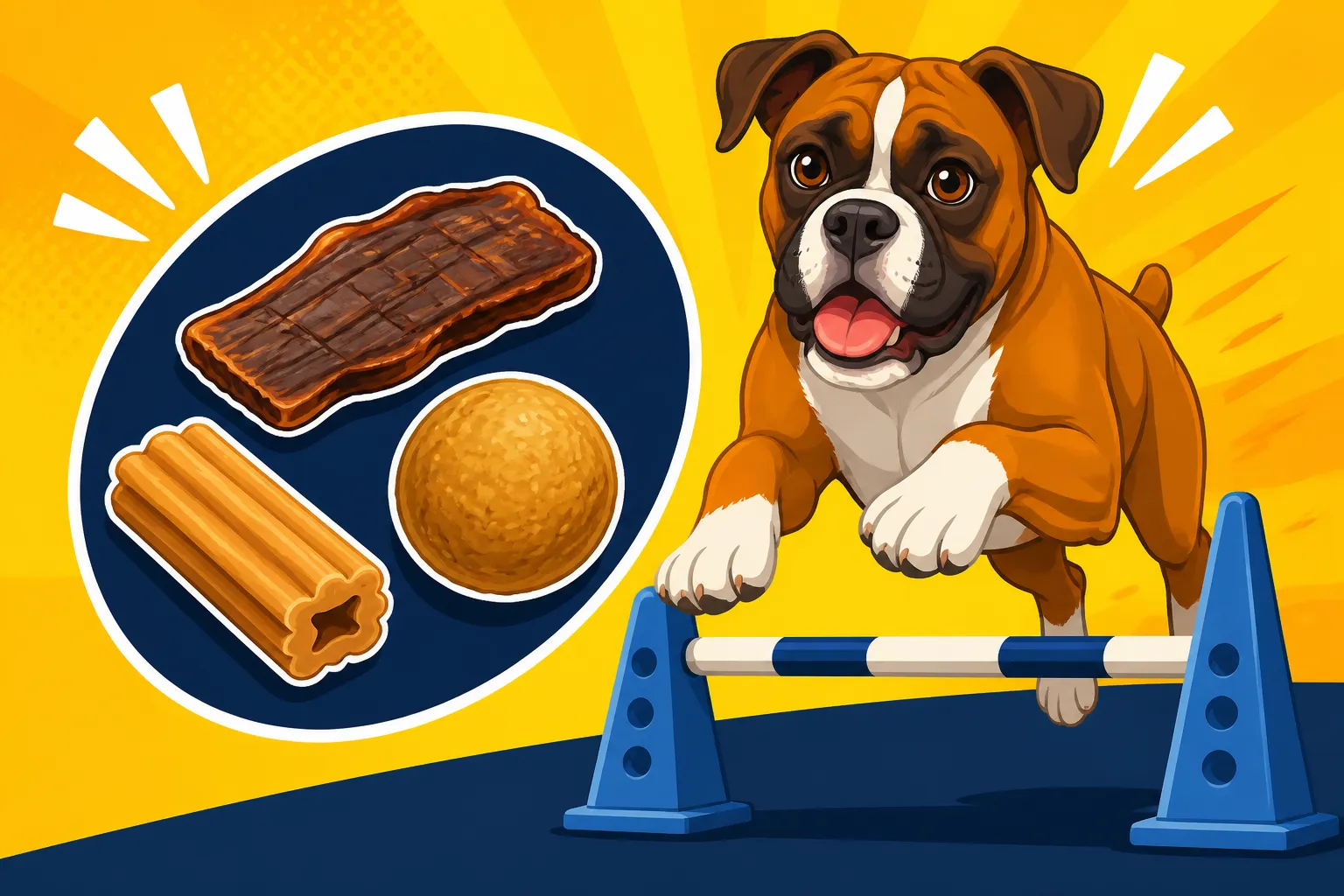
Treats That Survive Boxer Training Sessions
Every Boxer owner knows the drill: you’ve got this incredibly smart, energetic, and often hilariously stubborn dog, and you're trying to teach them something new. The biggest hurdle isn't usually the Boxer's intelligence, but their boundless enthusiasm and sometimes, their discerning palate. Finding treats that can withstand their powerful jaws, hold their attention, and actually last through a training session can feel like a quest for the holy grail. This guide is here to help you navigate the world of high-value training treats that truly survive a Boxer’s boundless spirit, ensuring your training sessions are effective and rewarding for both of you.
Why Standard Treats Often Fall Short for Your Boxer
It’s not your Boxer’s fault that they blow through a treat in a millisecond, leaving you fumbling for the next one while their attention has already shifted to a rogue dust bunny. Their unique blend of high energy, powerful chewing ability, and sometimes a sensitive digestive system means that many standard dog treats just don’t cut it.
The Boxer's High Energy and Short Attention Span
Boxers, bless their hearts, are a whirlwind of motion and curiosity. This means that during a training session, especially in a distracting environment, you need something that can grab and hold their focus. A treat that crumbles too quickly, is swallowed in one gulp, or simply isn't exciting enough will lose its appeal faster than you can say "stay." You're often battling against their natural exuberance, their tendency to "box" with their paws when excited, and their inherent need for constant engagement. This is especially true during that famously long period when they're still acting like a puppy, as discussed in The Boxer Puppyhood That Lasts Three Years. If you're struggling with getting your Boxer to focus, it's a common frustration, and the treat is often your secret weapon.
Imagine trying to teach your three-year-old Boxer to hold a "down-stay" in the park with squirrels chattering and children playing nearby. If you offer a bland, easily devoured biscuit, they might take it, swallow it, and then immediately pop up, scanning the environment for the next exciting thing. The treat simply didn't provide enough sustained reinforcement to outweigh the environmental distractions. You need something with staying power, both in terms of flavor and chew-time, to keep them mentally engaged with the task at hand. This also ties into Training a Boxer That Gets Bored Fast, highlighting why varied and high-value rewards are crucial.
The Power Chewer Predicament
Let's be honest, Boxers are power chewers. They have strong jaws, and they love to use them. Many standard training treats are designed to be soft or easily broken, which is great for quick rewards, but for a Boxer, it means they're gone in a flash. This doesn't allow for what we call "processing time" – that moment when your dog is still enjoying the reward, giving you a chance to reset, praise, or even increase the duration of a behavior.
Consider a scenario where you're working on leash manners. You're trying to get your Boxer to walk nicely by your side, and every few steps, you want to reward them for loose-leash walking. If the treat is gone before you've even taken two more steps, you're constantly digging in your pouch, breaking your rhythm, and your Boxer might start to anticipate the next treat rather than focusing on the act of walking nicely. For Boxers, this power-chewing habit also extends to their toys and sometimes even furniture, a common complaint touched upon in discussions like Chews That Redirect a Mouthy Boxer. Finding something that takes a little effort to consume becomes a part of the reward itself.
Sensitive Stomachs and Dietary Needs
Boxers can be prone to sensitive stomachs, allergies, or conditions like colitis. This means that a lot of commercially available treats, especially those with fillers, artificial colors, or common allergens like chicken or beef, might cause digestive upset. When your training treat causes loose stools or an upset tummy, it definitely doesn't contribute to a positive training experience for anyone.
Many owners find themselves constantly checking ingredient lists, trying to avoid common culprits. This challenge becomes even more pronounced when you consider Diet Changes for a Boxer With Colitis, where specific novel proteins or limited ingredient diets are often prescribed. It’s not just about what treats survive the chewing; it’s about what treats survive the digestive system without causing an internal rebellion. You want treats that are healthy and contribute to their overall well-being, keeping them lean and muscled, a goal also discussed when considering Feeding a Boxer to Stay Lean and Muscled.
Essential Qualities of Boxer-Proof Training Treats
So, what exactly makes a treat "Boxer-proof"? It comes down to a few key characteristics that cater specifically to their needs, making training more effective and enjoyable.
High Value and Irresistible Flavor
For a Boxer, a treat isn't just a snack; it's a motivator. And for that motivation to be effective, especially when you're trying to get them to perform a difficult task or ignore a major distraction, the treat needs to be high value. This isn't just about taste; it's about perceived value. What one dog finds "okay," another might find "utterly divine." For Boxers, who often have a strong food drive, this usually means something meat-based, stinky, and utterly delicious.
Think about it: would you rather work for a stale cracker or a gourmet steak? Your Boxer feels the same way. When they're presented with a high-value treat, their brain is literally flooded with feel-good chemicals, strengthening the association between the desired behavior and the reward. This is why discussions around Rewards a Boxer Will Work Hard For often emphasize potent, appealing options. It's about finding that treat that makes their eyes light up and their tail start to thump a little faster, the one they will truly focus on consuming, even if it takes a moment.
Durability and Chew-Time
As we touched on, a treat that disappears too quickly is a wasted opportunity for a Boxer. For effective training, especially when you're shaping longer duration behaviors like a stay or a polite greeting, you need a treat that provides at least a few seconds of chew-time. This "chew-time" acts as a mini-pause, allowing your Boxer to process what they did to earn that reward, and giving you time to mark the behavior, offer verbal praise, and prepare for the next repetition.
This doesn't mean you need a full-blown chew toy, but something that isn't instantly crunched and swallowed. Think about textures that require a bit of work from their strong molars – something chewy, slightly firm, or with an interesting consistency. This helps prevent them from becoming "hoovers" who just inhale the treat and demand another without truly engaging with the reward. The goal is to maximize the time the treat holds their attention, which is crucial given that Why Short Sessions Suit a Boxer's Attention Span.
Appropriate Size and Calorie Control
While we want durability, we don't want a treat that's too large or calorie-dense for frequent use. Training often involves many repetitions, and each repetition ideally gets a reward. If your treats are too big, you'll quickly overfeed your Boxer, leading to weight gain – which, as any Boxer owner knows, can exacerbate other health issues. This is particularly important when considering their overall intake, a topic often explored in discussions about Daily Calories for a Seventy-Pound Boxer.
The ideal training treat for a Boxer should be small enough to be given frequently without guilt, yet large enough to be satisfying and provide that necessary chew-time. You might need to cut larger treats into smaller, pea-sized pieces to control portions. The goal is to motivate without adding unnecessary bulk to their diet. Remember, treats should be considered part of their daily caloric intake, not just an extra bonus. This is also why many experienced owners never free-feed their Boxers, a philosophy detailed in Why a Boxer Should Never Free Feed.
Ingredient Quality and Digestibility
Given the Boxer's potential for sensitive stomachs and specific dietary needs, the quality and digestibility of your training treats are paramount. Look for treats with limited ingredients, especially single-source proteins if your Boxer has allergies. Avoid artificial colors, flavors, and excessive fillers that can cause upset or contribute to health problems.
For Boxers with known sensitivities, exploring novel protein sources like venison, duck, or rabbit can be a game-changer. These can be less likely to trigger adverse reactions compared to common proteins like chicken or beef. Some owners even turn to fresh food options. For instance, brands like Ollie offer human-grade, fresh meals that can often be portioned and used as incredibly high-value, digestible training treats for sensitive dogs. This focus on healthy, digestible ingredients supports their overall health and keeps them feeling good, which in turn makes them more receptive to training.
Top Treat Types for Boxer Training Success
Now that we know what makes a treat ideal, let’s dive into some specific types that often prove successful for our beloved Boxers.
Freeze-Dried Meats and Liver
These are often the gold standard for high-value training treats, especially for Boxers. Freeze-dried treats are typically single-ingredient (or very limited ingredient), intensely flavorful, and have a satisfying crunch that takes a moment for a Boxer to process. The process of freeze-drying preserves the natural scent and taste of the meat, making them incredibly appealing.
Think about freeze-dried chicken, beef liver, salmon, or even lamb. They are lightweight, easy to break into smaller pieces, and don't leave your hands greasy. Their intense aroma makes them highly motivating, even in distracting environments. For Boxers with allergies, you can easily find single-protein options that align with their specific dietary needs. Many premium brands offer these, and you can often find a wide selection of different protein sources through retailers like Chewy, allowing you to experiment and find what your Boxer loves best without committing to a huge bag of one type.
Soft, Chewy, and Moist Treats
While crunch is good, a soft, chewy treat can also be highly effective, particularly for very young puppies learning to mouth gently, or for older Boxers with dental considerations. The key is that they shouldn't be too soft that they're gone instantly, but rather have a satisfying chewiness that lasts a few seconds.
Look for treats with a pliable texture that can be easily torn or cut into small, consistent pieces. These often come in small, bite-sized forms already. They tend to be very palatable due to their moisture content and often come in rich, meaty flavors. For Boxers struggling with mouthing, these can be a good choice to redirect their puppy teeth from your fingers, a common issue discussed in Boxer Mouthing From Puppy to Adult. Just be mindful of the ingredients; choose brands with whole food ingredients and avoid excessive sugars or artificial additives.
Homemade or Fresh Food Treats
For ultimate control over ingredients and to cater to specific dietary needs, homemade treats are an excellent option. You can bake small pieces of lean chicken, turkey, or fish, or even hard-boil eggs and chop them into tiny bits. The aroma and freshness of homemade treats are often irresistible to Boxers.
Another fantastic option, especially for Boxers with extreme sensitivities, is to use small pieces of their regular food, or even specific parts of fresh dog food if they're on a brand like Ollie. Many owners find that cutting up cooked sweet potato, carrots, or green beans can also work as lower-calorie, high-fiber training rewards. Just be sure to check with your vet about any new additions to your Boxer's diet, especially if they have underlying health conditions. This approach ensures maximum digestibility and minimizes the risk of allergic reactions, making them perfect for sensitive Boxers.
Low-Calorie Crunchy Biscuits (Used Strategically)
While many crunchy biscuits are too low-value or too quickly consumed for main training sessions, they can have a place. For very simple, low-distraction behaviors, or as a "bonus" treat at the end of a successful session, a good quality, low-calorie biscuit can work.
Choose biscuits with wholesome ingredients, ideally those that require a bit of a crunch before they dissolve. Break them into small pieces. They are convenient to carry and won't get messy in your treat pouch. However, for serious behavior modification or teaching new, challenging commands, you’ll want to stick to the higher-value options. Think of these as your everyday "thank you" treats, reserving the "jackpot" rewards for truly outstanding work.
Training Treat Comparison Table for Boxers
| Treat Type | Value Level | Durability/Chew-Time | Ideal Use Case | Pros | Cons |
|---|---|---|---|---|---|
| Freeze-Dried Meats | Very High | Medium | High-distraction environments, new behaviors | Extremely palatable, limited ingredients, easy to break | Can be more expensive, some might crumble too easily |
| Soft Chewy Treats | High | Medium | Duration work, polite greetings, puppy mouthing | Very appealing, easy to chew and swallow, mess-free | Can be high in calories if not portioned, ingredients vary |
| Homemade Meats/Veggies | High to Very High | Varies (Medium) | Sensitive stomachs, diet control, specific preferences | Full control over ingredients, fresh, customizable | Requires prep time, can be messy, limited shelf life |
| Low-Calorie Biscuits | Low to Medium | Low to Medium | Simple behaviors, maintenance, quick rewards | Convenient, low calorie, cost-effective | Less motivating for Boxers, easily crushed, can contain fillers |
Making Training Treats Work for Your Boxer's Overall Well-being
It's not just about choosing the right treat; it's about how you use them and how they fit into your Boxer's overall health and lifestyle.
Integrating Treats into a Balanced Diet
Treats, no matter how healthy, are still extra calories. It's crucial to factor them into your Boxer's daily food intake to prevent unhealthy weight gain. An overweight Boxer is more prone to joint issues like Boxer Hip Dysplasia and Spondylosis and can put unnecessary strain on their heart, especially if they have conditions like ARVC, which is explored in What Boxer ARVC Actually Does to the Heart.
If you're doing extensive training, reduce the amount of kibble or regular food your Boxer receives at meal times. This balance ensures they are getting all the nutrients they need from their main meals, while still enjoying the benefits of high-value training rewards. Always monitor your Boxer's weight and body condition. You should be able to easily feel their ribs without seeing them prominently, and they should have a discernible waist.
Avoiding Resource Guarding
When using high-value treats, especially those that require a bit of chewing, you need to be mindful of potential resource guarding behaviors. Boxers, like any breed, can develop protective instincts over their valuable items, whether it's a favorite toy or a delicious treat. If you notice any stiffness, growling, or attempts to move away when you approach while they're enjoying a treat, it's a sign to step back and re-evaluate your approach.
To mitigate this, always ensure you're training in a calm, low-stress environment. Avoid taking treats away once given, and instead, practice "trade" games where you offer an even higher-value treat for the one they have, teaching them that your approach means good things. If you have multiple dogs, always separate them for high-value chew treats to prevent conflicts.
The Role of Different Treat Values in Training
Not all training scenarios require the highest value treat. You can create a "treat hierarchy" based on your Boxer's preferences and the difficulty of the task.
- Low-Value Treats: Simple, dry biscuits or even their regular kibble can be used for behaviors they already know well in a distraction-free environment (e.g., "sit" in the living room).
- Medium-Value Treats: Chewy, palatable treats or small pieces of lean meat can be used for practicing known behaviors in moderately distracting environments, or for introducing easier new commands.
- High-Value Treats: Freeze-dried liver, cheese, or small pieces of cooked chicken are reserved for teaching new, challenging behaviors, working in highly distracting environments (like a dog park), or for those "jackpot" moments when your Boxer performs an exceptional task. These are your go-to when you need to really break through the distraction.
By strategically using different treat values, you keep your Boxer engaged without overexposing them to the highest value options, preserving their potency for when you truly need them. This also helps you manage calorie intake more effectively over the long run.
Finding the right training treats for your Boxer is a journey of discovery, often involving some trial and error. But by focusing on high value, appropriate durability, smart portion control, and quality ingredients, you can make every training session a positive, productive, and delicious experience for your furry family member.
Disclaimer
This article is for general informational purposes only and does not constitute professional advice. Laws, prices and regulations vary by location and change over time. Consult a qualified professional for guidance on your specific situation.