Boxer Puppy Biting That Does Not Stop
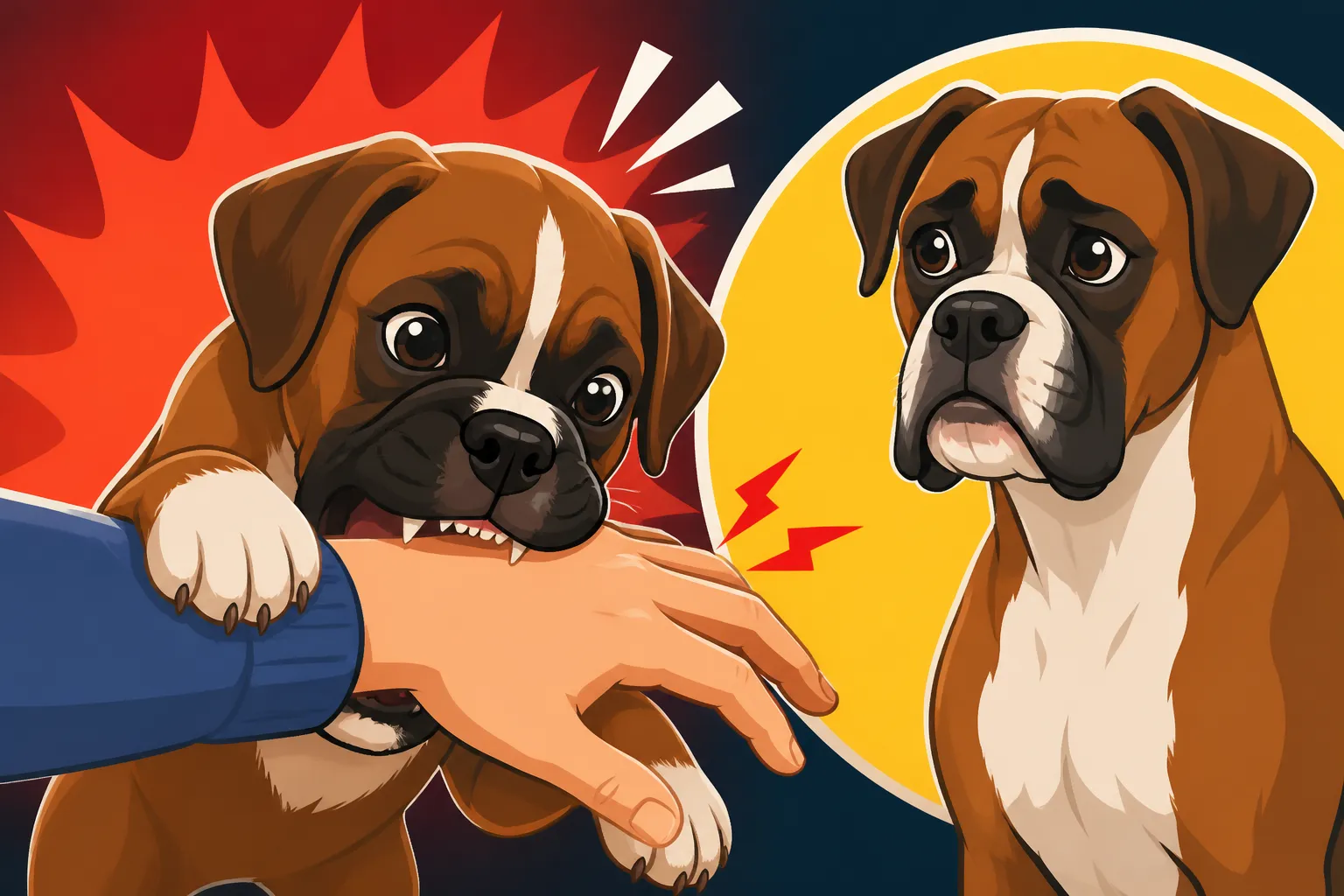
That relentless, sharp nip from your Boxer puppy can feel like a never-ending battle, leaving your hands scratched and your patience frayed. It's easy to wonder if your adorable, goofy companion is actually a tiny land shark intent on taking a finger. This guide is here to reassure you that this behavior, while frustrating, is incredibly common for Boxer puppies, and we'll walk through exactly why it happens and, more importantly, how to redirect that intense mouthing into appropriate, gentle play.
The Roots of Relentless Boxer Puppy Biting
It's tempting to think your Boxer puppy is just being naughty when they continuously nip at your fingers or clothes, but understanding the natural instincts behind this behavior is the first step toward managing it. For Boxers, who are notoriously exuberant and often mature a little slower than some other breeds, this phase can feel particularly pronounced.
Natural Instincts and Exploration
Think about how human babies explore the world: they grab everything and put it in their mouths. Well, Boxer puppies are no different, except their primary tool for interaction and exploration is their mouth, not hands. They don't have opposable thumbs to pick things up and examine them; instead, they mouth, chew, and gently (or not so gently!) nip to learn about their environment. This is completely normal and an essential part of their development.
In a litter, puppies constantly interact with each other using their mouths. They play-bite, wrestle, and tug. This rough-and-tumble play is crucial for developing what's called "bite inhibition," which we'll dive into shortly. When a puppy bites too hard, a littermate will yelp and stop playing, teaching the aggressor a valuable lesson about bite pressure. When you bring your Boxer puppy home, you become their new "littermate," and they'll naturally try to engage with you in the same way they did with their siblings. It’s important to remember that this isn't aggression; it's just how they communicate and play. The sheer energy of a Boxer puppy also contributes to this; they have so much zest for life and play that it often spills over into intense mouthing. You might even find yourself wondering if Boxer Puppyhood That Lasts Three Years is a polite way of saying "the land shark phase lasts forever." Rest assured, it doesn't, but understanding this initial drive is critical.
Teething Pains and Relief Seeking
Beyond exploration and play, there's another major factor driving persistent puppy biting: teething. Just like human babies, puppies go through a period where their sharp little needle teeth fall out and are replaced by stronger adult teeth. This process typically starts around three to four months of age and can last until they're about six months old, though it varies from pup to pup.
During teething, your puppy's gums can become sore, swollen, and itchy. Biting and chewing on things, especially firm objects, helps to alleviate this discomfort. Unfortunately, when a handy human finger or ankle is within reach, it often becomes the target of their teething relief efforts. This isn't malice; it's simply a puppy trying to find comfort. Providing plenty of appropriate chew toys during this period is absolutely essential. If you don't offer suitable alternatives, your puppy will find their own, which might include your furniture, shoes, or, yes, your hands. Recognizing the difference between playful nipping and pain-driven chewing can sometimes be tricky, but offering a variety of textures and temperatures (like a frozen Kong or a chilled teething toy) can make a huge difference in directing that instinct away from your skin.
Teaching Bite Inhibition: The Crucial Foundation
Teaching bite inhibition is perhaps the single most important skill you can impart to your Boxer puppy when it comes to mouthing. This isn't about stopping them from biting entirely – that's unrealistic and even undesirable – but rather about teaching them how hard they can bite without causing harm. It's about developing a "soft mouth."
The Concept of Bite Inhibition
Imagine a grown Boxer. Now imagine that seventy-pound dog, with its powerful jaws, biting down as hard as a puppy might without any restraint. It's a scary thought, right? This is why bite inhibition is so vital. A dog with good bite inhibition understands that human skin is fragile and that even in play or by accident, they must control the pressure of their jaws. It’s an invaluable life skill that makes them safer companions for people, especially children, and other animals.
As mentioned, puppies usually learn this from their littermates. When one puppy bites another too hard, the bitten puppy will yelp, pull away, and often stop playing for a moment. This teaches the biter that "oops, that was too hard, and now the fun has stopped." If you've ever seen a litter of puppies play, you've witnessed this natural education in action. When your Boxer puppy comes home, it's your job to continue this lesson in a way they understand. It takes patience and consistency, but it builds a fundamental layer of trust and safety for everyone in the household. It's a critical part of them learning Boxer Mouthing From Puppy to Adult in a healthy way.
The "Yelp and Ignore" Method
The most effective way to teach bite inhibition mimics what puppies learn from their littermates. This is often called the "Yelp and Ignore" method, and here's how to apply it:
- Exaggerated Yelp: The moment your Boxer puppy's teeth touch your skin, let out a sharp, high-pitched "YIP!" or "OUCH!" This isn't a scolding; it's mimicking the sound a littermate would make. Make it sound genuinely painful, even if it wasn't a hard bite.
- Immediate Withdrawal: As soon as you yelp, immediately pull your hand (or whatever body part was bitten) away from the puppy. Don't snatch it quickly, which can encourage a chase game; just smoothly remove it and put it out of reach.
- Ignore for 10-20 Seconds: Turn your back to the puppy, cross your arms, and completely ignore them. No eye contact, no talking, no petting. The message is: "Your biting made the fun stop."
- Resume Play (if appropriate): After a short period (10-20 seconds), you can resume playing. If the puppy bites hard again, repeat the sequence: yelp, withdraw, ignore.
- Time-Out (for persistent biting): If your puppy repeatedly bites hard even after several "yelp and ignore" cycles, it's time for a short "time-out." Briefly remove them from the play area to a designated "quiet zone" (a crate or puppy-proofed bathroom works well) for no more than one to two minutes. The time-out isn't a punishment, but a chance for them to calm down and understand that intense biting ends all interaction. Bring them back, and try again.
Consistency is absolutely paramount with this method. Every single person who interacts with the puppy must follow these steps without fail. If one person allows the puppy to bite them without consequence, it undermines all the hard work everyone else is doing. It can feel a bit silly yelping at your puppy, but it’s a language they understand. Over time, you'll start to notice your puppy's bite pressure lessening. Once they are consistently delivering very soft bites, you can raise your threshold, only yelping for medium-hard bites, and eventually only for truly hard bites. This refines their understanding of appropriate pressure.
Practical Strategies to Redirect Biting Behavior
While teaching bite inhibition is the foundation, you also need proactive strategies to manage and redirect your Boxer puppy's natural desire to chew and mouth. This involves providing appealing alternatives and structuring their environment and interactions to encourage good behavior.
Providing Appropriate Chews and Toys
One of the most powerful tools in your arsenal against unwanted puppy biting is a steady supply of engaging chew toys. If your Boxer puppy has something acceptable and satisfying to chew on, they're less likely to turn their attention to your hands or furniture. The key is to make these toys more interesting and readily available than your body parts.
Always have a variety of chew toys within easy reach. Boxers love to chew, and they'll chew through toys quickly if they're not robust. Look for durable options designed for strong chewers. Different textures can also be appealing: some puppies prefer soft, rubbery toys, others like harder nylon chews, and many enjoy toys that crinkle or squeak. Rotating these toys daily can keep things fresh and exciting, preventing boredom. Think about toys that can be stuffed with treats, like a classic KONG, which can keep a puppy occupied for a good stretch of time trying to extract the goodies. For teething relief, consider freezing some of these stuffable toys or offering frozen carrots (supervised!) or puppy-safe ice cubes. You'll find a massive selection of suitable chew options online, including a wide array on Amazon, from durable rubber toys to various dental chews. Don't be afraid to experiment to find what truly captures your Boxer's interest; what one pup loves, another might ignore. Remember, Chews That Redirect a Mouthy Boxer are your best friend during this stage.
Structured Play and Training Sessions
It’s easy for play with a Boxer puppy to quickly escalate into a wild, nipping frenzy if not managed properly. Structuring your play and incorporating short training bursts can channel their energy and teach them impulse control. The goal is to always play with toys, not your hands.
Engage your puppy in games like fetch, where they chase and retrieve a toy, keeping their mouth busy with the object rather than your skin. Tug-of-war can also be a fantastic outlet for their mouthing instincts, but it's crucial to teach a "drop it" cue early on. This teaches them control and that you dictate when the game starts and stops. If their teeth accidentally touch your hand during tug, immediately yelp and stop the game for a moment. Short, positive training sessions, even just five to ten minutes long, are also incredibly valuable. Work on basic cues like "sit," "stay," and "down." These exercises require mental focus, which can tire a puppy out just as much as physical activity, and teach them to listen even when excited. Consistency and positive reinforcement are key; praise and treats for good behavior will reinforce what you want them to do. For owners looking for structured guidance, platforms like BAXTER & Bella offer online puppy programs that can provide step-by-step training plans and support, helping you navigate these challenging phases. Remember, Why Short Sessions Suit a Boxer's Attention Span is crucial for puppies; their focus wanes quickly.
Managing Over-Excitement and "Zoomies"
Boxer puppies are bundles of boundless energy, and sometimes that energy can tip over into extreme over-excitement, often manifesting as frantic play, wild running (the "zoomies"), and, you guessed it, increased nipping and biting. Recognizing the signs of overstimulation is key to preventing these biting episodes.
Look for cues like intense, rapid breathing, dilated pupils, frantic running, increased jumping, and, of course, harder, more persistent nipping. When you see these signs, it's time to intervene before the situation spirals. Instead of trying to continue playing, gently guide your puppy to a calmer environment. This might mean a short "reverse time-out" for you (stepping behind a baby gate for 30 seconds) or encouraging them into their crate for a supervised "quiet time" with a safe chew toy. Sometimes, a puppy simply needs an enforced nap; overtired puppies are often the nippy-est. A calm, quiet space where they can decompress is invaluable. Never yell at an over-excited puppy, as this can just add to their frantic state. Redirect their energy by tossing a ball in an open yard, or engaging their brain with a puzzle toy rather than hands-on, high-energy wrestling that encourages mouthing. Understanding that A Two-Year-Old Boxer That Still Zooms means this energetic phase can last a while, so managing excitement is a long-term strategy.
When Biting Becomes a Bigger Concern
While most puppy biting is normal developmental behavior, there are instances where it might signal something more serious or become a safety risk that requires professional intervention. It's important for Boxer owners to distinguish between typical puppy nipping and true aggression.
Differentiating Normal Puppy Nipping from Aggression
The vast majority of Boxer puppy biting is rooted in play, exploration, or teething discomfort. These bites are usually accompanied by loose, wiggly body language, a "play bow," or a quick release of pressure. The puppy might mouth and then back off, or continue to engage in playful wrestling. The intent is not to harm, but to interact.
However, sometimes biting behavior can be a cause for greater concern. Signs that a puppy's biting may be moving beyond normal play into something more serious, potentially aggressive, include:
- Stiff body language: The puppy's body becomes rigid, not loose and playful.
- Growling or snarling: Not playful "rumble growls" but genuine, low, warning growls.
- Hard, unbroken bites: The puppy bites down hard and holds on, rather than releasing quickly.
- Snapping without contact: Air snapping or lunging with intent to connect.
- Resource guarding: Biting when someone tries to take a toy, food, or even approaches their bed.
- Fear-based aggression: Biting out of fear, often accompanied by tucked tail, flattened ears, or attempts to escape.
If you observe these signs in your Boxer puppy, particularly if they are persistent or escalate, it's crucial to consult with a professional. A certified professional dog trainer or a veterinary behaviorist can assess the situation, identify the root cause, and develop a safe and effective plan to address the behavior. Don't try to "fix" aggression on your own, as you could inadvertently make it worse.
The Importance of Socialization
Proper socialization is one of the most powerful tools you have to prevent problematic biting behaviors and foster a well-adjusted Boxer. Socialization isn't just about letting your puppy play with other dogs; it's about exposing them to a wide variety of sights, sounds, people, places, and experiences in a positive and controlled manner during their critical developmental window (typically up to 16 weeks of age).
A well-socialized Boxer puppy learns to be comfortable and confident in different situations, reducing the likelihood of fear-based biting later on. Interacting with other puppies and calm, vaccinated adult dogs (under strict supervision) helps them further refine their bite inhibition. They learn how to play appropriately, how to read canine body language, and how to respond to social cues. This also teaches them that not all interactions need to involve their mouth in an intense way. Exposing them to different types of people – men, women, children, people with hats, people with glasses, people using mobility aids – helps them generalize that humans are generally safe and friendly. Puppy classes are an excellent way to achieve structured, safe socialization. These classes not only provide exposure but also teach you how to continue positive socialization throughout their adolescence. Without adequate socialization, puppies can grow up to be fearful or anxious, which can manifest in reactivity or defensive biting. So, make sure to plan for Socializing a Boxer Puppy Before Sixteen Weeks as a top priority.
Common Pitfalls and How to Avoid Them
Even with the best intentions, owners can sometimes inadvertently reinforce biting behavior or create confusion for their Boxer puppies. Being aware of these common pitfalls can help you avoid them and make your training efforts more effective.
Reacting with Punishment or Scolding
It's natural to get frustrated when your Boxer puppy nips you, especially if it hurts. However, reacting with punishment, yelling, or hitting is almost always counterproductive and can actually make the biting worse. Physical punishment can teach your puppy to fear your hands, which could lead to more defensive biting or make them reluctant to interact. Yelling might simply excite them further, making the nipping more frantic, or they might interpret your loud voice as you engaging in their rough play.
Punishment doesn't teach a puppy what to do; it only teaches them what not to do, often out of fear. Instead of building trust, it erodes it. A puppy who is routinely punished for biting might become fearful and resort to biting out of self-defense rather than play. Or, they might learn to hide their biting behavior, which is much more dangerous. The goal is to gently guide them towards acceptable behavior, not to suppress natural instincts through intimidation. Remember the "yelp and ignore" method – it's about consequences (the fun stops), not punishment. As explored in A Boxer Puppy That Bites Harder When Told No, punishment rarely works and often backfires.
Inconsistency in Training
Perhaps one of the biggest challenges in puppy training is maintaining consistency. This is especially true when it comes to managing biting. Imagine this scenario: one family member strictly adheres to the "yelp and ignore" method, always redirecting to a toy. Another family member, finding the puppy's nips cute or simply being less vigilant, allows the puppy to mouth their hands during play. What does the puppy learn? Mixed signals.
The puppy learns that sometimes biting hands is okay, and sometimes it's not. This confusion slows down the learning process significantly. Every single person who interacts with your Boxer puppy – family members, friends, even occasional visitors – needs to understand and implement the same rules regarding biting. Before guests arrive, briefly explain your approach and ask them to adhere to it. This consistent messaging is vital for your puppy to understand the boundaries clearly. If the rules are constantly changing, your puppy will struggle to learn what you expect of them, and the biting phase will inevitably last longer.
Not Providing Enough Exercise or Mental Stimulation
Boxers are energetic, intelligent dogs. If a Boxer puppy isn't getting enough appropriate physical exercise and mental stimulation, they will find their own ways to entertain themselves, and those ways often involve destructive chewing and excessive nipping. A bored Boxer is a creative (and often mischievous) Boxer.
A common mistake is thinking that a large yard is enough. While a yard is great, it doesn't replace structured exercise and interaction. Boxer puppies need short, frequent play sessions, walks (appropriate for their age and vaccination status), and games that engage their minds. Boxer Exercise Needs and the Heat That Limits Them means you need to be mindful of temperature, but finding outlets is still crucial. This could include puzzle toys, brief training sessions, or even just interactive play with you using a flirt pole or a favorite fetch toy. A puppy that has had its physical and mental needs met is far more likely to settle down calmly and less likely to resort to frustrated biting. On hot days or when outdoor play isn't possible, remember that Indoor Exercise for a Boxer in a Heatwave can be just as important for burning off energy and preventing boredom. Ensuring a balanced routine helps channel that innate Boxer enthusiasm into positive behaviors.
Table: Effective vs. Ineffective Responses to Puppy Biting
| Response Type | Description | Impact on Puppy | Effectiveness |
|---|---|---|---|
| Yelp and Ignore | Sharp verbal "yelp," immediate withdrawal of attention/body part. | Teaches bite inhibition; fun stops when teeth touch skin. | Highly effective; mimics natural littermate learning. |
| Redirection | Immediately offer an appropriate chew toy when puppy nips. | Teaches what can be bitten; diverts natural chewing instinct. | Highly effective; provides acceptable outlet. |
| Time-Out | Briefly remove puppy from interaction/play area for 1-2 minutes. | Puppy learns intense biting makes all interaction stop. | Effective for persistent over-excitement/biting that doesn't respond to yelping. |
| Structured Play | Engaging in fetch, tug-of-war with toys (not hands), short training sessions. | Channels energy, teaches impulse control, strengthens bond through positive interaction. | Highly effective; prevents boredom and redirects energy. |
| Yelling/Scolding | Loud verbal reprimands, "No!", harsh tone. | Can increase fear, cause confusion, or excite puppy further. | Ineffective; can damage trust and exacerbate problem behaviors. |
| Hitting/Swatting | Physical punishment. | Can lead to fear, defensive aggression, or reluctance to interact. | Highly ineffective and dangerous; should never be used. |
| Rough Housing with Hands | Allowing or encouraging puppy to bite hands during play. | Teaches puppy that biting hands is an acceptable form of play. | Highly ineffective; actively reinforces unwanted biting. |
| Inconsistency | Different people respond differently to biting. | Confuses puppy, slows learning, makes it harder for them to understand boundaries. | Ineffective; undermines all training efforts. |
Disclaimer
This article is for general informational purposes only and does not constitute professional advice. Laws, prices and regulations vary by location and change over time. Consult a qualified professional for guidance on your specific situation.