A Boxer That Jumps on Every Visitor
There's nothing quite like the boundless enthusiasm of a Boxer, is there? That incredible whole-body wiggle and the sheer joy they exude when someone new arrives can be absolutely infectious. But when that enthusiasm manifests as a seventy-pound dog launching itself at every guest who walks through your door, it quickly moves from endearing to exasperating, and even dangerous. This guide is here to walk you through why your beloved Boxer becomes a canine projectile upon visitor arrival and, more importantly, how to implement practical, empathetic strategies to teach them a more polite way to say hello.
Understanding Why Your Boxer Jumps on Visitors
It's easy to get frustrated when your Boxer bounces off the walls (and your guests) with excitement, but understanding the root causes of this behavior is the first step toward changing it. It’s rarely about malice or a desire to be disobedient; it’s almost always about communication and instinct.
The Boxer's Enthusiastic Greeting Style
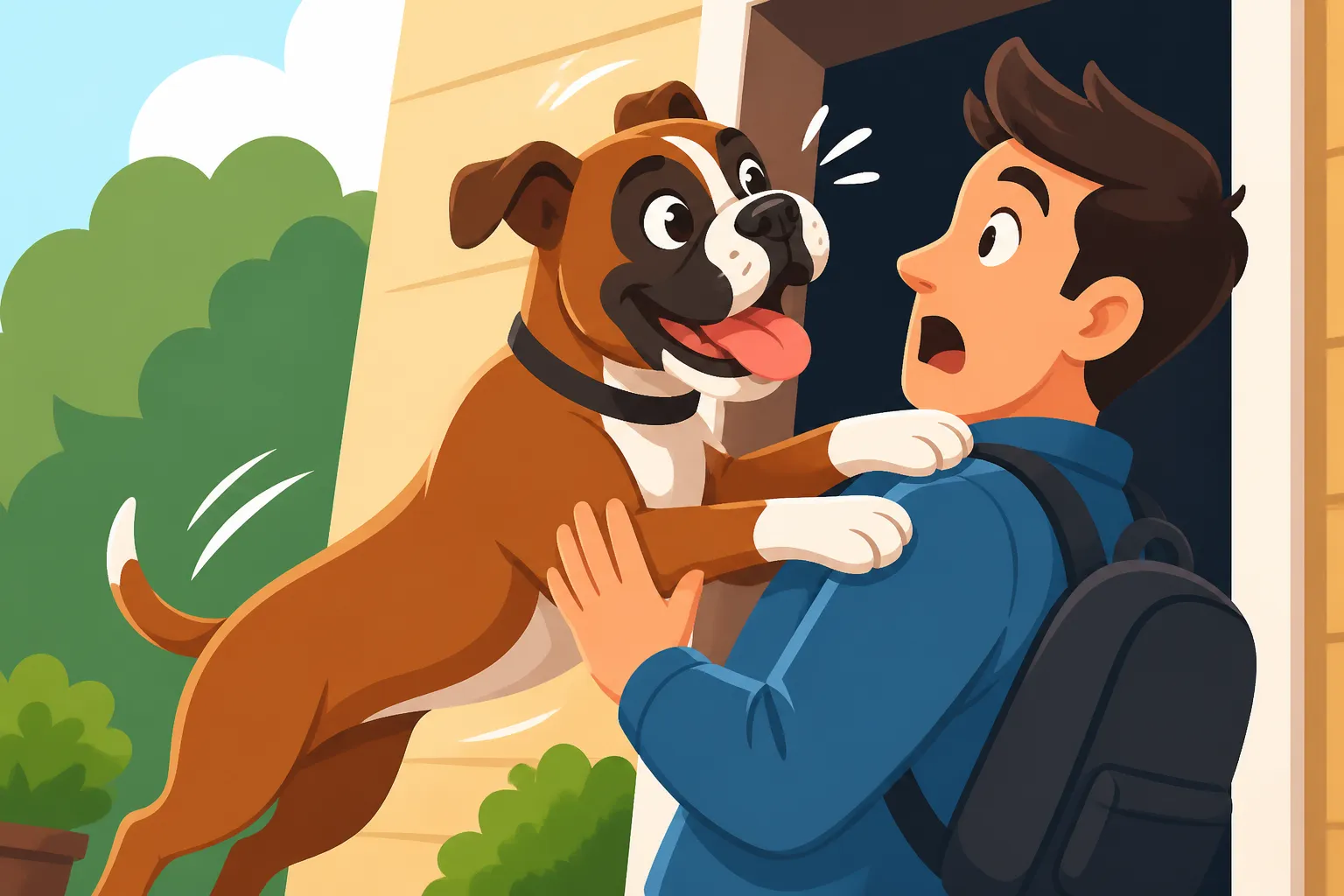
Boxers are, by nature, incredibly friendly, exuberant, and powerful dogs. They are notorious for their full-body "wiggles" that encompass their entire rear end, reflecting their sheer delight. When a new person enters their space, their natural instinct is often to greet them face-to-face, or as close as they can get. For a smaller dog, this might mean a little leap onto the shins. For a Boxer, with their impressive musculature and joyful springs, it means a full-body impact that can easily send an unsuspecting guest stumbling backward or even to the floor. They aren't trying to hurt anyone; they're simply trying to get as close as possible to share their immense happiness.
Think about it from their perspective: a new, exciting person has entered their territory, bringing new smells and sounds. Their primary goal is to interact, to say hello, and to engage. Jumping up is a powerful, attention-grabbing behavior that has likely been reinforced many times over, even unintentionally. It's their way of making sure you know they're there and want to be part of the action. This can be especially true for Boxers, whose effusive nature means they tend to throw themselves wholeheartedly into every interaction. You might even notice that classic Boxer wiggle starting from the moment they spot an approaching visitor, a clear signal of their building excitement. The Boxer Wiggle and What It Signals offers more insight into this characteristic behavior.
Seeking Attention and Reinforcement
This is a huge one, and it's often where we, as well-meaning owners and guests, inadvertently perpetuate the problem. Imagine your Boxer jumps on a visitor. What's the immediate reaction? Often, it's a gasp, a "down, boy!", pushing them off, or even making direct eye contact while trying to calm them. To a Boxer, any of this can be perceived as attention – and attention is a reward. They don't differentiate between positive and negative attention in the same way we do. If jumping gets them noticed, it's a successful strategy in their eyes.
Even a quick pat on the head while they’re mid-air, a nervous laugh from a guest, or an attempt to "distract" them with a verbal command after they've jumped can reinforce the behavior. They've learned, through repeated experience, that when a person comes to the door, launching themselves at that person yields interaction. This becomes a self-fulfilling prophecy: they jump, they get a reaction, and they continue to jump. It's a tricky cycle to break because it requires everyone involved to actively ignore the very behavior that's so hard to ignore. This isn't a sign of your Boxer being "bad"; it's simply a testament to how effectively they've learned to get what they want through this particular action.
Lack of Clear Boundaries and Training
The truth is, your Boxer isn't born knowing that jumping on people is rude or unsafe. This is a learned behavior, or more accurately, a lack of learned alternative behavior. If a Boxer hasn't been consistently taught what to do when a visitor arrives, they'll default to their natural, excitable tendencies. Without a clear "sit," "stay," or "go to your mat" command specifically for greeting situations, they'll just do what feels natural: jump.
Consistency is absolutely key here. If sometimes jumping results in a scolding, and other times it results in a quick pet or an absentminded push, the rules become unclear. Your Boxer becomes confused about what is expected. This ambiguity can be particularly challenging during adolescence, a period when Boxers often start testing boundaries and seeing what they can get away with. The Month a Boxer Starts Testing Rules delves into this period of their development. Every member of the household, and even frequent guests, needs to be on the same page about how to handle greetings. Without a unified front, it's incredibly difficult for your Boxer to understand and internalize the desired behavior. They need to understand not just what not to do, but what is acceptable.
Implementing Effective Strategies to Stop Jumping
Stopping a Boxer from jumping requires more than just telling them "no." It involves teaching them acceptable alternatives, managing their environment, and being incredibly consistent. It's about proactive training, not just reactive corrections.
Teaching an Alternative Greeting Behavior
The most powerful way to stop an unwanted behavior is to teach an incompatible, desired behavior. For jumping, this often means teaching your Boxer to keep "four on the floor" or to go to a designated "place" when visitors arrive. Start this training in a calm environment, without any actual visitors at first. Practice having someone pretend to be a guest, walking through the door. As soon as your Boxer moves to jump, before they launch, turn your back, ignore them completely, or step away. The moment their four paws are on the floor, even for a split second, immediately turn, praise them calmly, and offer a high-value treat.
Repeat this hundreds of times. Gradually, your Boxer will learn that calm behavior (four paws on the floor, sitting, or lying down) is what earns them attention and rewards, not jumping. You can then layer on cues like "sit" or "place." Once they are reliable in a quiet setting, introduce very calm, understanding guests who are willing to follow your instructions perfectly. Have the guest enter, ignore the dog until it's calm, then offer a gentle pet or treat. This method is incredibly effective because it reconditions their association with visitor arrival from "jump for attention" to "be calm for reward." For specific guidance, you might find Teaching a Boxer to Keep Four Feet Down incredibly useful, as it focuses on this core concept. Similarly, focusing on Teaching a Boxer to Sit Before the Door Opens can provide a solid foundation for polite greetings.
Managing the Environment and Guest Interactions
Until your Boxer's alternative greeting behavior is rock-solid, management is your best friend. This means controlling the environment to prevent the jumping behavior from happening in the first place, thus preventing accidental reinforcement. Consider these strategies:
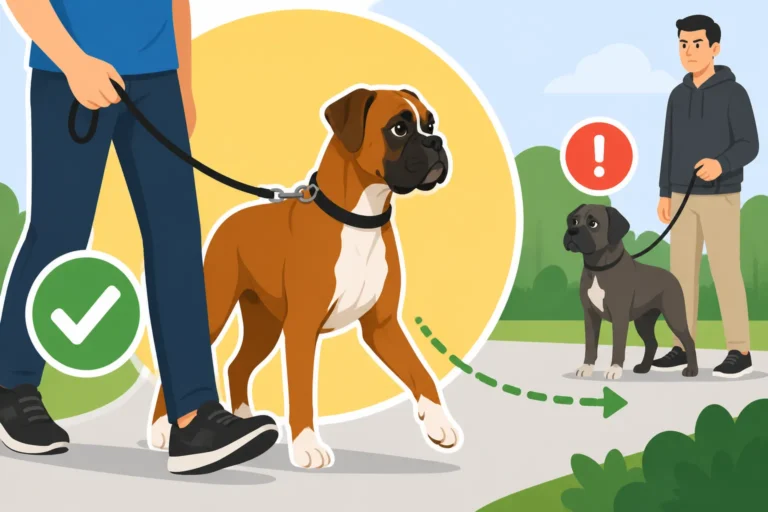
- Leash Management: When you know guests are arriving, put your Boxer on a leash. Hold the leash firmly but gently, keeping them by your side. If they start to lunge, give a slight upward tug on the leash and redirect them into a sit or down.
- Crating or Gating: If your Boxer's excitement is too much to handle on a leash, or if you have multiple guests arriving, it's perfectly fine to crate them in another room or behind a baby gate with a special chew toy until the initial hubbub settles. This gives them a safe space and prevents them from practicing the unwanted behavior. Choosing a Crate a Boxer Cannot Wreck can help ensure you have the right setup.
- Brief Your Guests: This is crucial. Before guests even step foot inside, explain your training plan. Tell them, "Please ignore [Boxer's Name] completely until all four paws are on the floor. Don't make eye contact, don't talk to her, and definitely don't push her away. When she's calm, then you can say hello." Most friends and family will be happy to help once they understand.
- Controlled Introductions: Once your Boxer is calm, and only then, slowly introduce them to your guests. Keep the leash on initially. If they remain calm, allow for gentle, short interactions. If they get too excited, calmly take them away for a moment and try again when they've settled.
This management phase is vital because it stops the cycle of reinforcement. Every time your Boxer successfully jumps, it strengthens the habit. By preventing them from jumping, you give them the opportunity to learn new ways of behaving.
Consistency and Patience in Training
Training a Boxer, especially to curb an ingrained behavior like jumping, demands immense consistency and patience. Boxers are highly intelligent but can also be notoriously exuberant, and their "puppyhood" often extends well beyond what you might expect for other breeds. Many Boxer owners will tell you that their dogs act like puppies well into their second or even third year! Why a Boxer Acts Like a Puppy Until Three highlights this prolonged period of youthful energy.
Every single person who interacts with your Boxer, whether they live in your home or are just visiting, must adhere to the same rules. If one person allows jumping "just this once," it can set your training back significantly. Your Boxer thrives on clear, predictable boundaries. Short, frequent training sessions are far more effective than long, drawn-out ones, especially for a breed known for its spirited, sometimes shorter, attention span. Try practicing for 5-10 minutes, several times a day, rather than one long 30-minute session. Why Short Sessions Suit a Boxer's Attention Span explains this better. Remember, you're essentially rewiring a learned response, and that takes time, repetition, and a lot of calm, positive reinforcement. Don't get discouraged if you have setbacks; simply reset and continue with your plan.
Tools and Resources to Aid Your Training Journey
You don't have to tackle this challenge alone! There are many tools and resources available that can make your training journey smoother and more successful. Leveraging the right equipment and expert advice can make a significant difference.
Essential Training Gear
Having the right gear can provide you with better control and make training more effective and safer for everyone involved.
- Front-Clip Harnesses: For Boxers that pull or lunge, a front-clip harness can be a game-changer. Instead of attaching the leash to a ring on their back, which encourages pulling, the leash attaches at their chest. This redirects their forward momentum, making it much harder for them to pull you or jump with full force. Many excellent options are available from retailers on platforms like Amazon, offering a wide variety of styles and fits for your muscular Boxer. Investing in a good quality harness is a worthwhile expense for managing their strength.
- High-Value Treats: When you're trying to counteract the excitement of a new visitor, you need a reward that is truly irresistible. Small pieces of cooked chicken, cheese, or specialized training treats often work better than regular kibble. Experiment to find what truly motivates your Boxer. Rewards a Boxer Will Work Hard For can help you identify what truly incentivizes your dog.
- Long Line: For practicing polite greetings at a slight distance, a long line (a leash 15-30 feet long) can be very useful. It allows your Boxer a bit of freedom while still giving you control to prevent them from getting to a guest if they decide to jump.
- Crates and Gates: As mentioned earlier, a sturdy crate or reliable baby gates are invaluable management tools. They provide a physical boundary that prevents undesirable behaviors from happening, giving you control over the situation when needed.
Remember, these tools are aids to training, not substitutes for it. They help you manage the behavior while you're teaching your Boxer what you do want them to do.
Professional Guidance and Online Programs
Sometimes, despite your best efforts, you might feel stuck, or your Boxer's jumping might be particularly persistent. That's when professional help can be incredibly beneficial.
- Certified Professional Dog Trainers (CPDT-KA): A good trainer can observe your Boxer, identify specific triggers, and tailor a training plan unique to your situation. They can teach you techniques for redirecting attention, reinforcing calm behavior, and managing visitor interactions more effectively. If your Boxer is particularly reactive or has other challenging behaviors, a one-on-one session with a professional trainer can be invaluable. Don't hesitate to ask if a trainer has experience working with Boxers, as their specific breed traits can sometimes require tailored approaches. Group Class Against Private Work for a Boxer discusses the pros and cons of different training settings.
- Online Training Programs: For those who prefer to learn at their own pace or might not have access to local trainers, online programs offer structured guidance. Services like BAXTER & Bella provide comprehensive, step-by-step curricula that cover everything from basic manners to addressing specific behavioral challenges. These programs often include video tutorials, live Q&A sessions, and community support, allowing you to implement professional-level training from the comfort of your home. They can be a fantastic resource for learning the "how-to" of consistent positive reinforcement and behavior modification.
- Local Obedience Classes: Group classes can be a great way to socialize your Boxer while learning basic obedience commands in a structured environment. While not specifically focused on jumping, the skills learned in general obedience (sit, stay, come, leave it) are foundational to polite greetings.
The key is to find resources that align with positive reinforcement methods, as these are generally the most effective and humane for teaching Boxers.
Common Pitfalls and Troubleshooting Your Boxer's Jumping
Even with the best intentions and strategies, training can present challenges. Being aware of common pitfalls and knowing how to troubleshoot them will keep you from getting discouraged and help your Boxer succeed.
Avoiding Accidental Reinforcement
This is the trickiest part because it requires a conscious effort to change our own instinctive reactions. When your Boxer jumps, your natural inclination might be to push them down, say "no" loudly, or even try to calm them with words. However, as we discussed, for a Boxer, any of these reactions can be seen as a form of attention. They don't necessarily understand the negative connotation of a push or a shout; they just know they got a response.
To truly avoid accidental reinforcement, you need to become a master of turning away. The moment your Boxer’s front paws leave the ground, immediately turn your back to them. Cross your arms, make no eye contact, and remain completely silent. This sends a clear signal: "Jumping means I become boring and unavailable." The instant all four paws are back on the floor, then you can calmly turn back, offer quiet praise, and perhaps a small, high-value treat. It's a precise dance of withholding attention for the unwanted behavior and lavishly (but calmly) giving it for the desired behavior. It takes practice, but it's incredibly effective. Be prepared for what trainers call an "extinction burst" – sometimes, the behavior will temporarily get worse as your Boxer tries harder to get your old reaction before it finally starts to fade. Stick with it!
What to Do When Guests Don't Cooperate
This is a common frustration for Boxer owners. You've been diligently working on training, only to have a well-meaning but misguided guest undo all your hard work. It's important to understand that not everyone understands dog behavior or training principles, and some people just can't resist a cute, bouncy Boxer.
- Pre-Briefing is Paramount: Before your guests even arrive, send them a text or email with clear instructions. Something like, "We're working on polite greetings with [Boxer's Name], so when you come in, please ignore her completely until she has all four paws on the floor. No eye contact, no talking, just stand still until she settles. Once she's calm, then you can say hello." This sets expectations before they step through the door.
- Physical Management is Your Backup: If, despite your briefing, a guest insists on engaging with your jumping Boxer, you need a backup plan. Keep your Boxer on a leash. If they jump, calmly remove them from the situation. Lead them to their crate, behind a baby gate, or into another room with a chew toy. Explain to your guest, "I appreciate your enthusiasm, but we're in a crucial training phase, and I need to reinforce calm behavior. [Boxer's Name] will join us once she's settled."
- Emphasize Safety: Sometimes, framing it in terms of safety can help guests understand. "Our Boxer means well, but she's a powerful dog, and we don't want her accidentally knocking over Grandma or the kids." This often resonates more than just talking about "training principles." Accidents happen, and a seventy-pound Boxer landing on someone, especially an elderly person or a small child, can cause serious injury. Stopping a Boxer Jumping on Elderly Relatives provides practical advice for this specific concern. Your Boxer's safety, and the safety of your visitors, is your ultimate responsibility.
Remember, you are your Boxer's advocate and trainer. It's okay to firmly but politely guide your guests on how to interact with your dog to support your training efforts. It's for the benefit of everyone involved.
| Action When Boxer Jumps | What NOT to Do (Accidental Reinforcement) | What TO Do (Positive Reinforcement) |
|---|---|---|
| Your Response | Push down, yell, make eye contact, talk loudly | Turn your back, ignore, stay silent |
| Guest's Response | Pet, talk, push away, make direct eye contact | Ignore, turn away, wait for calm |
| Boxer's Behavior | Jumping, pawing, vocalizing | Four paws on floor, sitting, calm body language |
| Timing of Reward | Any interaction while jumping | Only reward (praise/treat) when calm |
| Management Strategy | Allowing free-roaming, hoping for the best | Leash, crate, gate, "place" cue as needed |
Disclaimer
This article is for general informational purposes only and does not constitute professional advice. Laws, prices and regulations vary by location and change over time. Consult a qualified professional for guidance on your specific situation.