Stopping a Boxer Jumping on Elderly Relatives
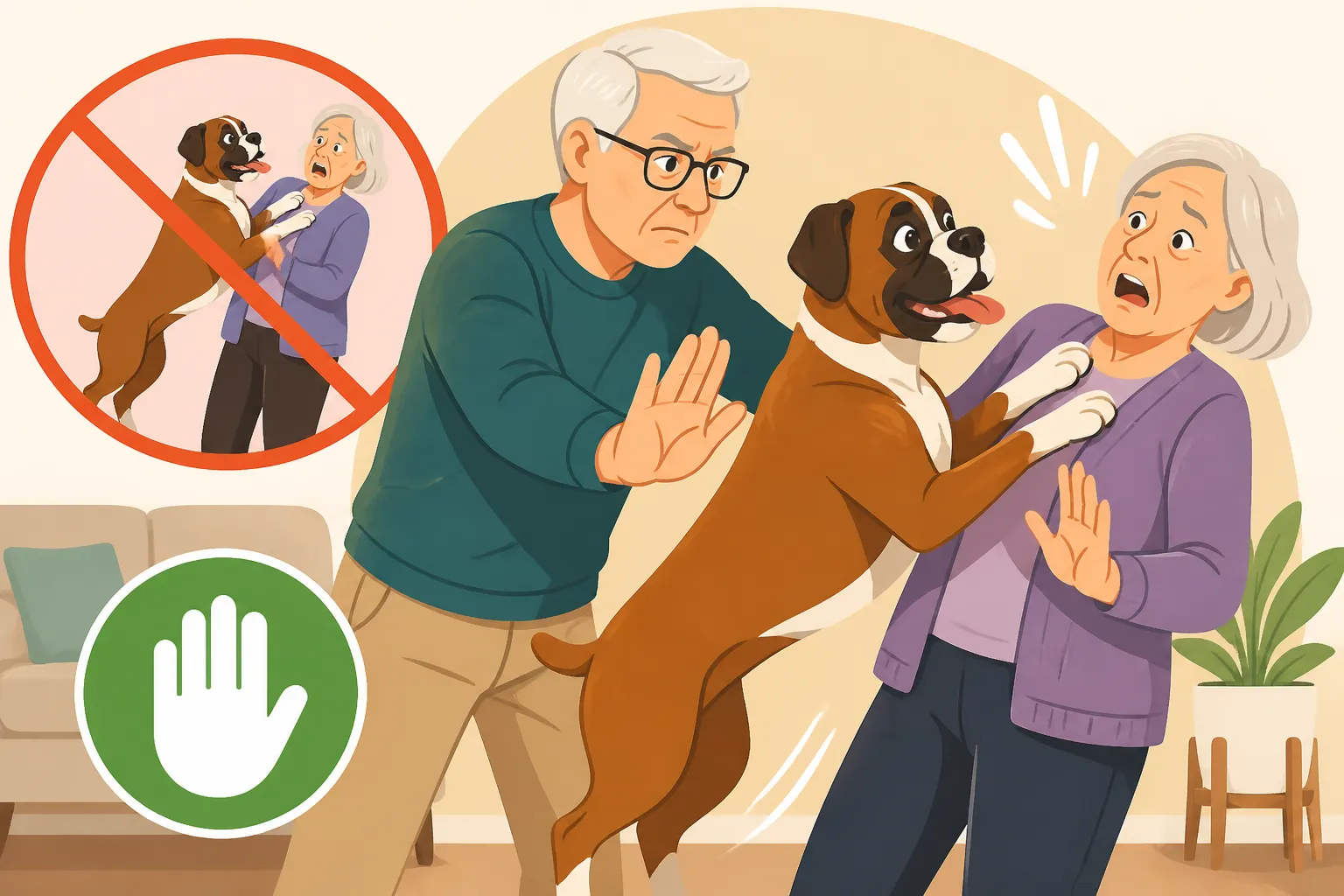
It's a scene many Boxer owners dread: an elderly relative or friend comes to visit, and your otherwise lovable, bouncy Boxer, in a burst of pure joy and excitement, launches themselves forward, front paws flailing, right into their chest. The potential for a serious fall, injury, or just immense discomfort is incredibly high, and it leaves you feeling anxious and embarrassed. This guide is here to walk you through practical, empathetic strategies to help your Boxer learn more appropriate greetings, ensuring everyone feels safe and welcome in your home.
Understanding Why Your Boxer Jumps
Before we can tackle the behavior, it's really important to understand why your Boxer jumps in the first place. They're not doing it to be naughty or malicious; it's almost always rooted in their unique personality and how they've learned to interact with the world around them. Boxers are incredibly affectionate, often described as perpetual puppies, and that enthusiasm translates into big, expressive greetings.
The Boxer's Natural Exuberance
Boxers are famous for their high energy, playful nature, and immense affection. They're often referred to as the "Peter Pan" of the dog world because they maintain a puppy-like demeanor well into adulthood. When someone new or beloved enters their space, their instinct is often to greet them at eye level, which, for a seventy-pound dog, means jumping up. They want to be close, to lick your face, to involve you in their boundless excitement. This isn't a sign of aggression; it's pure, unadulterated Boxer joy. Unfortunately, what's cute in a small puppy can become a significant hazard when that puppy grows into a powerful, muscular adult. This is especially true when you consider the sometimes frail balance or bone density of an elderly person.
Reinforcing the Wrong Behavior
Here's the tough truth: sometimes, we inadvertently teach our Boxers that jumping works. Think about it: when your Boxer jumps up, even if you push them down, you're still giving them attention. Maybe you make eye contact, say "no," or try to physically move them. From your Boxer's perspective, any attention is good attention. If a quick jump gets them a reaction, even a negative one, they've achieved their goal: to engage with you. Over time, this creates a strong behavioral loop where jumping becomes their go-to strategy for eliciting a response. We might also have guests who, with good intentions, greet a jumping puppy by petting them, cementing the idea that four paws off the floor gets them what they want. It’s a common pitfall that’s easily overlooked.
Lack of Impulse Control
Another major factor, especially in younger Boxers who genuinely seem like The Boxer Puppyhood That Lasts Three Years, is a simple lack of impulse control. Boxers are intelligent dogs, but their enthusiasm can often override their training, particularly when faced with a high-value distraction like a beloved person arriving. They haven't yet learned to self-regulate their excitement or to choose a more appropriate behavior when their instincts tell them to just go. This isn't a failing on their part, but rather an area where consistent training and management can make a huge difference. Think about a child who just can't wait to open presents – that's often the level of excitement your Boxer is operating at. This can be particularly challenging when Managing a Boxer Between Six and Eighteen Months, a period where their energy levels are sky-high and their decision-making skills are still developing.
Essential Training Strategies to Prevent Jumping
The key to stopping this behavior is consistency, patience, and teaching your Boxer an alternative, incompatible behavior. You can't just tell them "no"; you have to show them what to do instead.
Teaching "Four on the Floor"
This is the golden rule, and it needs to be practiced relentlessly, not just when guests arrive, but every single time you interact with your Boxer. The principle is simple: your Boxer only gets attention, pets, or praise when all four paws are firmly on the ground.
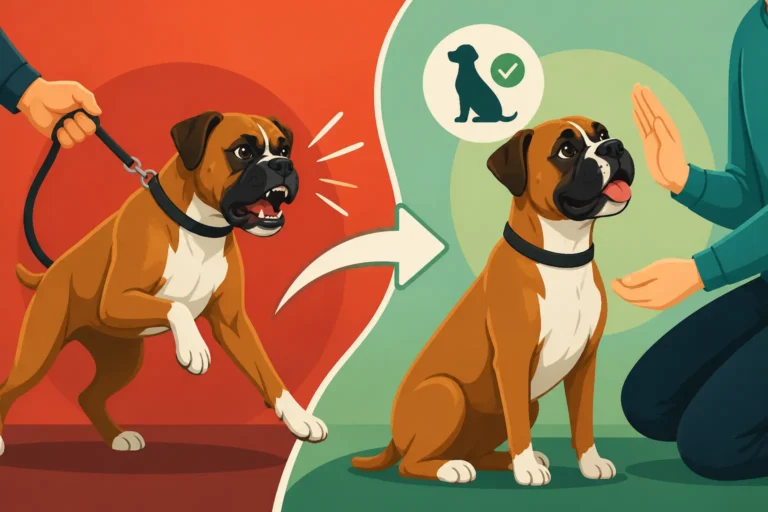
Start by practicing this when no one else is around. Approach your Boxer, and if they start to lift a paw or jump, immediately turn your back and walk away. Don't say anything, don't push them down. Just remove your attention. The moment they settle, even for a second, and all four paws are on the floor, turn back, praise them calmly, and offer a treat. Repeat this over and over. This is a crucial step in Teaching a Boxer to Keep Four Feet Down. If your Boxer is particularly persistent, you might even need to step out of the room for a moment, then re-enter. They will quickly learn that "four on the floor" is the gateway to interaction.
Managing Excitement at the Door
The arrival of guests is often the biggest trigger for jumping. This is where proactive management and structured greetings become vital. Before your elderly relative even steps through the door, put your Boxer on a leash. This gives you immediate physical control.
Practice having someone knock or ring the doorbell. As soon as your Boxer reacts by jumping, immediately guide them away from the door and ask for a "sit" or "place" command. Don't open the door until they are calm and holding their sit. If they break the sit, close the door (or pretend to re-enter) and try again. This teaches them that the door only opens when they are in a calm, controlled state. Enlisting the help of a friend or family member who understands the process is incredibly beneficial here. You could even use an online resource like BAXTER & Bella for structured guidance on this kind of desensitization and impulse control training.
Consistency is Key
This cannot be stressed enough: everyone who interacts with your Boxer must be on the same page. If you are diligently practicing "four on the floor," but a well-meaning relative still encourages jumping, all your hard work will be undermined. Explain the importance of the training to everyone who visits, especially your elderly relatives. Ask them to follow the same protocol: if the Boxer jumps, turn away, do not make eye contact, and only engage when all four paws are down. It might feel awkward initially, but it's essential for your Boxer's learning and everyone's safety. This consistent approach extends to all visitors, helping to establish proper Greeting Manners for an Excited Boxer.
Practical Tools and Management Techniques
Sometimes, training alone isn't enough, especially in those initial stages or if your Boxer is exceptionally enthusiastic. Strategic use of tools and environmental management can be incredibly helpful.
Choosing the Right Gear for Control
For managing an excited Boxer, especially one that can reach seventy pounds and has an instinct for jumping, the right gear is indispensable. A front-clip harness, often available on Amazon, can be a game-changer for leash control, as it redirects their pulling power towards you, making it harder for them to launch themselves forward. Unlike a back-clip harness which can sometimes encourage pulling, a front-clip harness discourages it and gives you better leverage.
Another excellent option is a head halter, sometimes called a Gentle Leader. This gentle training tool gives you control over your Boxer's head, and where the head goes, the body follows. It’s not a muzzle, but a training aid that can be incredibly effective for teaching polite leash manners and preventing jumping by giving you the ability to guide their attention away from the "jump" impulse. Always introduce new gear gradually and with positive reinforcement to ensure your Boxer associates it with good things. For a Boxer that pulls hard on walks, Harnesses That Hold a Pulling Boxer can be explored further.
Creating a Calm Environment
Before guests arrive, especially elderly relatives, consider ways to lower your Boxer's overall excitement levels. A good, long walk or a strenuous play session before the visitors arrive can help burn off some of that excess energy. A tired Boxer is a well-behaved Boxer!
When guests are due, consider using a sturdy crate, like those found on Amazon, or a baby gate to create a physical barrier. Your Boxer can still see and hear the guests but cannot physically jump on them. This allows them to calm down before being introduced. Once they are calm, you can then manage short, controlled interactions on a leash, reinforcing the "four on the floor" rule. Having a designated "place" command for them to go to when guests arrive can also be highly effective, giving them a job and a specific spot to settle. Teaching a Boxer a Place to Go When Guests Arrive is a fantastic skill to invest in.
Involving Family Members in the Training
It’s not just about what you do; it's about what everyone in the household, and especially the visiting relatives, understands and practices. Before an elderly relative comes over, have a brief chat with them. Explain that your Boxer is in training and that their cooperation is vital for everyone's safety. Give them clear instructions:
- Ignore the jump: If the Boxer jumps, turn your back, cross your arms, and avoid eye contact or talking.
- Reward calmness: The moment the Boxer has all four paws on the floor, even briefly, turn back, offer a calm "Good dog!" and a gentle pet.
- Offer low-value treats: Provide your relatives with some small, soft treats to offer only when the Boxer is calm and "four on the floor."
- Keep greetings short initially: Overly long or enthusiastic greetings can quickly escalate a Boxer's excitement.
This collaboration is paramount. Without it, you're fighting an uphill battle.
What to Do in the Moment
Even with the best preparation, there might be times when your Boxer still attempts to jump. Having a clear plan for these moments can prevent accidents and reinforce your training.
Turning Away and Ignoring
As discussed earlier, this is your most powerful tool. The moment your Boxer jumps, pivot your body completely away from them. Cross your arms and look up at the ceiling or at the wall. Essentially, you become a "boring tree." Your Boxer wants your attention, and by completely removing it, you're communicating that jumping does not work. It takes self-control, especially if they are bumping into you, but persistence pays off. The instant all four paws are back on the ground, turn back and calmly praise them. This swift consequence and reward system is critical for your Boxer to make the connection. If you have guests who tend to encourage jumping, you'll need to instruct them firmly on this technique, emphasizing that it's for their own safety. Stopping a Seventy-Pound Boxer From Jumping requires everyone to be consistent.
Redirection and Reward
For some Boxers, simply ignoring might not be enough in the heat of the moment, especially if their arousal levels are very high. In these cases, redirection can be effective. As your Boxer approaches a guest, anticipate the jump. Just before they launch, ask for a "sit" or "down" command. If they comply, immediately reward them with a high-value treat and calm praise.
You can also redirect their energy to an appropriate chew toy or a short game of fetch with a ball. The goal is to give them an alternative, acceptable behavior to perform instead of jumping. Always reward the desired behavior generously. Remember, Boxers are intelligent and love to work for Rewards a Boxer Will Work Hard For. The more you practice redirection in various scenarios, the more naturally they'll choose the appropriate behavior.
Prioritizing Safety
Above all, the safety of your elderly relatives must be the top priority. If you have a particularly persistent jumper, or if the relative's mobility is severely compromised, it's perfectly acceptable, and even responsible, to manage your Boxer's interactions more strictly. This might mean having your Boxer on a leash the entire time guests are present, or even crating them with a favorite chew toy in another room for the duration of the visit.
While we want our Boxers to be part of the family, there are times when responsible ownership means preventing potential harm. Don't feel guilty about managing the situation in a way that keeps everyone safe. As your Boxer's training progresses and their impulse control improves, you can gradually loosen these restrictions. It's a journey, not a sprint, and safety should always come first.
| Behavior | Owner/Guest Action | Boxer's Takeaway |
|---|---|---|
| Boxer Jumps Up | Immediately turn your back, cross arms, no eye contact, no talking. | Jumping makes people disappear/boring. I don't get what I want. |
| Boxer's Four Paws on Floor | Turn back, calm praise ("Good dog!"), gentle pet, offer a treat. | Keeping four paws on the floor gets me attention, praise, and treats. This is how I get what I want. |
| Boxer Approaches Calmly | Calm praise, gentle pets, offer a treat. | Approaching calmly and sitting nicely means positive interaction. |
| Boxer Is Overly Excited | Pre-emptively leash, ask for "sit" or "place," manage distance. | My humans are in control; I need to follow their lead to interact. |
Disclaimer
This article is for general informational purposes only and does not constitute professional advice. Laws, prices and regulations vary by location and change over time. Consult a qualified professional for guidance on your specific situation.