A Boxer That Lunges at Passing Dogs
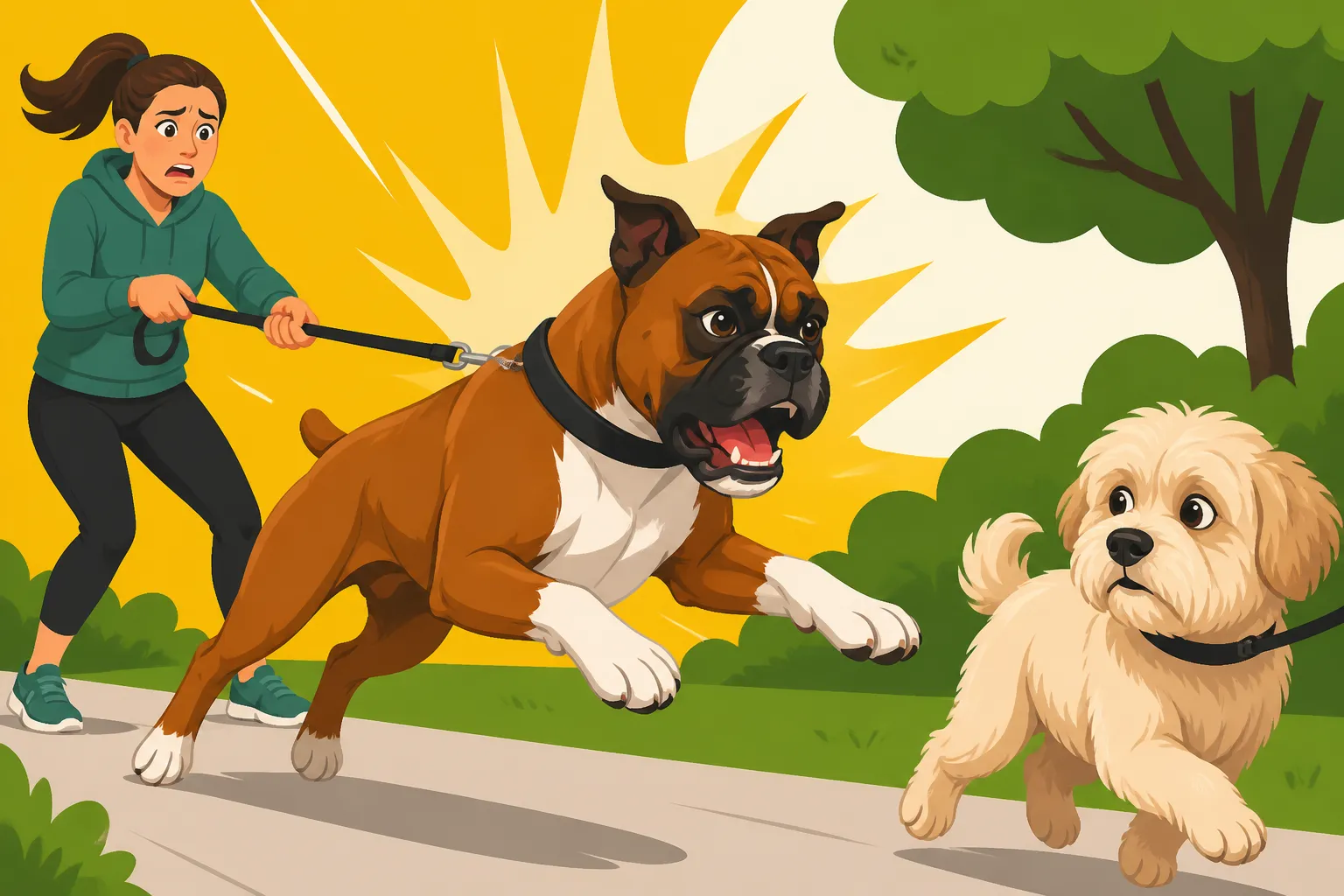
It’s incredibly disheartening and often embarrassing when your usually sweet and goofy Boxer suddenly transforms into a lunging, barking, growling mess at the sight of another dog on leash. You’re just trying to enjoy a peaceful walk, and then bam! – your arm is nearly pulled out of its socket, and you're left apologizing to strangers while wrestling a seventy-pound dog. This guide is here to help you understand why your Boxer behaves this way and, more importantly, equip you with actionable strategies to manage and ultimately reduce this challenging reactivity, making walks enjoyable for both of you again.
Understanding Why Your Boxer Lunges at Other Dogs
Before we can even think about fixing the behavior, we have to understand where it's coming from. It’s easy to feel like your Boxer is just being "bad" or "stubborn," but there's almost always a reason for leash reactivity, and it's rarely malicious. Boxers are incredibly sensitive dogs, despite their tough appearance, and their reactions can stem from a variety of complex emotions.
The Root Causes of Leash Reactivity
Leash reactivity in Boxers isn't a one-size-fits-all problem. Sometimes it's fear, pure and simple. A past negative experience – maybe a stray dog rushing them, an unexpected nip from a puppy, or even just feeling overwhelmed by too many dogs in a small space during their critical Socializing a Boxer Puppy Before Sixteen Weeks window – can make them incredibly wary. They might be trying to create distance or make the other dog go away through their display. Think of it as a preemptive strike: "If I act big and scary, maybe they won't come near me." This is particularly true if your Boxer feels trapped or unable to escape while on a leash, which is a common frustration for many dogs.
Other times, it’s rooted in pure over-excitement or frustration. Your Boxer wants to go greet the other dog, but the leash physically prevents them. This builds up a huge amount of pent-up energy and desire, which then explodes in a flurry of barks and lunges. They might genuinely love other dogs and just have absolutely no impulse control, or they might not have learned how to greet politely. Imagine a toddler in a candy store, unable to get to the treats — eventually, they're going to have a meltdown. For an energetic breed like a Boxer, this kind of frustration can be incredibly intense. They might be thinking, "Let me go! Let me play!" and the only way they know to express that is by putting on a big, loud show.
The Difference Between Aggression and Frustration
It’s crucial to distinguish between aggression and frustration-based reactivity, though they can look very similar on the surface. True aggression often involves stiff body language, a low growl, baring teeth with a tense mouth, and a focused, hard stare directed at the other dog. The intent is genuinely to deter or harm. These dogs might even try to lunge and snap with a clear intention to make contact if given the chance. This kind of reactivity usually warrants a different, more cautious approach and often requires professional intervention.
Frustration, on the other hand, often presents with a more "bouncy" or frantic energy. The growls might sound higher-pitched, more like frustrated vocalizations than truly threatening ones. Their body might be loose, and their tail might wag, albeit a stiff, high wag. They might pull wildly, bark incessantly, and generally seem to be throwing a tantrum. While still disruptive and stressful, the underlying emotion is often one of wanting to engage but being unable to, rather than wanting to attack. Knowing the difference helps you respond appropriately and gives you insight into your Boxer's emotional state. Sometimes, a frustrated Boxer just needs to learn how to communicate differently and manage their big feelings, whereas an aggressive Boxer needs to learn that other dogs are not a threat.
Immediate Strategies for Managing Leash Lunging
When you’re out on a walk and suddenly faced with an oncoming dog, you need tactics that work now to prevent or de-escalate a lunge. These are not long-term fixes, but rather essential tools for survival on daily walks while you work on deeper training.
Avoiding Triggers and Creating Distance
The simplest and most effective immediate strategy is avoidance. If you see another dog approaching, don't wait until your Boxer starts reacting. Proactively create distance. This might mean crossing the street, ducking behind a parked car, stepping into someone's driveway (briefly, of course!), or simply turning around and heading in the opposite direction. The goal is to keep your Boxer below their "threshold" – the point at which they lose control and begin to react. Every time they react, the behavior gets rehearsed and becomes stronger, so preventing the reaction is key.
Think of it as damage control. If you know your Boxer usually lunges when another dog is within, say, 50 feet, then make sure you're taking action when the other dog is 75 feet away. This gives you a buffer zone and allows you to keep your Boxer calm and focused on you. Using a visible cue like "Let's go this way!" and immediately turning, while offering a high-value treat, can make this a positive experience rather than a hurried escape. Remember, your Boxer is a powerful dog, so having Harnesses That Hold a Pulling Boxer can be incredibly helpful for maintaining control when you need to make quick directional changes. A good front-clip harness, easily found on Amazon, can redirect their pulling power back towards you, making U-turns much more manageable.
Emergency U-Turns and Distraction Techniques
Sometimes avoidance isn't possible, or another dog pops up unexpectedly. In these moments, you need an "emergency brake." The emergency U-turn is a lifesaver. As soon as you spot an approaching dog and before your Boxer notices or reacts, cheerfully say "Let's go!" or The Word That Stops a Boxer Mid-Charge, pivot 180 degrees, and briskly walk in the opposite direction, rewarding your Boxer with treats as you move away. The speed and unexpected change in direction can break their focus on the trigger and redirect it to you. Practice this when there are no triggers around, so it becomes a well-rehearsed, positive game.
Distraction is another powerful tool. Keep a pouch full of extremely high-value treats (think cooked chicken, cheese, or hot dogs – not just dry kibble) on every walk. As an approaching dog gets within your Boxer's sight, immediately start a rapid-fire treat delivery. "Look at me! Good boy! Treat! Look at me! Treat!" Keep their eyes glued to you and the treats, making yourself more interesting than the approaching dog. This technique is called "feed and move" or "look at that" and it helps change your Boxer's emotional association with other dogs from negative or over-excited to positive ("other dogs mean yummy treats!"). This works best when you are already working on Getting a Boxer's Attention Outdoors in general. Consistency with these techniques can significantly reduce the frequency and intensity of lunging episodes, offering both of you more peace on your daily strolls.
Long-Term Training to Overcome Reactivity
While management is critical for immediate relief, true improvement comes from consistent, long-term training that addresses the underlying emotional responses and teaches your Boxer alternative behaviors.
Desensitization and Counter-Conditioning
This is the cornerstone of reactivity training. Desensitization means gradually exposing your Boxer to the trigger (other dogs) at a distance where they remain calm and unreactive. Counter-conditioning means changing their emotional response to that trigger from negative (fear, frustration) to positive (happiness, anticipation of good things). You're essentially teaching your Boxer that the appearance of another dog predicts something wonderful happening.
Here's how it works:
- Identify the threshold: Find the maximum distance at which your Boxer can see another dog without reacting. This might be a block away, or even across a park.
- Controlled exposure: With your Boxer on leash, position yourselves at this safe distance. The moment another dog appears, start giving your Boxer super high-value treats. Not when they lunge, but when they notice the dog and remain calm.
- Timing is everything: The treat should appear after the other dog. The sequence is: "Other dog appears > Boxer sees other dog (calmly) > treat appears > other dog disappears." This builds the association: other dog = treats.
- Gradual decrease in distance: Over many, many sessions, and only when your Boxer is consistently calm and looking to you for treats at the current distance, you can very, very slowly decrease the distance to other dogs. This process takes immense patience and consistency. It’s better to go too slow than too fast, because one bad experience can set you back weeks. This is where Why Short Sessions Suit a Boxer's Attention Span comes into play; brief, positive exposures are far more effective than long, stressful ones.
Building Focus and Engagement on Leash
A Boxer who is deeply engaged with you on a walk is less likely to be surprised by or react to other dogs. Building this focus involves teaching a solid "watch me" cue and practicing loose leash walking in various environments. Your Boxer needs to learn that paying attention to you is far more rewarding than fixating on other dogs or objects.
- "Watch Me" game: Start in a quiet environment. Hold a treat near your nose. When your Boxer looks at your eyes, say "Yes!" and give the treat. Gradually increase the duration they have to look at you before getting the treat. Then, practice this in slightly more distracting environments.
- Loose leash walking: A Boxer who pulls constantly is already in a heightened state of arousal, making them more prone to reactivity. Investing time in Loose Leash Work With an Excited Boxer is crucial. Every time the leash tightens, stop walking. Only resume when the leash is slack. This teaches them that pulling gets them nowhere, but a loose leash keeps the walk moving. Using specific Rewards a Boxer Will Work Hard For can make these training sessions much more effective and enjoyable for your Boxer. Remember, Boxers are intelligent but can be easily bored, so keep training sessions fun and varied.
- Impulse control games: Games like "leave it" and "wait" teach your Boxer to control their impulses. Practice with low-value items first, then gradually increase the temptation. This skill transfers to real-world situations, helping them resist the urge to lunge.
Tools and Support for Reactive Boxers
Having the right equipment and knowing where to turn for help can make a huge difference in managing and training a reactive Boxer.
- Training Gear:
- Front-clip harness: As mentioned earlier, this is often preferred over a back-clip harness or a flat collar for reactive dogs because it redirects their pulling force and gives you more steering control. Brands like Freedom No-Pull Harness or Easy Walk are popular choices, widely available on Amazon.
- Long line: For practicing recall and engagement in safe, open spaces away from triggers. This allows your Boxer a sense of freedom while still being securely connected to you.
- High-value treats: Essential for counter-conditioning and distraction. Experiment to find what your Boxer goes absolutely wild for.
- Online Resources: Many reputable online dog training platforms offer courses specifically for reactive dogs. For instance, BAXTER & Bella offers comprehensive online training programs that can guide you through managing reactivity with positive reinforcement methods, providing step-by-step instructions and support.
- Supportive Community: Connecting with other Boxer owners who have faced similar challenges can provide emotional support and practical tips. Many online forums or local dog clubs offer a sense of community where experiences and strategies for topics like A Boxer That Pulls Hard on Walks are shared.
| Management/Training Tool | Purpose | How It Helps with Lunging |
|---|---|---|
| Front-Clip Harness | Leash control, prevents pulling | Redirects pulling force, gives handler more control for U-turns and distance management |
| High-Value Treats | Motivation, counter-conditioning | Creates positive association with other dogs (other dog = yummy treat), distracts focus |
| "Watch Me" Cue | Builds handler focus, impulse control | Teaches Boxer to look at handler for guidance rather than fixating on triggers |
| Emergency U-Turn | Immediate avoidance strategy | Prevents full-blown reactions by quickly removing Boxer from trigger situation |
| Desensitization | Changes emotional response | Gradually habituates Boxer to other dogs at non-reactive distances, reducing fear/frustration |
| Long Line | Safe practice in open spaces | Allows supervised freedom to practice recall and engagement in a controlled environment |
Realistic Expectations and Ongoing Support
Training a reactive Boxer is a journey, not a sprint. There will be good days and bad days, and it's essential to approach the process with patience, understanding, and a willingness to seek professional guidance when needed.
The Importance of Consistency and Patience
You are essentially rewiring your Boxer's brain and emotional responses, and that takes time, repetition, and unwavering consistency. One successful walk doesn't mean the problem is solved, and one setback doesn't mean all your progress is lost. Boxers are incredibly smart and devoted, but they also have big personalities and can be Whether a Boxer Is Smart or Just Stubborn at times. It’s easy to get frustrated, but remember that your Boxer is not doing this to spite you; they are struggling with big emotions they don't know how to process.
Every interaction your Boxer has with another dog, whether it's a calm pass or a full-blown lunge, contributes to their learned behavior. Therefore, managing their environment (avoiding triggers) is just as important as active training. Consistency means every family member needs to be on board with the training plan, using the same cues and strategies. Celebrate the small victories—a walk where you only had one minor lunge instead of five, or when your Boxer chose to look at you instead of barking at a dog across the street. These moments are huge indicators of progress.
When to Seek Professional Help
While many Boxer owners can make significant progress with online resources and dedicated self-training, there are times when professional help is not just recommended, but essential.
Consider consulting a certified professional dog trainer or a veterinary behaviorist if:
- Your Boxer's lunging includes genuine aggression (snapping, biting attempts, sustained hard stares).
- You feel unsafe or overwhelmed during walks.
- Your training efforts aren't yielding results, or you feel stuck.
- The reactivity is severely impacting your daily life or your Boxer's quality of life.
A qualified professional can assess your Boxer's specific situation, identify subtle nuances in their body language, and create a tailored training plan. They can also provide hands-on guidance, which is often invaluable. Look for trainers who use positive reinforcement and force-free methods, and don't hesitate to ask Whether a Trainer Has Worked With a Boxer Before with leash reactivity or specific to the Boxer breed. Sometimes, a few sessions with an expert can provide the breakthrough you need, giving you the confidence and tools to continue the work on your own or deciding if Group Class Against Private Work for a Boxer is the right next step for your specific needs. It's an investment in a happier, calmer future for both you and your beloved Boxer.
Disclaimer
This article is for general informational purposes only and does not constitute professional advice. Laws, prices and regulations vary by location and change over time. Consult a qualified professional for guidance on your specific situation.