Cooling Vests and Fans for a Boxer
The crushing worry of watching your beloved Boxer pant excessively, struggling to catch their breath on a warm day, is a feeling no owner wants to experience. Their unique anatomy, combined with their boundless energy, makes them incredibly susceptible to overheating, turning even a pleasant afternoon stroll into a potential emergency. This guide is here to empower you with practical solutions, focusing on effective cooling vests and fans, alongside other crucial strategies to keep your Boxer safe and comfortable when the mercury rises.
The Urgent Need for Cooling in Boxers
Boxer owners know a deep, specific kind of anxiety when summer rolls around or temperatures unexpectedly spike. It's not just about them being a bit warm; it's about their fundamental inability to regulate their body temperature as efficiently as other breeds. This isn't just an inconvenience; it's a serious health risk that demands proactive measures from every Boxer parent.
Why Boxers Are So Susceptible to Heatstroke
The primary reason our goofy, loving Boxers struggle so much in the heat boils down to their brachycephalic (short-nosed) head structure. Unlike dogs with longer muzzles, Boxers have compressed airways. Their soft palate is often elongated, and their nostrils can be narrower, making the simple act of panting — a dog's most effective cooling mechanism — incredibly inefficient. They work harder to move less air, which, paradoxically, generates more body heat. It's a frustrating biological design flaw for such an active dog.
Imagine trying to cool yourself down by breathing through a straw after a run. That's essentially what your Boxer is attempting to do. Their compact breathing passages mean they can't exchange heat as quickly through evaporation from their tongue and respiratory tract. This physiological disadvantage is compounded by their muscular build. While a short coat might seem like a benefit, that dense musculature beneath it can trap heat. Add in their characteristic exuberance and desire to play, even when they're already too warm, and you have a recipe for disaster. Owners often feel a deep sense of frustration because their dog wants to be active, but their body just can't keep up in the heat. It's a constant tightrope walk, and you really have to be vigilant. This is precisely How Fast a Flat-Faced Boxer Overheats and why even short bursts of activity can be dangerous.
The Dangers of Overheating: More Than Just Discomfort
Overheating in a Boxer isn't just about them feeling a bit hot; it quickly escalates into heatstroke, a life-threatening condition. The signs can develop rapidly, and recognizing them is absolutely critical for intervention. Early indicators might include excessive panting that sounds labored or raspy, profuse drooling, a dark red or purple tongue, and glazed eyes. As their body temperature continues to climb, things can turn very serious, very fast.
A Boxer suffering from heatstroke might become lethargic, stumble, or even collapse. Vomiting and diarrhea are common, and in severe cases, seizures or loss of consciousness can occur. The internal damage can be catastrophic, affecting vital organs like the kidneys, liver, heart, and brain. The long-term consequences of heatstroke, even if your Boxer survives, can include lasting neurological damage or chronic organ dysfunction. This isn't just a matter of discomfort; it's a race against time to prevent irreversible harm. It highlights why proactive cooling measures, rather than reactive ones, are paramount for our Boxers. Being aware of Signs a Boxer Is Overheating is the first step in protecting them.
Cooling Vests: A Wearable Shield Against the Heat
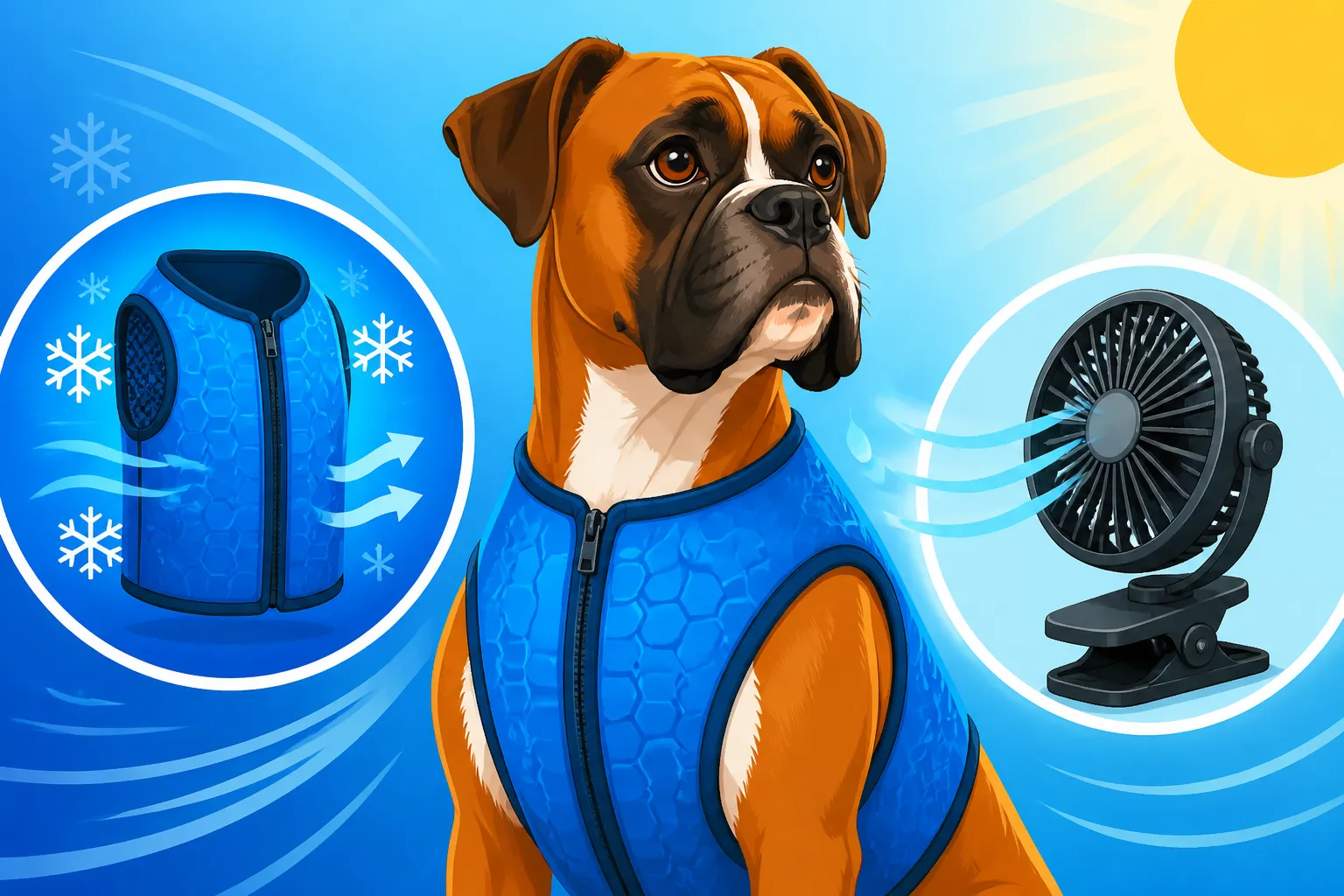
One of the most effective tools in an owner's arsenal against canine overheating is the cooling vest. These aren't just trendy accessories; they're functional garments designed to actively lower and maintain your Boxer's body temperature, giving them a much-needed edge against the oppressive heat.
How Cooling Vests Work and Their Different Types
Cooling vests for dogs primarily operate on one of two principles: evaporative cooling or phase change materials (PCM). Understanding the difference can help you choose the best option for your Boxer's needs and your local climate.
Evaporative Cooling Vests
These vests are perhaps the most common type you'll encounter, and they work very much like how sweating cools the human body. You soak the vest in cool water, wring out the excess, and then place it on your Boxer. As the water held within the vest fabric evaporates, it draws heat away from your dog's body, providing a cooling effect. The efficacy of these vests is directly related to the ambient humidity and airflow. In drier climates, evaporation happens more rapidly and is highly effective. In very humid environments, the rate of evaporation slows, reducing their cooling power.
Many popular pet supply retailers, like Chewy, offer a wide variety of these vests. They are generally lightweight, often more affordable, and easy to use and maintain. However, they do require re-wetting periodically, which means they can get your Boxer's coat a little damp and might need a refill of cool water if you're out for an extended period. For Boxers who love to splash in a Paddling Pools and a Boxer That Cannot Cool Itself, getting wet is no big deal, so these can be a natural fit for their water-loving tendencies.
Phase Change Material (PCM) Vests
PCM vests represent a more advanced, "dry" cooling solution. Instead of relying on evaporation, these vests incorporate special inserts or panels filled with a non-toxic material that freezes or solidifies at a specific temperature, often around 58°F (14°C). When placed on your Boxer, the material gradually melts, absorbing a significant amount of heat from their body in the process. This process provides a consistent, prolonged cooling effect without making your dog wet.
The main advantages of PCM vests are their extended cooling duration and the fact that they keep your Boxer completely dry, which can be a relief if you're concerned about damp fur leading to skin irritation or simply prefer a no-mess option. They are generally heavier and come with a higher price tag than evaporative vests, and the inserts need to be chilled in a freezer or refrigerator before use. This means they require a bit more planning but offer a superior, consistent cooling experience, especially in humid conditions where evaporative vests might struggle.
Choosing the Right Cooling Vest for Your Boxer
Selecting the perfect cooling vest for your Boxer involves considering a few key factors to ensure maximum effectiveness and comfort. It's not a one-size-fits-all situation, and what works best depends on your dog's build, activity level, and the environmental conditions you're facing.
First and foremost, fit is paramount. A cooling vest needs to make good contact with your Boxer's body, particularly their chest and back, to facilitate efficient heat transfer. Measure your Boxer carefully according to the manufacturer's guidelines. A vest that is too loose won't provide adequate cooling, while one that's too tight could restrict movement or breathing, especially around their deep chest. You want a snug, comfortable fit that allows for full range of motion.
Next, consider the materials and construction. Look for durable, breathable fabrics that can withstand a Boxer's active lifestyle. For evaporative vests, a high-quality absorbent fabric is essential. For PCM vests, ensure the inserts are robust and the vest itself is designed to hold them securely without shifting. If you plan to source one from a larger retailer like Chewy, take a moment to read the customer reviews; fellow Boxer owners often share valuable insights on fit and durability specific to the breed.
Finally, think about your typical usage and climate. If you live in a dry, arid region and mostly need cooling for shorter walks or play sessions, an evaporative vest might be perfectly sufficient and more convenient for re-wetting on the go. If you're in a humid area, need longer-lasting cooling, or want to keep your Boxer completely dry, the investment in a PCM vest might be well worth it. Some owners even find it beneficial to have both types for different scenarios. Remember, the goal is to keep your Boxer comfortable and safe, especially when managing Boxer Exercise Needs and the Heat That Limits Them.
| Feature | Evaporative Cooling Vests | Phase Change Material (PCM) Vests |
|---|---|---|
| Cooling Method | Water evaporation draws heat from body | Inserts absorb heat as they melt (e.g., at 58°F) |
| Activation | Soak in water, wring out | Chill/freeze inserts |
| Feel | Wet, damp | Dry |
| Duration | Shorter, requires re-wetting | Longer, more consistent |
| Weight | Lighter when dry, heavier when wet | Heavier due to inserts |
| Cost | Generally more affordable | Often higher upfront cost |
| Best For | Dry climates, shorter outings, active play | Humid climates, longer duration, sensitive skin |
| Maintenance | Regular washing, re-wetting | Freezing inserts, cleaning |
Fans for Boxers: Targeted Airflow for Relief
While cooling vests are excellent for direct body cooling, fans play a crucial role in managing the ambient temperature around your Boxer and enhancing the effectiveness of their natural cooling mechanisms. From portable units for crates to larger fans for your home, strategic airflow can make a world of difference.
Portable Fans for On-the-Go Cooling
Portable fans are unsung heroes for Boxer owners who are often out and about or need targeted relief in specific situations. The most common variety are crate fans, which typically attach securely to the wire mesh of a dog crate. These small, battery-operated units provide a steady stream of air, crucial for circulating air within the crate and preventing it from becoming a stifling hotbox. They're invaluable for car travel, dog shows, or even just when your Boxer is relaxing in their crate in a warmer room.
Beyond crates, small, battery-operated clip-on fans can be attached to dog strollers, carriers, or even your belt if you're taking a very short, carefully timed walk with your Boxer in warmer weather. While they don't replace the need for extreme caution or avoiding the heat altogether, they add an extra layer of protection by moving air directly over your Boxer's face and body, aiding in the evaporative cooling process from their mouth and tongue. For a Boxer, every little bit of assistance in preventing their core temperature from rising, particularly when you're asking them to exert themselves even slightly, is a gift. Always be mindful of The Temperature a Boxer Should Stop Walking At and use these fans as an aid, not a solution for excessive heat.
Home Solutions: Maximizing Air Circulation
At home, you have more options for creating a cool, comfortable environment for your Boxer. Strategic placement of fans can significantly improve air circulation and provide much-needed relief.
Floor fans are excellent for creating localized airflow where your Boxer tends to rest. Position one to blow across their favorite cooling mat or bed. The continuous movement of air helps dissipate heat from their body and promotes evaporation from their respiratory tract. Oscillating tower fans are also fantastic for whole-room circulation, helping to keep the general ambient temperature more bearable. Ceiling fans, if you have them, should be used on their highest setting to create a downdraft that pushes cool air down.
Of course, air conditioning remains the gold standard for home cooling. If you have central air or even a window unit, ensure your Boxer has access to the cooled areas of your home, especially during the hottest parts of the day. For those without AC, combining multiple fans, ensuring cross-ventilation, and drawing blinds or curtains to block direct sunlight are vital strategies. Remember, the goal is to create zones of comfort where your Boxer can retreat and truly cool down. Relying solely on an open window on a hot, still day is rarely sufficient for a Boxer, whose unique physiology struggles with heat even in relatively mild conditions. Effective air movement is critical for Keeping a Boxer Cool When It Cannot Pant Enough.
Complementary Cooling Strategies for Comprehensive Care
Cooling vests and fans are fantastic tools, but they are just two pieces of a larger puzzle. A truly comprehensive approach to keeping your Boxer safe in the heat involves a multi-faceted strategy that prioritizes prevention, hydration, and an acute awareness of their individual limits.
Timing Exercise and Seeking Shade
The single most impactful thing you can do for your Boxer in warm weather is to adjust their exercise schedule. Those long midday romps, so characteristic of their energetic personality, become dangerously risky. Instead, shift all outdoor activity to the coolest parts of the day: early mornings, before the sun has a chance to bake the pavement, and late evenings, once the heat has started to dissipate. This simple change dramatically reduces their exposure to peak temperatures and allows them to enjoy their much-needed physical and mental stimulation without excessive risk.
When you do venture out, always prioritize shade. Walk your Boxer on grassy areas or shady trails, avoiding direct sunlight and, critically, hot pavement. Asphalt and concrete absorb and retain heat, reaching temperatures that can easily burn paw pads and radiate heat back up to your Boxer's body, compounding their struggle to cool down. Even on days that seem mild to you, the ground temperature can be scorching. Imagine walking barefoot on that surface. If you can't, your Boxer shouldn't either. This mindful approach to exercise is key, as is highlighted in Splitting a Boxer's Exercise Around the Heat. You also need to know The Degrees at Which a Boxer Struggles and be realistic about whether outdoor time is even safe.
Hydration and Water-Based Activities
Consistent and ample hydration is non-negotiable for a Boxer, especially in warmer conditions. Always have fresh, cool water readily available, both inside and outside the home. Consider placing multiple water bowls around the house to encourage frequent drinking. Adding a few ice cubes to their water bowl can make it more appealing and provide a slight internal cooling effect.
For dogs who enjoy it, a shallow kiddie pool filled with cool water in a shaded spot can be a wonderful way for your Boxer to self-regulate their temperature. They might just stand in it, or they might splash and play, but either way, it provides a safe, fun way to cool down. Always supervise water play to ensure safety. Frozen treats, like Kongs filled with peanut butter or plain yogurt and then frozen, or even ice cubes made from low-sodium broth, can be a refreshing and hydrating snack. For Boxers on specific diets, or for those whose owners prioritize fresh food options, healthy brands like Ollie offer nutritious meal choices that can contribute to overall health and energy levels, which in turn supports better temperature regulation. Just remember that treats, even healthy ones, should be given in moderation as part of a balanced diet.
Recognizing the Signs and Emergency Preparedness
Despite all your best efforts, sometimes overheating can still occur. This is why being able to quickly recognize the signs of heat stress escalating into heatstroke is absolutely vital. We covered the Signs a Boxer Is Overheating earlier, but it bears repeating: excessive panting, drooling, a dark red tongue, weakness, stumbling, vomiting, and ultimately collapse. Time is of the essence in these situations.
If you suspect your Boxer is overheating, act immediately:
- Move them to a cooler area: Get them into shade, air conditioning, or near a fan.
- Apply cool (not cold or icy) water: Focus on their paws, ear flaps, and groin area. You can use a hose, wet towels, or even just your hands. Avoid dousing them with ice-cold water, as this can cause blood vessels to constrict, trapping heat inside, and can also lead to shock. The aim is gradual cooling. Learn how to respond effectively with Getting a Boxer's Temperature Down in Minutes.
- Offer small amounts of water: Don't force them to drink, but make water available.
- Contact your veterinarian immediately: Even if your Boxer seems to recover, an emergency vet visit is crucial. Internal damage may not be immediately apparent, and a vet can assess organ function and prevent further complications.
Having pet insurance, such as through Healthy Paws, can provide immense peace of mind in these emergency situations, knowing that you can focus on getting your Boxer the best care without immediate financial strain. Being prepared means not only having the right cooling gear but also knowing exactly what to do when an emergency strikes. It's about being your Boxer's first and best line of defense against the heat.
Disclaimer
This article is for general informational purposes only and does not constitute professional advice. Laws, prices and regulations vary by location and change over time. Consult a qualified professional for guidance on your specific situation.