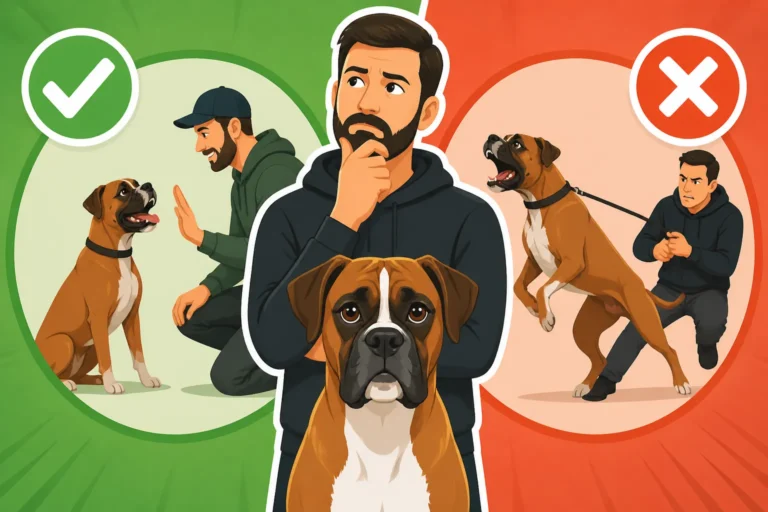
Boxer Watchdog Instinct Without Aggression
Many Boxer owners want their beloved companion to offer a sense of security without ever crossing the line into aggression. It's a fine balance: you appreciate their alert nature and imposing presence, but the idea of them actually being aggressive is terrifying. This guide will walk you through how to foster your Boxer's natural protective instincts, ensuring they're a vigilant and controlled watchdog, not an overzealous or dangerous one.
Understanding the Boxer's Natural Protective Tendencies
Boxers are renowned for their playful, clownish personalities, but beneath that fun-loving exterior lies a deep-seated loyalty and a natural inclination to protect their family. This combination makes them excellent watchdogs by nature, but it’s crucial for owners to understand how these instincts manifest and how to channel them appropriately. Misinterpreting their protective drive can inadvertently lead to behavioral issues.
The Boxer's Working History and Instincts
Boxers weren't originally bred to be dainty lapdogs. Their lineage traces back to the Bullenbeisser, a powerful German breed used for hunting large game like wild boar and bear. This required immense strength, courage, and a tenacious grip. When Boxers were developed, these qualities were refined, not eliminated. They were also used as cattle dogs and eventually gained recognition for their suitability in police and military work due to their intelligence, trainability, and courage. This deep-seated history means they come pre-wired with a protective streak. They were bred to be courageous and to stand their ground, even against formidable opponents. This isn't aggression; it's a deep-seated drive to protect their pack and territory.
Think about it: a dog that needs to hold a wild boar isn't going to back down easily. While our modern Boxers are far removed from those days, that instinct for vigilance and defense is still very much alive within them. They are intensely loyal to their families, often forming incredibly strong bonds with their human companions. This loyalty extends to a natural inclination to be aware of their surroundings and to react to perceived threats. It's not about being mean; it's about their devotion to you and their home. They see themselves as guardians, even if their most dangerous enemy is usually the mail carrier or a delivery truck. This historical background is a crucial part of The German Origins of the Boxer.
It's important for us as owners to recognize this historical foundation. It helps us understand why our Boxers behave the way they do when someone approaches the house, or when they hear an unexpected noise. They aren't trying to be difficult; they're simply acting on instincts that have been honed over generations. Our job is to channel these powerful instincts constructively, ensuring they manifest as appropriate alertness rather than uncontrolled fear or hostility. Understanding this core trait is the first step in nurturing a confident, well-behaved watchdog. This deep-seated protective instinct is part of their charm, but it's also why proper training and socialization are so crucial. Without guidance, a Boxer’s natural inclination to guard can easily be misinterpreted or can escalate into behaviors that are unmanageable or even dangerous. Their imposing presence, coupled with their powerful build, means that any uncontrolled display of protectiveness can have serious consequences. We want them to be a deterrent, not a danger.
Why Boxers Are Often Mistaken for Aggressive Dogs
A Boxer's physical appearance certainly plays a role in how they're perceived. Their muscular build, square jaw, and alert, often intense gaze can seem intimidating to strangers. Couple this with their boisterous, energetic nature, especially during their extended puppyhood which can last up to three years (a period often referred to as The Boxer Puppyhood That Lasts Three Years), and you have a dog that can easily be misunderstood. A happy Boxer greeting you with a full-body wiggle and a playful "box" with their paws might come across as aggressive lunging or pawing to someone unfamiliar with the breed. This is where the stereotype begins to form, even if the intent is purely friendly.
Furthermore, Boxers often have a loud, booming bark that can startle anyone not used to it. When they decide to "alert" you to the presence of a squirrel in the yard or a leaf blowing past the window, it sounds incredibly serious. For an intruder, this is a fantastic deterrent. For an unsuspecting visitor, it can be terrifying. This vocal expression of vigilance, while effective as a watchdog trait, contributes significantly to the misperception that they are aggressive. People hear the bark and see the powerful dog, and immediately jump to conclusions. This contributes to public perception, which is why Boxer Temperament in the Standard and in Life often needs clarification.
Their natural wariness of strangers, while not aggression, can also be misinterpreted. A Boxer often takes a moment to assess new people or situations. They might stand still, observing intently, before deciding if someone is friend or foe. This cautious approach, combined with their strong physical presence, can make strangers uneasy. They aren't necessarily acting aggressively, but their discernment and a lack of immediate, effusive greeting can make them seem aloof or potentially hostile. It's a protective mechanism, not an attack mechanism, but it looks similar to the untrained eye. It's our responsibility as Boxer owners to educate others and to manage these situations. We need to be aware that what we see as typical Boxer behavior — the playful bouncing, the watchful stillness, the deep bark — can be alarming to those who don't know the breed. By understanding how our Boxers are perceived, we can take proactive steps to ensure they are seen as the loving, loyal guardians they are, rather than as aggressive threats.
The Difference Between Alertness and Aggression
This distinction is absolutely crucial for any Boxer owner. Alertness in a Boxer means they are aware of their surroundings, noticing changes or new presences. This might manifest as an initial bark when the doorbell rings, standing at attention at the window, or a low growl at an unfamiliar sound outside. Their body language will typically be stiff but not overtly threatening; their hackles might be slightly raised, their tail might be held still or with a slight, stiff wag. They are communicating, "I see you, and I am observing." This is the ideal watchdog behavior we want to cultivate.
Aggression, on the other hand, involves a clear intent to harm or intimidate beyond a warning. This includes sustained, frantic barking coupled with lunging, snarling, snapping, or biting. An aggressive Boxer's body language will be tense, forward-leaning, with ears pinned back, teeth bared, and possibly a direct, hard stare. The key difference lies in the intent and the escalation. An alert Boxer gives a warning; an aggressive Boxer is preparing to act on a perceived threat without appropriate discernment or control. A Boxer that growls at visitors might be showing early signs of crossing that line if not managed correctly.
It’s a fine line, and often starts subtly. An overly intense stare, a quick snap at the air, or a refusal to back down when a stranger retreats can all be red flags. Your Boxer might just be trying to get someone to leave, but if they don't have the social skills or training to disengage, it can quickly escalate. We want our Boxers to warn someone away, not to engage in a physical confrontation. A truly confident, well-trained Boxer understands that its job is to notify you and to act as a deterrent, not to be the first line of attack.
Understanding the nuance between these two states is paramount for responsible Boxer ownership. We celebrate their alertness, their courage, and their willingness to stand between us and perceived danger. However, we must never mistake or encourage genuine aggression. Our goal is a Boxer who is confident, discerning, and whose protective instincts are always under our control. This balance provides security without the stress and danger of an aggressive dog.
Nurturing the Watchdog Without Encouraging Undesirable Behavior
Building a well-behaved Boxer watchdog is all about thoughtful, consistent training that starts early and focuses on positive reinforcement. You want to cultivate their natural protective instincts into a controlled, discerning alertness, rather than allowing them to develop into uncontrolled reactivity or aggression.
Early Socialization: The Foundation of a Balanced Boxer
The single most important thing you can do for your Boxer puppy, especially given their protective instincts and extended puppyhood, is to provide extensive and positive socialization. This isn't just about letting them meet other dogs; it's about exposing them to a vast array of sights, sounds, smells, people, and environments in a controlled and positive manner. Think about all the things your adult Boxer will encounter: children, elderly people, people in hats, people with umbrellas, construction noises, car alarms, different floor surfaces, veterinarians, groomers – the list is endless. Each of these experiences, if positive, builds confidence and reduces the likelihood of fear-based reactivity later on.
Start early, ideally between 8 to 16 weeks, which is a critical developmental window. Enroll in a well-run puppy class, where they can learn appropriate play with other puppies and be exposed to new people in a structured environment. Take them on short, positive outings to pet-friendly stores, parks (where you can observe from a distance at first), and friends' houses. Always ensure these experiences are positive, using treats and praise to create good associations. If your puppy seems overwhelmed, don't force it; gently remove them from the situation and try again later with less intensity. Socializing a Boxer puppy before sixteen weeks is not just good, it's essential for their long-term well-being and temperament.
The goal of socialization isn't to make your Boxer indiscriminately friendly with everyone. It's to teach them that the world is generally a safe place, and most new things aren't threats. This confidence allows them to be discerning watchdogs rather than fearful, reactive ones. A well-socialized Boxer understands what's normal and what's truly unusual, making their "alert" signals more meaningful. They'll be able to differentiate between a harmless jogger and someone genuinely suspicious, because they've learned to process a wide range of stimuli without anxiety.
Without proper socialization, a Boxer's natural wariness can quickly morph into fear and suspicion of anything new or unfamiliar. This fear is a primary driver of aggression. A dog that is constantly anxious about novel situations is far more likely to lash out. By building a strong foundation of positive experiences, you empower your Boxer to be a confident, balanced individual who can appropriately assess situations and act as a reliable, non-aggressive watchdog. This investment in their early life pays dividends for their entire lifespan.
Teaching Appropriate Alert Signals
We want our Boxers to tell us when something is amiss, but we don't want them to bark incessantly or lunge at every passerby. The key is to teach them a controlled, appropriate alert signal. When they first bark at the doorbell or someone approaching the property, acknowledge it calmly. Go to the door, look out, and assess the situation yourself. If it's a false alarm or a friendly visitor, calmly say "Thank you" or "Enough," and then reward them for quietening down. This teaches them that their alert has been heard and you are now handling it.
One effective technique is to teach a "quiet" command. When your Boxer starts barking at a trigger (like someone walking past the window), allow a few barks, then approach them, calmly say "Quiet," and offer a high-value treat the moment they stop barking. It might only be a second of silence at first, but you're rewarding the cessation of barking. Gradually increase the duration of silence required before the treat is given. This helps them learn to offer a few barks as an alert, then look to you for direction. This is much better than A Boxer that barks at the fence relentlessly.
You can also train a specific "speak" and "quiet" command. Hold a treat, say "Speak!" and encourage them to bark. Reward generously when they do. Once they reliably "speak," then introduce "Quiet!" and reward for silence. This gives you control over their vocalizations. When they learn that their barking is a command they can turn on and off, it becomes less of an uncontrolled reaction and more of a tool they use with your guidance. This approach prevents the "always barking" scenario and refines their communication.
The goal is for your Boxer to alert you, trust that you will investigate, and then disengage when you tell them it's okay. This means you need to be consistent in your responses. Always investigate their alerts, even if you think it's nothing. This builds trust. Then, always follow through with the "quiet" command and reward for compliance. This consistency reinforces their role as a partner in security, not the sole decision-maker.
Managing Your Boxer's Reactions to Triggers
Once you've established a baseline for alert signals, the next step is to manage your Boxer's reactions to specific triggers that might push them toward undesirable behavior. This often involves identifying what exactly sets them off and then systematically working to desensitize them or change their emotional response. For many Boxers, common triggers include the doorbell, strangers walking past the house, or other dogs. Rather than letting them constantly practice the unwanted behavior (like frantic barking or lunging), you need to proactively intervene.
If the doorbell is a major trigger, set up a controlled training scenario. Have a friend or family member ring the doorbell. Before your Boxer gets into a full barking frenzy, calmly call them to you, give them a high-value chew or toy (something they only get when the doorbell rings), and direct them to a designated "place" like their bed or crate. Reward them for staying calm and occupying themselves while you answer the door. Over time, the doorbell will become a signal for a positive experience (the chew/toy) and a calm response. Teaching a Boxer a place to go when guests arrive is invaluable here.
For outdoor triggers like people or dogs walking by, manage the environment. Use curtains or blinds to block their view if they bark excessively at the window. When on walks, if you anticipate a trigger, increase the distance or redirect their attention before they react. Carry high-value treats and practice "look at me" or other focus exercises. The moment they notice a trigger but choose to look at you instead of reacting, reward heavily. This is called "counter-conditioning" – changing their negative association with the trigger to a positive one.
Consistency is paramount. Every time your Boxer practices an unwanted reaction, it becomes more ingrained. Therefore, prevention is often the first step: manage the environment to reduce exposure to triggers until you've had a chance to work on their responses in a controlled way. This isn't about suppressing their watchdog instincts, but about refining them so they can be effective guardians without becoming a neighborhood nuisance or a liability.
Practical Training Techniques for a Controlled Watchdog
Effective training is the cornerstone of a non-aggressive, yet vigilant, Boxer watchdog. These techniques focus on building self-control, confidence, and clear communication between you and your dog.
The "Go To Your Place" Command
The "Go To Your Place" command is an incredibly powerful tool for managing a Boxer's protective instincts in a controlled way. Imagine guests arriving, or the doorbell ringing, and instead of a chaotic greeting, your Boxer calmly goes to their mat or bed until released. This command provides a safe, comfortable, and predictable alternative behavior for your dog when exciting or potentially stressful situations arise. It teaches them self-control and provides you with a way to manage their energy and watchdog alerts effectively.
To teach this, start by having a designated "place" – a dog bed, mat, or crate – that is easily identifiable and comfortable for your Boxer. Lure your dog onto the place with a treat. As soon as all four paws are on the place, say "Place!" and reward with a treat and praise. Repeat this many times. Once they understand the concept, start adding duration. Ask them to stay for a few seconds, then release them with a cue like "Okay!" or "Free!" and reward. Gradually increase the distance you are from the place and the duration they stay there.
Once they're reliably staying on their place, introduce distractions. Have someone walk by, or ring the doorbell softly. The moment they show any inclination to break, gently remind them "Place!" and guide them back if needed, without scolding. Reward heavily for staying put despite the distraction. This command becomes invaluable for managing greetings, meal times, and any situation where you need your Boxer to be calm and out of the way. It reinforces that you are in control of the situation and they don't need to be the designated greeter or protector in every scenario.
This command is not just about containment; it's about teaching your Boxer to settle and trust your judgment. When they are reliably on their place, they learn that you have assessed the situation, and everything is under control. This reduces their need to be constantly "on guard" and allows their natural alertness to be channeled appropriately. It’s a cornerstone for a well-mannered, non-aggressive watchdog.
Desensitization to Novelty and Strangers
For a Boxer to be a confident and controlled watchdog, they need to be desensitized to a wide range of stimuli that might otherwise trigger an unwanted alert or fear-based reaction. This means gradually exposing them to new things and people at a low intensity, pairing these exposures with positive reinforcement, so they learn these aren't threats. This is especially important for breeds like Boxers who have a natural wariness towards strangers. The goal is neutrality, not necessarily effusive friendship with every new person, but a calm acceptance.
Start small. If your Boxer barks at people walking by your window, put up sheer curtains so they can still see vaguely, but the visual stimulus is lessened. Then, practice "look at me" exercises while someone walks by at a distance outside. Reward them for focusing on you. Slowly, over many sessions, you can increase the clarity of the view or decrease the distance, always staying below their threshold for barking or reactivity. The idea is to always set them up for success, never pushing them into an overwhelming situation.
When introducing your Boxer to new people, particularly those who might be intimidated by their size or boisterousness, do it slowly and calmly. Have the person stand at a distance, perhaps with their back turned or avoiding direct eye contact at first. Have them offer a treat (if appropriate and with permission) or simply ignore the dog until the Boxer approaches calmly. Teach your Boxer a polite "greet" cue, where they can sniff calmly without jumping. Tools like clickers can be very effective in marking the exact moment of calm, polite interaction.
This consistent, gradual exposure, paired with positive reinforcement, rewires your Boxer's brain to associate novel stimuli and strangers with good things, rather than fear or a need to protect. This reduces their stress and, consequently, their likelihood of resorting to aggressive displays. Remember, your Boxer is a discerning dog; they need to learn that most people are not a threat, so they can better identify when there truly is something to be concerned about. You can find excellent training resources for this kind of work, including online courses from reputable trainers like those at BAXTER & Bella.
The Importance of a Reliable Recall
A strong, reliable recall ("Come!") is not just a party trick; it's a foundational safety command and an essential component of having a controlled watchdog. Imagine a scenario where your Boxer spots something or someone intriguing outside your yard, or if they manage to slip past you at the door. If their protective instincts kick in, or if they decide to investigate on their own, a reliable recall can prevent a potentially dangerous or frightening situation. It gives you the ultimate control to disengage them from a potential trigger or recall them from an unsafe situation.
Building a reliable recall requires consistent, positive training from puppyhood. Start in a quiet, distraction-free environment. Use a happy, excited voice and a high-value reward (like boiled chicken or cheese) when you call their name and say "Come!" Make coming to you the most rewarding thing they can possibly do. Never use "Come!" to scold them or do something unpleasant (like giving a bath or leaving the park). You want them to associate it purely with joy and rewards.
Gradually introduce distractions, always starting easy and increasing difficulty. Practice in different rooms, then the backyard, then a quiet park on a long line. A long line (a lightweight leash 15-30 feet long, available on Amazon and in most pet stores) is crucial for practicing recall in more open environments while maintaining safety and control. If they don't come, gently reel them in, rather than chasing them, which often turns it into a game for them. Reward them lavishly when they reach you, even if you had to guide them in. Getting a Boxer's attention outdoors is key for this command.
A Boxer's working history gives them a certain independence, but their loyalty makes them eager to please their handler. A rock-solid recall empowers you to manage their protective instincts, ensuring they remain close and under your direct control, even if they're tempted to "investigate" something themselves. It's a critical safety net that allows you to trust your Boxer more, knowing you can always call them back to you when needed. This control is vital for a responsible and non-aggressive watchdog.
Recognizing and Addressing Signs of Unhealthy Aggression
While we want to foster a Boxer's watchdog instincts, it's equally important to recognize when behaviors cross the line into unhealthy or dangerous aggression. Early identification and intervention are key to ensuring your Boxer remains a safe and well-adjusted member of the family and community.
Distinguishing Fear-Based from Dominance-Based Aggression
Understanding the root cause of aggression is paramount for addressing it effectively. Most canine aggression, including in Boxers, stems from fear, not "dominance" in the way many people mistakenly perceive it. A fear-based aggressive dog will often display appeasement signals (tail tucked, ears back, lip licking, yawning) before lashing out. They might try to create distance, growl as a warning to make the perceived threat go away, and only bite if they feel cornered or have no other option. Their aggression is defensive, born from anxiety and a lack of confidence. This dog needs reassurance, controlled exposure, and confidence-building.
"Dominance-based" aggression, while a term often misused, typically refers to resource guarding, possessiveness, or a dog who is genuinely trying to control resources or interactions. This dog might display more confident body language, such as a stiff posture, direct stare, and hackles raised. They might growl or snap when someone approaches their food bowl, bed, or even a preferred human. It's less about fear and more about controlling access. While Boxers are generally not considered dominant, some can display resource guarding tendencies, especially if not properly trained and socialized.
It's important to observe your Boxer's body language closely. Is their tail tucked or wagging stiffly? Are their ears back or forward? Are their hackles raised? Is their weight shifted backward (fear) or forward (challenge)? These subtle cues can tell you a lot. A Boxer with fear-based aggression needs patient, gentle desensitization and counter-conditioning. They need to learn that the things they fear are actually safe, and you are there to protect them, not expose them.
If you suspect any form of aggression, it is absolutely vital to consult with a certified professional dog trainer or a veterinary behaviorist. Attempting to address aggression on your own, especially without understanding its root cause, can easily make the problem worse. These professionals can help you accurately diagnose the type of aggression and develop a safe, effective behavior modification plan. Trying to "dominate" a fear-aggressive Boxer, for example, will only exacerbate their fear and likely increase their aggression.
When a Boxer's Barking Becomes Excessive or Hostile
While a Boxer's alert bark is a valuable watchdog trait, there's a point where barking crosses the line from helpful to problematic. Excessive barking isn't just annoying; it can be a sign of underlying anxiety, boredom, frustration, or even hostility. If your Boxer barks non-stop at everything that moves outside the window, at every sound, or at every visitor for extended periods, it's time to address the behavior. This isn't controlled vigilance; it's often a symptom of an unhappy or stressed dog.
Look at the context of the barking. Is it frantic and high-pitched, almost desperate? This could indicate anxiety or frustration. Is it a deep, sustained, low growl leading to a bark, accompanied by stiff body language and perhaps a direct stare? This could be a more hostile, territorial display. Does your Boxer refuse to stop barking even when you try to intervene, or does the barking escalate when you approach the trigger? These are all signs that the barking is no longer just an "alert" but has become an uncontrolled and potentially problematic behavior.
Excessive barking can be incredibly stressful for a Boxer. It indicates they feel the constant need to "defend" or react to everything, without any off-switch. This constant state of alert can lead to chronic stress, which can manifest in other behavioral issues or even physical health problems. If your Boxer is barking aggressively at people or other dogs, with accompanying lunging or snarling, this is a serious concern that requires immediate professional intervention. Boxer Reactivity Toward Strange Dogs can start with excessive barking.
Addressing excessive barking often involves a multi-pronged approach: environmental management (reducing triggers), increased exercise and mental stimulation (to combat boredom and frustration), and consistent training (to teach a "quiet" cue and alternative behaviors). If the barking is accompanied by other aggressive behaviors, do not hesitate to seek help from a qualified professional. Ignoring it won't make it go away; it will likely reinforce the behavior and potentially escalate it.
Seeking Professional Help for Behavioral Issues
It's okay to admit when you need help, especially with a powerful and intelligent breed like the Boxer. If your Boxer is displaying behaviors that you find concerning, such as growling, snapping, lunging, biting, or uncontrollable aggression towards people or other animals, please, please seek professional assistance immediately. This is not a sign of failure on your part, but a responsible and proactive step towards ensuring your Boxer's safety and the safety of those around them. Waiting will only allow the behavior to become more ingrained and harder to change.
Start by consulting your veterinarian. They can rule out any underlying medical conditions that might be contributing to behavioral changes (pain, thyroid issues, neurological problems). If health issues are cleared, ask for a referral to a board-certified veterinary behaviorist or a certified professional dog trainer (CPDT-KA or KPA-CTP). Look for trainers who use positive reinforcement and fear-free methods, and who have experience with Boxers or similar breeds. Avoid anyone who suggests harsh punishment, "alpha rolls," or other outdated, dominance-based training methods, as these can actually increase aggression in a fear-based dog.
A good professional will conduct a thorough assessment of your Boxer, taking into account their history, environment, and specific triggers. They will then develop a tailored behavior modification plan that focuses on identifying the root cause of the aggression and teaching your Boxer more appropriate coping mechanisms and responses. This might involve desensitization, counter-conditioning, management strategies, and teaching you how to effectively communicate with and manage your dog. Group Class Against Private Work for a Boxer can be a consideration, but for aggression, private, one-on-one sessions are usually best initially.
Remember, behavioral issues are complex, and it's not always something you can "fix" yourself with a book or a YouTube video. A Boxer, with their strength and powerful jaw, can cause serious injury if their aggression is not managed. Investing in professional help is an investment in your dog's future, your family's safety, and your peace of mind. There is no shame in seeking expert guidance; it’s a sign of a truly dedicated and responsible owner.
Environmental Management and Household Strategies
Creating the right home environment is just as important as direct training when it comes to fostering a controlled Boxer watchdog. Strategic management of their surroundings can significantly reduce triggers for unwanted behaviors and reinforce calm, confident alertness.
Secure Fencing and Clear Boundaries
A secure physical environment is absolutely fundamental when nurturing a controlled Boxer watchdog. Their protective instincts mean they will often patrol their territory, and if that territory isn't clearly defined or secure, it can lead to problems. A strong, tall fence is not just for keeping your Boxer in; it's also for keeping unwanted visitors (human or animal) out, which helps reduce triggers for their protective behaviors. A curious Boxer can easily scale or dig under an inadequate fence, leading to escapes and potential confrontations.
Ensure your fencing is at least six feet tall for most Boxers, as they are athletic and can jump. Regularly inspect the fence line for any weaknesses, loose boards, or spots where your dog might be digging. If your Boxer is a digger, consider burying chicken wire or concrete footers along the fence line. Having a clearly defined boundary means your Boxer understands where their territory ends, reducing confusion and the likelihood of them extending their "guarding" to beyond your property.
Beyond physical fences, establish clear behavioral boundaries within your home. Teach your Boxer that the front door isn't a free-for-all. Have them sit or go to their "place" when anyone approaches the door or enters. This creates a calm ritual instead of a frantic one. Don't allow them to rush windows and bark excessively at every stimulus. By controlling their access to potential triggers and establishing a routine around them, you empower your Boxer to be a discerning watchdog, rather than a reactive one.
The goal is to create an environment where your Boxer feels secure, understands the rules, and isn't constantly overstimulated or challenged. When they know their territory is safe and clearly delineated, they can relax more, and their protective instincts can be managed more effectively. A secure environment is the unsung hero of a calm, well-adjusted Boxer.
Controlling Access to Windows and Doors
For many Boxers, the windows and front door are prime locations for their watchdog duties – and often, for excessive barking. Allowing your Boxer unlimited access to "window patrol" can quickly reinforce alert barking into a compulsive, annoying, and often fear-driven habit. Every squirrel, every passerby, every delivery truck becomes a perceived invasion, and your Boxer feels it's their sole responsibility to "warn" them away. This can lead to a state of constant arousal and stress for your dog, and a nuisance for your neighbors.
Implement strategies to control their access. During times when there's a lot of outdoor activity, close blinds or curtains on windows that face busy areas. This removes the visual trigger and breaks the habit of "barking at everything." If you still want them to have some visibility, consider applying privacy film to the lower panes of windows. This allows light in but obscures the direct view, reducing the intensity of the visual stimuli.
For the front door, train your Boxer to go to their "place" whenever the doorbell rings or someone knocks. Practice this often with a friend. This teaches them that you will handle the door, and their job is to remain calm. If they struggle with this, consider using a baby gate to create a barrier a few feet back from the door. This prevents them from rushing the door and allows you to greet visitors calmly, giving your Boxer a chance to settle before being introduced.
By managing access to these high-trigger areas, you reduce the opportunities for your Boxer to rehearse unwanted barking and reactivity. This doesn't suppress their natural alertness; it just ensures that you control when and how they engage with these external stimuli. It teaches them that they don't have to carry the entire burden of home security, because you've got it covered. This leads to a calmer, more controlled, and ultimately happier watchdog.
Routine and Predictability for a Secure Boxer
Boxers, like many intelligent and sensitive breeds, thrive on routine and predictability. A consistent daily schedule helps to reduce anxiety and creates a sense of security, which in turn leads to a calmer, more confident watchdog. When your Boxer knows when to expect meals, walks, playtime, and quiet time, they are less likely to become anxious, bored, or over-stimulated – all factors that can contribute to excessive watchdog behaviors or even aggression.
Establish a consistent schedule for feeding, potty breaks, exercise, and training sessions. For example, morning walk at 7 AM, breakfast at 7:30 AM, quiet time in the crate, an afternoon training session, evening walk, dinner, and then relaxation. While life inevitably throws curveballs, sticking to a general framework as much as possible provides stability. When a Boxer knows what's coming, they can conserve their energy and focus better on learning and relaxing.
Predictability also extends to how you handle everyday interactions and events. If guests come over, have a consistent plan: Boxer goes to place, then gets a specific chew, then (if appropriate) is introduced calmly. If you leave the house, have a consistent departure routine that doesn't involve a lot of fuss or drama. These predictable patterns help your Boxer understand their role and the expectations placed upon them, reducing their need to feel constantly "on guard."
A Boxer who feels secure in their environment and understands their routine is a much more balanced and reliable companion. They will be less likely to react impulsively or out of anxiety, making their inherent watchdog qualities a valuable asset rather than a liability. This structured approach helps channel their energy and intelligence into positive behaviors, reinforcing their role as a loving, controlled family member.
The Role of Exercise and Mental Stimulation
Boxers are not just beautiful; they are athletes with brains! Neglecting their significant needs for both physical exercise and mental stimulation is a surefire way to cultivate undesirable behaviors, including an overactive or misdirected watchdog instinct.
Meeting a Boxer's High Energy Needs
Let's be real: Boxers are not couch potatoes. They are a high-energy, athletic breed, and if their substantial exercise needs aren't met, you're practically inviting behavioral problems. An under-exercised Boxer is a bored Boxer, and a bored Boxer is often a destructive, anxious, or excessively vocal Boxer. All that pent-up energy has to go somewhere, and it often manifests as unwanted barking, chewing, jumping, or hyperactivity that can be mistaken for aggression.
An adult Boxer typically needs at least 60-90 minutes of vigorous exercise per day, broken into multiple sessions. This isn't just a leisurely stroll around the block; this means fast-paced walks, running, games of fetch, or structured playtime. Consider activities like playing with a flirt pole, which provides intense bursts of activity, or brisk jogs in cooler weather. Remember their brachycephalic (flat-faced) nature makes them prone to overheating, so always exercise during cooler parts of the day, especially in summer. Splitting a Boxer's Exercise Around the Heat is critical.
Without this physical outlet, a Boxer's protective instincts can become magnified and misdirected. They might bark excessively at every sound because they're restless and looking for something to do, or they might become overly vigilant as a way to burn off energy. Think of it as a pressure cooker: exercise is the release valve. If you don't provide that release, the pressure builds, and eventually, it's going to erupt in less-than-desirable ways.
Making sure your Boxer is physically tired before they're asked to be calm or disciplined makes all the difference. A well-exercised Boxer is more receptive to training, calmer around guests, and less likely to engage in nuisance behaviors. It's a foundational element of responsible Boxer ownership and directly impacts their ability to be a composed and controlled watchdog. This is directly related to meeting a Boxer's high energy needs.
Mental Enrichment to Prevent Boredom
Beyond physical exercise, Boxers are intelligent dogs who also need significant mental stimulation. A mentally bored Boxer can be just as problematic as a physically under-exercised one. Their minds need to be engaged and challenged, or they'll find their own "entertainment," which often involves things like excessive barking, chewing furniture, or becoming overly fixated on external stimuli. Mental fatigue can be just as effective as physical fatigue in creating a calm and happy dog.
Incorporate puzzle toys and feeders into their daily routine. These make your Boxer "work" for their food or treats, engaging their problem-solving skills. Companies on Amazon offer a wide variety of interactive toys, from slow feeders to advanced treat-dispensing puzzles that can keep a Boxer occupied for a significant amount of time. Instead of just putting their meal in a bowl, try putting it in a Kong or a similar toy.
Regular, short training sessions (5-10 minutes, several times a day) are also excellent for mental stimulation. Boxers are eager learners, but they can get bored with repetition, so keep sessions fun and varied. Practice new tricks, review old commands, or engage in scent work. Even simple games like "find the treat" hidden around the house can be incredibly engaging for them. This focused mental effort helps them feel fulfilled and less likely to seek out undesirable ways to occupy their minds.
A Boxer who is regularly challenged both physically and mentally is a much more balanced dog. They are less likely to be reactive out of boredom or frustration, and their protective instincts can be better managed when they are in a calmer, more satisfied state. Mental enrichment helps to channel their intelligence constructively, making them better companions and more discerning watchdogs.
How Under-Exercise Can Fuel Unwanted Behaviors
This point cannot be stressed enough: a lack of sufficient exercise is a common culprit behind a myriad of unwanted Boxer behaviors. When a Boxer has too much untapped energy, it doesn't just disappear; it finds an outlet, and those outlets are rarely convenient or desirable for human owners. This often manifests as behaviors that are frustrating, destructive, and can even be mistaken for aggression, further complicating the goal of having a controlled watchdog.
Think about the "zoomies" that turn into destructive chewing of household items. Or the incessant barking at everything outside because they're restless and looking for any stimulation they can find. This over-alertness isn't their well-honed protective instinct; it's often a desperate plea for engagement. They might also become pushy, demanding attention in ways that seem aggressive, such as excessive pawing, jumping, or body-slamming during play. While often playful, these can be signs of a dog that simply has too much energy and isn't sure what to do with it. This is why Why a Boxer Wrecks Things When Under-Exercised is such a common complaint.
Furthermore, chronic under-exercise can lead to anxiety and stress. A Boxer who is constantly wired and unable to release energy can become neurotic, easily startled, and more prone to fear-based reactions. This heightened state of arousal makes them less able to discern actual threats from benign stimuli, causing them to react more intensely and inappropriately to everyday occurrences. This is the opposite of a calm, discerning watchdog.
The solution is straightforward, though it requires dedication: prioritize meeting your Boxer's exercise requirements every single day. It's not a luxury; it's a necessity for their physical and mental health, and for fostering the well-adjusted temperament you desire. By consistently providing appropriate outlets for their energy, you lay the groundwork for a calm, confident, and controlled Boxer who can embody the ideal non-aggressive watchdog.
The Boxer as a Family Protector: Safety with Children and Other Pets
Boxers possess a wonderful blend of loyalty and playfulness that makes them generally excellent family dogs. However, their protective instincts and boisterous nature mean that careful management and clear boundaries are essential, especially in homes with children or other animals.
Teaching Children How to Interact Respectfully
Boxers are often wonderful with children, earning them the nickname "Nanny Dog." Their patient, playful, and protective nature makes them great family companions. However, even the most tolerant Boxer has limits, and it's absolutely crucial that children are taught how to interact with the dog respectfully and safely. This isn't just for the dog's sake, but for the child's as well. A Boxer, while loving, is a powerful animal, and accidental injuries can occur if boundaries aren't understood.
Educate children from a very young age about canine body language. Teach them to recognize signs that a Boxer might be uncomfortable: yawning, lip licking, turning away, growling, a stiff posture, or a tucked tail. Explain that these are warnings, and when a dog gives a warning, children should immediately back off and alert an adult. Emphasize that dogs are not toys and should not be climbed on, pulled, poked, or disturbed while eating or sleeping. Teach them to approach calmly, offer a hand for sniffing (if the dog approaches willingly), and to pet gently.
Always supervise interactions between your Boxer and children, especially young ones. Even if your Boxer is incredibly gentle, an excited child can accidentally hurt the dog, or the dog can accidentally knock a child over in their exuberance. Teach children the "quiet" or "calm" command you use with your Boxer, so they can reinforce good behavior. Also, teach children to respect the Boxer's "place" command – if the dog is on its mat, it's off-limits.
By teaching children respect, understanding, and safe interaction practices, you create a harmonious environment where your Boxer can truly thrive as a family protector without any risk of aggression born from fear or frustration. This careful guidance ensures that the bond between your Boxer and your children is one of mutual respect and affection. This is key to Boxers With Children and Other Dogs living in harmony.
Managing Introductions to Other Animals
Boxers generally get along well with other dogs, especially if they are well-socialized from a young age. However, their playful, sometimes boisterous energy can be overwhelming for smaller or more timid dogs. When introducing your Boxer to other animals, whether another dog, a cat, or a small pet, careful management and controlled introductions are essential to prevent any misinterpretations or conflicts.
For dog-to-dog introductions, always do it on neutral territory, such as a park or a friend's yard, not immediately in your Boxer's home territory. Keep both dogs on leash initially, allowing them to sniff and observe each other from a distance before a closer interaction. Watch body language carefully for any signs of tension, fear, or aggression. Keep interactions short and positive, ending before either dog becomes overstimulated. Supervise all play, especially with different sizes, and interrupt if play becomes too rough or one dog seems stressed.
Introducing a Boxer to a resident cat or other small pet requires even more patience and careful supervision due to their natural prey drive (though often low in Boxers, it can still exist). Use baby gates to keep them separated initially, allowing them to get used to each other's scent and presence without direct interaction. Reward your Boxer for calm behavior around the other pet. Gradually allow supervised, leashed interactions, always being ready to intervene. Never leave them unsupervised until you are absolutely certain of their harmonious relationship.
The goal is for your Boxer to view other animals as part of their extended "pack" or at least as benign presences, not as threats or prey. By managing introductions carefully and reinforcing calm, respectful interactions, you foster an environment where your Boxer's protective instincts are channeled towards their human family, not turned against other household members.
Supervising Interactions for a Harmonious Home
Even with the best training and socialization, supervision remains a critical component of safely integrating a Boxer into a busy family home, especially one with children or other pets. Accidents can happen, misunderstandings can occur, and even the most well-behaved dog can react unexpectedly in certain situations. Constant, vigilant supervision allows you to intervene before problems escalate and to reinforce positive interactions.
Think of supervision as proactive management. It means being actively present and observing, not just in the same room scrolling on your phone. Notice subtle shifts in body language – a stiff tail, a sudden gaze, a child getting too close to a sleeping dog. These are your cues to intervene gently, redirect, or separate before a situation becomes tense. For example, if your Boxer is guarding a favorite toy, you can step in and trade them for a high-value treat, teaching them that giving up items is rewarding, rather than letting a child try to grab it.
Use management tools like crates, baby gates, or leashes indoors when you cannot provide direct, active supervision. If you're busy cooking, or if children are having boisterous playtime, putting your Boxer in their crate with a chew toy can be a wise choice. This prevents accidental knocks, unwanted jumping, or resource guarding over dropped food, and gives your Boxer a safe, quiet space. Why a Boxer needs a crate more than most is a valid question, and part of the answer lies in its ability to manage a boisterous young dog and give them a safe space.
The ultimate aim is a harmonious household where everyone feels safe and respected. Your Boxer's protective instincts are a wonderful trait, but they must always be channeled through your guidance and control. Active supervision is the constant reassurance that you are the benevolent leader, managing all interactions and ensuring that their loyalty and protective nature remain a source of comfort, not concern.
Common Mistakes to Avoid When Developing a Watchdog
Even with the best intentions, it's easy to fall into common traps when trying to cultivate a well-behaved Boxer watchdog. Being aware of these pitfalls can help you steer clear of problems and foster the ideal temperament in your loyal companion.
Not Socializing Enough
This is arguably the biggest mistake a Boxer owner can make, and it leads to a cascade of problems down the line. We discussed the importance of early socialization, but it's worth reiterating as a crucial mistake to avoid. Many owners mistakenly believe that because their Boxer is friendly with their family, that's enough. Or they think that exposing them to a few familiar dogs is sufficient. It's not. Lack of broad, positive socialization is a primary driver of fear, anxiety, and reactivity in Boxers, which can easily manifest as aggression.
A Boxer who hasn't been exposed to a wide variety of people (different ages, ethnicities, sizes, gaits, uniforms), sounds (buses, sirens, construction, children yelling), and environments (city, park, store, vet's office) in a positive way will often grow up to be fearful of the unfamiliar. This fear makes them more likely to bark, growl, or even snap at things they don't understand, because they perceive them as threats. This isn't true protective instinct; it's a defensive reaction to an overwhelming world.
Some owners also pull back on socialization once their Boxer reaches adolescence, thinking they're "too old" or "already set." However, the extended Boxer puppyhood means they continue to develop and mature for a long time. Ongoing, positive exposure to new situations and people throughout their young adult life is still highly beneficial. Consistent positive experiences reinforce confidence and prevent regression into fearful behaviors.
Never assume your Boxer will just "grow out of" their shyness or fear. Without intentional and positive socialization, these traits tend to become more deeply ingrained. This mistake can transform a potentially discerning watchdog into an anxious, reactive dog that is a liability rather than a source of security. Make socialization a priority, and it will be the best gift you give your Boxer.
Punishing Warning Signals
This is another critical error that can have severe and dangerous consequences. When your Boxer growls, barks, or shows other warning signals (like a stiff posture, lip curl, or pinned ears), they are communicating. They are telling you, and the perceived threat, that they are uncomfortable, anxious, or feeling threatened. Punishing these warning signals – by scolding, hitting, or using aversive tools like shock collars – does not address the underlying emotional state. It only teaches your Boxer to suppress their communication.
Imagine you're trying to warn someone away from something you fear, and you get punished for it. What happens? You stop warning. Instead, you might go straight to biting without any prior signal. This is what happens with dogs. If a Boxer learns that growling results in pain or punishment, they might stop growling. But their fear or discomfort doesn't disappear; it's just hidden. The next time they're in a similar situation, they might bypass the growl and go straight to a bite, making them a "silent but deadly" threat, which is far more dangerous.
Instead of punishing, acknowledge the warning signal. Assess the situation and try to understand why your Boxer is giving it. Then, intervene safely. Remove your Boxer from the situation, or remove the trigger, and then work on desensitization and counter-conditioning. Teach them an alternative, desirable behavior, and reward that heavily. For example, if they growl at a stranger, calmly remove them, and then work on teaching them to go to their "place" and settle when guests arrive, rewarding them for that calm behavior.
Warning signals are valuable information. They tell you your Boxer is struggling. Suppressing them creates a ticking time bomb. Always listen to your Boxer's communication, address the underlying emotion, and teach them safer, more appropriate ways to respond to perceived threats. This fosters trust and ensures your Boxer remains a communicative, predictable, and ultimately safe companion.
Confusing a Boxer's Play with Aggression
Boxers are famously playful, often described as "clowns" of the canine world. Their play style can be quite boisterous, physical, and vocal, which can sometimes be misinterpreted as aggression by inexperienced owners or those unfamiliar with the breed. They use their front paws to "box," body-slam during wrestle play, and emit growls and barks that sound very serious but are entirely part of their joyous interaction. Boxer Play Style With Other Dogs is often quite rough and tumble.
It's important to learn the nuances of your Boxer's play. Look at their overall body language. Is it loose, fluid, and bouncy? Are their ears relaxed (not pinned back)? Is their tail wagging freely (even if it's a docked nub)? Are they taking turns chasing and being chased? Is there a "play bow" (front end down, rear end up) to initiate or invite play? Are their mouths open and relaxed, often in a "grin"? These are all signs of healthy, appropriate play, even if it looks and sounds intense.
Signs that play might be escalating beyond healthy bounds include stiff body language, sustained hard staring, resource guarding (over a toy, for example), one dog constantly pinning or bullying the other without reciprocation, or genuine fear signals from one of the dogs. If play becomes too rough or one-sided, it's always best to calmly interrupt, give both dogs a brief time-out, and then re-engage them, or simply end the session.
The mistake here is to incorrectly label exuberant Boxer play as aggression, which can lead to unnecessary punishment or fear of their natural instincts. This can stifle their joyful spirit and confuse them. Conversely, it's also a mistake to ignore signs that play is genuinely escalating into aggression, especially with other dogs or children. Learning to read your Boxer's play signals accurately allows you to enjoy their playful nature while ensuring safety and appropriate boundaries are maintained.
| Trait Category | Desired Watchdog Traits | Unhealthy Aggression Traits |
|---|---|---|
| Communication | One or two barks to alert, then quiet with intervention | Continuous, frantic barking, snarling, snapping |
| Body Language | Alert, ears forward, tail stiff or slight wag, standing tall | Stiff, forward lean, ears pinned back, baring teeth, hard stare |
| Response to Strangers | Cautious observation, allows approach when owner is present | Lunging, attempting to bite, persistent intimidation |
| Intent | To warn the owner, deter, notify | To harm, instill fear, control |
| Owner's Role | Owner takes over, dog disengages | Dog refuses to disengage, acts independently |
| Emotional State | Confident, discerning, stable | Fearful, anxious, stressed, insecure |
Disclaimer
This article is for general informational purposes only and does not constitute professional advice. Laws, prices and regulations vary by location and change over time. Consult a qualified professional for guidance on your specific situation.