A Boxer That Chases Squirrels
It’s a scene all too familiar for Boxer owners: you’re enjoying a peaceful walk, the sun is shining, your Boxer is trotting happily by your side… and then, a blur of grey fur darts across the path. In an instant, your seventy-pound dog transforms into a powerful, single-minded rocket, straining against the leash, barking with an intensity that seems to vibrate through your very bones. Dealing with a Boxer that is utterly fixated on chasing squirrels, rabbits, or anything that moves can be frustrating, embarrassing, and downright dangerous. This guide will help you understand why your Boxer has this strong prey drive and equip you with practical strategies and tools to manage it, making your walks more enjoyable and safer for both of you.
Understanding Your Boxer's Prey Drive
Before we can even begin to tackle the "how" of stopping the squirrel chase, we need to understand the "why." Your Boxer isn't doing it to annoy you, nor are they being disobedient simply for the sake of it. This behavior is deeply ingrained, a product of their history and genetics.
The Instinct Behind the Chase
Boxers were originally bred in Germany from Bullenbeissers, a type of bulldog used for hunting wild boar, deer, and even bear. Their job was to hold down large prey until the hunter arrived. This heritage means they come pre-programmed with a strong desire to spot, chase, and seize moving objects. It's a fundamental part of who they are, a powerful instinct that activates the moment they see something bolt. When a squirrel dashes up a tree, your Boxer's brain isn't thinking, "Oh, there's a cute rodent." It's thinking, "Prey! Must pursue! Must catch!" This instinct is often what makes them so alert and engaged, but it also means it's a huge challenge to override. It’s not just a passing interest; it’s a deep, primal drive that takes over. For a deeper dive, consider reading about Whether a Boxer Has a Strong Prey Drive.
This powerful urge isn't something you can simply train out of them entirely, nor should you necessarily want to. It's part of their zest for life, their athleticism, and their quick reactions. The goal isn't to extinguish the drive but to manage it, to teach your Boxer that you are the decision-maker when it comes to expressing that drive, and that there are appropriate outlets for it. Think of it less as a flaw and more as a natural energy you need to channel. Acknowledging this instinct helps you approach training with more patience and understanding, rather than feeling like your Boxer is purposefully ignoring you.
Why Some Boxers Are More Obsessed Than Others
Just like people, every Boxer is an individual. While the breed generally has a strong prey drive, the intensity can vary wildly from dog to dog. Some Boxers might give a casual glance at a passing bird, while others will launch themselves after anything that moves with unbridled ferocity. Several factors contribute to this difference:
- Genetics: Some lines are simply bred with a stronger drive, especially if their ancestors were involved in working roles or specific sports.
- Early Socialization and Exposure: A Boxer puppy exposed to various sights, sounds, and controlled experiences with different animals (from a safe distance) might learn to temper their reactions more effectively than one who wasn't. However, even the best socialization can't completely erase an innate drive.
- Age and Maturity: Younger Boxers, still full of puppy exuberance, tend to have less impulse control. As they mature, their ability to focus and listen often improves, but the core drive remains. You might notice your young Boxer has endless energy and reacts to everything; for more on this stage, check out Boxer Puppyhood That Lasts Three Years.
- Reinforcement History: If a Boxer has had a history of successfully chasing (even if they never catch anything), the act of chasing itself becomes highly self-rewarding. The thrill of the chase is often enough to keep them trying. Conversely, consistent redirection and reward for not chasing can build better habits over time.
Understanding your individual Boxer's level of obsession is key to tailoring your training approach. If your Boxer is a high-drive individual, you'll need more consistent and intensive training than someone whose Boxer has a milder interest in squirrels.
The Risks and Realities of the Squirrel Chase
A Boxer's intense focus on prey isn't just a nuisance; it poses real dangers and significantly impacts your daily life with your dog. Ignoring or downplaying these risks can lead to serious consequences.
Safety Concerns: Roads, Wildlife, and Getting Lost
The most immediate and terrifying risk is obvious: if your Boxer slips their leash or harness, they become an unguided missile headed straight for whatever caught their eye.
- Traffic Accidents: A squirrel darting across a busy road doesn't register as a "danger zone" to a Boxer in full chase mode. Their tunnel vision makes them oblivious to cars, bikes, or other hazards, putting them at extreme risk of being hit.
- Encounters with Other Animals: While a squirrel is one thing, a high-speed chase could lead your Boxer into conflict with a less-than-friendly dog, a territorial cat, or even larger wild animals like coyotes or raccoons, potentially resulting in injuries for your Boxer or the other animal.
- Getting Lost: If your Boxer gives chase and disappears into dense woods or an unfamiliar neighborhood, their strong scent drive can lead them far from you. Their single-mindedness means they aren't looking back to see where you are. This can be a terrifying experience for any owner, especially if your Boxer isn't microchipped or wearing up-to-date tags.
- Injuries: The sudden lunge and pull can cause neck or back injuries to your Boxer, or even dislocate your shoulder or wrist if you're holding the leash unprepared. Slipping on wet pavement or tripping over your own feet while being yanked forward is also a real possibility.
These dangers aren't theoretical; they happen to well-meaning owners every day. This is why addressing the prey drive isn't just about good manners, it's about safeguarding your Boxer's life and your own peace of mind.
The Impact on Leash Manners
Beyond the safety hazards, the squirrel chase completely dismantles any semblance of good leash manners you've tried to instill. You might spend weeks or months working on loose-leash walking, only for it to be undone in seconds by a single scurrying creature.
- Constant Pulling: If your Boxer knows that pulling might eventually get them closer to their target, they will continue to pull. Every lunge reinforces the idea that pulling is effective. This can make walks a miserable chore rather than an enjoyable outing. You might find yourself dreading walks, which isn't fair to either of you. If you're struggling with this, resources like A Boxer That Pulls Hard on Walks can offer more insights.
- Loss of Focus: When your Boxer is constantly scanning for potential prey, they aren't paying attention to you. Your cues, your verbal praise, and even high-value treats can become secondary to the thrill of the hunt. Getting a Boxer's Attention Outdoors is a challenge when prey drive takes over. This lack of focus makes any kind of outdoor training incredibly difficult.
- Frustration for Both of You: You become frustrated by the constant pulling and the feeling of being dragged. Your Boxer, in turn, can become frustrated by being thwarted in their natural drive. This can lead to a strained relationship during walks, which should be a bonding experience. It can even generalize to other areas of their behavior, making them less responsive overall.
Practical Strategies to Manage the Squirrel Obsession
Managing a Boxer's prey drive requires a multi-faceted approach. There's no magic bullet, but consistent effort using these strategies can make a significant difference.
Building a Rock-Solid "Leave It" and "Come"
These two commands are your absolute superpowers when dealing with a high-prey-drive Boxer. "Leave It" is your defensive shield, and "Come" is your emergency brake. They need to be practiced relentlessly, starting in low-distraction environments and gradually building up.
"Leave It" Training:
- Start Indoors, Low Value: Place a low-value treat (like a piece of kibble) on the floor and cover it with your hand. Say "Leave It."
- Wait for Disengagement: The moment your Boxer looks away from the treat or moves their head back, immediately mark the behavior (with a clicker or a verbal marker like "Yes!") and reward them with a different, higher-value treat from your other hand. Do not let them have the covered treat.
- Increase Difficulty:
- Once proficient, uncover the treat. If they go for it, cover it again. Repeat.
- Place the treat on the floor and stand on it, then gradually move your foot away.
- Hold the treat in an open palm. If they try to take it, close your hand.
- Move to higher-value treats.
- Practice with tempting objects they can't have (e.g., a favored toy).
- Introduce Distractions: Slowly move to more distracting environments (e.g., your backyard, a quiet park) and eventually, places where squirrels might be visible but distant.
- Be Consistent: Everyone in the household must use the command consistently.
"Come" (Recall) Training:
- Start Indoors, Fun and Games: Begin in a quiet room. Call your Boxer by name followed by "Come!" The instant they turn towards you, crouch down, open your arms, and make exciting noises. When they reach you, reward with a high-value treat and enthusiastic praise. Make it a party!
- Use a Long Line: Once they're reliable indoors, move to a fenced yard or a very safe, open space. Attach a Long Line Work With a Young Boxer to their harness. Let them wander. When you call, gently reel them in while continuing to make it exciting. Reward heavily when they reach you.
- Proofing with Distractions: This is where the real work happens for squirrel chasers.
- Practice recall when they are slightly distracted (e.g., by a family member, a distant sound).
- Gradually introduce visual distractions that are not squirrels first (e.g., a ball rolling, someone running).
- Work in areas where squirrels are present but far away. Call your Boxer before they notice the squirrel, or the instant they spot it but before they engage fully in the chase.
- Always make coming to you more rewarding than the distraction. Use the absolute highest-value treats possible.
- Never Punish Recall: If you call your Boxer and then scold them for something they did, you poison the recall. Always make coming to you a positive experience.
Remember, Boxers can get bored easily, so keep training sessions short and fun. Why Short Sessions Suit a Boxer's Attention Span is crucial for their engagement. Use Rewards a Boxer Will Work Hard For to maximize motivation.
Managing the Environment: Tips for Preventing Chases
While training is paramount, environmental management is your first line of defense. Prevention is always better than reaction.
- Avoid High-Squirrel Areas: If you know a particular park or street is teeming with squirrels, try to choose alternative walking routes, especially during peak squirrel activity times (early morning and late afternoon).
- Scan Ahead: Develop the habit of constantly scanning your environment. If you spot a squirrel before your Boxer does, you have a crucial window to either redirect their attention, change direction, or implement a "Leave It" command proactively.
- Leash Up in Unfenced Areas: Even if your Boxer has a great recall most of the time, the instinct to chase can override everything when a squirrel appears. In any unfenced or potentially unsafe area, your Boxer should always be on a leash. Do not trust them off-leash if their prey drive is strong.
- Window and Yard Management: If your Boxer barks incessantly at squirrels in the yard or through windows, consider visual barriers (privacy film, tall fences) to reduce their ability to see and react to wildlife. This can help reduce the constant arousal and practice of the unwanted behavior.
Redirecting Their Energy: Alternative Outlets for Prey Drive
Since you can't eliminate the prey drive, redirecting it into appropriate, safe channels is a fantastic strategy. This allows your Boxer to satisfy their natural instincts in a controlled way.
- Flirt Poles: A flirt pole is like a giant cat toy for dogs. It's a long pole with a lure (often a toy or piece of fabric) attached to a rope. You drag the lure on the ground, making it dart and weave like prey. This allows your Boxer to chase, pounce, and "catch" the lure safely. It's an incredible workout and a brilliant way to burn off that prey-driven energy. You can find excellent quality flirt poles on platforms like Amazon.
- Interactive Fetch/Retrieval Games: Structured games of fetch where your Boxer retrieves a specific toy can be very satisfying. Teach a strong "drop it" so they don't guard the "prey." Varying the throw patterns can simulate erratic animal movements, engaging their chase instinct.
- Lure Coursing or Fast CAT: These are organized dog sports specifically designed to harness a dog's prey drive. Dogs chase a mechanical lure around a course in a safe, fenced environment. Boxers, with their athleticism and speed, often excel at these activities and absolutely love them. It's an incredible outlet and builds immense focus.
- Scent Work/Nose Work: While not directly about chasing, scent work taps into a dog's natural hunting instincts by engaging their powerful sense of smell to locate hidden treats or odors. This can be a calming yet mentally stimulating activity that utilizes a different aspect of their predatory behavior.
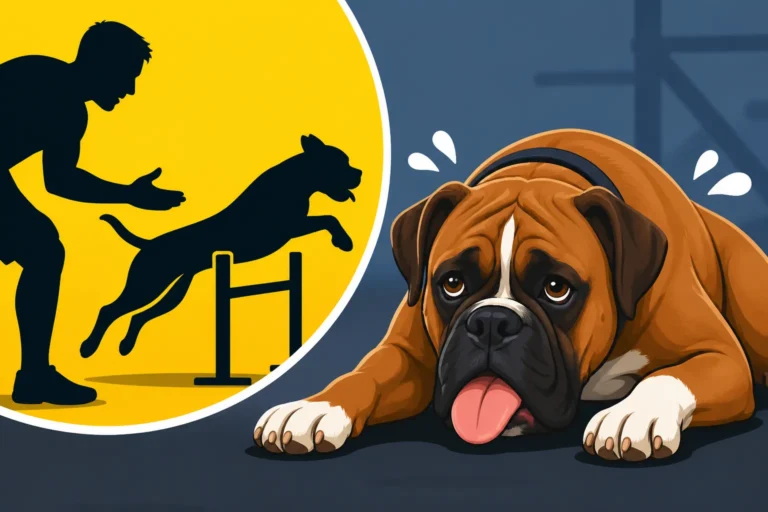
- Agility: The fast pace, jumps, and tunnels of agility courses can provide a fantastic outlet for a Boxer's energy and athleticism, requiring intense focus and partnership with you.
By providing these outlets, you're not only satisfying their instincts but also building a stronger bond and improving their responsiveness to your commands. Remember, Training a Boxer That Gets Bored Fast is key, so keep these activities varied and engaging.
Tools and Resources to Help You Succeed
Sometimes, training alone isn't enough, or you need a little extra help to manage the situation safely. There are several tools and resources that can be invaluable for Boxer owners dealing with a strong prey drive.
Harnesses and Leashes for Better Control
The right equipment can make a world of difference in your ability to manage a lunging Boxer.
- Front-Clip Harnesses: These harnesses have the leash attachment point on the dog's chest. When your Boxer pulls, the leash redirects them sideways, turning them back towards you instead of allowing them to forge ahead. This reduces their pulling power and gives you more control. Popular brands offer various styles you can find on Amazon. For specific recommendations, check out Harnesses That Hold a Pulling Boxer.
- Head Halters (Haltis or Gentle Leaders): These devices fit over your Boxer's snout and behind their ears, similar to a horse halter. They allow you to steer your Boxer's head, and where the head goes, the body follows. They offer excellent control but require careful introduction and positive reinforcement to ensure your Boxer accepts them comfortably. Never yank on a head halter, as it can cause injury.
- Standard Leashes (6-foot nylon or leather): While the harness is key, a good quality, comfortable leash is essential. Avoid retractable leashes, as they teach dogs to pull and offer no real control in an emergency. A fixed 6-foot leash gives you enough slack for comfortable walking but keeps your Boxer close.
Important Note: Always ensure any harness or head halter is properly fitted. A poorly fitting harness can chafe, cause discomfort, or allow your Boxer to slip out.
Training Aids and Toys
Beyond leashes and harnesses, certain training aids and toys can support your efforts.
- High-Value Treats: For Boxers, who can be very food motivated, having a supply of truly irresistible treats is crucial for recall and "Leave It" training, especially outdoors. Think cooked chicken, cheese, or specialized training treats they rarely get.
- Interactive Puzzle Toys: These toys dispense treats as your Boxer manipulates them, providing mental stimulation and a distraction, which can be useful when you need them to settle down or focus on something other than the window.
- Durable Chew Toys: Boxers are powerful chewers. Having appropriate, tough chew toys available can help satisfy their oral fixation and keep them occupied, especially if they're experiencing frustration from being unable to chase.
- Clicker: A clicker is an excellent tool for precision training. It marks the exact moment your Boxer performs the desired behavior, making it easier for them to understand what they're being rewarded for.
Professional Help: When to Seek It
If you've tried everything and are still struggling, or if your Boxer's prey drive is leading to aggression or reactivity, it's time to call in a professional.
- Certified Professional Dog Trainer (CPDT-KA/KPA CTP): A qualified trainer can assess your Boxer's specific behaviors, help you fine-tune your techniques, and provide personalized guidance. They can also offer safe environments for practicing with distractions. Some services like BAXTER & Bella offer online coaching and programs that can be incredibly helpful for owners needing structured guidance from home.
- Veterinary Behaviorist (DACVB): If the prey drive is extreme, coupled with anxiety, aggression, or other complex behavioral issues, a veterinary behaviorist has a deeper medical understanding and can help rule out underlying health conditions, and in some cases, prescribe medication to help manage anxiety or impulse control issues in conjunction with behavior modification.
- Group Classes vs. Private Lessons: For some issues, a group class can be beneficial for socialization and distraction training. However, for intense prey drive or reactive Boxers, private lessons are often more effective as they allow for tailored attention without overwhelming your dog. Group Class Against Private Work for a Boxer offers a deeper comparison.
Managing a Boxer's squirrel obsession is a journey, not a destination. It requires patience, consistency, and a deep understanding of your Boxer's instincts. But with the right strategies and tools, you can transform those stressful walks into enjoyable outings, building a stronger, safer relationship with your beloved Boxer.
Disclaimer
This article is for general informational purposes only and does not constitute professional advice. Laws, prices and regulations vary by location and change over time. Consult a qualified professional for guidance on your specific situation.