The Boxer Wiggle and What It Signals
If you've ever been greeted by a Boxer, you know "the wiggle" isn't just a myth—it's a full-body, hip-swiveling, tail-thumping phenomenon that can send coffee cups flying and small children giggling. But beyond the sheer delight (or occasional chaos) it causes, this unique Boxer dance actually signals a lot about what's going on in your dog's mind. This guide will help you decode the different types of wiggles and understand what your beloved Boxer is trying to tell you.
What Exactly is the Boxer Wiggle?
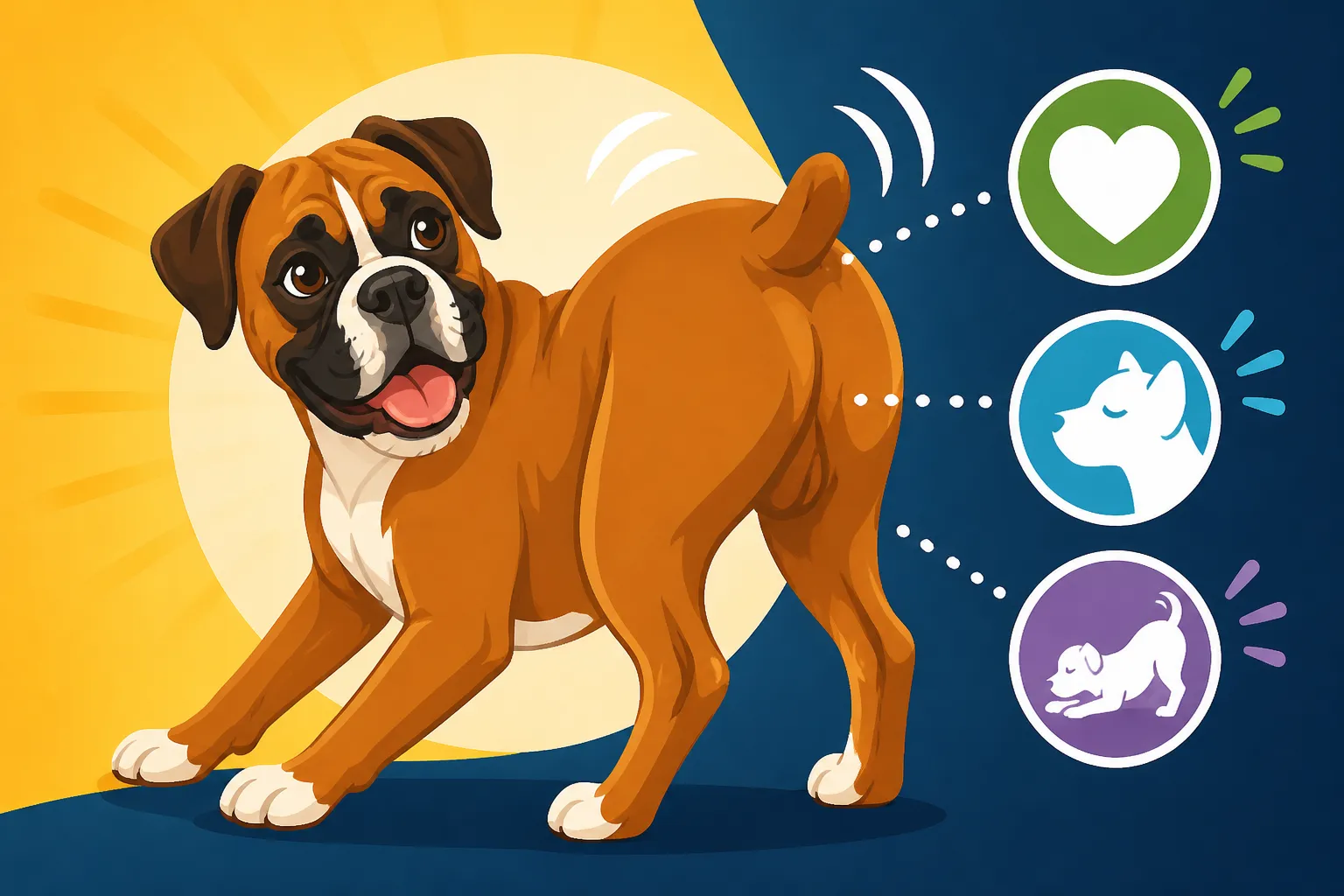
For new Boxer owners, the first time you witness the full-body wiggle can be a bit bewildering. It’s not just a wagging tail, though that’s certainly part of it. The Boxer wiggle is characterized by a rapid, often intense, side-to-side motion of the dog’s entire hindquarters, extending up through their back and sometimes even into their shoulders. Their powerful, muscular bodies seem to pivot and sway, usually accompanied by an enthusiastic tail wag, a happy pant, and sometimes even a little dance on their front paws. It’s an expression of intense emotion, typically positive, and it’s one of the most endearing (and hilarious) traits of the breed.
This distinctive movement is a physical manifestation of a Boxer's exuberance and their deep desire for connection. They are truly social animals, and their greetings are rarely subtle. Unlike some breeds that might offer a polite sniff or a gentle tail wag, a Boxer often commits its whole being to expressing its happiness and affection. It's a hallmark of their friendly, outgoing nature, and a clear signal that they are thrilled to see you, or whoever else is receiving the greeting.
The Physics of the Happy Dance
Think about the sheer joy radiating from your Boxer when you walk through the door after being gone for even just five minutes. Their entire body tenses with excitement, then releases into this undulating, powerful movement. Their strong hindquarters, built for speed and agility, become the engine of this joyous display. The short, docked tail (a traditional aspect of the breed, though not universally practiced now) doesn't have the same broad sweep as a long tail, so the dog compensates by moving its entire lower body to express the same level of enthusiasm. It’s a full-body celebration.
Because a Boxer is such a strong, muscular dog, this "happy dance" can be quite forceful. A seventy-pound Boxer throwing its weight around in a full wiggle can easily bump into furniture, knock over lightweight items, or even send a person stumbling if they’re not prepared. This isn't aggression; it's just pure, unadulterated Boxer joy, often accompanied by happy vocalizations like whines or excited barks. Understanding the sheer physical power behind this movement is key to appreciating it, and also to managing it in certain situations. The Boxer the Breed Standard Describes mentions the powerful build that contributes to these movements.
Why Boxers Are So Wiggle-Prone
The Boxer's unique personality is a huge factor in their propensity for the wiggle. They are known as the "clowns of the canine world" for a reason. Their playful, affectionate, and sometimes goofy nature makes them incredibly expressive. They don't hold back their feelings, and the wiggle is a perfect example of their open-hearted exuberance. This isn't a learned behavior in the sense of a trick; it's an innate, deeply ingrained way for them to communicate their emotional state, particularly when they feel safe, loved, and excited.
Their history as working dogs, bred for strength, courage, and loyalty, also plays a role. They form incredibly strong bonds with their families and are keenly aware of their human companions. This strong bond means that departures and arrivals are significant events, warranting a grand display of emotion. The wiggle is their way of saying, "You're back! I missed you! Let's play!" It's a beautiful, if sometimes overwhelming, testament to the deep connection they feel with their people. For a deeper dive into their character, you might explore Boxer Temperament in the Standard and in Life.
The Joyful Wiggle: Happy Greetings and Excitement
The most common and recognizable form of the Boxer wiggle is the one born of pure, unadulterated joy. This is the wiggle you'll see when you come home from work, when a favorite family member arrives, or when they realize it's time for their favorite activity. It's often impossible not to smile when witnessing it, even if you brace yourself for a potential hip-check.
This particular wiggle is characterized by its intensity and the overall "happy" body language that accompanies it. The dog's ears might be relaxed or even slightly flattened back, their mouth usually open in a soft, panting smile, and their eyes bright and engaged. They might dart around, push their head into your hand, or even try to "box" you gently with their front paws – another classic Boxer trait. It's an entire package of affectionate enthusiasm.
Welcoming You Home: The Ultimate Celebration
There's nothing quite like coming home to a Boxer. Even if you've only been gone for an hour, they'll greet you as if you've been away for years, lost at sea, and have just miraculously returned. The joyful wiggle will be in full force, a rapid-fire movement that shows they are absolutely thrilled your absence is over. They might pick up a favorite toy and bring it to you, then drop it to wiggle more effectively. They might lean into your legs, making it almost impossible to walk without tripping.
This homecoming wiggle is a profound demonstration of their bond with you. It signifies their happiness, their relief at your return, and their anticipation of interaction. It's a reminder of how deeply they love and miss you, and it's a powerful antidote to any stressful day. However, it’s also the wiggle that can lead to unintentional bumps and jumps, which is why things like Stopping a Seventy-Pound Boxer From Jumping are often topics of discussion among Boxer owners.
When Friends or Family Arrive
It’s not just immediate family who get the full wiggle treatment. Boxers are generally friendly dogs, and if they’re well-socialized, they'll extend their enthusiastic greetings to trusted friends and extended family members who visit your home. The wiggle might be slightly less intense than the one reserved for their primary caregivers, but it will still be unmistakably joyful. They might circle the visitor, wagging and wiggling, inviting attention and interaction.
This is where the "clown" aspect of their personality really shines. They want to be part of the action, to make people laugh, and to receive affection. The wiggle is their way of breaking the ice and saying, "Hello, I'm a Boxer, and I'm very happy you're here!" It's a charming trait, but it does mean teaching good Greeting Manners for an Excited Boxer is important, especially when guests might not be accustomed to such an enthusiastic welcome.
Anticipation of Play or Food
Beyond greetings, the joyful wiggle also makes an appearance when a Boxer anticipates something wonderful. Is it walkie-time? Ball-throwing time? Dinner? As soon as they pick up on the cues – you grabbing the leash, opening the treat jar, or just uttering a keyword like "walk?" – the wiggle can start. This anticipatory wiggle might be less about welcoming a person and more about expressing excitement for an activity.
You might see them do a little hop-and-wiggle around their food bowl as you prepare their meal, or bounce around the back door, wiggling their whole body in anticipation of heading out. This is a very clear signal of their eagerness and their high energy levels. It shows they are engaged with their environment and ready for action. You might even use this enthusiasm in training; positive reinforcement for good behavior could involve a quick, excited wiggle from you as a reward, mirroring their own joy.
Subtler Wiggles: Communication Beyond Pure Joy
While the full-blown happy wiggle is iconic, Boxers also use subtle variations of the wiggle to communicate a range of other feelings and intentions. These aren't always about pure, unbridled joy, but rather about appeasement, invitation, or even a touch of nervousness. Learning to distinguish these nuances can help you better understand your Boxer's emotional state and respond appropriately.
It's similar to how human body language works; a smile can mean genuine happiness, but it can also be a polite greeting, a nervous reaction, or an attempt to diffuse tension. For Boxers, the context of the wiggle, along with other body language cues, is vital for accurate interpretation. Are their ears back? Is their tail low or high? Is their gaze direct or averted? These details provide the full picture.
The "I'm Friendly!" Invitation
Sometimes a Boxer will offer a more subdued wiggle as an invitation to play or as a clear signal of friendliness to another dog or person they're meeting for the first time. This might be a slower, gentler sway of the hips, often accompanied by a lowered head and an open, relaxed mouth. It's their way of saying, "I come in peace, and I'd love to interact!"
Imagine your Boxer meeting a new dog at the park. Instead of a full-speed charge, they might approach with a loose, slightly wiggling body, perhaps even bowing their head slightly. This is an appeasement gesture, showing they mean no harm and are open to a friendly encounter. It’s part of their Boxer Play Style With Other Dogs and generally helps to initiate positive interactions. Owners often miss these subtle cues, thinking all wiggles are the same, but they're not!
Submissive or Appeasement Wiggles
In situations where a Boxer might feel slightly unsure or is trying to show deference, their wiggle can take on a more submissive quality. This might manifest as a lower body posture, with the tail wagging low or tucked between the legs, while the hindquarters still do the characteristic sway. Their ears might be fully flattened against their head, and they might avert their gaze periodically. This isn't usually fear, but rather a clear signal of respect or an attempt to de-escalate any perceived tension.
For instance, if you're gently reprimanding your Boxer for getting into the trash, they might offer a submissive wiggle, perhaps combined with a "guilty" look. They're not necessarily expressing joy; rather, they're acknowledging your authority and trying to diffuse the situation with a conciliatory gesture. It's their way of saying, "Okay, okay, I get it. I'm sorry, and I respect you." Recognizing this can help you understand that they're not being defiant, but rather trying to communicate their understanding and deference.
"Check-in" Wiggles
Boxers, with their deep attachment to their people, often use a quick, subtle wiggle as a "check-in" or a way to seek reassurance. You might be working at your desk, and your Boxer will come over, lean against your leg, offer a brief, gentle wiggle, perhaps a soft sigh, and then settle down. This isn't an explosion of joy, but a quiet affirmation of their presence and a bid for a moment of connection.
It's a delicate dance of affection. They want to know you're still there, still loving them, and still part of their world. These subtle wiggles are often accompanied by a soft gaze or a gentle nudge with their head. It’s a quiet confirmation of the bond you share, a reminder that even when things are calm, their love for you is still very much active. Pay attention to these moments; they are just as important as the grand, joyful celebrations.
When the Wiggle is Not Just a Wiggle
While the Boxer wiggle is almost universally associated with happiness and friendliness, it's crucial for owners to understand that not all enthusiastic body movements are benign. There are times when what appears to be a wiggle might be masking underlying issues, or when the sheer force of the wiggle itself becomes a problem that needs to be addressed through training and management. Distinguishing between a genuinely happy wiggle and one that signals something else is part of being a responsible Boxer owner.
This is where keen observation skills come into play. Look beyond the movement itself and consider the entire context: the environment, the dog's other body language cues, and the situation leading up to the wiggle. A wiggle without other signs of happiness could be misleading.
Over-Excitement and Loss of Control
Sometimes, a Boxer's wiggle, particularly when combined with jumping or mouthiness, can escalate from joyous to genuinely overwhelming. This isn't aggression, but rather a loss of self-control due to extreme excitement. A Boxer that's over-stimulated can inadvertently knock over children, elderly guests, or even inflict minor scratches or bruises with their enthusiastic paws and body slams. This kind of interaction can be frightening for others and can quickly become a liability.
It's important to differentiate between a happy dog and a dog whose excitement levels have tipped over into frenzied, uncontrolled behavior. This is especially common in young Boxers, who often act like puppies until they're The Age a Boxer Is Mentally Grown Up, which can be well past their physical maturity. If your Boxer’s wiggle becomes a hurricane of uncontrolled energy, it’s a sign that training is needed to help them learn calmer greeting behaviors.
Wiggle-Related Injuries: For Dogs and Humans
The sheer power behind a Boxer's wiggle can sometimes lead to unintended consequences. For humans, this can mean being knocked off balance, bruised shins, or even falls, especially for children or the elderly. For the dog itself, constant frantic wiggling or jumping can sometimes put strain on joints, particularly if they have underlying conditions like Boxer Hip Dysplasia and Spondylosis.
A dog that's constantly launching itself into full-body wiggles and jumps might also be prone to accidental injuries, like slipping on slick floors or bumping into sharp objects. While it's wonderful to see your Boxer so happy, ensuring their physical safety and the safety of those around them is paramount. This makes managing the intensity of the wiggle, rather than trying to eliminate it entirely, a sensible goal for many owners.
Potential Health Concerns
While rare, a sudden change in a Boxer's balance or coordination, which might look like a wiggle but is uncontrolled, could be a symptom of a health issue. If your Boxer starts wiggling in situations where they normally wouldn't, or if their movements seem clumsy, involuntary, or accompanied by other concerning signs (like disorientation, lethargy, or pain), it's crucial to consult your veterinarian. This is especially true for older Boxers, where changes in gait or coordination could indicate neurological issues or severe arthritis.
For example, a Boxer that suddenly develops a pronounced sway or weakness in its hindquarters could be experiencing early signs of something like Degenerative Myelopathy in an Older Boxer. While this isn't a "wiggle" in the happy sense, it could be misinterpreted as such by an owner unfamiliar with the subtle differences. Always err on the side of caution if you notice any unusual or unexplained changes in your Boxer's movement patterns.
Managing the Wiggle: Training and Social Context
The Boxer wiggle, while endearing, can sometimes be too much of a good thing, especially when dealing with children, elderly guests, or simply trying to walk across your living room without tripping. The goal isn't to stop the wiggle entirely—that would be like trying to stop a Boxer from being a Boxer! Instead, it's about channeling that exuberant energy and teaching polite greeting behaviors so your dog can express its joy safely and appropriately. This involves consistent training, understanding their triggers, and providing alternatives.
It’s about striking a balance: allowing them to be themselves while also ensuring they are well-mannered companions. Remember, Boxers are intelligent and eager to please, even if their excitement sometimes gets the better of them.
Training for Calm Greetings
One of the most effective ways to manage an over-enthusiastic wiggle is to teach your Boxer how to greet people calmly. This doesn't mean no wiggle at all, but rather a more controlled, less physically impactful one. The key is to reward calm behavior and ignore (or temporarily remove yourself from) over-the-top displays. Consistency is vital, and everyone in the household needs to be on the same page.
Here’s a simple strategy:
- Practice "Four on the Floor": When you arrive home or a guest enters, wait for your Boxer to have all four paws on the ground before giving any attention, praise, or treat. If they jump or get overly excited, turn your back or step away. Only engage when they settle.
- Short, Calm Greetings: When they are calm, offer a brief, calm greeting, a gentle pet, and then disengage. This prevents them from escalating their excitement. You can always have a longer play session once they've had a chance to calm down.
- Use a Barrier: For particularly excited Boxers, a baby gate or crate can be useful. Allow them to greet from behind the barrier until they can maintain a calm demeanor. Once calm, slowly allow them to approach, reinforcing calm behavior. Training a Boxer That Gets Bored Fast will emphasize the need for engaging methods.
- Redirection: Keep a favorite toy near the door. When you arrive, immediately offer the toy as a redirection. They can wiggle with the toy in their mouth, which often makes jumping harder and focuses their energy. You can find durable toys for powerful chewers on sites like Amazon.
Socialization and Exposure
Early and continued socialization is crucial for helping your Boxer understand appropriate behavior in various social contexts. A well-socialized Boxer will be more confident and less likely to resort to extreme excitement or submissive wiggles in unfamiliar situations. Exposing them to different people, places, and other dogs from a young age helps them develop social graces.
A Boxer puppy needs to meet a wide variety of friendly people and calm dogs during their critical socialization period, typically before 16 weeks of age. This helps them learn how to interact politely, gauge social cues, and manage their excitement. Puppy classes, like those offered by online platforms like BAXTER & Bella, can be invaluable for structured socialization and learning foundational manners. This kind of early intervention can significantly reduce the intensity of an adult Boxer's wiggle and improve their overall demeanor.
Exercise as an Energy Outlet
A tired Boxer is often a well-behaved Boxer. Much of the intense wiggling and over-excitement can stem from pent-up energy. Boxers are a high-energy breed and require a significant amount of daily exercise to stay physically and mentally healthy. Without adequate outlets, that energy will manifest in less desirable ways, including excessive wiggling, jumping, and destructive behaviors.
Ensure your Boxer gets at least 60-90 minutes of vigorous exercise every day, split into multiple sessions. This could include fast-paced walks, games of fetch, or structured playtime in a securely fenced yard. Remember, Boxers are also sensitive to heat due to their brachycephalic (flat-faced) nature, so Exercising a Boxer Without Overheating It is a critical consideration. If you're struggling to meet their exercise needs, consider doggy daycare or hiring a professional dog walker.
Tools and Resources for Management
There are many resources available to help you manage your Boxer's enthusiastic wiggle.
| Wiggle Challenge | Potential Solution (Training Focus) | Relevant Tool/Resource Example |
|---|---|---|
| Over-excited greetings, jumping | Teaching "four on the floor," polite approaches | Leash training, positive reinforcement, baby gates |
| Intense pulling on leash (leading to wiggles) | Loose-leash walking, heel command | Front-clip harnesses (e.g., from Amazon), long lines |
| Excessive energy, destructive wiggles | Sufficient mental and physical exercise, enrichment | Puzzle toys, interactive feeders, structured play |
| Lack of impulse control | "Stay," "wait," focus exercises | Online training courses (e.g., BAXTER & Bella) |
A well-fitting, comfortable harness can help with leash control during walks, allowing you to manage their powerful movements without putting strain on their neck. Durable chew toys can redirect their mouthy excitement during greetings. And don't underestimate the power of consistent positive reinforcement. Every time your Boxer offers a calm greeting, reward them with praise, a small treat, or a gentle scratch. This reinforces the behavior you want to see, gradually making calm wiggles more common than chaotic ones.
Disclaimer
This article is for general informational purposes only and does not constitute professional advice. Laws, prices and regulations vary by location and change over time. Consult a qualified professional for guidance on your specific situation.