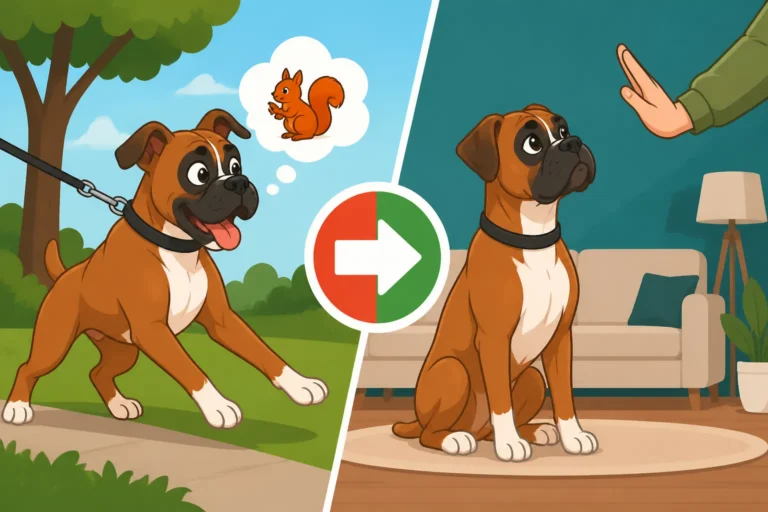
A Boxer That Jumps at the Kitchen Counter
It's incredibly frustrating when your otherwise charming and well-behaved Boxer decides that the kitchen counter is a prime target for investigation, sniffing, and, let's be honest, sometimes a quick grab of whatever deliciousness has been left within reach. This guide is all about understanding why your Boxer might be perfecting their counter-surfing skills and, more importantly, how to put a stop to this cheeky, and potentially dangerous, habit.
Why Your Boxer Sees the Counter as a Playground
Boxers are intelligent, curious, and often food-motivated dogs with a zest for life that can sometimes translate into boundless enthusiasm for exploring forbidden territories. When your Boxer jumps at the kitchen counter, it’s rarely out of malice; it’s usually driven by instinct, opportunity, and a bit of learned behavior. Understanding the root causes is the first step toward finding effective solutions.
The Irresistible Lure of Opportunity and Scent
Let's face it, our kitchens are usually the most exciting rooms in the house from a dog's perspective. They are full of amazing smells, tantalizing sounds, and often, easily accessible rewards. A Boxer's nose is a powerful tool, and even the faintest scent of leftover toast crumbs, a forgotten sandwich, or the tantalizing aroma of dinner cooling on the counter can be an irresistible beacon. They're not thinking about manners; they're thinking about potential treasures. They explore with their mouths and noses, and if something smells good, their natural instinct is to investigate further, often by standing up on their powerful hind legs to get a better vantage point. This isn't just a puppy phase, either; even a two-year-old Boxer can still retain some of that youthful exuberance and curiosity. The Age a Boxer Is Mentally Grown Up
Learned Behavior and Accidental Reinforcement
Perhaps the most common reason Boxers become serial counter-surfers is that, at some point, they’ve been accidentally rewarded for it. Maybe they successfully snatched a crumb, or perhaps they managed to pull down a paper towel roll that they then joyfully shredded. Even if you immediately scold them, the act of getting something from the counter can be enough reinforcement. Boxers are smart, and they quickly learn cause and effect. If jumping up once led to a tasty treat, even a tiny one, they’ll try it again. This is why consistency is absolutely crucial. Every successful "raid," no matter how small, reinforces the behavior and makes it harder to break. It’s a vicious cycle where a quick grab by your Boxer translates to a huge payoff in their mind.
Under-Exercised Energy and Boredom
A bored Boxer is a creative Boxer, and creativity often leads to mischief. Boxers are high-energy dogs that need a significant amount of physical and mental stimulation every single day. If they aren't getting enough outlets for their energy, whether it's long walks, vigorous play sessions, or engaging training, they will find ways to entertain themselves. And sometimes, that entertainment comes in the form of scaling the kitchen counter in search of excitement. A Boxer left alone all day with nothing to do might view the counter as a stimulating challenge. This kind of destructive or troublesome behavior is often a symptom of underlying boredom or insufficient exercise. Why a Boxer Wrecks Things When Under-Exercised
Strategies to Stop Counter Surfing
Tackling counter-surfing requires a multi-pronged approach: prevention, management, and consistent training. It's about setting your Boxer up for success and teaching them that counters are simply not for them.
Environmental Management: Make the Counter Unrewarding
This is the golden rule: never leave anything tempting on the counter. This means food, dirty dishes, napkins, or anything else your Boxer might find appealing. If there's nothing there to steal, they can't be rewarded for jumping up. It sounds simple, but it requires vigilance from every member of the household.
- "Naked" Counters: Aim for a "naked" counter policy whenever you're not actively using the space. Store food in cupboards, put dirty dishes directly into the dishwasher, and keep trash cans securely lidded. This removes the primary incentive for jumping.
- The Power of No Reward: If your Boxer never finds anything interesting on the counter, the behavior will naturally diminish over time because it no longer serves a purpose for them. This might mean investing in airtight containers for your pantry and a truly chew-proof trash can.
- Physical Barriers: For persistent counter-surfers or when you know you can't be 100% vigilant, consider physical barriers. A baby gate can restrict access to the kitchen entirely, especially when you're not there to supervise. Make sure it's tall enough that your athletic Boxer can't jump over it! Taller pressure-mounted gates, often available on Amazon, can be a lifesaver for keeping a determined Boxer out of trouble spots.
Let's look at some common counter-surfing scenarios and how to manage them:
| Scenario | Boxer's Motivation | Management Strategy | Training Focus |
|---|---|---|---|
| Food Left Out | High-value reward, easy access | Naked counters, secure food storage | "Leave It" command, "Off" command |
| Dirty Dishes/Crumbs | Scavenging instinct, interesting smells | Immediate dishwashing, wipe counters after use | Reinforce "Place" command, redirect to appropriate chew |
| Boredom/Attention Seeking | Lack of stimulation, seeking interaction | Increase exercise/mental enrichment, puzzle toys | "Go to Mat/Place" for quiet time, "Settle" command |
| Guests Arrive, Food on Counter | Excitement, distraction, opportunity | Gate off kitchen, crate Boxer, supervise closely | "Stay," "Go to Place" during high-traffic times |
Training Solutions: Teaching "Off" and "Leave It"
While management is crucial, training is how you truly change your Boxer's understanding of boundaries. This will take patience and consistency, as Boxers can be famously playful and sometimes a bit stubborn. Why a Boxer Stops Working Mid-Session
The "Off" Command
This command teaches your Boxer to remove all four paws from the counter (or anything else they shouldn't be on).
- Set Up Success: Start with a clean counter, but have a high-value treat ready.
- Lure Down: When your Boxer jumps up, hold a treat below their nose, near the floor, and say "Off!" As soon as all four paws are on the ground, immediately reward them with the treat and lavish praise.
- No Push/Pull: Avoid pushing them down, as this can be misinterpreted as play or even a challenge. You want them to make the choice to get down.
- Practice: Practice this frequently, starting in calm environments and gradually adding distractions. As they get better, you can start placing a tiny, less-desirable item on the counter (e.g., a piece of dry kibble) to increase the challenge, but be ready to lure them off quickly.
The "Leave It" Command
"Leave It" is invaluable for teaching your Boxer to ignore tempting items.
- Foundation First: Start with a treat in your closed fist. Say "Leave It!" As your Boxer tries to sniff or paw at your hand, keep it closed. The instant they back away or look at you, open your hand and give them a different, even higher-value treat from your other hand. This teaches them that ignoring the first item leads to a better reward.
- Progress to the Floor: Once they understand this, place a low-value treat on the floor, cover it with your hand, and repeat the process.
- Counter Application: When they're reliable, you can apply this to the counter. Place a non-food item (like a toy they like but aren't obsessed with) on the counter. If they jump up, say "Leave It!" and reward them when they back off. Gradually move to more tempting, but still supervised, items.
Remember, Boxers respond wonderfully to positive reinforcement. Rewards a Boxer will work hard for are usually food-based, so make sure you have some really good stuff on hand for training.
Addressing Underlying Needs
Beyond direct training, think about your Boxer's overall well-being. A happy, well-adjusted Boxer is less likely to engage in mischievous behaviors.
- Plenty of Exercise: Ensure your Boxer gets at least 60-90 minutes of vigorous exercise daily, split into multiple sessions. This could be walks, runs (weather permitting, given their brachycephalic nature), or games of fetch in a securely fenced yard. Sixty to Ninety Minutes a Day With a Boxer
- Mental Stimulation: Boxers are smart and need to use their brains. Incorporate puzzle feeders, like those you can find on Amazon, which make them work for their meals. Engage them in short, fun training sessions throughout the day. Consider enrolling in an online training program, like BAXTER & Bella, which offers structured courses and ongoing support that can help keep your Boxer mentally engaged and reinforce good habits. Puzzle Feeders That Hold a Boxer's Attention
- Crate Training: A crate can be an invaluable tool for management, especially when you can't supervise your Boxer directly. It provides a safe, comfortable den for them and prevents them from practicing undesirable behaviors like counter-surfing when you're out or busy. Why a Boxer Needs a Crate More Than Most
Common Pitfalls and How to Avoid Them
Even with the best intentions, it's easy to fall into traps that can inadvertently encourage counter-surfing.
Inconsistency is Your Enemy
This is the biggest hurdle. If you're strict about "naked counters" and "off" commands for a week, but then have a busy day and leave a plate of cookies out, you've just undone a lot of hard work. Your Boxer learns that sometimes, it's worth trying because you might forget. Every single person in the household needs to be on the same page and enforce the rules consistently, every single time.
Punishing After the Fact
If you walk into the kitchen and find evidence of counter-surfing – crumbs on the floor, an empty wrapper – it's too late to scold your Boxer. They won't connect the punishment to the act, which happened minutes or hours ago. They'll just think you're mad for no reason, which can damage your bond and make them fearful. Focus on preventing the behavior in the first place and rewarding good choices.
Giving in "Just This Once"
"Oh, it's just a tiny piece of cheese that fell." Giving your Boxer food from the counter, even if it falls, can teach them that good things do come from that area. It blurs the lines you're trying to establish. Always make sure treats come from your hand or a designated bowl, never from the counter or the floor directly beneath it.
Not Providing Alternatives
If you're asking your Boxer not to counter-surf, you need to provide them with appropriate outlets for their chewing and exploratory instincts. Offer a variety of chew toys, especially durable ones that can stand up to a Boxer's powerful jaws. Chews That Redirect a Mouthy Boxer Engage them in appropriate play, and consider teaching them "fetch" or other games that satisfy their desire to interact and retrieve.
By being diligent with management, consistent with training, and mindful of your Boxer's needs for exercise and mental enrichment, you can successfully teach your loyal companion that the kitchen counter is a human-only zone. It takes effort, but the peace of mind (and cleaner counters!) are well worth it.
Disclaimer
This article is for general informational purposes only and does not constitute professional advice. Laws, prices and regulations vary by location and change over time. Consult a qualified professional for guidance on your specific situation.