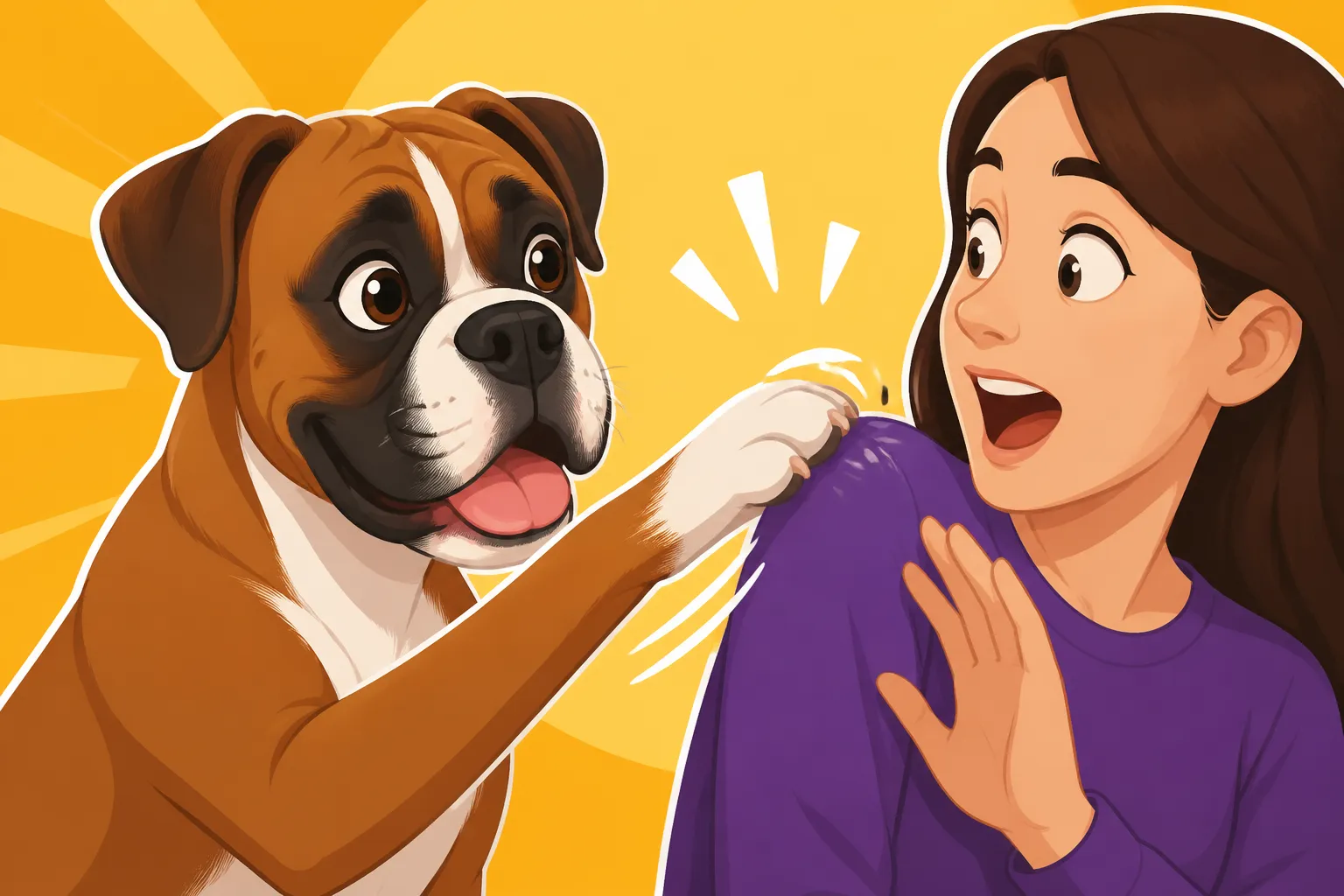
A Boxer That Paws at People
That exuberant Boxer greeting, full of wiggles and happy snorts, is one of the joys of sharing your life with this incredible breed. But for many Boxer owners, that enthusiastic welcome often comes with a less-than-charming habit: pawing. Whether it's a gentle tap for attention, a persistent nudge, or an outright "boxing" match with those strong front paws, a Boxer that paws at people can be frustrating, painful, and even a little intimidating for visitors or small children. This guide is here to help you understand the root causes of this common Boxer behavior and provide you with practical, compassionate strategies to redirect those paws toward more appropriate expressions of affection and attention-seeking.
Understanding Why Your Boxer Paws at People
It's easy to assume your Boxer is just being "bad" when they start pawing, but in reality, their motivations are often rooted in instinct, learned behavior, or simply trying to communicate in the best way they know how. Boxers are incredibly expressive dogs, and their front paws are a primary tool in their communication arsenal. Recognizing why they paw is the first crucial step toward addressing the behavior effectively.
The Instinctive "Boxing" Behavior
Boxers earned their name, in part, due to their tendency to stand on their hind legs and "box" with their front paws. This isn't just a cute quirk; it's an inherent part of their play style, stemming from their ancestors and how they interacted. In a playful context, two Boxers will often bat at each other with their front paws, like furry prize fighters.
When your Boxer paws at you or other people, especially during excited greetings or playtime, they might simply be transferring this natural, breed-specific play behavior to human interaction. They aren't trying to hurt you; they're trying to engage you in a game, often one that involves their version of wrestling or playful sparring. The problem arises because humans don't always appreciate being on the receiving end of a seventy-pound dog's "playful" jabs. This can be particularly startling for someone who isn't used to a Boxer's unique brand of enthusiasm.
Seeking Attention or Engagement
Think about it: when your Boxer paws at you, what's your immediate reaction? Often, it's to look at them, push their paw away, or even scold them. From your Boxer's perspective, any reaction is attention. Even negative attention is still attention, and for a dog that thrives on interaction and being part of the family, it's a powerful motivator. If pawing has worked in the past to get you to stop what you're doing and focus on them, even for a moment, they've learned that it's an effective strategy.
This can manifest in various ways: a gentle paw on your arm while you're working, a persistent tap on your leg during dinner, or even a full-body pawing session when you're relaxing on the couch. They're asking for something: a scratch, a walk, a play session, or simply to acknowledge their presence. It's their way of saying, "Hey, I'm here! What are we doing next?" Boxers are incredibly social, and being ignored can be a real challenge for them.
Over-Excitement and Lack of Impulse Control
Boxers are renowned for their boundless energy and their tendency to remain "puppy-like" for quite a long time, sometimes even up to three years of age. Why a Boxer Acts Like a Puppy Until Three discusses this phenomenon in depth. This prolonged puppyhood often comes with a side effect: a lack of impulse control. When they get overly excited, perhaps when you return home or when new guests arrive, their manners can go right out the window.
In these moments of high arousal, pawing can become an involuntary action. They're so overwhelmed with joy and anticipation that they literally can't contain themselves. Their brains are flooded with happy chemicals, and those paws just start flying. It's not malicious; it's just pure, unadulterated Boxer enthusiasm expressed without the filter of learned self-control. This is why you'll often see them combine pawing with jumping and frantic wiggling – it's all part of their excited display.
Communicating a Need or Discomfort
Sometimes, pawing isn't about play or attention-seeking in a general sense, but about communicating a very specific need. A paw on your knee near the door might mean, "I need to go potty!" A paw on your empty food bowl might be a reminder that dinner is due. If your Boxer is pawing at a specific part of their body, or at you while whimpering, it could even be a sign of discomfort or pain.
It's crucial to consider the context of the pawing. Is it accompanied by other body language? Are they looking at something specific? Have they just eaten or exercised? Learning to differentiate between "I want to play" pawing and "I need something" pawing is an important skill for any Boxer owner. Always rule out a physical issue or immediate need if the pawing seems unusual or persistent.
| Motivation for Pawing | Common Scenarios | Key Body Language Clues |
|---|---|---|
| Playful "Boxing" | Excited greetings, initiating play, roughhousing | Wiggle butt, playful growls, open mouth, soft eyes, body bowing |
| Attention-Seeking | When you're busy (phone, computer), relaxing, eating | Direct eye contact, nudging, following, dropping a toy |
| Over-Excitement | Coming home, guests arriving, new stimulation | Jumping, frantic tail wags, high-pitched vocalizations, zoomies |
| Communicating a Need | Near door, empty food bowl, focused on a specific item | Looking at object of desire, whining, sniffing, pawing self (pain) |
Effective Strategies to Teach Your Boxer "Paws Off"
Once you understand why your Boxer might be pawing, you can start to implement training strategies that teach them more appropriate ways to interact. The key is consistency, patience, and redirection. Remember, Boxers are smart but can be stubborn, and Why Repetition Loses a Boxer explains why keeping training engaging is vital.
The "No Paws On" Rule
This is the cornerstone of addressing pawing. The moment your Boxer's paw touches you or another person, the desired interaction stops immediately.
How to Implement:
- Withdraw Attention: The instant a paw lands on you, whether playfully or for attention, quietly stand up, turn your back, or simply move away. Do not make eye contact, speak, or push the paw off with your hands. Any of these actions can still be perceived as a form of attention.
- Be Consistent: Everyone in the household needs to adhere to this rule. If one person allows pawing and another doesn't, your Boxer will get mixed signals and the behavior will be much harder to extinguish.
- Practice in Low-Stimulus Environments: Start practicing this when your Boxer is relatively calm. As they improve, gradually introduce more exciting scenarios, like when guests arrive (but manage those initial greetings carefully).
This method works because it teaches your Boxer that pawing never gets them what they want – attention or continued interaction. They learn that the fastest way to make you disengage is to paw.
Redirecting to an Appropriate Behavior
Simply stopping the unwanted behavior isn't enough; you also need to teach your Boxer what to do instead. This is where positive reinforcement comes in.
Teaching "Four on the Floor":
- Reward Calmness: When your Boxer approaches you or someone else with all four paws on the floor, immediately reward them. This could be a gentle scratch behind the ears, a soft verbal "Good boy/girl," or a small, high-value treat.
- Use a Mat or Bed: If your Boxer paws when you're sitting, teach them to go to their mat or bed as an alternative. Teaching a Boxer a Place to Go When Guests Arrive provides excellent guidance on this. When they are calmly on their mat, approach them for interaction and praise.
- Offer a Toy: If pawing is part of their play initiation, teach them to bring you a toy instead. When they bring a toy and don't paw, engage in a brief, controlled play session. This redirects their instinct to "box" to a more acceptable outlet.
You'll find that Boxers respond very well to positive reinforcement. They want to please you, and if they learn that being calm and keeping their paws down earns them rewards, they'll be much more likely to choose that behavior. Consider high-value treats that really get your Boxer's attention, or use their favorite squeaky toy as a reward. You can find a huge variety of durable, engaging toys suitable for Boxers on Amazon, which can be great for redirecting that energy.
Teaching Specific Cues
Training specific commands can be immensely helpful in managing pawing behavior, especially in moments of excitement.
- "Off" or "Down": These are classic commands. "Off" means all four paws on the floor, while "Down" typically means lying down. Practice these consistently. When your Boxer starts to paw, give the command "Off" and reward them the instant their paws are on the ground.
- "Sit" and "Stay": These are powerful impulse control cues. If your Boxer paws for attention, ask for a "Sit." When they sit calmly, reward them. Gradually extend the duration of the "Stay" before releasing them for interaction. This teaches them that calm waiting, not frantic pawing, leads to good things.
- "Touch" or "Target": You can teach your Boxer to target your hand with their nose instead of their paw. Hold out your hand and say "Touch." When they touch it with their nose, reward them. This gives them an alternative, appropriate way to physically engage with you for attention.
Consistent practice of these cues in various situations will build your Boxer's understanding and impulse control. For more structured learning, especially if you're a new owner or dealing with a particularly persistent pawer, consider exploring online training programs, such as those offered by BAXTER & Bella, which provide structured lessons and support for common behavioral challenges like excessive pawing.
Managing Pawing in Everyday Situations
Knowing the "why" and having training strategies is one thing, but applying them in the chaotic reality of everyday life, especially with a high-energy Boxer, requires proactive management.
Greetings and Visitors
This is often where pawing peaks. Your Boxer is ecstatic to see you or new people, and all that pent-up energy and excitement comes out in a flurry of paws and jumps. Teaching a Boxer to Keep Four Feet Down is a great resource for overall greeting manners.
Strategies:
- Controlled Entry: When you come home, ignore your Boxer for the first few minutes until they calm down. This means no eye contact, no speaking, no touching. Only once they have all four paws on the floor and are relatively settled should you offer a calm greeting.
- Guest Management: Before guests arrive, have your Boxer on a leash or behind a baby gate. Explain to your guests that your Boxer is learning "paws off" manners and ask them to ignore any pawing. Once your Boxer is calm, allow them to greet guests one at a time, always with "four on the floor." If pawing starts, the greeting stops immediately (either you or the guest turns away, or your Boxer is calmly redirected).
- Provide a Distraction: Offer a long-lasting chew toy or a puzzle feeder when guests first arrive to redirect their excitement. This can help them settle down before they even attempt to greet anyone.
Playtime and Excitement
Boxers are playful dogs, and it's natural for them to use their paws during play. The goal isn't to stop them from ever using their paws, but to teach them when and how it's acceptable.
Strategies:
- Appropriate Play Outlets: Engage in games that encourage appropriate paw use, like fetching a ball or playing tug-of-war (with clear "drop it" commands). These games fulfill their desire to use their bodies and mouths in an acceptable way. Fetch and Flirt Poles for a Boxer offers more ideas for engaging play.
- Set Rules for Roughhousing: If you allow some rough play, establish clear boundaries. If paws get too rough or land on skin, immediately stop the game with a clear "All done!" or "Too rough!" and walk away. Resume play only after a brief cool-down period and when your Boxer is calm.
- Use Toys as a Buffer: Always try to have a toy between your hand and your Boxer's mouth and paws during play. This teaches them to engage with the toy, not your body parts.
Handling and Attention
Sometimes Boxers paw for attention when you're busy or simply want to snuggle on the couch.
Strategies:
- Proactive Attention: Instead of waiting for your Boxer to demand attention with their paws, proactively offer calm attention when they're settled. Go over and give them a quiet pat or a gentle scratch when they are resting peacefully. This reinforces that calm behavior earns positive interaction.
- Teach a "Lap" Cue: If you enjoy having your Boxer on your lap (and they fit!), teach them a specific cue like "Lap" so they only jump up when invited, rather than pawing their way on.
- Consistency is Key: Whether it's ignoring the pawing while you read or asking for a "Sit" before getting a belly rub, consistency will be your greatest ally. Every time you allow pawing, even just once, you're reinforcing the behavior.
Remember, Boxers are highly intelligent and crave interaction. By consistently teaching them alternative, polite ways to get your attention and engage in play, you'll strengthen your bond and enjoy a much more harmonious life together. This breed's enthusiasm is one of its most endearing qualities; the trick is just to channel it appropriately. The Age a Boxer Is Mentally Grown Up provides good perspective on their developmental timelines, and why patience is so important.
Tools and Training Aids to Support Your Efforts
While consistency and positive reinforcement are the main pillars of training, there are various tools and aids that can complement your efforts and make the process smoother for both you and your Boxer. These aren't substitutes for training, but rather helpful additions.
Management Tools for Excitement
Managing your Boxer's environment can significantly reduce opportunities for unwanted pawing, especially in situations where they are likely to get over-excited.
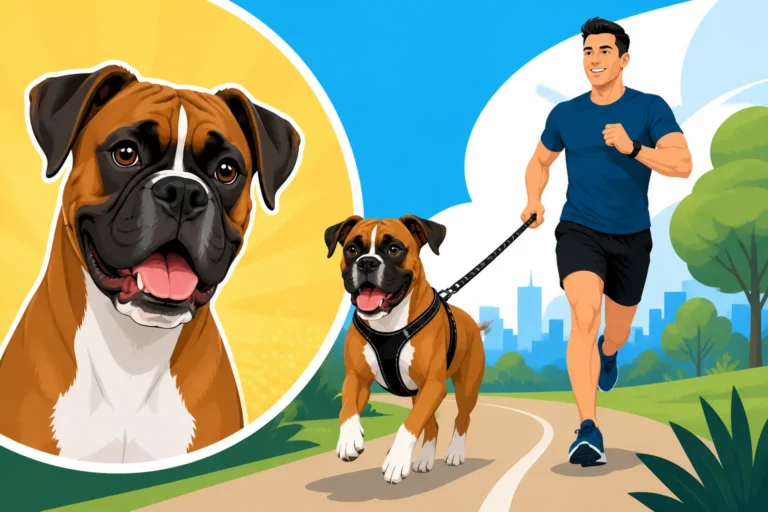
- Leashes and Harnesses: For greetings with guests, a leash and a front-clip harness can give you more control over your Boxer's body, making it easier to prevent them from jumping or pawing. A brand like Ruffwear or Easy Walk, often available on Amazon, offers harnesses that discourage pulling and can help keep all four paws on the ground. Harnesses That Hold a Pulling Boxer can offer more insights into suitable gear.
- Baby Gates or Crates: These are invaluable for managing a Boxer during high-stimulation times, like meal prep, busy household moments, or when new people first arrive. A brief period of confinement in their Crates Big Enough for a Grown Boxer or behind a sturdy baby gate allows them to observe calmly before being integrated into the activity, reducing the likelihood of excited pawing.
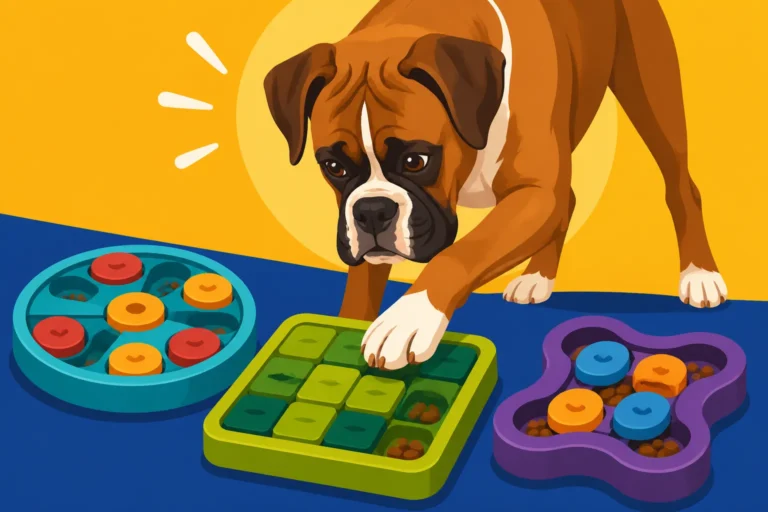
- Chew Toys and Puzzle Feeders: These provide a positive outlet for energy and attention. When your Boxer is engaged with a stimulating chew toy or working on a puzzle feeder, they are less likely to be looking for opportunities to paw. Always have a variety of sturdy, Boxer-proof toys on hand.
Training Aids for Impulse Control
Some tools are designed to assist directly with teaching impulse control and redirecting focus.
- Target Sticks: A target stick can be a fantastic tool for teaching "touch" with their nose. You can lure them to touch the end of the stick, then gradually move the stick away from your body, teaching them to engage without pawing.
- High-Value Treats: As mentioned, Boxers are often food-motivated. Small, soft, extremely palatable treats are essential for positive reinforcement during training. Think boiled chicken, cheese, or specialized training treats. Rewards a Boxer Will Work Hard For delves deeper into motivating your Boxer.
- Clicker Training: Many Boxers respond incredibly well to clicker training. The clicker marks the exact moment your Boxer performs the desired behavior (e.g., keeping paws down), followed immediately by a reward. This precision helps them understand exactly what they're being rewarded for.
Ongoing Support and Resources
Behavioral training is an ongoing journey, especially with a breed as exuberant as a Boxer. Don't hesitate to seek additional resources.
- Professional Dog Trainers: If you're struggling to make progress, a certified professional dog trainer can provide tailored advice and hands-on guidance. They can observe your Boxer's specific behavior and help you refine your techniques.
- Online Training Courses: For structured learning from home, platforms like BAXTER & Bella offer comprehensive programs that cover a wide range of obedience and behavior challenges, including impulse control and polite greetings, which can be directly applied to managing pawing. These courses often include video tutorials and support forums.
- Support Groups: Connecting with other Boxer owners, whether online or locally, can offer invaluable advice, shared experiences, and encouragement. You'll find that many Boxer owners face similar challenges and have creative solutions to share.
Remember, the goal is to teach your Boxer how to exist harmoniously in your home and with guests, not to stifle their wonderful, joyful personality. With patience, consistency, and the right tools, you can transform that enthusiastic pawing into more controlled, polite, and equally loving interactions.
Disclaimer
This article is for general informational purposes only and does not constitute professional advice. Laws, prices and regulations vary by location and change over time. Consult a qualified professional for guidance on your specific situation.