Whether a Cooling Vest Helps a Flat-Faced Boxer
If you're a Boxer owner, you know the dread that creeps in when the temperatures start to climb. Our beloved flat-faced companions, with their boundless energy and playful spirits, struggle profoundly in the heat, often to a dangerous degree. This guide is here to help you understand why Boxers overheat so easily and explore whether a cooling vest can genuinely be a useful tool in keeping your cherished dog safe and comfortable during warmer weather.
Understanding Why Flat-Faced Boxers Overheat So Easily
It’s a heartbreaking reality for those of us who share our lives with Boxers: they just don't handle the heat well. While every dog can overheat, our brachycephalic (flat-faced) friends have a distinct disadvantage that makes them particularly vulnerable. It's not just about them being a bit warm; it's a fundamental physiological challenge that puts them at serious risk.
The Anatomy of a Brachycephalic Breed
Our Boxers, with their distinctive short snouts and charming smooshed faces, are classified as a brachycephalic breed. This unique facial structure, while undeniably endearing, comes with a significant downside for their respiratory system. Imagine trying to breathe deeply through a very narrow straw while running a marathon – that's a bit like what a Boxer's airway can feel like.
Their elongated soft palate, narrowed nostrils (stenotic nares), and sometimes a collapsed larynx all contribute to what's known as Brachycephalic Airway Syndrome (BAS). This means their airways are simply not as open and efficient as those of a dog with a longer muzzle. Every breath they take requires more effort, and less air can pass through, especially when they’re trying to cool down. This isn't a defect; it's a consequence of the breed's specific physical traits, but it's one we, as owners, need to be acutely aware of and manage. Anesthesia Risk in a Flat-Faced Boxer is also something every Boxer owner should understand due to these anatomical quirks.
How Boxers Regulate Temperature (or Don't)
Dogs don't sweat like humans do; their primary method of cooling down is through panting. When a dog pants, air passes over the moist surfaces of their tongue, mouth, and respiratory tract, and as the moisture evaporates, it carries heat away from the body. It’s a highly effective system for most dogs.
However, for our Boxers, this system is compromised. Because of their restricted airways, they can't move air as efficiently over these surfaces. The act of panting itself becomes a struggle, and they can't evaporate heat as quickly or effectively as a long-nosed breed. The air they draw in sometimes doesn't even make it past the obstructions in their throat and nose before it's exhaled, making their panting less efficient at cooling and more of an energy drain. This can create a dangerous cycle: they get hot, they pant more to cool down, but the panting is inefficient and makes them work harder, which generates more heat. It's a lose-lose situation in rising temperatures. How Fast a Flat-Faced Boxer Overheats is a real concern for us all.
The Dangers of Overheating for Your Boxer
When a Boxer starts to overheat, it's not just a minor inconvenience; it can rapidly become a life-threatening emergency. Heatstroke is a severe condition that can lead to organ damage, neurological problems, and even death if not addressed quickly and effectively.
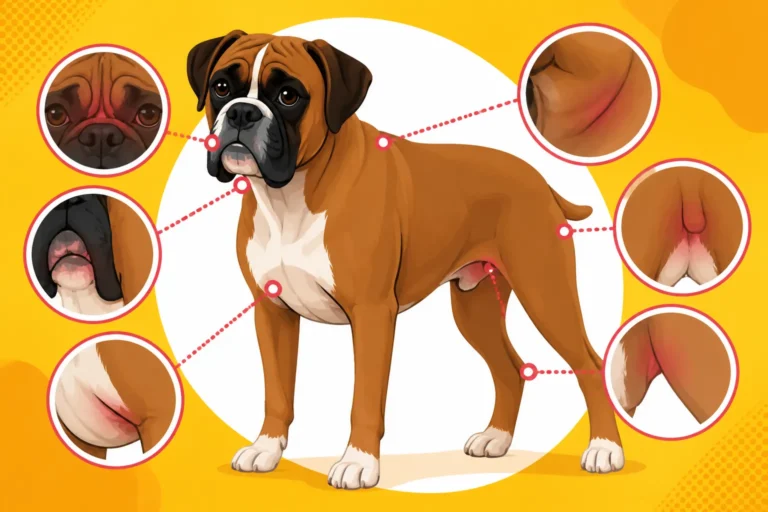
Initial signs of overheating might include excessive panting, drooling, restlessness, and a flushed appearance to their gums. As it progresses, you might see weakness, staggering, vomiting, diarrhea, and even collapse or seizures. Their internal body temperature can rise to dangerous levels very quickly. Because of their limited ability to cool themselves, a Boxer can go from being a little warm to critically overheated in a shockingly short amount of time, sometimes in conditions that wouldn't even bother a Golden Retriever. It's why recognizing the signs early and having a plan for Getting a Boxer's Temperature Down in Minutes is so vital.
What is a Cooling Vest and How Does It Work?
Given their challenges with heat, it’s only natural for Boxer owners to seek out any tool that can offer relief. Cooling vests have emerged as a popular option, promising to help our dogs stay comfortable. But what exactly are they, and how do they purport to work their magic?
Different Types of Cooling Vest Technologies
Not all cooling vests are created equal, and understanding the different technologies can help you choose the best fit for your Boxer's needs. Generally, they fall into a few main categories:
-
Evaporative Cooling Vests: These are perhaps the most common type. They work on the same principle as your dog's natural panting — evaporation. You soak the vest in cold water, wring out the excess, and then place it on your dog. As the water slowly evaporates from the vest's fabric, it draws heat away from your dog's body, providing a cooling effect. The efficacy depends on humidity levels; they work best in drier climates where evaporation occurs more readily.
-
Phase-Change Material (PCM) Vests: These vests contain special packs filled with a material that changes from a solid to a liquid (or vice versa) at a specific temperature, usually around 58-65°F (14-18°C). These packs are chilled in a refrigerator or freezer and then inserted into pockets in the vest. As the PCM absorbs heat from your dog's body, it slowly melts, maintaining a consistent, cool temperature without getting excessively cold. They are not dependent on evaporation, so they work well in humid environments and offer longer-lasting cooling.
-
Reflective or Insulated Vests: Less common purely as "cooling vests," but some designs incorporate reflective outer layers to deflect sunlight or offer a layer of insulation against external heat. These are often combined with evaporative or PCM technology for a more comprehensive approach.
Here’s a quick comparison:
| Feature | Evaporative Cooling Vest | Phase-Change Material (PCM) Vest |
|---|---|---|
| Cooling Principle | Evaporation of water from fabric | Material changes phase (solid to liquid) absorbing heat |
| Primary Mechanism | Wicking heat away as water evaporates | Direct conduction of coolness, consistent temperature |
| Activation | Soak in water, wring out | Chill PCM packs in fridge/freezer |
| Humidity Impact | More effective in low humidity | Effective in all humidity levels |
| Duration | Depends on heat/humidity, typically a few hours | Longer duration, often 4-6 hours or more |
| Reactivation | Resoak in water | Re-chill PCM packs |
| Bulk | Lighter, more flexible | Can be bulkier due to PCM packs |
How Cooling Vests Aim to Help
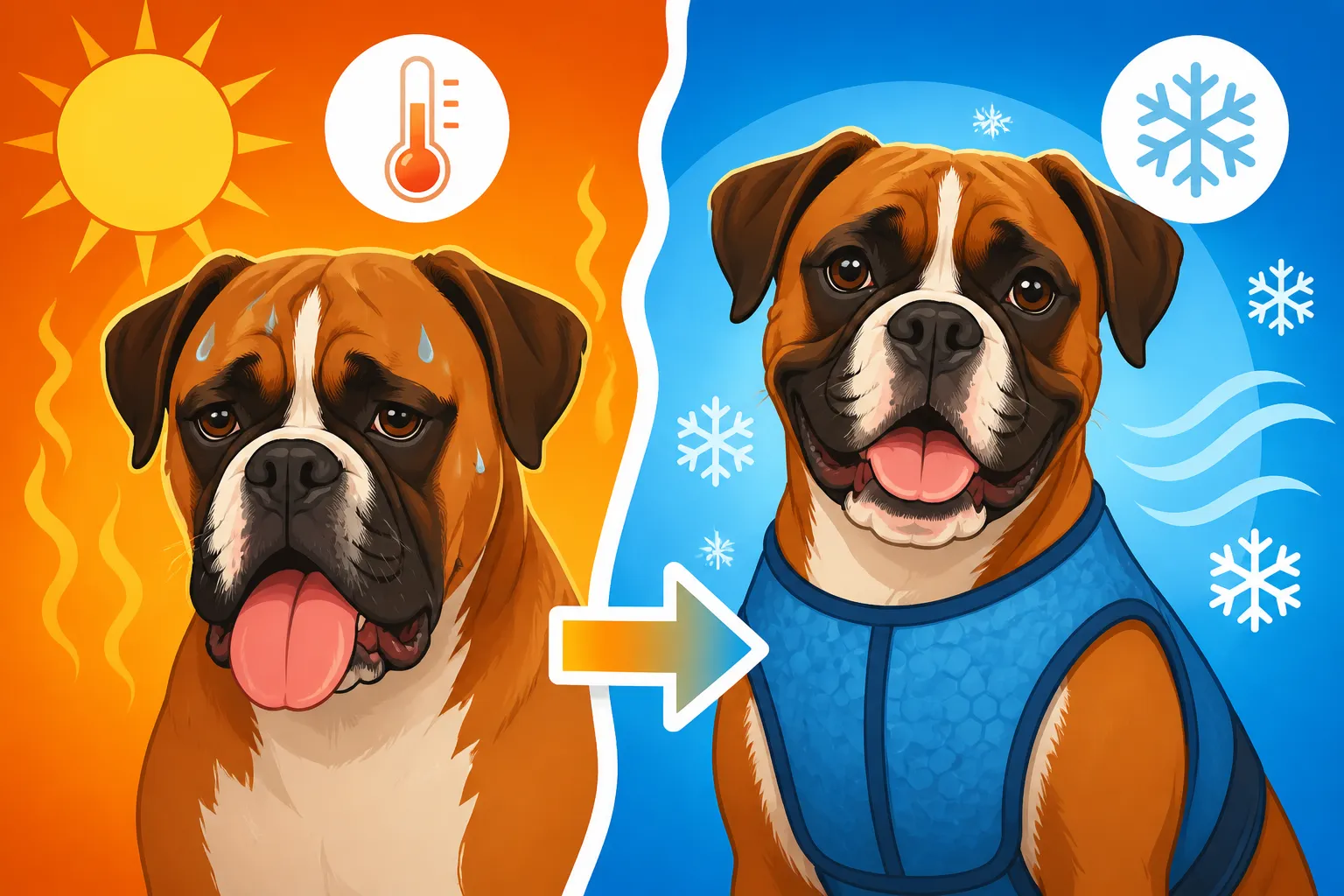
The core idea behind a cooling vest is to reduce your dog's body temperature by transferring heat away from their torso. For Boxers, whose internal cooling mechanisms are compromised, an external aid like a vest can potentially offer a much-needed boost. By keeping the core body temperature lower, these vests aim to:
- Prevent Overheating: The primary goal is to help your Boxer stay within a safe temperature range, reducing the risk of heatstroke.
- Enhance Comfort: A cooler dog is a more comfortable dog, allowing them to enjoy short outings or simply relax indoors more easily.
- Supplement Natural Cooling: The vest works in conjunction with your dog's panting, giving them an extra edge in managing their body heat.
It’s about providing a surface that is cooler than their skin, allowing heat to move from their body into the vest, and then for that heat to dissipate into the environment.
The Limitations and Considerations of Cooling Vests
While cooling vests can be a valuable tool, it's crucial to understand they are not a magic bullet. They have limitations, especially when it comes to a breed as sensitive to heat as a Boxer.
Firstly, no vest can entirely negate the effects of extreme heat or replace common sense precautions. You should never rely solely on a vest to keep your Boxer safe in dangerous temperatures. Secondly, the effectiveness of evaporative vests is significantly reduced in high humidity, a common scenario in many summer climates. If the air is already saturated with moisture, water simply won't evaporate from the vest efficiently, and the cooling effect will be minimal. PCM vests overcome this, but they require chilling, which isn't always convenient.
Furthermore, a vest covers only a portion of the dog's body. Their paws, ears, and snout are still exposed and play a role in temperature regulation. If your Boxer is actively working or playing hard, the vest might not be enough to prevent a dangerous rise in internal temperature. You must still be vigilant for Signs a Boxer Is Overheating and act immediately if you see them.
Is a Cooling Vest the Right Solution for Your Boxer?
Deciding whether a cooling vest is genuinely helpful for your Boxer involves considering the circumstances, your dog's individual needs, and how you integrate it into a broader heat management strategy. It’s rarely a standalone solution but can be a powerful ally.
When a Cooling Vest Is Most Effective
A cooling vest truly shines in specific scenarios, particularly for our Boxers. Think of it as an aid for moderate heat, not a shield against extreme conditions.
- Moderate Temperatures: On days when it's warm but not scorching, say 70-80°F (21-27°C), a cooling vest can make a significant difference for a short walk or a brief outdoor potty break. It can help prevent that initial spike in body temperature.
- Low to Moderate Humidity: Evaporative vests perform best when the air is dry enough for water to evaporate readily. If you live in a drier climate, these can be quite effective. PCM vests, as mentioned, are better for high humidity.
- Brief Outdoor Activities: For quick trips to the vet, a short stroll around the block, or a few minutes of supervised play in the yard, a vest can offer valuable comfort and protection.
- Indoor Comfort: Even indoors, if your home isn't perfectly air-conditioned, a cooling vest can help your Boxer stay more comfortable, especially if they tend to get warm quickly even when resting.
- Post-Exercise Cooldown: After a brief, gentle activity in cooler parts of the day, a vest can help accelerate the cooldown process, bringing their body temperature back to normal faster.
It's important to remember that The Degrees at Which a Boxer Struggles can be surprisingly low, so don't wait for scorching temperatures to consider these tools.
Combining Vests with Other Cooling Strategies
The absolute best way to keep your Boxer safe in the heat is a multi-pronged approach, with a cooling vest as just one component. Never, ever, rely on a vest alone.
- Timing is Everything: Walk your Boxer during the coolest parts of the day – early morning or late evening. Avoid the midday sun completely. Walking a Boxer Before Sunrise in Summer can make a huge difference.
- Limit Exercise: Reduce the intensity and duration of exercise. Short, leashed walks are better than vigorous play. On truly hot days, Indoor Exercise for a Boxer in a Heatwave is the safest option.
- Hydration: Always provide fresh, cool water. Consider adding ice cubes or offering a frozen treat.
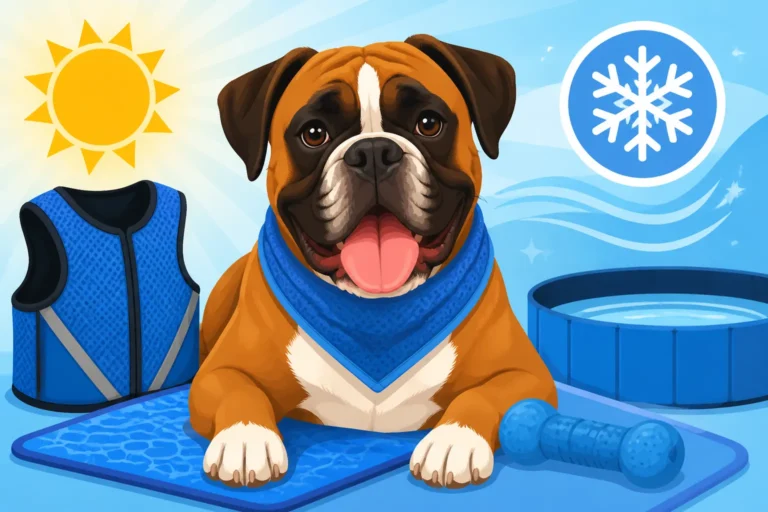
- Shade and Cool Surfaces: Ensure your Boxer always has access to shade when outdoors and cool surfaces to lie on indoors (tile, specialized cooling mats).
- Air Conditioning/Fans: This is your Boxer's best friend. Keep them in an air-conditioned environment. Fans can also help with evaporative cooling if the humidity isn't too high. Cooling Bills in a Household With a Boxer are a necessary expense.
- Cooling Towels/Paddling Pools: A damp towel draped over their back or a shallow Paddling Pools and a Boxer That Cannot Cool Itself can offer immediate relief.
- Never Leave in a Car: Even with windows cracked, car interiors heat up rapidly and can be deadly.
- Consider a Gastropexy: If your Boxer is going under for a spay or neuter, discuss Tacking a Boxer's Stomach During the Spay with your vet. While unrelated to heat, it is a key preventive measure for another life-threatening Boxer emergency: bloat.
By layering these strategies, you create a much safer environment for your Boxer.
Sizing and Fit for a Boxer's Unique Build
Getting the right fit is crucial for a cooling vest to be effective and comfortable. Boxers have a very distinct physique: deep chests, lean waists, and broad shoulders. This can make finding off-the-rack apparel tricky.
- Chest Girth is Key: This is often the most critical measurement. Measure the widest part of your Boxer's chest, just behind their front legs.
- Back Length: Measure from the base of the neck (where the collar sits) to the base of the tail.
- Neck Circumference: Measure around the base of their neck.
Look for vests that are adjustable, particularly around the chest and belly, to accommodate their athletic build. A vest that’s too tight can restrict movement and breathing, making things worse. One that’s too loose won't make good contact with their body and won't cool effectively. Many manufacturers provide detailed sizing charts, and it’s always best to measure your Boxer carefully before purchasing. When in doubt, some brands recommend sizing up if your Boxer is between sizes, but always check their specific guidelines.
Choosing and Using a Cooling Vest for Your Boxer
Once you've decided a cooling vest is a good addition to your Boxer's heat management toolkit, the next step is selecting the right one and knowing how to use it safely and effectively. There are many options out there, so a little research goes a long way.
Key Features to Look For
When shopping for a cooling vest, keep these features in mind to ensure you get the best product for your Boxer:
- Material Quality: For evaporative vests, look for breathable, quick-drying fabrics that wick away moisture efficiently. For PCM vests, ensure the material holding the packs is durable and comfortable against the skin.
- Adjustability: As discussed, Boxers have unique proportions. Adjustable straps around the chest and belly are vital for a snug, yet comfortable, fit. Look for robust buckles or hook-and-loop fasteners that won't come undone easily.
- Coverage: A good vest should cover a significant portion of your Boxer's back and sides, where much of their surface area is. Avoid vests that are too minimal.
- Ease of Use and Maintenance: How easy is it to activate the cooling mechanism? Can it be easily cleaned? Most vests should be hand-washed or machine-washed on a gentle cycle.
- Reflective Elements: Some vests include reflective strips, which are excellent for visibility during early morning or late evening walks, especially useful when trying to get out before the heat hits.
- Durability: Your Boxer is an active dog! Choose a vest made from materials that can withstand regular use, outdoor adventures, and perhaps a bit of playful roughhousing.
Brands and Where to Find Them
There are several reputable brands that offer cooling vests for dogs, and you can find them readily online. When you're ready to explore options, popular pet supply retailers like Chewy often have a wide selection with customer reviews that can be very helpful for Boxer owners trying to gauge fit and effectiveness. Online marketplaces like Amazon also offer numerous brands, from established names to smaller niche manufacturers. Some popular cooling vest brands include Ruffwear (known for their Swamp Cooler vest), Hurtta, and Chilly Dogs.
While Ollie focuses primarily on fresh dog food, ensuring your Boxer gets proper nutrition to maintain a healthy weight is also a component of heat management. A lean, fit Boxer will generally handle moderate heat better than an overweight one, so consider their overall diet alongside cooling accessories.
Remember to always read reviews from other owners, particularly those with brachycephalic breeds, to get real-world insights into how the vest performs.
Practical Tips for Maximizing Effectiveness and Safety
Once you have your cooling vest, here are some tips to get the most out of it and ensure your Boxer's safety:
- Pre-Cooling: If using an evaporative vest, soak it in ice water for an extra chill before putting it on. For PCM vests, ensure the packs are fully frozen or chilled according to instructions.
- Monitor Constantly: Even with a vest, never leave your Boxer unattended in warm weather. Continuously watch for any signs of overheating. The vest is a tool, not a substitute for your vigilance.
- Regular Re-activation: Evaporative vests will dry out. Re-soak them regularly to maintain the cooling effect. Carry a bottle of cold water to re-wet the vest on longer outings. PCM packs will eventually warm up and need re-chilling.
- Avoid Direct Sun: Even with a cooling vest, direct sun exposure, especially on dark-coated Boxers, will quickly negate the vest's benefits. Stick to shaded areas.
- Acclimation: Introduce the vest gradually. Let your Boxer wear it for short periods indoors first, with treats and praise, so they associate it with positive experiences.
- Cleanliness: Keep the vest clean. A dirty vest can be less effective and potentially irritate your Boxer's skin.
- Consider a Second Vest: If you rely heavily on an evaporative vest, having a second one ready to swap out when the first dries can be incredibly useful, especially for longer periods outdoors or travel.
By understanding the "why" behind your Boxer's heat sensitivity and thoughtfully incorporating tools like cooling vests into a comprehensive strategy, you can help them live a safer, more comfortable life, even when the mercury rises.
Disclaimer
This article is for general informational purposes only and does not constitute professional advice. Laws, prices and regulations vary by location and change over time. Consult a qualified professional for guidance on your specific situation.