Preparing a Boxer for a Good Citizen Test
If you're a Boxer owner, you know the boundless energy and goofy charm that comes with these magnificent dogs. But that same enthusiasm can sometimes make public outings or polite greetings a bit… challenging. It’s not uncommon to feel overwhelmed trying to channel all that zest into good manners. This guide is all about giving you the tools and insights to prepare your spirited Boxer for the Canine Good Citizen (CGC) test, helping you both build confidence and show off just how well-behaved your furry friend truly can be.
Understanding the CGC Test and Your Boxer
The Canine Good Citizen (CGC) program, often run by the American Kennel Club (AKC), is a fantastic way to demonstrate that your Boxer is a well-behaved and reliable companion in everyday situations. It’s not just about earning a certificate; it’s about establishing a solid foundation of manners and communication between you and your dog, which is invaluable for any Boxer living in a human world.
What is the Canine Good Citizen Test?
The CGC test consists of ten practical skills that demonstrate a dog's good manners and obedience in a variety of environments. Think of it as a basic etiquette course for dogs, covering everything from politely greeting a stranger to walking calmly on a leash through a crowd. These aren't flashy tricks; they're essential life skills that make your Boxer a joy to live with and take out in public. The test is designed to be fair, taking place in a natural setting rather than a sterile obedience ring, which is great for Boxers who thrive on interaction and can sometimes get a little antsy in formal environments.
The ten items include accepting a friendly stranger, sitting politely for petting, appearance and grooming, walking on a loose leash, walking through a crowd, sit and down on command/staying in place, coming when called, reaction to another dog, reaction to distraction, and supervised separation. Each one builds on basic obedience and social skills, proving that your Boxer can be a responsible member of the community. It's truly about proving that your dog is a "good citizen" in every sense of the word, capable of handling everyday encounters with grace and composure.
Why is it a Great Goal for Boxers?
Boxers are renowned for their playful, often boisterous nature. They mature slowly, often acting like puppies well into their second or even third year, which means their energy levels can be sky-high and their enthusiasm for life can sometimes translate into jumping or over-the-top greetings. Because of this, the CGC test is an exceptionally rewarding goal for Boxer owners. It provides a structured framework for teaching the self-control and manners that can sometimes be challenging for this breed.
Working towards the CGC helps channel that incredible Boxer energy into productive learning, rather than letting it manifest as undesirable behaviors. It builds a strong bond between you and your dog, as you both learn to communicate more effectively. Imagine being able to walk your Boxer through a bustling park, knowing they won't pull you off your feet, or having them calmly greet a new acquaintance without knocking them over. The CGC gives you the tools to achieve that. It's not about stifling their personality, but about refining it so their joyful spirit can shine through without causing chaos. It’s also an excellent way to prepare for Whether a Boxer Can Compete in Obedience if you want to explore further dog sports.
Foundation Skills: The Building Blocks for Success
Before tackling the specific items of the CGC test, it’s crucial to ensure your Boxer has a solid grasp of fundamental obedience commands. These are the bedrock upon which all other good manners are built. Without a strong foundation, trying to layer on more complex behaviors can be frustrating for both you and your dog.
Mastering Basic Obedience
Every Boxer needs to know the basics: "sit," "down," "stay," and "come." These aren't just parlor tricks; they are critical control commands that form the core of good behavior. For a Boxer, consistent practice is key because their intelligence can sometimes be accompanied by a playful stubbornness if they don't see the value in what you're asking. Start training in a quiet, low-distraction environment, then gradually introduce more challenging settings. Short, frequent training sessions are far more effective than long, drawn-out ones, especially with a breed known for its short attention span. Why Short Sessions Suit a Boxer's Attention Span can give you more insight into this.
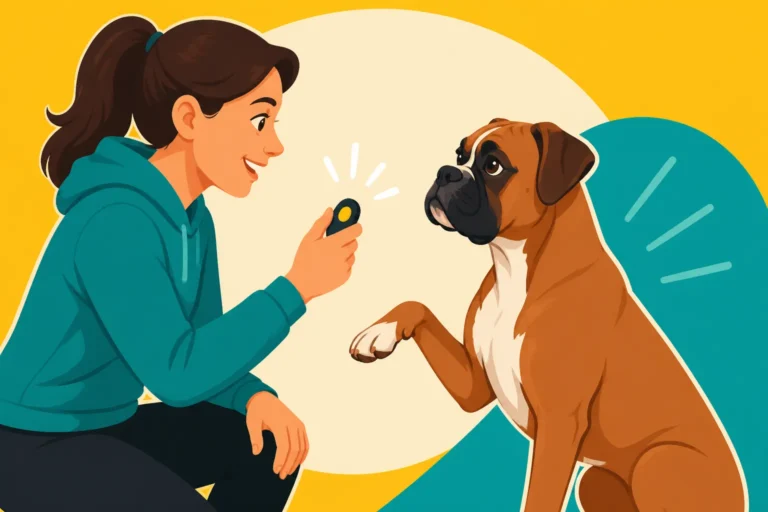
Use positive reinforcement heavily – think high-value treats and enthusiastic praise. Boxers thrive on interaction and attention, so make training fun! Once your Boxer is reliably responding in your home, start practicing in your backyard, then a quiet street, and eventually a park. The goal is for your Boxer to respond to these cues regardless of what exciting things are happening around them. A good resource for structured home training can be found with programs like BAXTER & Bella, which offer step-by-step guidance on these fundamental skills.
Reliable Recall and Stay
A reliable "come" (recall) and a solid "stay" are perhaps two of the most critical commands for the CGC, and frankly, for your Boxer's safety. A Boxer with a poor recall can quickly dart away after a squirrel, putting themselves in danger. The CGC test includes a "come when called" item from ten feet away, which seems simple, but requires absolute consistency. Practice recall using a long line (you can find affordable options on Amazon) in an open, safe area. Start close, then gradually increase the distance, always making coming back to you the most rewarding thing your Boxer could do. Long Line Work With a Young Boxer can be very helpful here.
For "stay," begin with short durations and minimal distance, slowly building up the time and space between you and your Boxer. Remember, a Boxer's focus can waver, so don't set them up for failure by asking for too much too soon. If they break the stay, calmly reset them and try again. The "sit and down on command/staying in place" item on the CGC requires your dog to hold a position for three minutes while you move away. This takes dedication, patience, and consistent practice.
Accepting a Friendly Stranger and Petting
Boxers are generally friendly dogs, often too friendly, which can translate into jumping or pawing at new people. The CGC test requires your Boxer to "accept a friendly stranger" and "sit politely for petting" without showing shyness or resentment, but also without jumping or over-the-top excitement. This is where early and ongoing socialization truly pays off. Teach your Boxer that polite greetings mean they get attention and treats.
When a stranger approaches, have your Boxer sit. If they remain seated, the stranger can offer a treat and gentle praise. If they jump, the attention immediately stops. Consistency is paramount. Many Boxer owners struggle with Stopping a Seventy-Pound Boxer From Jumping, so this skill will be a huge win. Practice with various people – different ages, genders, and sizes – so your Boxer gets used to all sorts of human interactions. Reward calm, four-on-the-floor greetings generously. This also applies to the "appearance and grooming" item, where a friendly stranger (the evaluator) will briefly inspect your Boxer as if grooming them.
Addressing Boxer-Specific Challenges for the CGC
Boxers have a unique set of traits that, while endearing, can pose particular hurdles when preparing for the CGC. Understanding and proactively addressing these can make all the difference on test day.
Managing the Boxer Enthusiasm and "Zoomies"
Ah, the Boxer zoomies! That sudden burst of wild, unadulterated joy that sends them tearing around the house or yard at top speed. While hilarious at home, this kind of unbridled enthusiasm isn't conducive to the calm demeanor required for the CGC. Boxers are also prone to the "Boxer wiggle," where their entire body wiggles with excitement. The key is to teach an "off switch" and reinforce calm behavior, particularly when greeting people or encountering new situations.
One effective strategy is to proactively manage their energy before training or public outings. A good, vigorous play session or a brisk walk before you need them to be calm can burn off excess energy. Once they're a bit more settled, then you can work on the CGC items. Teach them a "place" command, giving them a specific spot to go to and relax when guests arrive or when they're overstimulated. Teaching a Boxer a Place to Go When Guests Arrive can really help here. Reward them heavily for calm, quiet behavior, even if it's just lying quietly at your feet while you watch TV.
Overcoming Leash Pulling and Distraction
A strong, muscular Boxer pulling on the leash can be a real workout! The CGC test includes "walking on a loose leash" and "walking through a crowd," both of which demand that your Boxer walks politely beside you without pulling. This is often one of the biggest challenges for Boxer owners, as their dogs are so eager to investigate everything. A Boxer That Pulls Hard on Walks is a common complaint.
Start with consistent loose-leash training in low-distraction environments. When your Boxer pulls, stop immediately. Only move forward when the leash is slack. Reward heavily for walking nicely. There are various tools that can aid in this, such as front-clip harnesses (like those found on Amazon) which discourage pulling by redirecting your dog's momentum. Avoid retractable leashes, as they teach your dog that pulling is necessary to move forward. Gradually introduce distractions, always reinforcing that attention on you, even amidst exciting sights and smells, earns the best rewards. Harnesses That Hold a Pulling Boxer provides great advice on selecting the right gear.
Socializing for Calmness Around Other Dogs
The CGC test requires your Boxer to react appropriately to another dog, demonstrating a neutral or friendly demeanor without excessive barking, lunging, or shyness. Boxers generally love other dogs, but their play style can be boisterous, and sometimes their excitement can be mistaken for aggression by less tolerant dogs. Or, they might get too excited and want to play rather than focus on you.
Ongoing, positive socialization is vital. Expose your Boxer to a variety of calm, well-mannered dogs from a young age. Puppy classes and supervised playdates are excellent. When practicing for the CGC, arrange to have a friend with a calm, well-behaved dog stand at a distance while you practice walking past them. Reward your Boxer for looking at you and staying focused, rather than fixating on the other dog. Gradually decrease the distance. Remember, the goal isn't necessarily for them to play, but for them to be able to politely ignore or calmly acknowledge another dog and then re-focus on you. This ties into Socializing a Boxer Puppy Before Sixteen Weeks and continuing that exposure responsibly throughout their lives.
The Test Day: What to Expect and How to Shine
After all your hard work, test day can feel a bit nerve-wracking. But with good preparation and a calm mindset, you and your Boxer can absolutely shine.
Practice Makes Perfect (Simulating the Test)
The best way to prepare for the actual test is to simulate it as closely as possible. Go through all ten items in order, ideally in an unfamiliar location that mimics a test environment, like a local park or community center. Ask a friend or family member to act as the evaluator and the friendly stranger. Practice having them approach and pet your Boxer, and have them bring their own well-behaved dog to practice the "reaction to another dog" item.
Remember to incorporate distractions into your practice sessions. Have people walk by, drop things, or make sudden noises – these mimic the "reaction to distraction" item. By exposing your Boxer to these scenarios during practice, they'll be less likely to be startled or overly reactive on test day. Make sure you're using high-value rewards during these practice sessions to keep your Boxer motivated. Rewards a Boxer Will Work Hard For will help you choose the best treats. The more familiar your Boxer is with the routine and potential distractions, the more confident they'll be when it counts.
Keeping Your Boxer Calm and Focused
On test day, your Boxer will feed off your energy. If you're stressed, they're likely to be stressed. Try to approach the test with a positive, calm attitude. Arrive a bit early to allow your Boxer to sniff around and get comfortable with the new environment. A short, gentle walk before the test can help them burn off any last-minute jitters and relieve themselves.
Bring your Boxer's favorite treats and toys, but use them strategically. During the test, focus on clear, consistent cues and reward good behavior promptly. Remember that evaluators understand that dogs are not robots; they're looking for a dog that genuinely understands and tries to comply, not perfection. If your Boxer makes a mistake, just calmly reset and try again if permitted. The "supervised separation" item, where your Boxer is left with a trusted person for three minutes while you walk out of sight, can be tough for Boxers who form strong bonds. Practice this at home first, gradually increasing the duration. Programs like BAXTER & Bella can offer additional guidance on managing anxiety and building focus in real-world settings.
Here’s a quick overview of the CGC test items and how your Boxer's natural tendencies might play into them:
| CGC Test Item | Boxer Tendency/Challenge | Boxer-Specific Tip |
|---|---|---|
| 1. Accepting a Friendly Stranger | Overly enthusiastic greetings, jumping | Teach "sit to greet." Reward heavily for all four paws on the floor. |
| 2. Sitting Politely for Petting | Wiggly body, trying to lick, jumping up | Practice having strangers pet while your Boxer is in a sit or down. Reward calmness. |
| 3. Appearance and Grooming | May not enjoy being handled by strangers, lip folds checked | Acclimate to being handled, brushed, and having paws/mouth touched by various people. |
| 4. Walking on a Loose Leash | Strong puller, easily distracted by smells and sights | Use a front-clip harness. Stop immediately when pulling. Reward loose leash walking frequently. |
| 5. Walking Through a Crowd | Wants to greet everyone, can get overwhelmed by close proximity | Practice in busy areas. Reward attention on you. Keep treats handy for focus. |
| 6. Sit and Down on Command/Stay | Short attention span, may break stay to investigate | Build duration and distraction slowly. Make "stay" highly rewarding. |
| 7. Coming When Called (Recall) | Easily distracted by scents, sights, other dogs | Practice with a long line. Make recall the most exciting thing (best treats/toys). Getting a Boxer's Attention Outdoors |
| 8. Reaction to Another Dog | Can be boisterous, wants to play, or gets over-excited | Practice polite passes at a distance. Reward calm observation and focus on you. |
| 9. Reaction to Distraction | Startles easily, or wants to investigate loud noises/movement | Expose to various sounds/sights during practice. Reward neutral responses. |
| 10. Supervised Separation | Can be vocal or anxious when handler leaves | Practice short separations at home first, gradually increasing time and distance. |
The Canine Good Citizen test is a journey, not just a destination. It’s an opportunity to strengthen the bond with your beloved Boxer, refine their manners, and proudly show the world what a truly fantastic companion they are. With patience, consistency, and a good sense of humor (which every Boxer owner needs!), you and your Boxer will undoubtedly achieve success and enjoy a lifetime of good citizenship.
Disclaimer
This article is for general informational purposes only and does not constitute professional advice. Laws, prices and regulations vary by location and change over time. Consult a qualified professional for guidance on your specific situation.